
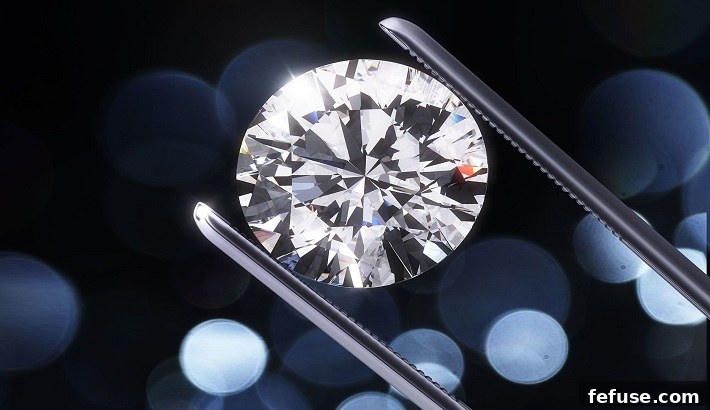
The global diamond industry is currently navigating a period of significant transformation, marked by the increasing prominence of lab-grown diamonds. In response to this evolving landscape, leading organizations are taking proactive steps to clarify the distinct value propositions of natural diamonds. A pivotal moment for these discussions is the upcoming Presidents Meeting of the World Federation of Diamond Bourses (WFDB) and the International Diamond Manufacturers Association (IDMA), scheduled for September 24-25 in Dubai. This high-level gathering is poised to delve deeply into the complex issue of synthetic diamonds, affirming the industry’s commitment to transparency and consumer education.
The agenda for the Presidents Meeting highlights the gravity with which the industry views the challenge of differentiation. A dedicated panel on synthetic diamonds will feature a roster of esteemed industry experts, offering diverse perspectives and insights into the market dynamics, technological advancements, and ethical considerations surrounding these stones. This proactive engagement underscores a collective resolve to protect the integrity and enduring legacy of natural diamonds within the broader jewelry and luxury markets.
The Enduring Value Proposition: Natural Diamonds’ Rarity and Legacy
Ernie Blom, the revered President of the WFDB, has consistently been a vocal advocate for natural diamonds, emphasizing their unique and irreplaceable characteristics. His insights provide a foundational argument for understanding the fundamental differences between natural and lab-created stones. “What distinguishes natural diamonds from lab-created diamonds, apart from the whole love element, is that natural diamonds are a non-renewable source,” Blom stated. This simple yet profound statement encapsulates the core economic principle of scarcity that underpins the value of natural diamonds. Unlike any manufactured product, the supply of natural diamonds is inherently finite, dictated by geological processes that unfolded over billions of years deep within the Earth’s mantle.
This non-renewable nature is directly linked to another crucial attribute: their historical value retention. Blom meticulously highlighted, “Importantly, more expensive natural diamonds have historically maintained resale value after purchase which is tied to the inherent rarity of higher-quality natural diamonds. Synthetic diamonds will not hold value. Natural diamonds do.” This assertion draws a clear distinction between an investment-grade natural diamond, which often appreciates or retains its value over time, and a factory-produced synthetic diamond, whose value trajectory is more akin to a manufactured consumer good, typically depreciating after initial purchase. The rarity of natural diamonds, particularly those of exceptional quality, makes them enduring assets, sought after by collectors and investors alike, a characteristic that synthetics, by their very nature of being reproducible, cannot replicate.
Blom concluded his impassioned remarks by issuing a clarion call to the global diamond trade: to “unite around a campaign to stress as much as possible the rarity of natural diamonds.” This emphasizes the imperative for collective action and a unified message to educate consumers worldwide about the intrinsic and unique attributes that make natural diamonds truly special and irreplaceable. This rallying cry sets the tone for industry-wide efforts to preserve the integrity and perceived value of natural diamonds in an increasingly competitive market.
Pioneering Campaigns: “We Love Natural Diamonds”
In a testament to this collaborative spirit, the Israel Diamond Exchange (IDE) took a significant step in July by launching a global campaign specifically designed to promote natural diamonds. This initiative, developed in close cooperation with the World Federation of Diamond Bourses (WFDB), represents a concerted effort to reinforce the unique appeal of natural stones. The campaign, aptly titled “We Love Natural Diamonds,” has already garnered considerable attention with the release of two impactful videos in its initial phase.
The overarching objective of this international campaign is clear: to meticulously differentiate natural diamonds from their lab-grown and other synthetic counterparts. It aims to transcend mere technical distinctions, instead focusing on the profound narrative and inherent qualities that elevate natural diamonds. The campaign is specifically crafted to illustrate to consumers the profound and significant differences that exist between natural diamonds—marvels of geology that are billions of years old, whose value, beauty, and mystique are preserved eternally—and synthetic, factory-produced diamonds, which, while chemically identical, lack the inherent rarity, geological provenance, and emotional depth of their natural brethren.
The “We Love Natural Diamonds” campaign seeks to connect with consumers on an emotional level, reminding them that a natural diamond is not just a gemstone but a piece of Earth’s ancient history, a symbol of enduring love and commitment, and a tangible legacy passed down through generations. These narratives are crucial in a marketplace where the visual similarities between natural and lab-grown diamonds can sometimes blur their fundamental distinctions, particularly concerning origin and long-term value. By highlighting the unparalleled journey of a natural diamond—from deep within the Earth to its place on a finger—the campaign aims to rekindle the magic and wonder associated with these extraordinary gems, setting them apart from industrially replicated products.
The Intrinsic Differences: Beyond the Chemical Composition
While lab-grown diamonds share the same chemical composition and crystal structure as natural diamonds, their origin stories and market implications are vastly different. Natural diamonds are geological miracles, formed under immense pressure and heat deep beneath the Earth’s surface over periods ranging from 1 to 3 billion years. Each natural diamond is a unique fingerprint of the Earth, bearing subtle inclusions and characteristics that tell a story of its arduous journey. This geological provenance imbues natural diamonds with an unparalleled sense of rarity, authenticity, and historical significance.
Lab-grown diamonds, on the other hand, are products of human ingenuity, created in controlled laboratory environments within weeks. While technologically impressive, their controlled production means they can be manufactured on demand, making them a renewable resource. This fundamental difference in origin and supply directly impacts their long-term value proposition. As manufacturing processes become more efficient and production volumes increase, the price of lab-grown diamonds is expected to continue its downward trend, making their resale value uncertain, if not negligible. This stands in stark contrast to natural diamonds, particularly those of higher quality, which have historically demonstrated resilience and often appreciation in value, acting as tangible assets.
The “love element” that Ernie Blom referenced goes deeper than mere sentimentality. It encompasses the tradition, heritage, and emotional resonance that have been associated with natural diamonds for centuries. From engagement rings symbolizing eternal commitment to heirlooms representing family legacy, natural diamonds have become interwoven with humanity’s most cherished moments. This cultural significance and emotional depth are qualities that cannot be replicated in a laboratory, regardless of how scientifically identical the synthetic product may be. Consumers seeking a piece of history, an enduring symbol of love, or a true investment in rarity will invariably gravitate towards natural diamonds.
Ensuring Consumer Confidence and Market Clarity
The diamond industry recognizes that maintaining consumer trust is paramount. Clear and accurate disclosure about a diamond’s origin—whether natural or lab-grown—is not just an ethical imperative but a foundational element for a healthy market. Organizations like the WFDB and IDMA are actively working to establish robust standards for identification and disclosure, ensuring that consumers are fully informed about their purchases. Advanced testing equipment and rigorous certification processes are vital tools in this effort, enabling jewelers and buyers to distinguish between the two types of diamonds with absolute certainty.
Furthermore, the ongoing campaigns, such as the “We Love Natural Diamonds” initiative, play a critical role in educating the public. By investing in consumer awareness, the industry aims to empower buyers to make informed decisions that align with their personal values, financial goals, and emotional connections. This includes understanding the impact of origin on value retention, the environmental footprint of both production methods, and the socio-economic benefits that the natural diamond industry brings to mining communities worldwide through responsible sourcing practices.
Ultimately, the future of the diamond market likely involves the coexistence of both natural and lab-grown diamonds, each serving different segments of the consumer base. However, the industry’s unwavering focus, as highlighted by the upcoming WFDB and IDMA Presidents Meeting and the IDE’s pioneering campaign, remains on articulating the unique, irreplaceable, and enduring value of natural diamonds. These efforts are crucial not only for preserving the mystique and economic stability of natural diamonds but also for upholding the very essence of what makes these ancient treasures so profoundly cherished and sought after across the globe.