
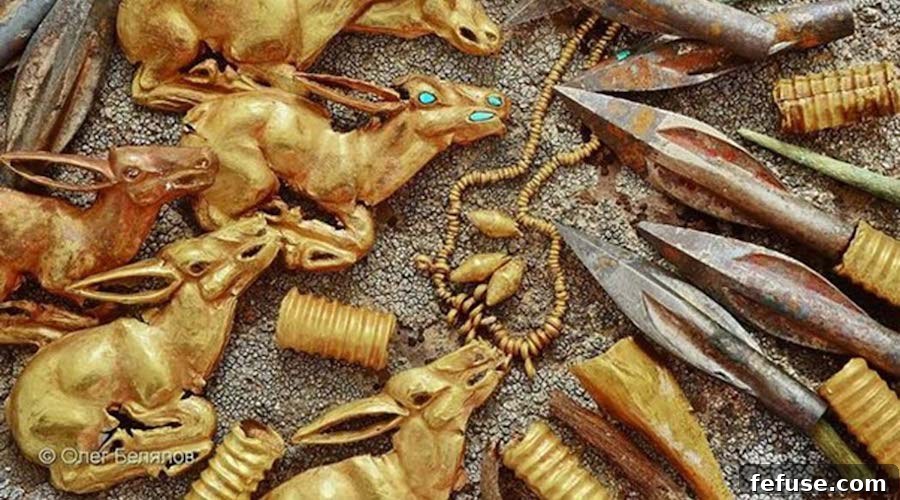
Deep within the rugged and expansive landscapes of northeastern Kazakhstan, a remarkable archaeological revelation has captured the attention of the global historical community. In the remote Tarbagatai Mountains, an extensive archaeological dig has unearthed an astonishing trove of 3,000 gold and other precious metal objects and intricate jewelry pieces. These magnificent artifacts are estimated to date back nearly 2,800 years, offering an invaluable glimpse into a sophisticated ancient civilization that flourished almost eight centuries before the Common Era. This discovery does not merely represent a collection of ancient ornaments; it stands as a testament to the advanced metallurgical skills and profound cultural richness of the people who once inhabited these lands.
The treasure, meticulously recovered from what is known as the ‘Yeleke Sazy’ burial site, is widely believed to have been the personal possessions of a prominent noble family. This aristocratic lineage belonged to the enigmatic Saka people, a dominant nomadic group whose influence spanned across the vast expanse of Central Asia approximately 2,800 years ago. The Saka were a significant sub-group of the much larger and widely celebrated Scythian culture, renowned for their equestrian prowess, intricate gold work, and expansive steppe empire. The burial mounds at Yeleke Sazy thus offer direct, tangible links to the upper echelons of this powerful and culturally rich nomadic society, providing crucial insights into their social hierarchy, artistic expression, and burial rituals.
Local media outlets extensively covered the archaeological team’s findings, highlighting the profound impact these discoveries had on the researchers. The excavation, expertly led by the distinguished historian Zeinolla Samashev, has consistently revealed artifacts that showcase an extraordinarily high level of technological development in gold jewelry production. The precision, detail, and artistry evident in each piece defy the conventional understanding of ancient craftsmanship for that period. This sophisticated metalworking suggests a deep understanding of materials and techniques, pushing the boundaries of what was previously thought possible for nomadic societies of the early Iron Age. The intricate designs and flawless execution are a clear indication of a society that valued artistry and possessed the specialized skills to create objects of enduring beauty and significant cultural value.
Among the fascinating items accompanying the remains of two individuals at the Yeleke Sazy site were an array of exquisite pieces. These included intricately designed bell-shaped earrings, delicate gold plates, finely crafted chains, and elaborate necklaces adorned with various precious stones, which would have shimmered with vibrant colors. Perhaps most striking were the exquisitely crafted animal figures made from gold, demonstrating a profound connection to the natural world and likely holding symbolic importance within Saka beliefs. Additionally, thousands of golden beads were discovered, which once embellished the elaborate and richly decorated clothing of the Saka nobility. These adornments were not merely decorative; they were powerful symbols of status, wealth, and cultural identity, illustrating the profound aesthetic and social significance of personal ornamentation in Saka society.
The ongoing archaeological efforts in the Tarbagatai Mountains are far from over. The research team, energized by their initial success, continues to systematically excavate the region. Their work is driven by the compelling presumption that the Eleke Sazy plateau hosts close to 200 additional burial mounds, many of which remain untouched and hold the promise of further spectacular discoveries. Each new mound presents the potential to unlock more secrets of the Saka people, shedding light on their daily lives, spiritual beliefs, trade networks, and interactions with neighboring cultures. The sheer scale of this necropolis suggests it was a site of immense importance, potentially serving as a major burial ground for generations of Saka leaders and elites.
The geographical context of the Tarbagatai Mountains, nestled within the broader steppe region of Central Asia, is crucial to understanding the Saka and Scythian cultures. These nomadic groups were masters of their environment, utilizing the vast grasslands for their herds and developing advanced equestrian skills that made them formidable warriors and extensive traders. The discovery of such rich gold artifacts in this region underscores the economic vitality and cultural sophistication of these ancient peoples, challenging long-held stereotypes of “barbarian” nomads. The gold itself, likely sourced from local rivers and mines, points to organized labor and resource management, while its transformation into such intricate jewelry speaks volumes about their artistic vision and technical prowess. This site effectively redefines our understanding of early Iron Age societies in Central Asia, positioning them as significant contributors to the tapestry of ancient world civilizations.
The meticulous nature of the excavation process, led by experienced archaeologists like Zeinolla Samashev, is paramount to preserving these ancient treasures. Each artifact, from the smallest golden bead to the most elaborate necklace, is carefully documented, cleaned, and analyzed. This scientific rigor ensures that the historical context and integrity of the find are maintained, allowing researchers to reconstruct the lives and customs of the Saka people with greater accuracy. The detailed study of the materials, techniques, and iconography of these artifacts provides invaluable data for archaeologists, art historians, and anthropologists alike, contributing significantly to the broader academic discourse on ancient nomadic empires and their impact on Eurasia. The site also offers a unique opportunity to study the interactions between different cultural groups in the region during the Bronze and Early Iron Ages, potentially revealing early trade routes and cultural exchanges that predate the famed Silk Road.
The presence of such an enormous quantity of gold and precious metals at Yeleke Sazy highlights the profound significance of gold in ancient societies. Gold was not just a symbol of wealth; it often held deep spiritual and ritualistic meanings, connecting the earthly realm with the divine. Its incorruptible nature made it a fitting material for objects intended for the afterlife, ensuring the deceased’s eternal prosperity and status. The sheer volume of gold discovered also points to a highly organized society capable of accumulating such riches, potentially through trade, tribute, or conquest. The intricate animal motifs prevalent in Saka gold work, often depicting creatures like deer, eagles, and wild cats, are characteristic of the “Scythian animal style,” a distinctive artistic tradition that spread across the Eurasian steppes. These animal figures were not merely decorative but often served as powerful totems or representations of spiritual beliefs, reflecting a sophisticated cosmology and a deep reverence for the natural world.
This breathtaking discovery in Kazakhstan serves as a crucial piece of the puzzle in understanding the history of Central Asia, a region that has long been a crossroads of civilizations but whose ancient history is still being fully uncovered. The Yeleke Sazy site provides tangible evidence of a rich and powerful culture that thrived long before the common historical narratives of sedentary empires. It challenges us to reconsider the complexity and sophistication of nomadic peoples, illustrating their capacity for advanced craftsmanship, complex social structures, and enduring artistic traditions. The continuity of settlement and burial practices over generations at this site further suggests a stable and enduring cultural presence, rather than transient movements, indicating a sophisticated understanding of territory and lineage.
For Kazakhstan, a nation rich in history and culture, the Yeleke Sazy discovery is a source of immense national pride and a powerful symbol of its ancient heritage. It reinforces the country’s position as a vital archaeological frontier, attracting international attention and fostering a deeper appreciation for its historical legacy. The commitment to preserving these invaluable cultural assets is evident in the ongoing efforts of local authorities and academic institutions, ensuring that these treasures are protected for future generations to study and admire. This discovery is expected to boost cultural tourism and inspire a new generation of Kazakhstani archaeologists and historians to delve deeper into their nation’s past, further enriching the global understanding of human history.
Looking ahead, the potential for further discoveries at the Eleke Sazy plateau is truly immense. With an estimated 200 burial mounds awaiting exploration, each excavation promises new revelations that could reshape our understanding of the Saka people and their place in ancient history. These future finds could illuminate aspects of their daily lives, their agricultural practices, their spiritual rituals, and their interactions with other ancient civilizations. The Yeleke Sazy site is poised to become one of the most significant archaeological complexes in Central Asia, offering a continuous stream of data that will fuel academic research and public fascination for decades to come. The promise of unlocking more secrets from these ancient burial sites underscores the enduring allure of archaeology and the boundless wonders that still lie hidden beneath the earth.
The story of the Saka people, as told through the shimmering gold of Yeleke Sazy, is a poignant reminder of the ebb and flow of civilizations and the enduring human spirit of creativity and aspiration. These ancient nomads, often overlooked in mainstream historical narratives, left behind an incredible legacy of art and culture that continues to captivate and educate us. Their mastery of metalwork, their sophisticated social structures, and their deep connection to the land are all etched in the very fabric of these thousands of precious objects. The Tarbagatai Mountains, once a remote frontier, now stand as a beacon, illuminating a forgotten chapter of human history and inviting us to marvel at the ingenuity and artistic brilliance of the ancients.
In essence, the Yeleke Sazy gold discovery is far more than just a collection of valuable ancient artifacts. It is a portal to a lost world, offering unparalleled insights into the lives, beliefs, and artistic achievements of the Saka people. It compels us to acknowledge the rich tapestry of human history and the remarkable contributions of nomadic cultures to the global heritage. As archaeologists continue their painstaking work, the narrative of the Saka will undoubtedly become richer and more detailed, ensuring their rightful place in the annals of ancient civilizations. This ongoing journey of discovery in the heart of Eurasia continues to reveal the magnificent and often surprising depths of our shared past.
News Source: mining.com