
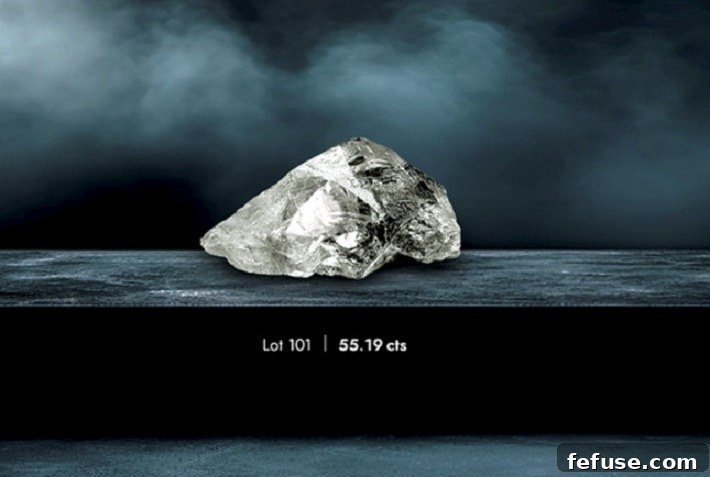
De Beers Resumes Rough Diamond Auctions Amidst Evolving Global Market Dynamics
De Beers, a global leader in diamond exploration, mining, and marketing, is set to recommence its rough diamond auctions next week, marking the first time since September of last year. This pivotal move signals a cautious yet optimistic outlook from the UK-based miner following a challenging period for the global diamond industry. The auctions, which represent a crucial component of De Beers’ sales strategy, were strategically suspended during its 9th and 10th sales cycles in response to a significant slump in worldwide demand for rough diamonds.
The Strategic Pause: Navigating Market Imbalances
The decision to halt online rough diamond sales was not taken lightly, reflecting the severity of the market downturn experienced in the latter half of 2023. Al Cook, CEO of De Beers Group, articulated the rationale behind this temporary suspension at the time, stating that it was essential to help “re-establish equilibrium between wholesale supply and demand.” This commitment to market stability underscores De Beers’ proactive approach in managing supply to prevent further price erosion and inventory build-up across the diamond pipeline.
The global diamond market had been grappling with a confluence of adverse factors, including persistent inflationary pressures, a slowdown in major economies, and a general cautiousness among consumers regarding luxury spending. This led to an accumulation of polished diamond inventory in cutting and polishing centers, particularly in India, and subsequently, a reduced appetite for rough diamonds from manufacturers. By temporarily withdrawing from the auction market, De Beers aimed to provide the industry with an opportunity to absorb existing stock, stabilize prices, and reset expectations, thereby fostering healthier market conditions for future sales.
The Return to Auction: A Glimmer of Market Confidence
The first rough diamond auction of 2024 is scheduled to take place from January 16 to 18, generating considerable anticipation within the industry. The resumption of these sales is widely interpreted as an indication that De Beers perceives a potential thawing in market conditions, or at least a manageable level of demand that can support a return to regular auction schedules. It suggests that the inventory overhang might be starting to clear, and that manufacturers and cutters are preparing to restock for anticipated demand in the coming months, possibly buoyed by improved economic forecasts or seasonal purchasing patterns.
De Beers’ auctions are distinct from its primary Sight sales. While Sights account for approximately 90 percent of its rough diamond sales, conducted through long-term contractual agreements with accredited buyers (Sightholders), auctions make up the remaining 10 percent. Auctions typically offer a more flexible platform, providing a spot market for a diverse range of rough diamond parcels, allowing for greater price discovery and catering to the immediate needs of a broader spectrum of buyers. With 950 registered buyers, the auction platform serves as a vital barometer for real-time market sentiment and specific demand for various diamond categories.
De Beers’ 2023 Performance: A Year of Significant Headwinds
The year 2023 proved to be exceptionally challenging for De Beers Group’s rough diamond sales. Total sales for the year plummeted to $3.63 billion, representing a substantial 37 percent decrease compared to the robust figures recorded in 2022. This sharp decline underscores the profound impact of the economic downturn and weakened consumer confidence on the luxury goods sector.
Highlighting the extent of the market contraction, De Beers’ cycle 8 sales last year garnered just $200 million. This figure was notably the second lowest recorded since the company began publicly reporting its Sight totals in 2016, a testament to the severe demand crunch that characterized the latter half of the year. Such diminished sales performance reflects not only a reduction in purchasing volumes by sightholders and auction participants but also a potential softening in rough diamond prices as De Beers adjusted its offerings to stimulate demand in a buyer’s market.
The slump was attributed to several factors beyond general economic deceleration. High inventory levels in the midstream (cutters and polishers) meant there was little urgency to acquire new rough material. Furthermore, the rise of lab-grown diamonds (LGDs) presented a growing alternative, creating competitive pressure, particularly in certain price segments. Consumers, faced with cost-of-living increases, often prioritized essential spending over discretionary luxury purchases, directly impacting the entire diamond value chain from mine to retail.
The Broader Diamond Industry Landscape and Challenges
The difficulties faced by De Beers in 2023 were symptomatic of broader issues affecting the entire global diamond industry. Manufacturers in key polishing centers, such as Surat, India, experienced prolonged periods of reduced activity and even temporary shutdowns due to excess inventory and a lack of fresh orders. Retailers, cautious about economic uncertainties and shifting consumer preferences, became more conservative with their inventory procurement, leading to a ripple effect throughout the supply chain.
The industry also contended with evolving consumer attitudes towards sustainability and traceability, demanding greater transparency in sourcing. Geopolitical events and trade dynamics further complicated the landscape, impacting logistics and market access. In this complex environment, the ability of major players like De Beers to adapt their sales strategies, manage supply, and communicate effectively with their partners became paramount to navigating the volatility.
The interdependency of the diamond pipeline means that challenges in one segment quickly cascade to others. When consumer demand for polished diamonds wanes, it reduces the need for retailers to restock, which in turn slows down orders from manufacturers. This leads to an oversupply of rough diamonds and pressure on mining companies to either cut production or adjust pricing to clear inventory. De Beers’ decision to pause auctions was a direct response to this cyclical downturn, attempting to prevent a further saturation of the market and support the health of its partners in the midstream.
Outlook for 2024: A Cautious Path to Recovery
As De Beers reintroduces its rough diamond auctions, the industry will be closely monitoring the results for signals regarding the pace and strength of recovery in 2024. While the global economic outlook remains somewhat uncertain, there are tentative hopes for a gradual improvement in consumer sentiment and spending, particularly in key markets like the US and China. The holiday season sales performance, though varied, may offer some insights into current consumer appetite for fine jewelry.
De Beers’ strategic management of rough diamond supply, alongside its ongoing marketing initiatives, will be crucial in fostering a stable and sustainable recovery. The company will likely continue to balance its sales volumes with market demand, ensuring that prices remain constructive and that its partners can operate profitably. The performance of the auctions will provide immediate feedback on demand for specific categories of rough diamonds, influencing De Beers’ subsequent Sight offerings and overall production plans.
Furthermore, the diamond industry continues to innovate, exploring new marketing angles, embracing digital technologies, and enhancing supply chain transparency to appeal to modern consumers. The interplay between natural and lab-grown diamonds will also remain a significant dynamic, with both segments likely to find their distinct market niches. Ultimately, De Beers’ resumption of auctions is a positive, albeit measured, step forward, signaling a belief that the diamond market is beginning to find its footing after a turbulent period.
Conclusion: A Bellwether for the Diamond Sector
The return of De Beers’ rough diamond auctions next week is more than just a procedural restart; it is a significant indicator for the entire diamond industry. After a strategic hiatus aimed at rebalancing the market, the decision to resume sales suggests a cautious optimism that the worst of the demand slump may be behind us. While the 2023 sales figures underscored the profound challenges faced by the sector, the controlled reintroduction of auction activity provides a hopeful signal that the intricate supply chain is beginning to heal and regain momentum. All eyes will be on the outcomes of these crucial auctions as stakeholders across the globe look for firm evidence of renewed confidence and a clearer path towards sustainable growth in the vibrant world of diamonds.