
Forevermark India Unveils Key 2020 Diamond Industry Trends: Navigating Ambiguity and Embracing Evolving Consumer Desires
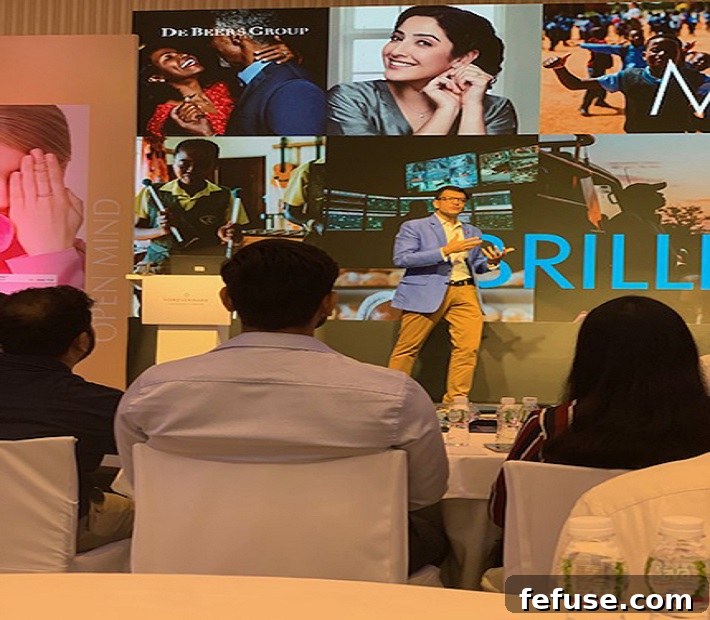
The global diamond and luxury sector continually adapts to shifting consumer behaviors and macro-economic forces. In a significant move to address and anticipate these changes, Forevermark India launched its highly anticipated 2020 Trend Report, presenting its findings to Mumbai’s leading retailers at Trident BKC. This comprehensive report not only identified crucial trends such as Urban Natural, Open Mindedness, La Suerte, and Royal 2.0 but also highlighted broader macro consumer shifts, including inclusive design principles and the implications of AI-based deepfake production. This strategic unveiling underscores Forevermark’s commitment to guiding the industry through evolving landscapes and empowering its partners with foresight.
Navigating a Dynamic Market Landscape: Resilience and Strategic Adaptability
The year 2019 proved to be exceptionally challenging for the diamond industry at large, marked by various global economic headwinds and shifts in consumer spending. Despite these widespread difficulties, Sachin Jain, President of Forevermark India, proudly announced that Forevermark had experienced one of its most successful years. This remarkable performance, he noted, was largely attributed to a strong emphasis on collaboration—both small-scale partnerships and major alliances—coupled with a relentless pursuit of ideation and innovation. Jain emphasized that continuously doing something new and different is not merely an option but a critical imperative for sustained growth in a competitive market.
While traditional markets like the U.S. and China remain pivotal for the global diamond trade, Jain underscored India’s burgeoning significance for Forevermark. The country’s growing economy, expanding middle class, and cultural affinity for diamonds position it as an exceptionally important market, warranting dedicated focus and tailored strategies.
“Ambiguity is the New Normal”: Strategic Adaptability in an Unpredictable World
Sachin Jain articulated a stark reality for businesses today: “Ambiguity is the new normal.” He pointed to a series of impactful events shaping this uncertain environment, including frequent changes in government, evolving taxation policies, significant policy shifts, and even large-scale financial scams that erode consumer trust. Internationally, the protracted U.S.-China trade war adds another layer of complexity, creating instability that reverberates across global supply chains and consumer confidence.
In this landscape of continuous flux, Jain stressed that businesses must not only acknowledge these challenges but proactively “chalk out a plan” to navigate them. This requires an unparalleled level of preparedness and agility, necessitating not just a “plan B” but a “plan C and D,” indicating the need for multifaceted strategies and an open-minded approach to maneuvering through unforeseen circumstances. His insights serve as a potent reminder that adaptability is paramount for survival and prosperity.
To illustrate the scale of innovation and investment required in today’s economy, Jain drew a compelling comparison. He highlighted that the global rough diamond business is valued at approximately $15 billion annually. In stark contrast, Amazon’s research and development budget alone stands at an astonishing $22 billion. This disparity underscores a fundamental shift in market dynamics, where technological innovation and consumer-centric development dominate. This context gives rise to a new widely adopted term across various industries: WACD, or “What Amazon Can Do,” which encapsulates the benchmark for customer experience, efficiency, and disruptive innovation that modern businesses are increasingly measured against. For the diamond industry, this implies a pressing need to rethink traditional models, embrace technology, and prioritize customer value at every touchpoint.
Fostering Productivity and Understanding Modern Love in Retail
Beyond market dynamics, Sachin Jain also emphasized internal organizational structures and external consumer understanding as key drivers of productivity and success. He advocated for less hierarchy within workplaces and a greater degree of openness, fostering an environment where ideas can flow freely, and innovation is encouraged from all levels. Such an approach can empower employees and streamline decision-making, crucial for rapid response in an ambiguous environment.
From a retail perspective, Jain identified “understanding modern love” as paramount. The traditional narrative of diamond purchases, often centered around engagement rings for heterosexual couples, is rapidly evolving. Consumers are now getting married at various ages, challenging long-held societal norms. Furthermore, the rise of live-in relationships, increased acceptance of same-sex couples, and the growing trend of self-purchase signify a much broader spectrum of celebratory moments and expressions of affection that jewelry can commemorate.
A particularly insightful observation was the growing economic independence and purchasing power of women in India. Jain noted that an impressive 22 percent of women in India now earn more than men, signifying a powerful demographic shift. This translates into a significant potential for women to purchase diamonds and luxury jewelry for themselves, celebrating personal achievements, milestones, or simply as an expression of self-love and empowerment. Retailers who successfully tap into this evolving definition of love and purchasing power are poised for considerable success, requiring a re-evaluation of marketing strategies, product designs, and customer engagement approaches to resonate with this diverse and dynamic consumer base.
The Evolving Consumer: Redefining Preferences and Purchase Drivers
Federica Imperiali, Head of New Product Development at Forevermark, provided the audience with a detailed presentation on macro consumer trends that are profoundly influencing purchasing decisions globally, particularly within the luxury sector. These overarching trends form the bedrock upon which the more specific 2020 jewelry trends are built, offering a holistic view of the contemporary consumer psyche.
Macro Consumer Trends Shaping Purchasing Decisions
Imperiali outlined several critical macro trends:
- First-Time Empowerment: This trend reflects a generation of consumers who feel empowered to make conscious choices, often seeking brands that align with their values. It signifies a shift from passive consumption to active engagement, where consumers demand transparency, authenticity, and ethical practices from luxury brands. In the context of diamonds, this translates to a desire for responsibly sourced stones, clear origin stories, and products that reflect their personal achievements and independence.
- Multisensory Experience: Modern consumers crave experiences that engage more than just sight. Luxury is no longer just about the visual appeal of a product; it encompasses the tactile sensation, the scent of a boutique, the emotional resonance of a brand story, and even the subtle sounds associated with unpacking a cherished item. For jewelry, this means considering packaging, presentation, the feel of the metal, and the overall emotional journey evoked by the piece.
- Naturality: There is an escalating demand for authenticity, purity, and connection to nature. This trend manifests as a preference for natural diamonds over synthetic alternatives, a focus on ethical and environmentally conscious sourcing, and designs that draw inspiration from organic forms and elements. Consumers are increasingly scrutinizing the origin and journey of their luxury items, valuing transparency and sustainability.
- Artificial Intelligence (AI): While deepfakes represent a more nefarious application, AI’s broader impact on consumer behavior is transformative. From personalized recommendations based on past purchases and browsing history to virtual try-on experiences and AI-driven customer service, technology is reshaping how consumers discover, evaluate, and purchase luxury goods. For diamond retailers, AI offers unprecedented opportunities for hyper-personalization, efficient inventory management, and immersive digital brand experiences.
- Inclusive Design: This trend champions the idea that products and experiences should be accessible and appealing to everyone, regardless of gender, age, ethnicity, ability, or lifestyle. It challenges traditional notions of luxury, moving away from exclusivity based on narrow demographics towards a broader, more welcoming approach. In jewelry, this means offering diverse styles, sizes, and price points, and marketing campaigns that reflect the rich tapestry of human identity and relationships, celebrating all forms of love and self-expression.
These macro trends collectively inform the consumer’s purchasing decisions, making it imperative for brands like Forevermark to integrate these insights into their product development, marketing, and retail strategies.
Forevermark’s 2020 Trend Forecast: A Glimpse into Future Luxury
Building upon the foundation of these macro consumer shifts, Federica Imperiali then unveiled Forevermark’s highly anticipated color-based themes and design inspirations for 2020. These four core trends offer a vivid roadmap for jewelry design and marketing, reflecting the dominant cultural narratives and aesthetic preferences of the coming year.
Urban Natural: Embracing Green Sensibility
The “Urban Natural” trend captures the growing global consciousness towards environmental sustainability and the yearning for a connection to nature amidst urbanized living. It reflects a desire for authenticity, raw beauty, and a harmonious balance between human innovation and the natural world. In jewelry, this translates into designs that incorporate organic forms, intricate textures reminiscent of natural elements, and a reverence for ethically sourced materials. The predominant color palette for this trend revolves around various shades of green, from lush emeralds to earthy olive tones, complemented by warm browns, muted grays, and natural white diamonds, evoking a sense of tranquility and grounded elegance. Jewelers embracing Urban Natural will focus on sustainable practices, transparent sourcing, and designs that celebrate the inherent beauty of natural elements, perhaps featuring untreated diamonds or intricate nature-inspired motifs.
Open Mindedness: Celebrating Freedom and Diversity
“Open Mindedness” is a celebration of freedom, individuality, and diversity. This trend symbolizes a break from conventional norms, encouraging self-expression and inclusivity. It champions a vibrant, eclectic aesthetic that embraces a spectrum of colors and styles, reflecting the modern consumer’s desire for personalization and unique identity. In jewelry design, this trend manifests in bold, unconventional pieces, the playful combination of diverse gemstones and metals, and designs that allow for personal customization. The color palette is characterized by a joyous explosion of multicolors – bright blues, vivid pinks, sunny yellows, and energetic oranges – all harmoniously blended to create a sense of optimism and unbridled creativity. This trend encourages jewelers to experiment with innovative cuts, mixed materials, and designs that resonate with a wide array of personal styles and preferences, moving beyond traditional gender or age-specific categorizations.
La Suerte: The Allure of Myth and Magic
The “La Suerte” trend delves into the enchanting realms of myth, magic, and personal destiny. It taps into the human fascination with ancient cultures, spiritual symbolism, and the desire for good fortune and protective talismans. This trend speaks to a longing for deeper meaning and storytelling in luxury items, where jewelry becomes more than just an adornment—it becomes a personal amulet, a bearer of wishes, and a connection to a mystical past. Design elements associated with La Suerte include intricate patterns, symbolic motifs, and the use of gemstones believed to possess unique properties. The defining color palette is rich and enigmatic, dominated by deep purples and violets, often complemented by luxurious golds, mysterious indigos, and hints of deep reds, evoking a sense of ancient luxury and mystical power. For jewelers, this trend offers an opportunity to craft pieces with compelling narratives, incorporating symbolic designs and rare, richly colored gemstones that resonate with a sense of wonder and enchantment.
Royal 2.0: Modernizing Luxury and Heritage
“Royal 2.0” represents a contemporary reinterpretation of traditional luxury and heritage. It is about blending classic elegance with a fresh, modern sensibility, creating a “new luxury” that is both opulent and accessible, sophisticated yet relevant for today’s discerning consumer. This trend challenges the perception of royalty as archaic, updating it with a sleek, refined, and understated grandeur. Jewelry designs under Royal 2.0 are characterized by their exquisite craftsmanship, innovative settings, and a harmonious balance between classic forms and modern aesthetics. The distinctive color palette for this trend is a sophisticated combination of luxurious teal and timeless yellow gold. These colors are often paired with crisp white diamonds, creating a striking contrast that speaks to both tradition and innovation. Jewelers embracing Royal 2.0 will focus on creating pieces that exude refined glamour, offering bold yet elegant designs that honor heritage while embracing contemporary luxury.
Conclusion: A Forward-Looking Vision for the Diamond Industry
The 2020 Trend Report from Forevermark India provides an invaluable compass for the diamond and luxury industry, highlighting the imperative for adaptability, innovation, and a profound understanding of the evolving consumer. From navigating the complexities of “ambiguity” with strategic flexibility to embracing the diverse expressions of “modern love” and integrating macro trends like sustainability and AI, the pathway to future success lies in proactive engagement with these shifts. Forevermark’s detailed forecast, encompassing the Urban Natural, Open Mindedness, La Suerte, and Royal 2.0 trends, offers concrete aesthetic and conceptual directions for product development and marketing. By embracing these insights, the industry can not only overcome challenges but also forge stronger connections with a new generation of consumers, ensuring the enduring allure and relevance of diamonds in an ever-changing world.
News Source: diamondworld