

De Beers Diamond Insight Report: Navigating the Future with Millennials and Gen Z
The global diamond industry stands at a pivotal juncture, constantly adapting to evolving consumer landscapes and economic shifts. A crucial barometer for these changes is the annual De Beers Diamond Insight Report, a comprehensive analysis offering invaluable perspectives on market dynamics. The 2018 edition, published on September 13, 2018, delivered particularly striking insights, highlighting the undeniable influence of younger demographics. The report revealed that Millennials (aged 21 to 39) and Gen Z (up to 20 years old) collectively represented an astonishing two-thirds of global diamond jewelry sales in 2017. This demographic shift signals a transformative era for the diamond market, compelling industry stakeholders to recalibrate their strategies to meet the distinctive values and purchasing behaviors of these powerful consumer groups.
A Resilient Global Diamond Market in 2017
Before delving into the specifics of generational consumerism, the De Beers report painted an optimistic picture for the overall diamond supply chain in 2017. Despite various global economic uncertainties, the year proved to be robust for the industry, demonstrating resilience and significant growth in key areas.
Consumer Demand Soars, Led by the US
Global consumer demand for diamond jewelry experienced a healthy 2% rise in 2017, reaching an impressive $82 billion. The United States once again emerged as the fastest-growing region, affirming its position as the world’s largest and most dynamic market for diamond jewelry. This strong performance in the US was largely attributed to a robust economy, increasing consumer confidence, and innovative marketing campaigns that resonated with buyers. Furthermore, consumer demand also saw an upward trend in China, driven by a burgeoning middle class and the cultural significance of diamonds in expressing love and commitment. However, this growth was not universal, as demand observed a decline in some other major markets, likely influenced by localized economic headwinds or evolving consumer preferences.
Stabilization Across the Diamond Trading Pipeline
The report also noted a significant stabilization in trading conditions throughout 2017, particularly following the short-term disruption caused by India’s demonetization plan. This return to normalcy in the trading pipeline, which encompasses everything from rough diamond sales to polished diamond distribution, instilled greater confidence and predictability within the industry. Stable trading conditions are vital for manufacturers and retailers, allowing for more accurate forecasting, efficient inventory management, and ultimately, a more stable pricing environment for consumers.
Surge in Diamond Production
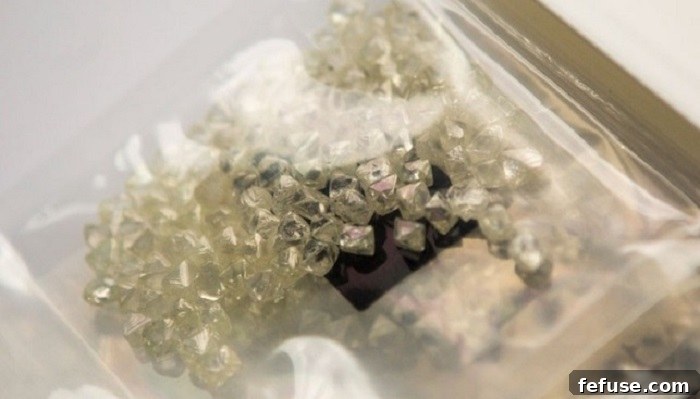
In terms of supply, diamond production witnessed a substantial increase in 2017, both in volume and value. The estimated value of global diamond production reached $17.5 billion, marking a significant 15% increase compared to 2016. In volume terms, production grew by 14%, totaling 164 million carats. Major mining companies played a crucial role in this uplift, with De Beers accounting for the largest increase in production volumes (+6.1 million carats), followed by Rio Tinto (+3.7 million carats) and Alrosa (+2.3 million carats). Russia, home to Alrosa, impressively maintained its position as the largest diamond-producing country, both in terms of carat volume and total value.
Outlook for 2018 and Beyond
Looking ahead, De Beers anticipated a slight decline in total diamond production from 2017 levels in 2018. However, this projected modest reduction in supply was expected to be offset by continued favorable demand in most countries. This optimism was underpinned by strong macroeconomic indicators globally and sustained marketing investments from various players within the diamond industry. The report emphasized that continued promotional efforts and consumer engagement would be critical in maintaining the positive momentum and fostering sustained growth for diamond jewelry sales worldwide.
The Dominance of Millennials and Gen Z in Diamond Consumption
The core focus of the De Beers Diamond Insight Report undeniably centered on the transformative power of Millennials and Gen Z. These two generations are not just a segment of the market; they are rapidly becoming its driving force, reshaping how diamonds are perceived, purchased, and celebrated.
Millennials: The Current Powerhouse
Representing approximately 29% of the world’s population, Millennials have firmly established themselves as the largest group of diamond consumers. Their influence is profound, accounting for nearly 60% of diamond jewelry demand in the US and an even more staggering nearly 80% in China in 2017. This demographic’s significant purchasing power is shaped by their distinct life stages, including engagements, weddings, and key life milestones, where diamonds often play a central role. However, their consumer journey is characterized by a unique set of expectations and values.
Gen Z: The Future Architects of Demand
Gen Z, comprising an even larger 35% of the global population, are rapidly coming of age and are poised to become the next dominant force in diamond consumption over the coming decades. While still nascent in their purchasing power in 2017, the oldest Gen Z consumers (aged 18 to 20) already contributed to 5% of all diamond jewelry pieces purchased in the US. Their entry into the market signals a new wave of preferences and requires forward-thinking adaptations from the industry.
Understanding Generational Nuances and Shared Values
De Beers meticulously analyzed the psychological and behavioral traits distinguishing these generations, as well as their common ground:
- Millennials’ Approach: Generally characterized by a heightened sense of mistrust towards traditional institutions and marketing, Millennials require brands to actively earn their trust through transparency, authentic storytelling, and a clear demonstration of values before committing to a purchase. They are discerning buyers who conduct extensive research.
- Gen Z’s Outlook: In contrast, Gen Z tends to be more individualistic and optimistic. They are driven by a desire for products and experiences that help build and express their unique personal brands. For them, a diamond is not just a symbol but an extension of their identity and values.
- Shared Core Values: Despite their differences, both generations share critical commonalities. They deeply value love and relationships, are digital natives who seamlessly integrate online and offline experiences, demonstrate strong concern for social issues, and above all, desire authenticity and self-expression in their purchases. These shared values form the bedrock upon which successful diamond marketing strategies must be built.
Strategic Opportunities for the Diamond Industry
Recognizing the profound influence of Millennials and Gen Z, the De Beers report outlined three key areas of opportunity for the diamond industry to adapt and thrive. These opportunities require innovative thinking, technological integration, and a deep understanding of modern consumer psychology.
1. Evolving the Bridal Market: Beyond Tradition
The bridal market, historically the cornerstone of diamond sales, must evolve to reflect the broader, more inclusive interpretations of love and commitment embraced by young consumers. This means moving beyond solely traditional designs and complementing them with more niche and customizable offerings. Brands must recognize that relationships today are diverse – encompassing same-sex partnerships, non-traditional engagements, and self-purchases to celebrate personal milestones. Customization can take many forms: unique settings, personalized engravings, bespoke designs that tell a couple’s specific story, or even offering ethically sourced or lab-grown diamond options that align with personal values. The emphasis should be on creating a deeply personal and meaningful experience that resonates with each individual’s unique journey.
2. Mastering the Omni-Channel Experience: Seamless Digital Engagement
As digital natives, Millennials and Gen Z expect a seamless and integrated experience across all touchpoints, both online and offline. This necessitates the development of a robust omni-channel strategy that goes beyond simply having a presence on social media platforms like Facebook, Instagram, and Snapchat. Brands must create content that is organic, authentic, humorous, and truly out-of-the-box, fostering genuine engagement rather than overt sales pitches. This involves leveraging influencer marketing, creating interactive digital experiences (e.g., virtual try-on apps), utilizing engaging video content, and ensuring that the transition from online discovery to in-store purchase is smooth and consistent. An effective omni-channel approach ensures that the brand narrative and customer experience are cohesive, regardless of how or where the consumer interacts with the brand.
3. Championing Ethical Sourcing and Transparency: Earning Trust through Technology
Both Millennials and Gen Z display a strong and vocal concern for social causes and demand responsibly sourced products. They are acutely aware of global issues, from environmental impact to labor practices, and expect brands to uphold the highest ethical standards. For the diamond industry, this means not just making ethical claims but backing them up with verifiable proof. Technologies such as blockchain, which can provide immutable digital asset tracking from mine to market, become critically important. Blockchain offers an unprecedented level of transparency, allowing consumers to trace the origin and journey of their diamond, thereby reassuring them of its ethical provenance. Beyond blockchain, adherence to certifications like the Kimberley Process and the Responsible Jewellery Council, along with clear communication about sustainable practices and community investment, are essential to building and maintaining the trust of these conscientious consumers.
Conclusion: Adapting for Enduring Brilliance
The De Beers Diamond Insight Report serves as a clarion call for the entire diamond industry. The insights gleaned from the 2018 report underscore a fundamental truth: the future of diamonds hinges on the industry’s ability to understand, connect with, and cater to the distinct values of Millennials and Gen Z. While the global market demonstrated impressive resilience and growth in 2017, the path forward demands continuous innovation in product offerings, marketing strategies, and ethical practices. By embracing customization, perfecting the omni-channel experience, and championing transparency through technological advancements, the diamond industry can not only meet but exceed the expectations of these powerful generations, ensuring its enduring brilliance for decades to come.
News Source: en.israelidiamond.co.il