
India’s Gem & Jewellery Sector: Charting a Course for Resilient Financing and Sustainable Growth
The Gem & Jewellery Export Promotion Council (GJEPC) convened a pivotal Banking Summit in Mumbai on May 11, 2018, addressing the critical theme of “Diamond & Jewellery Financing 2018: Mitigating Risks Effectively.” This timely gathering brought together key stakeholders from the financial sector, government, and the gems and jewellery industry to foster dialogue and devise robust strategies for safeguarding the sector’s financial integrity and future growth. The summit commenced with an insightful opening address by Pramod Agrawal, Chairman of the GJEPC, setting a collaborative tone for the day’s discussions.
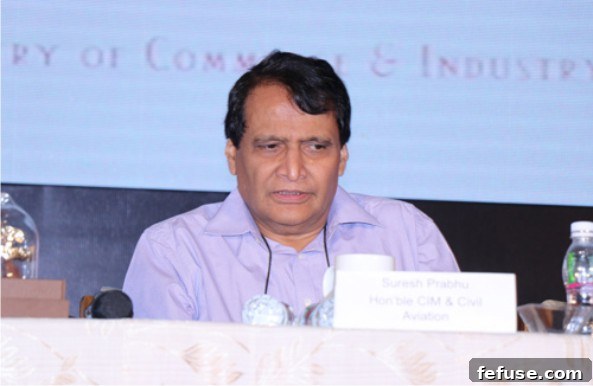
The event garnered significant governmental presence and industry leadership. Shri Suresh Prabhu, the then Hon’ble Minister for Commerce & Industry (MoC&I) and Civil Aviation, Government of India (GoI), graced the occasion as the Chief Guest, underscoring the government’s vested interest in the sector’s stability. He was joined by other distinguished dignitaries, including Smt. Rita Teaotia, Commerce Secretary, MoC&I, GoI; Shri Manoj Dwivedi, Jt. Secretary, MoC&I, GoI; and Paul Rowley, Executive Vice President of De Beers. Representatives from major banks actively involved in financing the gems and jewellery business, alongside prominent industry leaders, completed the influential assembly, all united in their commitment to addressing the sector’s financial landscape.
The Indian Gems & Jewellery Industry: A Pillar of Economic Strength and Potential
In his inaugural address, GJEPC Chairman Pramod Agrawal meticulously placed the Indian gems and jewellery industry’s achievements into a broader economic context. He highlighted its formidable contribution, stating, “Our sector contributes a substantial 14% towards India’s total merchandise exports, approximately 7% to India’s total GDP, and is a vital employer, providing livelihoods to over five million people across the nation.” These figures unequivocally position the gems and jewellery sector not merely as a luxury trade but as a cornerstone of India’s manufacturing prowess, export economy, and employment generation engine.
Agrawal further elaborated on the long-standing, symbiotic relationship between the banking sector and the gems and jewellery industry, acknowledging the pivotal role financial institutions have historically played in its development. However, he drew attention to a significant disparity: “Despite the industry’s considerable economic impact and consistent value addition, it is estimated that finance extended to the gems and jewellery sector constitutes a mere 1% of the total finance provided by banks to all sectors, amounting to approximately Rs. 70,000 crore annually.” This limited financial exposure, he noted, stood in stark contrast to the industry’s impressive annual value addition of around Rs. 40,000 crore to the national economy, signaling a clear opportunity for deeper engagement and mutual growth.
Navigating Turbulent Waters: Addressing Financing Challenges and Restoring Trust
The 2018 Banking Summit was particularly timely and critical, convened in the wake of certain issues that had earlier in the year posed significant challenges to the entire gems and jewellery trade. These incidents, while isolated to a few individuals, had unfortunately cast a shadow of doubt over the broader industry, creating an urgent need for collective introspection and corrective action. Agrawal candidly addressed this predicament, acknowledging the discomfort it brought but emphasizing the need for transparency and accountability.
“The industry finds itself in this situation due to certain alleged wrongdoings by a few individuals within the trade, who, regrettably, are our members—a fact we cannot shy away from,” Agrawal stated. He passionately argued against collective guilt, stressing, “For the wrongdoings of a person that fall outside the ethical and operational dimensions of this industry, the entire sector cannot and should not be blamed.” This assertion was crucial in differentiating the actions of rogue elements from the integrity of the vast majority of legitimate businesses that adhere to ethical practices.
Extending this principle, Agrawal further stressed, “Similarly, the entire banking community cannot be held accountable for the misdeeds of a few individuals at a specific bank branch. Moreover, neither the Government nor the RBI can be faulted, as the transactions in question demonstrably deviated from established RBI guidelines.” This balanced perspective aimed to foster a constructive environment, moving beyond blanket accusations towards targeted solutions.
To further clarify the operational nuances of the sector and dispel misconceptions, the Chairman explicitly stated that “the diamond sector, a significant component of our industry, does not utilize facilities like Letters of Credit (LC) and Letters of Undertaking (LoU) in its routine business operations.” This clarification was vital, as these instruments had been central to the recent financial controversies, and their non-usage by the diamond sector highlighted a need for differentiated understanding by financial institutions.
Emphasizing a proactive and forward-looking approach, Agrawal remarked, “Every challenging incident, however unfortunate, offers invaluable lessons. Based on these insights, it becomes imperative to undertake corrective actions and implement robust precautions. Our aim is to prevent similar occurrences in the future and ensure that misguided individuals do not jeopardize the reputation and stability of both the industry and the banking sector.” This sentiment underscored the summit’s core objective: to transform challenges into opportunities for strengthening the ecosystem.
GJEPC’s Proactive Stance: Forging a Path Towards Transparency and Self-Regulation
In response to these challenges and in line with its unwavering belief in robust self-regulation, the GJEPC had already initiated several pioneering measures. Agrawal highlighted one such transformative project: “MyKYCBank.” This innovative platform is designed to standardize and centralize Know Your Customer (KYC) information for all participants in the gems and jewellery trade, significantly enhancing transparency and reducing information asymmetry. It serves as a crucial tool for financial institutions to conduct due diligence more effectively, ensuring that only genuine and compliant businesses operate within the industry.
Furthermore, Agrawal announced a significant policy initiative: “The GJEPC is committed to presenting a comprehensive White Paper on mitigating risks specifically for diamond and jewellery financing.” This meticulously researched document, he suggested, would offer a robust framework of best practices and recommendations that could be adopted by banks after thorough deliberation. The White Paper aimed to bridge the knowledge gap between the industry’s unique operational complexities and the banking sector’s risk assessment protocols, paving the way for more informed and secure lending practices.
Concluding his address, Agrawal offered a firm assurance to the assembled bankers regarding the GJEPC’s strenuous and ongoing efforts to promote unparalleled transparency across the sector. He affirmed, “As an industry, we unequivocally promise to address all pertinent issues to the complete satisfaction of our banking partners. Indeed, the Indian gems and jewellery sector stands alone in having proactively established arbitration mechanisms with banks to facilitate recoveries in cases of Non-Performing Assets (NPAs), demonstrating our deep commitment to financial discipline and shared responsibility.” This unique collaborative approach underscored the industry’s resolve to maintain a healthy and accountable financial ecosystem.
Earlier, the Chairman had also detailed the GJEPC’s broader, long-term initiatives aimed at fostering sustainable growth, employment generation, and product excellence within the gems and jewellery industry. These efforts included the establishment of state-of-the-art Jewellery Parks, the proliferation of Common Facility Centres (CFCs) to support small and medium enterprises, and the expansion of training institutions nationwide under the esteemed umbrella of the Indian Institute of Gems & Jewellery (IIGJ). These infrastructural and educational investments are crucial for nurturing talent, enhancing manufacturing capabilities, and ensuring the industry’s competitive edge on the global stage.
Moreover, the Council was diligently working to expand India’s market share in the global gems and jewellery marketplace. This ambition was complemented by efforts to collectively increase the overall global “pie” for gems and jewellery by actively contributing to generic promotional campaigns undertaken by the Diamond Producers Association (DPA). The DPA, a collaborative body formed by seven of the world’s largest and most influential mining companies, plays a vital role in promoting the intrinsic value and desirability of natural diamonds, thereby benefiting the entire supply chain, including Indian manufacturers and exporters.
Government Endorsement and Strategic Vision for Growth
Addressing the august gathering, Hon’ble Shri Suresh Prabhu dwelled extensively on the immense growth potential inherent in the gems and jewellery industry. He lauded it as an “exceptionally important sector for the country, generating vast employment opportunities and contributing significantly to the national economy.” His words reinforced the government’s recognition of the industry’s strategic importance beyond its commercial value.
While assuring the government’s unwavering support for the industry’s continued growth, the Minister unequivocally stressed a crucial caveat: “Anything illegal or fraudulent will unequivocally not be financed by banks. However, any business that is demonstrably bankable, scalable, and conducted with utmost transparency will receive the necessary financial backing.” This statement served as a clear directive, aligning financial support with ethical business practices and robust governance.
Shri Prabhu articulated the specific purpose of the summit: “This conclave has been meticulously organized to create an open forum for a direct and candid dialogue between the industry and banks. The objective is to collaboratively identify and implement the most effective strategies for risk mitigation, ensuring that through the establishment of proper systems, banks and financial institutions can confidently finance the industry for the mutual benefit of both sectors.” This emphasis on dialogue and structured cooperation was key to rebuilding trust and fostering a healthy lending environment.
He further reiterated the critical importance of a mutual understanding between the industry and banks regarding effective risk mitigation. “It is imperative that the gems and jewellery industry and the banking sector work hand-in-hand to devise and implement robust methodologies for this,” he stressed, advocating for a collaborative approach rather than unilateral actions. This partnership, he believed, was the bedrock for sustainable financing.
“Banks should actively finance the G&J sector without undertaking undue risk, thereby enabling the industry to flourish, and in turn, allowing banks to grow symbiotically,” the Minister reiterated, succinctly capturing the essence of the desired financial relationship. He assured all attendees of the government’s steadfast commitment to significantly increasing India’s exports. “Rather than merely pursuing quantitative targets, we must implement a well-defined strategy. A successful strategy will inherently and automatically yield the desired export numbers,” he advised, advocating for a qualitative, strategic approach to boosting trade.
Perspectives from Key Stakeholders: Deepening Dialogue and Building Confidence
The summit also featured focused presentations on the practical tools and frameworks being developed. Colin Shah, Vice Chairman of the GJEPC, delivered a detailed presentation on the MyKYCBank initiative. He elaborated on how this platform would be instrumental in tracking comprehensive information about industry players, thereby ensuring that only legitimate and compliant businesses could operate effectively within the sector. This, he asserted, would go a long way in restoring confidence among financial institutions.
Following this, Sanju Kothari, Convenor of the Banking, Insurance & Taxation Sub-Committee of the GJEPC, formally presented a comprehensive White Paper on Risk Mitigation. This diligently prepared document by the Council outlined a series of recommendations and best practices aimed at creating a more secure and transparent financing environment for the industry.
Smt. Rita Teaotia, Commerce Secretary, Government of India, in her insightful address, reiterated the profound importance of the gems and jewellery industry to the Indian economy. She underscored the need for continuous vigilance and proactive measures. “I consistently urge the Chairman of the GJEPC and other office bearers I engage with to prioritize and ensure absolute financial transparency and to advance the corporatization of the industry,” she stated. However, she also directed a crucial message towards the banking sector: “Banks too must engage in introspection and adopt proactive measures to safeguard their interests, crucially without withdrawing financing from this vital sector.” This call for a balanced approach emphasized shared responsibility.
Lauding the MyKYCBank initiative as a significant step forward, Smt. Teaotia also commended the White Paper for its substantial and actionable suggestions. To operationalize these recommendations and foster ongoing collaboration, she advised, “A Standing Committee, comprising representatives from both the banking sector and the industry, should be promptly constituted.” This committee, she envisioned, would be tasked with rigorously considering the suggestions outlined in the White Paper, meticulously assessing the ongoing functionality of the MyKYCBank platform, and continuously adapting to emerging challenges. “The overarching goal of this committee,” she emphasized, “should be to robustly build confidence and, crucially, to deepen the flow of lending from banks to the sector.” The Commerce Secretary specifically referenced the critical need for banks to seriously consider increasing their financial exposure to the Micro, Small, and Medium Enterprises (MSME) segment within the gems and jewellery industry, recognizing its potential for broad-based growth and employment.
Providing a candid perspective from the banking community, Shri Dinesh Kumar Khara, Managing Director of the State Bank of India (SBI), acknowledged that while the various proactive moves undertaken by the GJEPC could indeed contribute significantly to mitigating risk, the recent past events had deeply shaken the confidence of bankers. He stated that “it would understandably take some time for confidence to be fully restored,” offering a realistic assessment of the healing process required within the financial ecosystem.
From a global market perspective, Paul Rowley, Executive Vice President of De Beers, offered an optimistic outlook. In his address, he recounted the diamond and jewellery market’s journey from a challenging period in 2015 to a more stable and robust position over the subsequent two years. He expressed strong confidence that “2018 would prove to be a good year for the industry,” signaling a positive global demand environment.
Strengthening Partnerships: The GJEPC-AWDC Collaboration
A significant highlight of the summit was the signing of a Memorandum of Understanding (MoU) between the GJEPC and the Antwerp World Diamond Centre (AWDC). This formal agreement solidified a commitment to cooperation on the MyKYCBank platform, underscoring the international significance and collaborative potential of this initiative in promoting global transparency and ethical business practices within the diamond trade.
Conclusion: A Unified Vision for a Secure and Prosperous Future
The Banking Summit 2018, orchestrated by the GJEPC, served as a crucial turning point for the Indian gems and jewellery sector. It brought together influential leaders and stakeholders who collectively committed to fostering an environment of unparalleled transparency, robust risk mitigation, and sustainable growth. The dialogues underscored a unified vision: to transform challenges into opportunities, strengthen financial partnerships, and ensure the continued prosperity of an industry vital to India’s economic fabric. Through initiatives like MyKYCBank, the White Paper, and a concerted effort towards self-regulation and government support, the industry set a clear trajectory towards regaining and reinforcing trust, paving the way for a more secure and vibrant future.