

A Symphony of Stones: Unveiling Nature’s Masterpieces
Delve into the captivating world of geology with this extraordinary collection of mineral specimens. Each piece tells a unique story, showcasing the incredible artistry and complex processes that shape our planet. From rare crystal formations to vibrant hues and intriguing natural sculptures, these geological treasures are a testament to the Earth’s boundless creativity. Explore these magnificent natural wonders, each a precious gem for connoisseurs and enthusiasts alike, offering a glimpse into the hidden beauty beneath our feet.
Blade Calcite: The Sculpted Edge of Nature
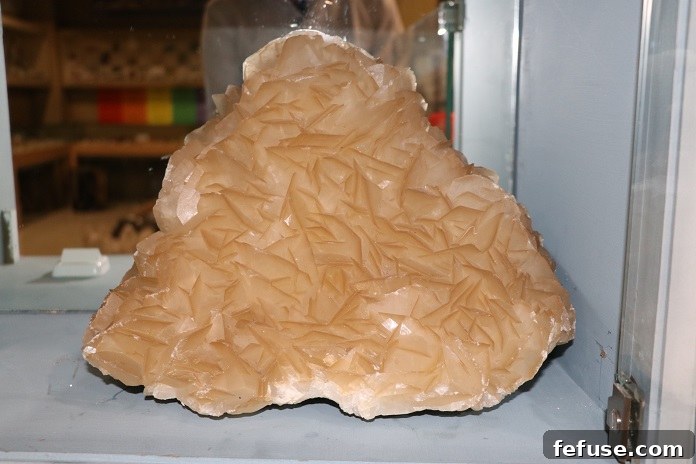
While calcite is recognized as one of Earth’s most abundant minerals, its presentation in this particular specimen elevates it to a truly remarkable status. Commonly, calcite forms in a ‘rhombohedron’ crystal habit, characterized by six rhomb-shaped faces. However, this exceptional example breaks from the norm, exhibiting a distinct ‘scalenohedron’ form. These crystals are defined by their sharp, pointed edges and a characteristic double-pyramidal shape, lending the specimen its evocative name: ‘blade’ calcite. The impressive size of this formation further accentuates its rarity and allure, making it a prized acquisition for any serious mineral collector. This unique morphology is a direct result of specific environmental conditions during the mineral’s growth, showcasing nature’s intricate control over crystal development. Its lustrous surfaces reflect light beautifully, emphasizing the dramatic angles and geometric precision that define this stunning natural sculpture.
Weight: 90,000 carats
Origin: USA
Multi-Color Jasper: Nature’s Palette in Stone
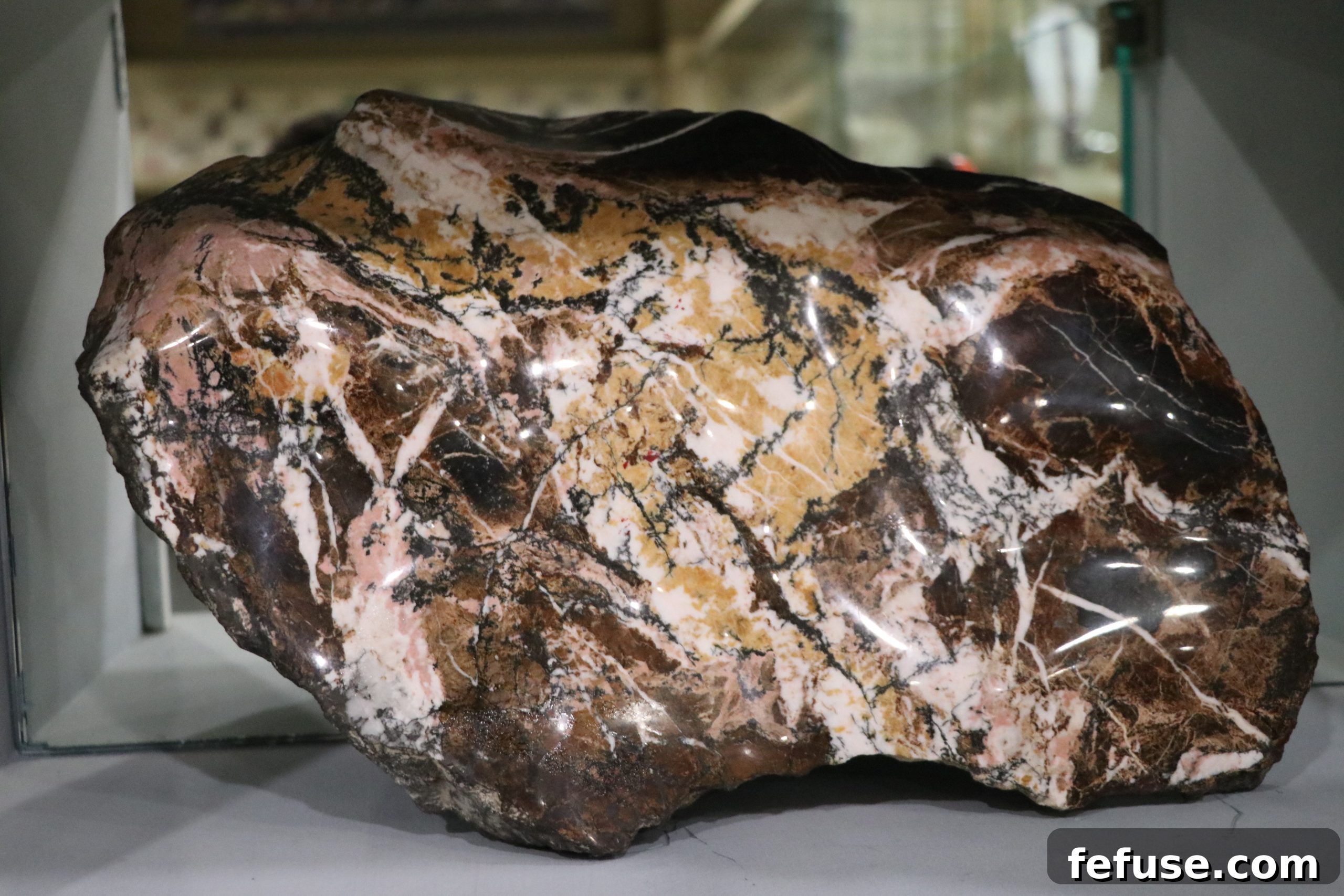
This magnificent multi-colored jasper specimen is a true testament to the unparalleled artistry of nature. It presents a breathtaking spectrum of variable hues and tones, all contained within a single, impressively sized gem. The diverse coloration is primarily attributed to subtle variations in chemical impurities, such as iron oxides, incorporated during the jasper’s formation. Each swirl, band, and contrasting shade tells a geological story, making this piece a visual feast for collectors. Adding to its unique charm is the presence of exquisite dendrites – intricate, fern-like patterns formed by manganese oxides. These fascinating inclusions create a delicate, almost painterly effect across the stone’s surface, enhancing its natural beauty and collector appeal. Jasper, a microcrystalline variety of quartz, is renowned for its opaque, earthy appearance and ability to display a myriad of patterns. This particular specimen’s complex blend of colors and detailed dendrites makes it an exceptional example of natural art, perfect for those who appreciate the subtle yet profound beauty of Earth’s geological creations. It serves as a reminder that no two natural stones are ever truly identical.
Weight: 67,100 carats
Origin: Mexico
‘Shoe-shaped’ Agate: A Whimsical Marvel of Geology
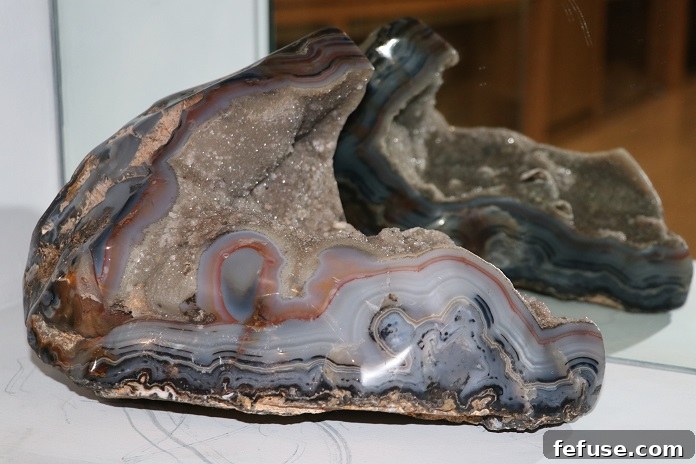
Nature, in its infinite creativity, occasionally surprises us with formations that mimic familiar objects, and this ‘shoe-shaped’ agate specimen is a captivating example of such geological serendipity. This remarkable piece, composed of subtle grey and rich brown agate, distinctly forms the shape of a shoe within its original rock matrix. It invites observers to engage their imagination, recognizing the whimsical outline of footwear carved by millennia of natural processes. Agate, a banded variety of chalcedony, typically forms in cavities of volcanic rock. In this instance, the growth patterns and mineral deposition have uniquely conformed to an intriguing silhouette. Adding to its charm, small, sparkling crystals of crystalline quartz are visible within the outer ‘banded’ agate rim, offering a delightful textural contrast and a hint of inner radiance. This specimen is not merely a mineral; it’s a conversation starter, a natural sculpture that highlights the unpredictable and often humorous artistry of the Earth. Its distinct shape makes it an especially sought-after piece for collectors who cherish unique and visually evocative geological finds.
Weight: 63,300 carats
Origin: Brazil
Rhodochrosite: A Rare Brown Bloom
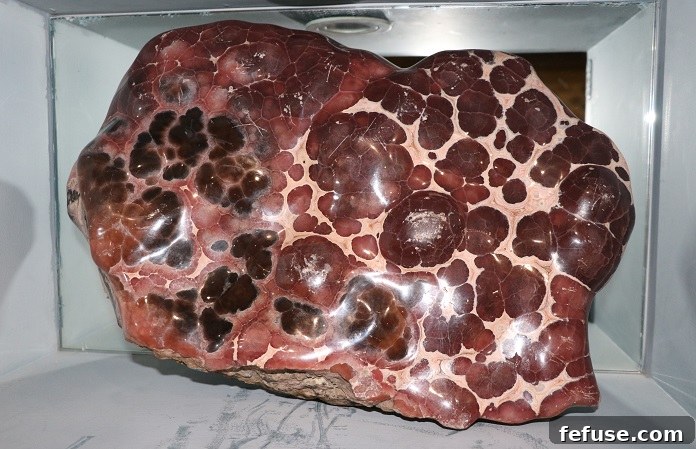
Rhodochrosite is widely celebrated for its striking pink to rose-red hues, a color beloved in both jewelry and mineral collections. However, this particular rhodochrosite specimen stands out dramatically due to its exceptionally rare brown coloration, transforming it into a highly coveted collector’s item. The unusual brown tone is a fascinating deviation from its typical vibrant pink, likely influenced by specific trace elements or unique formation conditions. Further enhancing its distinctiveness is its historical significance: this specimen was originally mined in Japan in 1960. Following its extraction, mining operations in that specific area ceased, rendering new finds of this particular brown rhodochrosite virtually impossible. This makes the specimen exceptionally rare and historically important. Its unique ‘spherulitic’ growth pattern, where crystals radiate outwards from a central point, creates a mesmerizing texture that beautifully reminds one of a delicate ‘flower bouquet’. This organic, almost sculptural appearance, combined with its unusual color and provenance, makes this rhodochrosite a truly magnificent and irreplaceable addition to any serious mineral collection, embodying both geological wonder and historical intrigue.
Weight: 140,700 carats
Origin: Japan
‘Honey’ Fluorite: Golden Cubes of Geological Delight
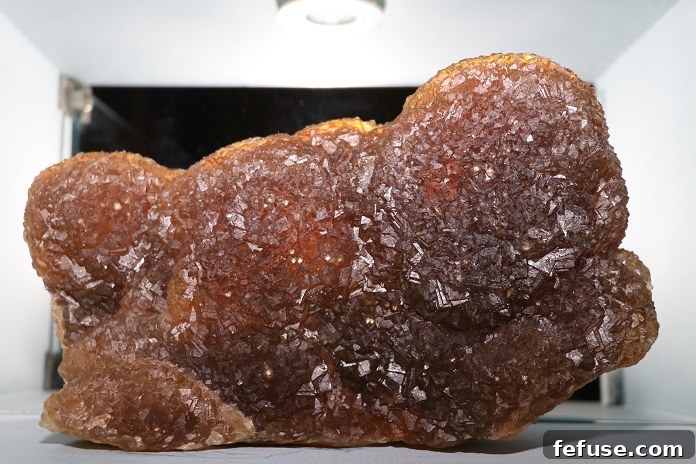
This captivating variety of fluorite is distinguished by its warm, pleasant honey color, which radiates a gentle luminescence. It is composed of numerous smaller, perfectly formed cubic crystals that are intricately intergrown, creating a mesmerizing tapestry of geometric precision. The arrangement of these cubes forms a distinctive ‘camel hump’ pattern, characterized by three elegant elevations that add a unique sculptural quality to the specimen. While each individual cube contributes to the overall beauty, their collective formation is what truly sets this piece apart. Such well-preserved, multi-faceted specimens are highly valued and often specifically reserved for discerning collectors who appreciate both the aesthetic and scientific aspects of mineralogy. It serves as a profound reminder of the astonishing diversity and complexity inherent in natural crystal growth. Fluorite, known for its wide spectrum of colors and characteristic cubic or octahedral habits, rarely presents with such a harmonious combination of specific color, crystal form, and unique macro-structure. This ‘Honey’ Fluorite beautifully illustrates how nature can craft exquisite designs and shapes from common mineral elements, making it a truly exceptional and enchanting display piece.
Weight: 90,600 carats
Origin: China
Onyx Marble: The Banded Elegance
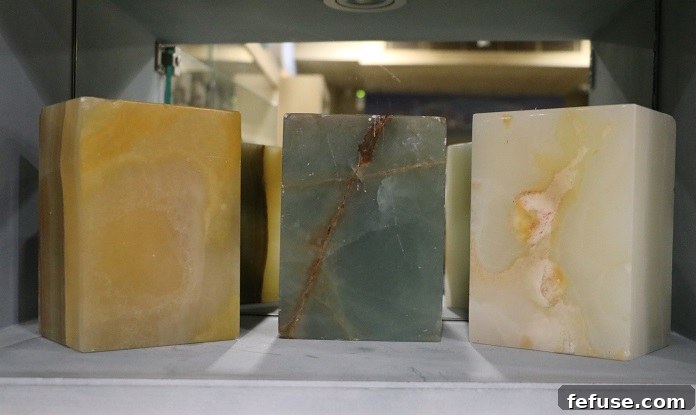
These impressive specimens are recognized as onyx marble, a distinct variety primarily composed of calcite and aragonite. The term ‘onyx’ is bestowed upon these types of marble due to their striking, parallel banding, which visually resembles the well-known chalcedony variety, true onyx. While chemically distinct from quartz-based onyx, the aesthetic similarity in their layered patterns is undeniable and captivating. Onyx marble is formed through the precipitation of carbonate minerals from cold water solutions, often in caves or springs, leading to its characteristic translucent bands that vary in color from creamy whites and yellows to greens and browns. Although onyx marble is not typically classified as a gemstone for fine jewelry due to its relative softness compared to other gem materials, it holds significant value as an important material for crafting exquisite artifacts, sculptures, and architectural elements. Its unique banding and capacity for a high polish make it a favored choice for decorative items, adding a touch of natural elegance to any setting. These pieces beautifully demonstrate nature’s ability to create both artistic patterns and functional materials from geological processes, making them appreciated by both mineralogists and artisans.
Origin: Argentina
Fluorite ‘Hill’: A Verdant Crystal Landscape
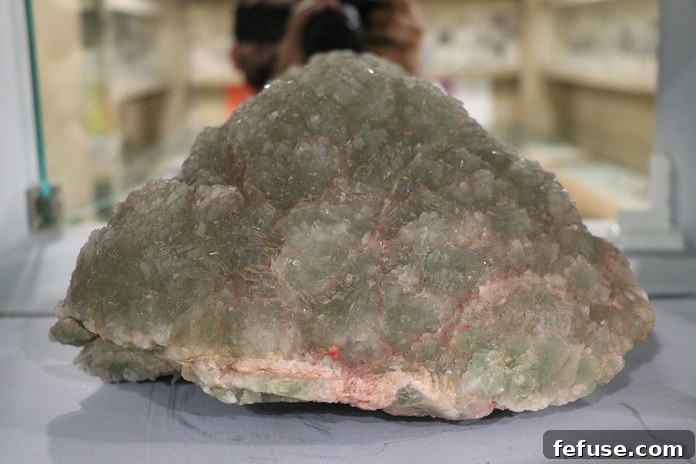
Behold this stunning formation of intergrown cubic crystals of fluorite, collectively forming what can only be described as a ‘hill’ of vibrant green. This particular specimen showcases a dense accumulation of individual fluorite cubes, meticulously stacked and interlocked by natural geological forces over millennia. The pleasant green hue adds to its serene and captivating aesthetic, inviting closer inspection of its intricate structure. Considering the substantial size of this crystalline ‘heap’ and the delicate nature of its individual, smaller crystals, such specimens are rarely cut or fashioned into smaller pieces. Instead, their true beauty and scientific value are best appreciated in their natural, macroscopic form, preserving the integrity of the entire geological landscape. As such, these unique fluorite hills are highly sought after by mineral collectors who prioritize specimens that retain their original, untouched formations. Fluorite, known for its perfect octahedral cleavage and a wide array of colors, is a calcium fluoride mineral admired for its optical properties and crystal habits. This ‘Fluorite Hill’ is a testament to the grand scale of natural crystal growth and the inherent beauty found in unblemished geological architecture.
Weight: 74,150 carats
Origin: Mali
Bi-Color Jasper: A Harmonious Blend of Hues
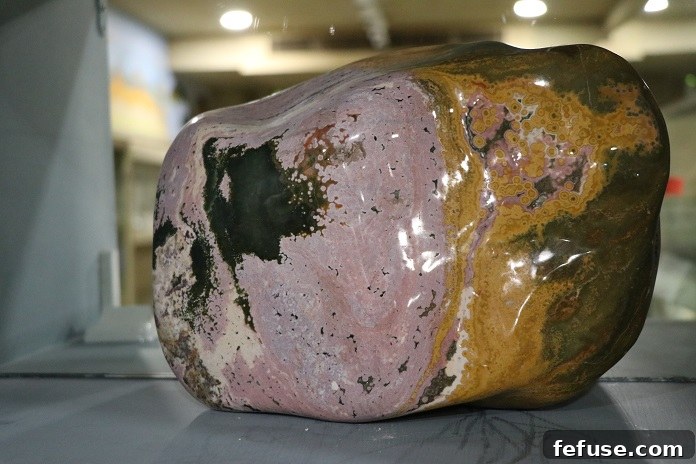
This striking bi-color jasper specimen mesmerizes with its exquisite combination of two dominant hues: a soft lavender and a rich, earthy brown. These colors merge and flow across the stone’s surface, creating a visually captivating contrast that highlights nature’s mastery of color theory. Observe closely how geological processes have minutely crafted intricate ‘spherical’ designs and swirling patterns within this specimen, adding layers of complexity and visual interest. Jasper, a form of chalcedony, is renowned for its opaque body and diverse array of patterns, which are largely influenced by the presence of various mineral inclusions and impurities during its formation. The beauty of such a piece lies not only in its raw form but also in its potential. When this material is fashioned into individual stones, each cut will reveal entirely distinct colors and patterns, ensuring that no two finished pieces will ever be identical. This inherent uniqueness makes bi-color jasper highly prized by jewelers and collectors alike, offering endless possibilities for creative expression and a guarantee of an exclusive, one-of-a-kind treasure. It truly embodies the concept of natural singularity.
Weight: 47,220 carats
Origin: Madagascar
Fluorite: The Emerald Octahedron Cluster
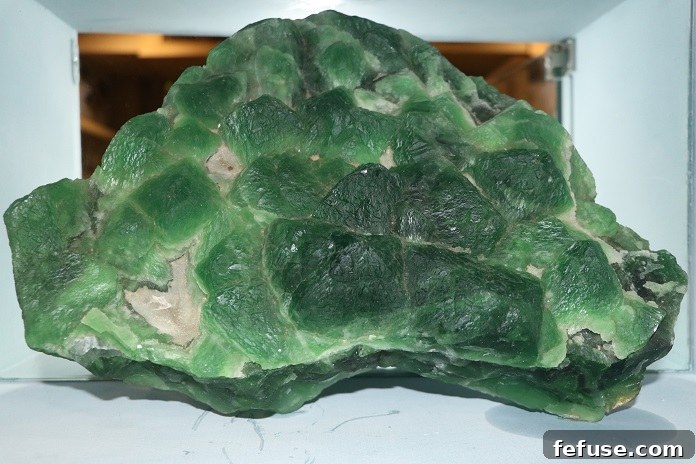
This colossal cluster of fluorite crystals is truly exceptional, not only for its impressive size but also for its distinctive ‘octahedral’ habit and vibrant ’emerald’ green color. Unlike the more common cubic fluorite formations, these crystals have grown into striking, double-pyramidal shapes, each resembling a perfectly formed octahedron. Numerous individual pyramids dramatically emerge from the matrix, showcasing complex surface features and natural etchings that reflect light with stunning brilliance. The rich emerald green hue is particularly captivating, adding a touch of regal elegance to this geological marvel. This combination of a massive cluster, precise octahedral forms, and vivid coloration makes the specimen an absolutely wonderful and indispensable item for any serious mineral collector. Furthermore, keen observers will appreciate the subtle variations in color from one crystal to another, hinting at slight differences in mineral composition or growth conditions across the cluster. Fluorite, a calcium fluoride mineral, is renowned for its wide array of colors and crystal habits, but this particular piece stands out as a prime example of its aesthetic potential, representing a pinnacle of natural crystallographic beauty.
Weight: 96,500 carats
Origin: China
Malachite ‘Ash-Tray’: Artisanal Beauty from the Congo
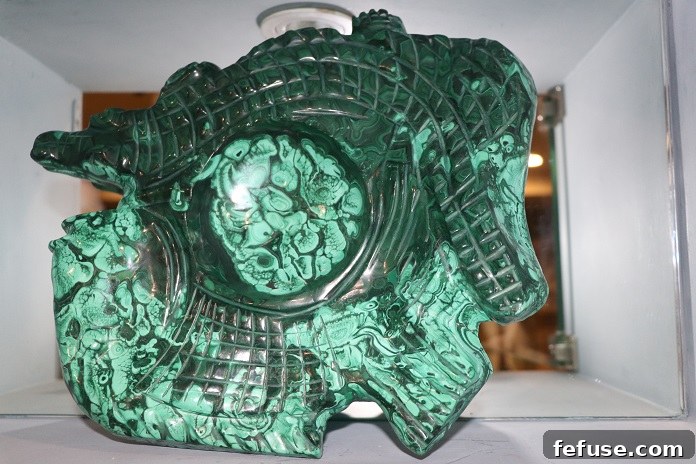
This uniquely crafted malachite plate, shaped as an ‘ash-tray’, is a remarkable example of artistic ingenuity born from necessity. Its creation is a direct result of a past ban on the export of rough malachite stones from the Democratic Republic of Congo (then Zaire), the primary source of this vibrant mineral. Faced with restricted raw material exports, local craftsmen ingeniously adapted, transforming their skills to create exquisite decorative art pieces from the malachite available locally. These beautiful objects were then exported globally, showcasing the artisans’ exceptional talent and resilience. This specific ash-tray displays the characteristic, exquisite banding of malachite, with concentric patterns of light and dark greens swirling across its polished surface, a hallmark of this copper carbonate mineral. Beyond its natural beauty, the piece is further enhanced by delicate carvings: a meticulously rendered crocodile gracefully adorns the top, while a fish with an open mouth is intricately detailed at the bottom. These thoughtful embellishments not only add to its aesthetic appeal but also reflect the rich cultural and natural heritage of the region, making it a truly unique fusion of geological wonder and human craftsmanship.
Weight: 45,100 carats
Origin: Democratic Republic of Congo (Zaire)
Agate: The Symphony of Concentric Bands
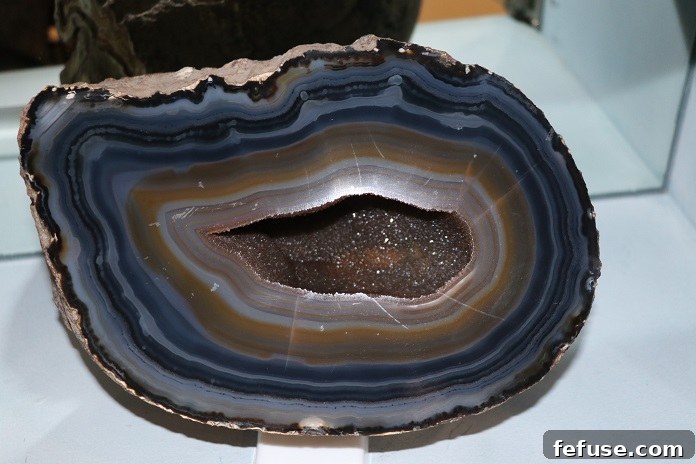
This agate specimen is a magnificent display of geological precision, showcasing sharp, multi-colored concentric linings, or bands, elegantly arranged around a central cavity. It powerfully illustrates the profound symmetry and meticulous order at which nature operates, a true marvel of mineral formation. Agate, a variety of chalcedony, forms when silica-rich waters seep into volcanic rock cavities, depositing layers of microcrystalline quartz over time. The varying mineral content and environmental conditions during these successive depositions create the distinct and vibrant banding patterns observed. Adding to the specimen’s allure, fine, transparent crystals of crystalline quartz are visible within the central cavity, contrasting beautifully with the opaque, banded agate. These druzy quartz crystals often sparkle, adding another dimension of visual interest. One cannot help but be captivated by such a perfect creation, a testament to nature’s ability to craft intricate designs with unparalleled precision and beauty. This agate serves as a stunning reminder of the Earth’s enduring capacity to produce masterpieces that delight the eye and ignite the imagination of anyone who beholds them, celebrating the delicate balance of geological forces.
Weight: 54,000 carats
Origin: Brazil
‘Native’ Copper: The Earth’s Pure Metal
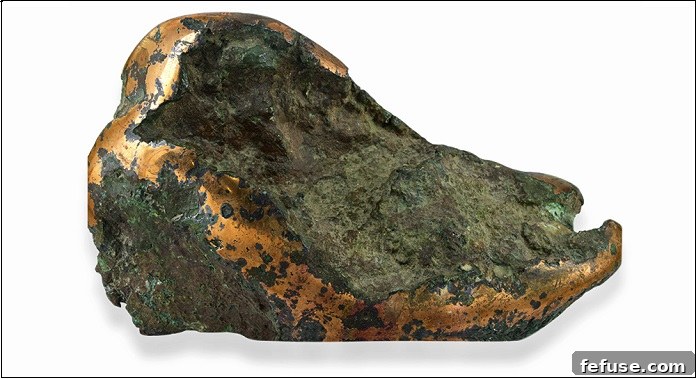
Copper holds a unique distinction as one of the very few metallic elements that occur naturally in a ‘native’ form, meaning it is found as a pure metal rather than as a compound or ore. While it is commonly extracted from various minerals where it is chemically bound with other elements, finding it in its elemental state, as depicted here, is a geological treasure. Native copper typically manifests as irregular masses, dendritic growths, or intricate veins, rather than in well-defined crystal structures. This particular specimen beautifully illustrates its characteristic form, showcasing a substantial irregular mass associated with its original rock matrix. Despite some areas where it remains connected to its host rock, the majority of the specimen proudly displays its iconic, warm metallic ‘copper’ color, known for its distinct reddish-brown luster. This metallic sheen is instantly recognizable and has been prized by humanity for millennia. Historically, native copper was one of the first metals used by early civilizations due to its malleability and ease of working, playing a pivotal role in the development of tools, weapons, and art. This specimen offers a direct link to Earth’s primordial metallic wealth, making it a compelling piece for both geological study and historical appreciation.
Weight: 39,900 carats
Origin: USA
Sugilite: The Tortoise of Translucent Beauty
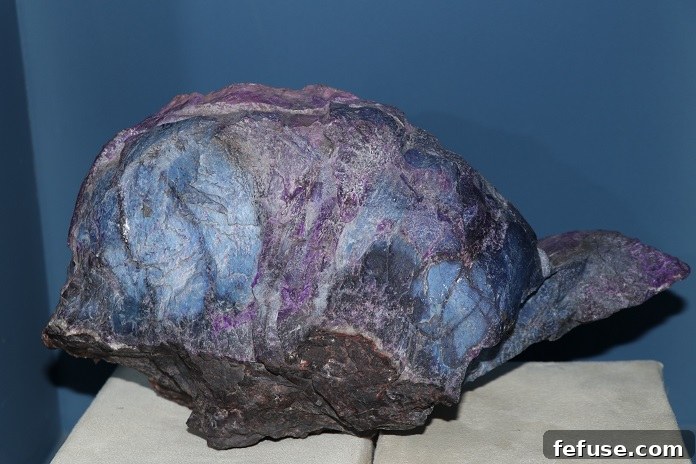
Sugilite, a relatively rare and lesser-known gemstone, is celebrated for its stunning range of purple hues, from pale lavender to deep magenta. However, when specimens like this one emerge, naturally taking on the distinct shape of a tortoise, they transform into an extraordinary treat for discerning collectors. With just a touch of imagination, one can clearly discern the tortoise’s protective shell, meticulously formed by nature, with its head gracefully projecting outwards, as if peering into the world. This organic sculpting is a testament to the unpredictable and artistic forces of geological processes. Sugilite often forms in association with other minerals, and in this specimen, traces of pectolite are visibly present, adding a contrasting blue color that further enhances the stone’s visual appeal and geological complexity. The unique combination of a rare mineral, a fascinating natural form, and the subtle interplay of associated minerals makes this sugilite specimen a truly captivating and highly valuable addition to any high-end mineral collection. Its rarity, coupled with its charming zoological likeness, ensures its status as a remarkable natural wonder.
Weight: 26,975 carats
Origin: South Africa
Pyrite: Nature’s Golden Cascade
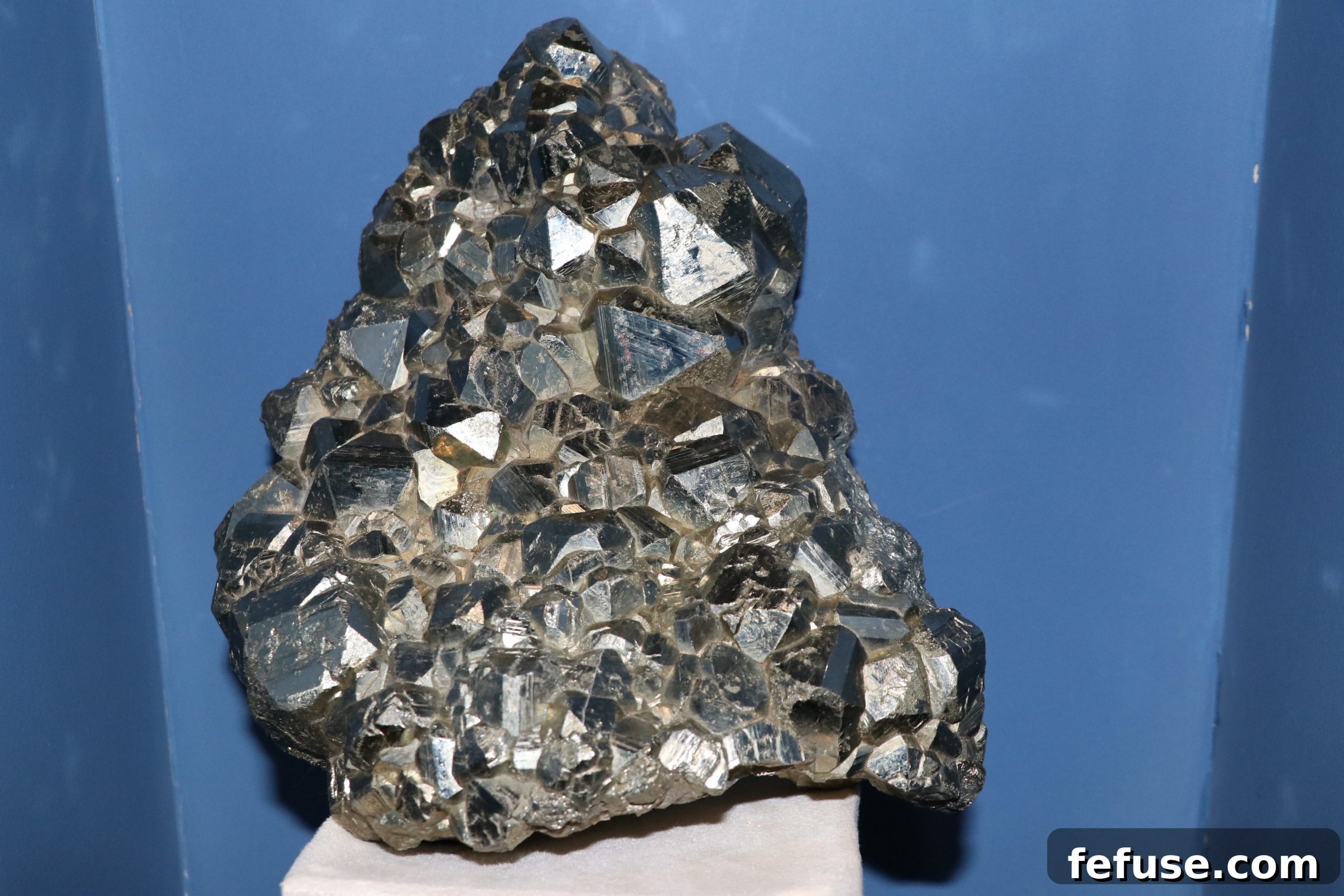
This impressive heap of metallic pyrite crystals showcases a truly organic and intricate formation, interwoven together by nature’s own design, untouched by human interference. Each crystal, gleaming with a distinctive metallic yellow luster, contributes to a dense, sparkling cluster that catches the light beautifully. Pyrite, a common iron sulfide mineral, is often found in cubic, octahedral, or pyritohedral forms, and here, these forms interlock to create a visually striking mass. Due to its bright metallic yellow color and superficial resemblance to precious gold, pyrite has historically been referred to as ‘fool’s gold’. This nickname often led to mistaken identities during gold rushes, yet pyrite itself possesses a unique allure and scientific importance. It forms in a variety of geological environments, from hydrothermal veins to sedimentary rocks, and is a significant ore for sulfur and sometimes iron. This specimen perfectly illustrates the beauty of mineral aggregation, demonstrating how individual crystals can combine to create a grander, more complex structure. Its dazzling appearance and historical association with gold make it a fascinating and aesthetically pleasing addition to any mineral collection, proving that even “fool’s gold” can be a genuine treasure.
Weight: 48,500 carats
Origin: Spain
Opal with ‘Fossilized’ Shell: Ancient History Preserved in Stone
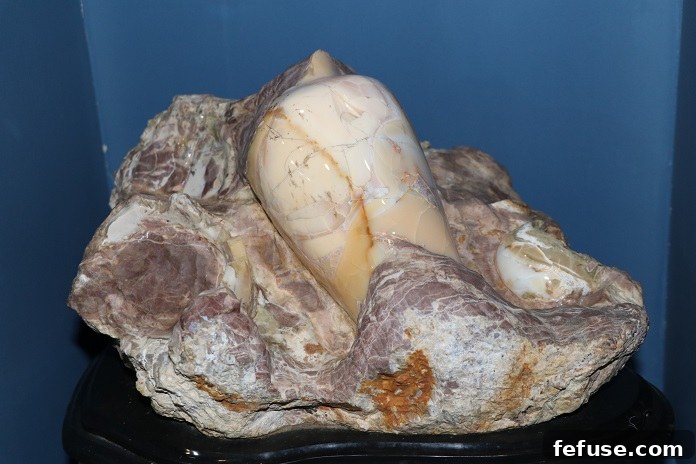
This extraordinary specimen presents a rare and captivating combination: multiple large pieces of fossilized shells intricately embedded within their original matrix, alongside shimmering opal. Such an unusual and well-preserved amalgamation is exceptionally rare and profoundly significant. It offers a tangible connection to prehistoric life, telling a compelling story not only about the specific history of the shells’ fossilization but also about the ancient environmental conditions and geological evolution of the region where it was discovered. The process of opalization, where silica-rich solutions replace organic material over millions of years, perfectly preserves the delicate structures of the shells while imbuing them with the unique play-of-color or translucence characteristic of opal. This specimen serves as a powerful testament to nature’s remarkable ability to preserve extinct species, providing invaluable insights that greatly assist in our understanding of Earth’s biological and geological evolution. For paleontologists and mineral collectors alike, this piece is a bridge between two scientific disciplines, offering both aesthetic beauty and profound educational value, a true window into the deep past of our planet.
Weight: 72,500 carats
Origin: India
Chalcedony ‘Helmet’: A Sparkling Natural Sculpture
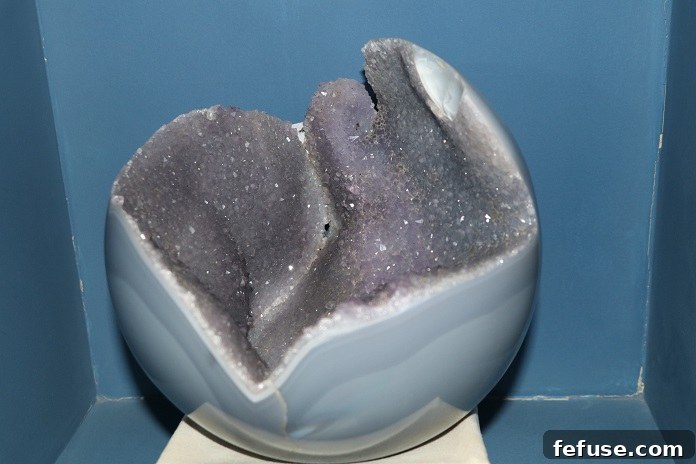
This unique chalcedony specimen is a remarkable example of nature’s sculptural prowess, naturally forming a shape that distinctly resembles a helmet. The exterior surface of this geological marvel has been expertly polished, revealing the smooth, often translucent qualities of chalcedony, a microcrystalline variety of quartz. However, the true surprise and enchantment lie within. When one gazes inside the helmet’s hollow interior, a dazzling spectacle awaits: numerous shining pieces of amethyst crystals are intricately attached to the inner surface, sparkling brilliantly like a miniature constellation of stars. These small, vibrant amethyst druzy crystals, known for their captivating purple hues, create an incredible contrast with the smooth outer chalcedony and give the impression of a galaxy contained within a stone. This stunning combination of a functional-looking form with an unexpected, radiant interior makes this piece an extraordinary collector’s item. It perfectly encapsulates the hidden wonders that lie beneath the Earth’s surface, marrying the subtle elegance of polished chalcedony with the vibrant sparkle of amethyst, making it a truly captivating display of geological artistry and mystery.
Weight: 37,650 carats
Origin: Brazil
Agate ‘Bowl’: Nature’s Functional Art
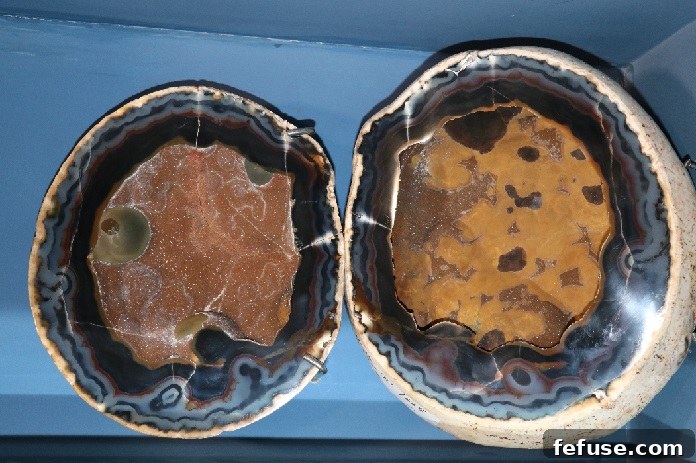
This extraordinary agate specimen is presented as a functional and decorative ‘bowl’ complete with its perfectly fitted lid. Originating from a single piece of rough agate that contained a natural central cavity, this masterpiece of natural art and human craftsmanship has been meticulously cut open to yield these two complementary parts. One half forms the gracefully shaped bowl, while the other serves as its impeccably matched lid, creating a harmonious and unified piece. Agate, a cryptocrystalline variety of silica, is renowned for its diverse patterns and vibrant banding, which are beautifully showcased on both the bowl and its lid. The central cavity, a natural void within the original stone, is further enhanced by being filled with countless smaller, sparkling crystals of crystalline quartz. These tiny crystals catch and refract light, creating a dazzling effect. Adding to its unique character, the crystal-lined cavity is elegantly accented with a lining of iron oxide, which imparts subtle earthy tones and a rich visual texture. This agate bowl is a testament to the seamless fusion of nature’s inherent beauty and human ingenuity, transforming a geological formation into a functional work of art that is both practical and breathtakingly beautiful.
Weight: 51,275 carats
Origin: Brazil
Brown Jasper: The Caramel Candy Stone
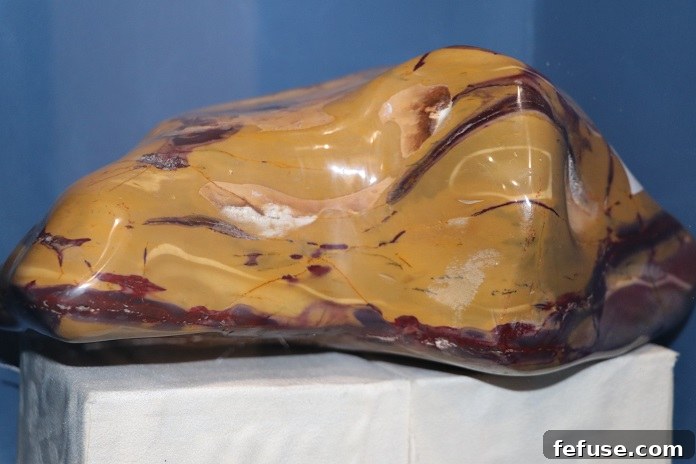
This captivating jasper specimen delights with its rich tapestry of two distinct shades of brown, creating a warm and inviting appearance that beautifully reminisces a delectable caramel candy. The nuanced coloration is a direct result of the presence of iron oxide, which exists in two different mineralogical forms within the stone: hematite, which imparts the darker, richer brown hues, and goethite, responsible for the lighter, softer brown tones. This natural interplay of minerals creates a visually dynamic and appealing pattern across the jasper’s surface. Jasper, a microcrystalline variety of quartz, is known for its opaque nature and the incredible diversity of patterns and colors it can exhibit, making each piece unique. When this fascinating material is fashioned into individual stones, each cut will unveil a completely different array of colors and intricate patterns. This ensures that no two finished stones will ever be entirely similar, offering an exclusive and personalized aesthetic. Such inherent individuality makes this brown jasper highly sought after by collectors and artisans alike, who appreciate the profound beauty and unique character that nature imbues into every piece. It stands as a testament to the subtle yet impactful variations found within Earth’s geological treasures.
Weight: 53,800 carats
Origin: Madagascar
For more information on these and other exquisite geological specimens, please visit www.mgjjaipur.com. Discover the endless beauty and scientific wonder that the Earth has to offer.