
High-Value Fancy Yellow Diamonds Withdrawn from Auction: Unraveling Market Dynamics
The elite world of high-value jewelry auctions has recently witnessed a fascinating and somewhat perplexing trend: the last-minute withdrawal of several exceptionally rare and magnificent fancy yellow diamonds from highly anticipated sales. This intriguing phenomenon, highlighted by the abrupt removal of a 45.07-carat fancy vivid yellow diamond from Phillips’ New York Jewels Auction and the legendary 101.29-carat Allnatt yellow diamond from Sotheby’s Geneva, prompts significant discussion. What compels sellers of such breathtaking treasures to pull them from the spotlight, especially when faced with multi-million dollar estimates?
The Phillips Auction: A 45.07-Carat Marvel Withdrawn
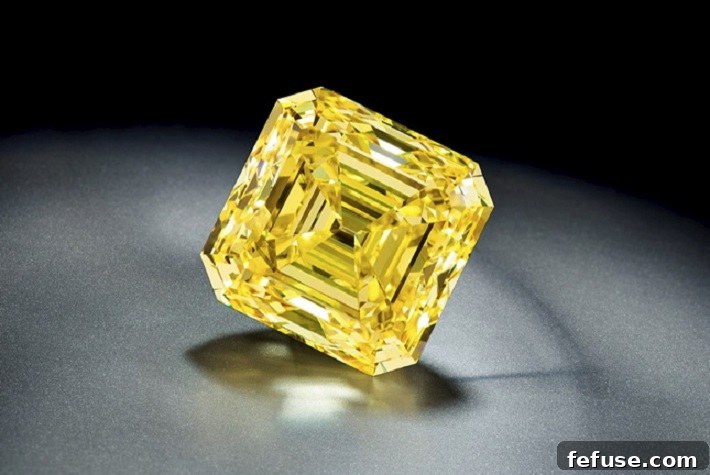
The most recent incident that captivated the diamond industry involved a truly spectacular 45.07-carat fancy vivid yellow diamond. This extraordinary gem was meticulously positioned as the undisputed highlight of the Phillips New York Jewels Auction, scheduled for Wednesday, June 12th. Its remarkable intensity of color, coupled with its impressive size, made it a standout piece, attracting considerable attention from global collectors and astute investors. Market analysts had projected a robust selling price, with pre-sale estimates ranging from $2.8 million to $3.5 million.
The diamond’s specifications alone painted a picture of rarity and exceptional quality: a square emerald-cut, boasting a VS1 clarity grade. This clarity classification denotes very slight inclusions that are exceedingly difficult to discern even under 10x magnification, further enhancing its desirability. Despite the extensive marketing efforts and the gem’s inherent allure, it was unexpectedly withdrawn from the sale just moments before it was due to appear on the auction block. Phillips offered no immediate public explanation for this decision, simply listing the item as “unsold” in its subsequent online results – a surprisingly understated outcome for a jewel of such magnitude and expected value.
The Allnatt Diamond Precedent: Sotheby’s and a 101.29-Carat Masterpiece
This incident at Phillips was not an isolated occurrence but rather echoed a similar, equally high-profile event that transpired merely a month prior. The illustrious 101.29-carat Allnatt yellow diamond, a gem celebrated for both its prodigious size and historical significance, was conspicuously absent from Sotheby’s Magnificent Jewels and Noble Jewels sale in Geneva. This cushion-cut marvel, recognized for its exceptional brilliance and vivid color saturation, carried an even more ambitious estimate of $6.2 million to $7.2 million, making its withdrawal a particularly significant moment for the market.
The Allnatt diamond holds a revered place in the annals of famous gemstones. Named after its notable former owner, Major Alfred Ernest Allnatt, it was famously incorporated into a stunning Cartier floral brooch. Its extraordinary intensity of yellow, combined with its impressive carat weight, firmly establishes it as a world-class treasure. Initially, Sotheby’s, much like Phillips, refrained from explicitly mentioning the diamond’s absence in their post-auction report. However, they later confirmed that the decision to withdraw the magnificent gem was made by the seller. The precise motivations behind this seller’s choice have remained undisclosed, leaving industry observers and enthusiasts to ponder the underlying factors.
Deciphering the Mystery: Why High-Value Diamonds Are Withdrawn from Auction
The repeated withdrawal of such prominent and high-value yellow diamonds from major international auctions compels a deeper investigation into the complex mechanics governing the luxury gemstone market. While auction houses are typically discreet about the specifics, several common reasons often underpin these strategic, last-minute decisions by sellers:
1. The Reserve Price Conundrum
The most common and fundamental reason for a diamond’s withdrawal is the failure of bids to meet the seller’s confidential reserve price. Every item consigned for auction has a pre-determined minimum selling price, agreed upon between the seller and the auction house. If the auctioneer anticipates that bidding will not reach this threshold, or if bids on the floor simply do not ascend to the required level, withdrawing the item becomes a pragmatic move. This prevents the diamond from being “bought-in” or “passed,” a term used when an item fails to sell. A public failure to sell can negatively impact a gem’s perceived value and desirability in future sales, making a strategic withdrawal a superior alternative.
2. Strategic Reassessment and Market Timing
Sellers of such rare and valuable assets are frequently sophisticated investors, collectors, or institutions who meticulously monitor market conditions and global economic indicators. A withdrawal can signify a calculated strategic reassessment of various factors, including the timing of the sale, the efficacy of the marketing approach, or even the preferred sales channel. A seller might conclude that a private sale could potentially yield a more favorable price, or that holding onto the asset for a more opportune market window is a more prudent long-term investment strategy. This approach is particularly relevant for unique and historically significant items like fancy vivid yellow diamonds, which are not merely jewelry but substantial tangible assets.
3. Broader Market Volatility and Economic Climate
High-value luxury goods, especially rare diamonds and precious gemstones, are inherently sensitive to broader economic trends and shifts in market sentiment. Periods of economic uncertainty, geopolitical instability, or even significant fluctuations in global financial markets can directly influence buyer confidence and their willingness to commit to multi-million dollar acquisitions. Sellers may opt to withdraw an item if they perceive a temporary downturn in the market’s appetite for such substantial investments, choosing instead to wait for a more robust and predictable economic climate before re-offering their prized possessions.
4. Unforeseen Logistical or Legal Complications
While less frequent for items meticulously vetted by leading auction houses, unforeseen circumstances related to a diamond’s provenance, potential legal disputes concerning ownership, or even last-minute changes in the seller’s personal or financial situation could theoretically necessitate a withdrawal. Given the stringent due diligence processes employed by top-tier auctioneers, such instances are relatively rare for flagship lots but remain a remote possibility.
The Enduring Allure and Investment Potential of Fancy Yellow Diamonds
Despite these recent withdrawals, the intrinsic value and captivating appeal of fancy yellow diamonds remain profoundly undisputed. These gemstones are not just beautiful; they represent a pinnacle of natural artistry and extreme rarity. Unlike traditional colorless diamonds, which are graded on a D-Z scale based on their absence of color, fancy colored diamonds are prized precisely for the intensity, purity, and distribution of their vibrant hues.
Fancy yellow diamonds, whose stunning spectrum ranges from a delicate canary yellow to a deep, intense golden fire, owe their vivid coloration to the presence of nitrogen atoms meticulously arranged within their crystal structure. The “fancy vivid” designation, exemplified by the 45.07-carat diamond, represents the highest and most coveted color grade, signifying an extraordinary saturation and brilliance that commands premium prices. Their inherent scarcity, particularly in larger carat weights combined with high clarity grades, makes them highly sought after by discerning collectors and astute investors across the globe.
Historically, fancy colored diamonds, and particularly those in the yellow spectrum, have consistently demonstrated remarkable resilience and impressive appreciation in value, often outperforming traditional investment vehicles. They offer a tangible store of wealth, a highly portable asset, and a compelling hedge against economic inflation. This formidable investment appeal further solidifies why sellers might exercise caution and reluctance to part with such gems if their perceived market value is not genuinely met during an auction.
Beyond Yellow: Other Unsold Gems and Market Selectivity
The trend of unsold high-value lots was not exclusively confined to yellow diamonds at the recent Phillips auction, suggesting a potentially broader cautiousness among bidders or an increasingly discerning market. The event also saw other exquisite fancy colored diamonds fail to secure buyers, indicating a selective acquisition environment:
- A magnificent cushion modified brilliant-cut, 4.01-carat, fancy intense green diamond, which carried a pre-sale estimate of $300,000 to $350,000, ultimately remained unsold. Green diamonds are among the absolute rarest of all fancy colors, making this outcome particularly noteworthy and perhaps indicative of extremely specific buyer preferences.
- A stunning pear brilliant-cut, 3.07-carat, light-blue, VS2-clarity diamond ring by the iconic house of Cartier, estimated between $200,000 and $300,000, also did not find a buyer. Blue diamonds, especially those with notable clarity and the prestigious provenance of a renowned jeweler like Cartier, are typically subjects of intense competition among collectors.
These additional unsold lots suggest that while the global market for unique and investment-grade gemstones remains fundamentally robust, buyers are perhaps more selective than ever before. They appear to be demanding a perfect convergence of price, inherent quality, and perceived long-term investment value. Alternatively, these outcomes could signal a period of recalibration, where there’s a noticeable divergence between seller expectations and the prevailing market appetite.
The Broader Implications for the Luxury Diamond Market
The recent series of high-profile withdrawals of fancy yellow diamonds from major auction houses serves as a fascinating and important barometer for the overall health and sophistication of the luxury diamond market. It does not necessarily signal a downturn or weakness, but rather a sophisticated and strategic negotiation between the lofty expectations of sellers and the prevailing realities of market demand. Sellers, often individuals or entities with substantial capital and no urgent need to liquidate assets, are demonstrating a clear willingness to hold out for prices they deem truly reflective of their diamonds’ rarity, historical significance, and intrinsic value. This strategic approach effectively prevents “fire sales” and, in the long run, helps to maintain and reinforce the high-value perception of these truly exceptional gems.
For discerning collectors and astute investors, these events underscore the critical importance of understanding dynamic market cycles and the unique, nuanced characteristics that collectively drive the value of fancy colored diamonds. While a diamond’s withdrawal from auction can undoubtedly be disappointing for those hoping to bid, it ultimately highlights and reinforces the unwavering belief in the enduring intrinsic worth of these magnificent treasures. The ongoing saga of the withdrawn yellow diamonds serves as a powerful reminder that in the exclusive and often enigmatic realm of high jewelry, patience, strategic foresight, and an intimate understanding of market nuances are ultimately as valuable as the glittering gems themselves.