
The United States has taken decisive action to close a significant loophole that, for nearly two years, allowed Russian-origin rough diamonds to enter the American market after being cut and polished in third countries, most notably India. This move marks a critical escalation in Western economic pressure against Russia, directly targeting one of its key revenue streams.
Closing the “Substantial Transformation” Loophole
For months, the global diamond trade grappled with the implications of sanctions imposed on Russia following its invasion of Ukraine. While the U.S. initially banned the direct importation of rough diamonds from Russia on March 11, 2022, a crucial exception remained. This loophole permitted stones mined in Russia to be processed – cut and polished – in other nations, thereby transforming their “country of origin” and allowing them to bypass the initial restrictions. This practice, often referred to as “substantial transformation,” effectively created a pathway for Russian diamonds to continue reaching lucrative markets like the United States.
The new White House Executive Order, signed by President Joe Biden on Friday, December 22, explicitly broadens the existing restrictions. It now unequivocally includes diamonds and other Russian goods “even if these products are then transformed in a third country.” This revision immediately shuts down the circumventive practices that had permitted a steady flow of Russian-origin gems into the U.S. market, irrespective of where their final processing occurred.
A Coordinated Global Effort: The G7’s Role
This pivotal U.S. decision is not an isolated measure but rather a cornerstone of a broader, coordinated effort by the Group of Seven (G7) nations. The announcement of these new restrictions closely followed the G7’s collective declaration to impose a comprehensive ban on Russian diamonds, a ban officially slated to come into force on January 1. As a prominent member of the G7, the United States’ swift implementation reinforces the alliance’s unified stance and its commitment to applying sustained economic pressure on Moscow.
The G7’s initiative has been a complex undertaking, involving extensive discussions on how to effectively trace and restrict diamonds without disrupting the legitimate global trade. The aim is to create a robust mechanism for verifying the origin of diamonds, ensuring that stones entering G7 markets are verifiably not of Russian origin. This coordinated approach underscores the international community’s resolve to diminish Russia’s financial capacity to fund its ongoing conflict.
Strategic Implications and the U.S. Message
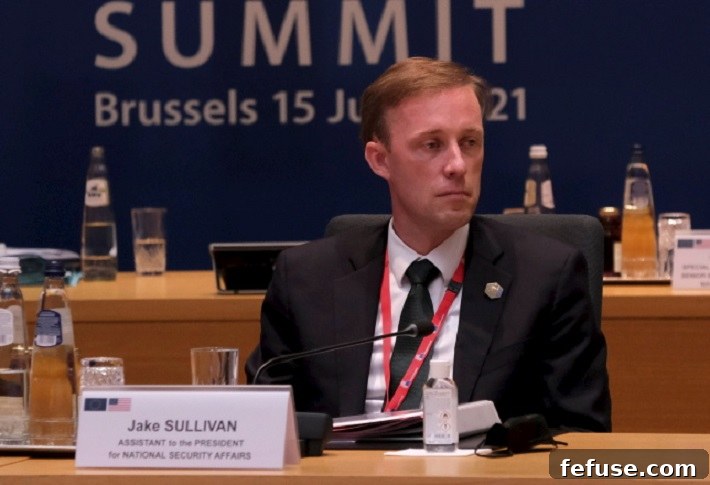
The intent behind these stricter sanctions is clear and unambiguous. As U.S. National Security Advisor Jake Sullivan emphasized in a statement, “We are sending an unmistakable message: Anyone supporting Russia’s unlawful war effort is at risk of losing access to the U.S. financial system.” This declaration highlights the U.S.’s broader strategy to isolate Russia economically and financially, making it increasingly difficult for Moscow to sustain its military operations.
Beyond diamonds, the Executive Order also signals a broader intent to tighten controls on other Russian goods. The White House affirmed that the E.O. will “make it more difficult for specific Russian goods to enter the United States after being modified in a third country.” This suggests a potential expansion of similar “transformation” loophole closures across various sectors, reflecting a comprehensive approach to strangling Russia’s export revenues.
Profound Impact on the Global Diamond Industry
The ramifications of this updated ban are expected to be substantial, reshaping supply chains and trade dynamics across the global diamond industry. The most immediate and significant impact will be felt by India’s vast diamond processing sector.
India’s Diamond Industry: A Major Blow
India stands as the world’s largest cutting and polishing center for diamonds, handling approximately 90% of the world’s rough diamonds by value. The industry is a significant employer and a vital contributor to India’s economy. Historically, a substantial portion of the rough diamonds processed in India originated from Russia, particularly from Alrosa, the Russian state-owned diamond mining giant. With the U.S. accounting for a staggering 45 percent of all of India’s polished diamond exports, the new sanctions directly threaten a crucial market for Indian processors.
Industry experts anticipate significant challenges for Indian diamantaires. They will be compelled to diversify their sourcing away from Russian roughs, which could lead to initial supply shortages and increased competition for non-Russian stones. The shift may also necessitate adjustments in business models, potentially impacting employment levels in key diamond hubs like Surat. Adapting to these new realities will require strategic foresight and potentially new trade partnerships for India.
Pressure on Russia’s Revenue Streams
From Russia’s perspective, diamonds represent a significant export commodity, generating billions of dollars annually. While not as large as its oil and gas revenues, diamond sales contribute meaningfully to the state budget, especially during times of international sanctions. By effectively blocking a major pathway for these diamonds to reach key Western markets, the U.S. and G7 aim to further diminish Russia’s financial resources, thereby limiting its capacity to fund military operations in Ukraine. This move underscores a persistent effort to target all possible sources of revenue for the Russian state.
Shifting Global Supply Chains and Transparency
The new restrictions will inevitably lead to a reorientation of global diamond supply chains. Manufacturers and retailers will need to demonstrate stricter due diligence to ensure the ethical and sanction-compliant sourcing of their stones. This renewed focus on origin tracing will likely accelerate the adoption of advanced technologies, such as blockchain and other digital tracking systems, to provide irrefutable proof of a diamond’s journey from mine to market. Enhanced transparency will become paramount, not just to comply with sanctions but also to meet the growing consumer demand for ethically sourced and conflict-free diamonds.
Challenges of Enforcement and the Road Ahead
While the intent is clear, the enforcement of these comprehensive diamond sanctions presents considerable challenges. Diamonds are small, fungible, and easily transportable, making their origin difficult to ascertain once they have entered the processing pipeline. The G7 and its partners are actively working on developing robust tracing and certification mechanisms to effectively implement the ban. These mechanisms will likely involve a combination of industry cooperation, governmental oversight, and technological solutions to create a verifiable chain of custody.
In the coming months, the United States and its international partners are committed to introducing more refined and comprehensive import restrictions. These will specifically target “certain diamonds mined, processed, or produced in Russia,” building upon the existing U.S. ban. This phased approach suggests an ongoing commitment to refining the sanctions regime, ensuring maximum impact on Russia while minimizing unintended disruptions to the broader legitimate diamond trade.
Conclusion: A New Era for Diamond Trade and Sanctions
The closure of the “substantial transformation” loophole marks a pivotal moment in the global diamond trade and the ongoing international sanctions regime against Russia. It signifies a heightened level of resolve from the U.S. and G7 nations to exert maximum economic pressure on Moscow, cutting off avenues through which it has historically generated revenue. While posing significant adaptation challenges for key industry players like India, this bold move underscores a collective commitment to upholding international norms and holding accountable those who violate them. The diamond industry is entering a new era, one defined by increased scrutiny, enhanced transparency, and a profound shift in geopolitical sourcing dynamics, all driven by the imperative to financially isolate Russia from the global economy.