
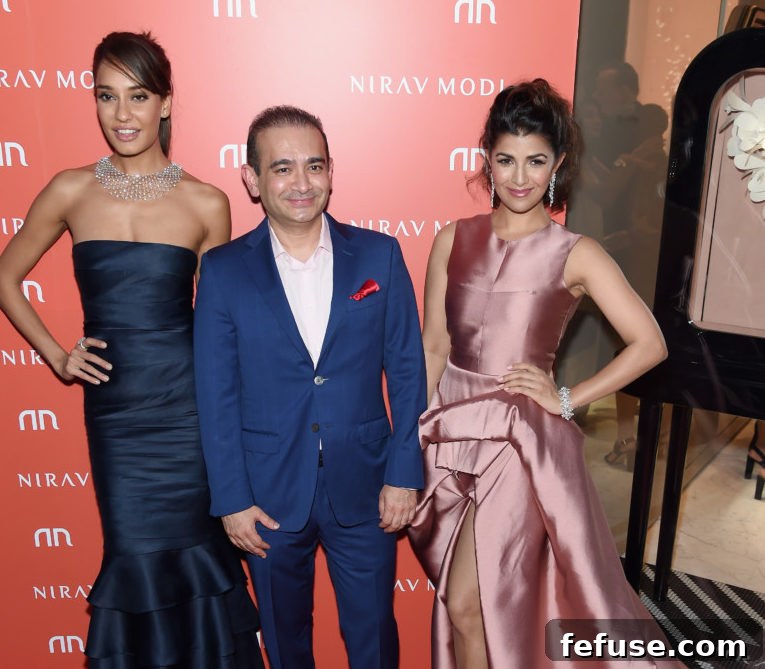
In a startling development that sent shockwaves through India’s financial sector and the global luxury market, Nirav Modi, a name synonymous with exquisite diamonds and high-end jewellery, found himself at the centre of an alleged multi-billion dollar bank fraud. Once lauded as an innovative entrepreneur who built an international luxury brand from the ground up, Modi’s fall from grace has become a prominent symbol of corporate malfeasance and the challenges facing India’s banking system. The investigation, which began with a complaint from one of India’s largest state-owned banks, rapidly escalated into a scandal of unprecedented scale, drawing international attention to the intricate world of finance and luxury.
The Genesis of a Scandal: Punjab National Bank’s Allegations
The saga began to unravel when Punjab National Bank (PNB), a venerable institution in India’s banking landscape, first reported a significant financial irregularity. Initially, the accusation pointed to a fraud amounting to approximately $44 million, allegedly perpetrated by Nirav Modi and his associates. This initial report, made public last month, was merely the tip of the iceberg. Within weeks, the true depth of the alleged deception came to light, with PNB publicly declaring that Modi was among the key individuals involved in a much larger, staggering $1.8 billion fraud. This dramatic escalation transformed what might have been a contained incident into a full-blown financial crisis, casting a long shadow over the reputation of Indian banking.
The core of the alleged fraud involved the issuance of fraudulent Letters of Undertaking (LoUs) from PNB’s Brady House branch in Mumbai. LoUs are guarantees issued by a bank to a client, allowing them to obtain short-term credit from other Indian banks’ foreign branches to fund their import requirements. In this case, it was alleged that certain PNB employees, in collusion with Modi and his uncle Mehul Choksi (another prominent jeweller), bypassed established banking channels and the core banking system. They are accused of issuing LoUs without proper collateral or entries in the bank’s system, thereby enabling Modi’s companies to secure credit from overseas branches of other Indian banks, essentially using PNB’s implied guarantee without the bank’s full knowledge or authorization. This complex scheme allowed the alleged perpetrators to siphon off vast sums of money, creating a colossal financial liability for PNB.
Following these grave allegations, a series of raids were conducted on Nirav Modi’s properties across India. The swift action by law enforcement agencies underscored the seriousness of the charges. At a news conference held on February 15, the jeweller was formally named a leading suspect in the case, catapulting him from a celebrated business magnate to a wanted financial offender. India’s Law and Justice Minister addressed the nation, stating unequivocally, “Nirav Modi and his accomplices attempted to bypass established banking channels by perpetrating this fraud,” highlighting the deliberate and sophisticated nature of the alleged scheme. While formal investigations have commenced, and authorities have taken considerable steps, no charges had been brought against Nirav Modi at the initial stages of this unfolding scandal, and he had yet to comment on the claims, maintaining a conspicuous silence that only fuelled public speculation.
The Rise and Global Dominance of a Diamond King
Before the shadow of scandal loomed large, Nirav Modi was celebrated as a visionary in the global luxury jewellery market. Born into a family of diamond dealers, Modi possessed an innate understanding of the industry, but he harbaded ambitions far beyond traditional diamond trading. He envisioned creating a luxury brand that would rival the likes of Cartier and Tiffany & Co., a brand synonymous with artistic integrity, exquisite craftsmanship, and timeless elegance. His eponymous brand, ‘Nirav Modi,’ launched in 2010, quickly ascended to prominence, attracting a discerning clientele who appreciated its unique design philosophy and the unparalleled quality of its stones.
Modi’s strategic expansion was meticulously planned and executed. He opened boutiques in some of the world’s most prestigious luxury destinations, including New York, Hong Kong, and Beijing. A significant milestone in his global conquest was the opening of his European flagship store on London’s illustrious Old Bond Street in the summer of 2016. This was Nirav Modi’s first venture into the highly competitive European luxury market, a move that solidified his brand’s international standing and made his exquisite pieces accessible to a new echelon of global consumers. The London boutique, a testament to his brand’s success, continued to trade on this prestigious street, a beacon of luxury that ironically stood in stark contrast to the brewing financial turmoil. His rapid success translated into significant personal wealth; according to Forbes, Modi commanded a net worth of $1.84 billion through his jewellery design and retail businesses, placing him as the 85th richest person in India, a testament to his entrepreneurial acumen and the perceived robustness of his empire.
The Impact on Brand, Business, and Banking Trust
The allegations against Nirav Modi have had devastating consequences, not only for his personal reputation but also for the extensive business empire he meticulously built. The Nirav Modi brand, once a symbol of aspiration and luxury, found itself irrevocably tainted by association with a monumental financial scandal. Store closures, asset freezes, and the seizure of properties by investigative agencies marked the beginning of the brand’s rapid decline. The public outcry and negative media attention led to a significant erosion of trust among consumers, partners, and employees, making the continuation of business operations virtually impossible.
Firestar International, the flagship enterprise of Mr. Nirav Modi and the parent company owning the Modi retail chain, attempted to distance itself from the controversy. A spokesperson for Firestar International issued a statement, asserting that “this matter has no affiliation, legal or otherwise, with Firestar International Limited which is the flagship enterprise of Mr. Nirav Modi.” This statement aimed to protect the broader business interests and insulate the operational entities from the personal liabilities of its founder. However, in the interconnected world of global finance and branding, such distinctions often prove challenging for public perception, especially when the founder’s name is eponymous with the luxury brand itself. The financial implications extend far beyond Modi’s personal wealth; they affect numerous employees, creditors, and ancillary businesses that were part of his vast network.
Beyond the immediate impact on Modi’s enterprises, the PNB scam has ignited a fierce debate about the integrity of India’s public sector banks and the efficacy of regulatory oversight. It highlighted critical vulnerabilities in banking procedures, the potential for collusion, and the urgent need for systemic reforms to prevent future occurrences of such large-scale financial crimes. The incident served as a stark reminder of the challenges India faces in strengthening its financial architecture and reinforcing public trust in its institutions. The government and regulatory bodies have since been under immense pressure to tighten controls, enhance fraud detection mechanisms, and ensure accountability for those involved in financial malfeasance.
The Global Chase and Legal Ramifications
As the investigations intensified, Nirav Modi reportedly left India, making him a fugitive from justice. This development added another layer of complexity to the case, triggering a global search and igniting discussions about extradition treaties and international legal cooperation. The Indian government initiated proceedings to bring Modi back to face charges, a process often fraught with legal challenges and diplomatic complexities. The case became a test of India’s resolve to prosecute economic offenders who attempt to evade justice by fleeing the country, sending a clear message that no one, regardless of their wealth or influence, is above the law. The ongoing legal battles in various international jurisdictions have continued to attract significant media attention, underscoring the global reach of modern financial crimes.
The Nirav Modi case serves as a powerful cautionary tale for the luxury industry, the banking sector, and governments worldwide. It underscores the fragility of reputation, even for the most established brands, when confronted with allegations of serious financial misconduct. For India, it was a wake-up call, prompting a renewed focus on corporate governance, banking reforms, and the relentless pursuit of economic offenders. The scandal has left an indelible mark on the Indian financial landscape, prompting a re-evaluation of how business is conducted, how trust is maintained, and how accountability is enforced in an increasingly interconnected global economy.
Conclusion: A Legacy Tarnished, Lessons Learned
The journey of Nirav Modi, from a celebrated diamond billionaire to an alleged mastermind of one of India’s biggest bank frauds, represents a dramatic narrative of ambition, success, and eventual downfall. The $1.8 billion PNB scam not only unravelled a seemingly impenetrable luxury empire but also exposed critical weaknesses within India’s banking system, prompting widespread reforms and a re-evaluation of regulatory frameworks. While the initial reports highlighted a shocking sum and the alleged involvement of a prominent figure, the subsequent investigations laid bare a sophisticated network of deceit that bypassed established financial controls. The ramifications of this scandal continue to reverberate, affecting trust in financial institutions, influencing policy changes, and serving as a stark reminder of the imperative for transparency and accountability in both business and banking. The legal battles and the international pursuit of Nirav Modi continue, ensuring that this saga remains a significant chapter in the ongoing efforts to combat financial crime on a global scale.