
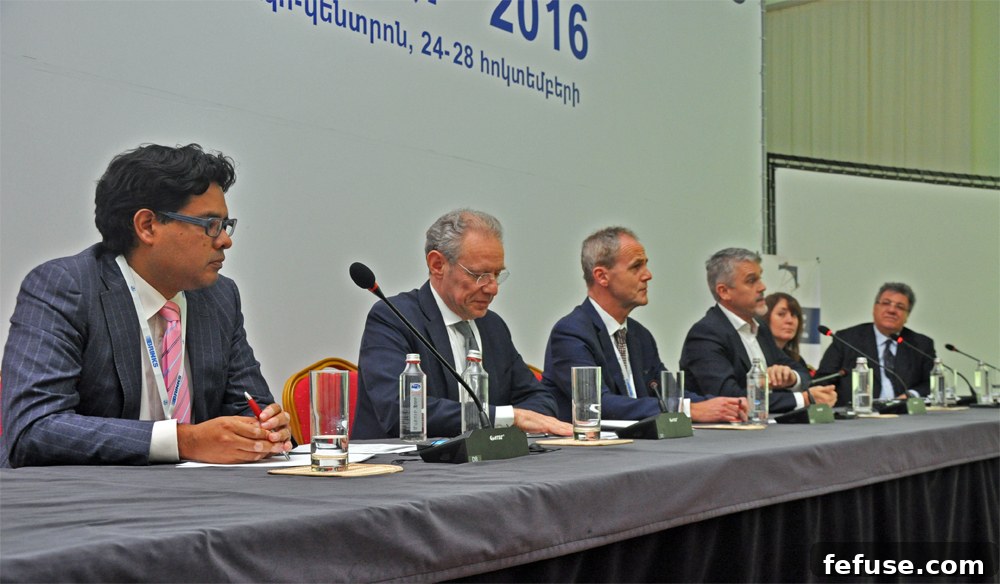
Elevating Trust: Key Insights from the CIBJO Congress 2016 on CSR and Industry Reputation
The 2016 CIBJO Congress served as a pivotal platform for the global gem and jewellery industry, bringing together leaders and stakeholders to address some of its most pressing challenges and opportunities. Held shortly after its inauguration, two crucial sessions shone a bright spotlight on how consumers perceive the industry, emphasizing not only the urgent need for robust Corporate Social Responsibility (CSR) initiatives but also the paramount importance of effectively communicating these efforts to the broader public. This strategic focus aims to significantly enhance the reputation and foster greater trust in the gem and jewellery sector.
Throughout the discussions, distinguished speakers representing diverse segments of the industry converged on a singular, critical understanding: the future of the gem and jewellery business is inextricably linked to its commitment to ethical practices and transparent communication. Each expert elaborated on this principle within the specific context of their primary area of involvement, collectively painting a comprehensive picture of an industry striving for greater accountability and positive impact.
The Imperative of Corporate Social Responsibility (CSR)
At the heart of the congress’s agenda was the unequivocal message that Corporate Social Responsibility is no longer merely a desirable add-on but a fundamental pillar for sustainable growth and consumer engagement. Industry leaders stressed that embracing CSR is not just about compliance; it’s a proactive strategy that offers immense opportunities for business development and differentiation. By demonstrating a genuine commitment to ethical sourcing, fair labor practices, environmental stewardship, and community development, companies can build stronger brands, attract conscientious consumers, and mitigate potential risks.
The discussions highlighted that the modern consumer, particularly within the luxury goods market, is increasingly discerning and demands transparency regarding the origins and ethical journey of their purchases. For the gem and jewellery industry, where products often carry deep emotional and symbolic value, the ethical integrity of the supply chain becomes even more critical. Failing to meet these evolving consumer expectations can lead to reputational damage and a loss of market share. Conversely, excelling in CSR can transform it from a perceived cost into a significant competitive advantage, fostering loyalty and attracting a new generation of socially conscious buyers.
Unpacking the Kimberley Process: Achievements and Perceptions
One of the key discussions at the congress centered on the Kimberley Process (KP), reflecting on its substantial achievements and how it is currently perceived by both industry insiders and the general public. Stephane Fischler, then President of the Antwerp World Diamond Centre (AWDC), articulated a crucial point: “There is no doubt that the KP’s narrow focus has proven to be effective.” This statement underscored the KP’s success in its primary mission to prevent conflict diamonds from entering the legitimate supply chain, a goal that has undeniably had a transformative impact on the diamond industry.
However, Fischler also emphasized the importance of internal dialogue within the industry regarding broader values. He urged members to understand that CSR should be viewed as an opportunity rather than a risk for their businesses, implying that while the KP addresses a specific critical issue, the industry’s responsibility extends beyond that singular focus. Responsible Jewellery Council Executive Director Andy Bone further expanded on this, acknowledging the KP’s excellent work but noting that media discussions about its perceived limitations or areas it *should* cover might have inadvertently created an impression that it was not fully realizing its mission. This highlights the ongoing challenge of managing public perception and communicating the precise scope and successes of such complex initiatives, especially when public expectations often encompass a wider range of ethical concerns.
Beyond Luxury: The Demands of Responsible Business
Ian Harebottle, President and CEO of Gemfields at the time, brought a compelling perspective to the congress, questioning whether some of the definitions used by international organizations were perhaps too broad, leaving conceptual gaps that the industry itself needs to proactively fill. He strongly asserted that the industry must do more, particularly given its position in the luxury market. “Jewellery is still seen as luxury not a necessity,” Harebottle stated, “and companies dealing in them are expected to do more.” This sentiment resonates deeply with the evolving landscape of consumer expectations, where luxury brands are held to a higher standard of ethical conduct and social contribution.
Harebottle provided tangible evidence of Gemfields’ commitment, revealing that his firm allocates approximately one percent of its revenue to sustainability programs. This seemingly modest percentage translates into a significant twenty percent of their net income, demonstrating a substantial investment in responsible practices. He elaborated on their efforts to engage with downstream participants in their supply chain, ensuring that these partners operate ethically, prohibiting child labor, paying taxes, and fulfilling other commitments as responsible firms. Critical to this approach is disclosure, which Harebottle firmly believes brings a valuable return on investment. This focus on transparency and accountability throughout the supply chain is a testament to the industry’s growing understanding that true sustainability requires collective effort and shared responsibility, from the mine to the final point of sale.
The Retailer’s Role: A Crucial Link to the Consumer
Andrei Polyakov, who served as President of the World Diamond Council and Vice President of ALROSA, underscored the indispensable role of jewellery retailers within the entire pipeline. He highlighted their unique position as the primary interface with consumers, making them arguably the most vital link in the chain. This direct interaction means that retailers are often the front line for communicating the industry’s values, ethical commitments, and the story behind each precious gem and piece of jewellery. Their ability to convey transparency and build trust directly impacts consumer confidence in the entire sector.
Polyakov further emphasized the critical importance of organizations like CIBJO in uniting the global business. He specifically praised CIBJO’s work on the “Blue Books,” which provide internationally recognized standards and harmonized terminology for the gem and jewellery industry. These guidelines are crucial for promoting fair and ethical business practices across borders, ensuring consistency and clarity for both trade and consumers. He concluded by reiterating the foundational importance of responsible business practices, recognizing them as the bedrock upon which the industry’s reputation and future prosperity are built. The collaboration fostered by CIBJO is essential for establishing and maintaining these high standards across a complex global supply chain, empowering retailers to confidently represent the industry’s integrity.
The Responsible Jewellery Council (RJC): Setting Industry Standards
The discussions also extensively covered the pivotal role of the Responsible Jewellery Council (RJC) in driving ethical standards. Andy Bone, the Executive Director of the Responsible Jewellery Council, provided a comprehensive overview of RJC’s mission and impact. He described the RJC as the only standards organization that encompasses the entire jewellery supply chain, stretching from the very beginning at the mines all the way through to retail. This holistic approach ensures that ethical considerations and sustainability principles are integrated at every stage of a product’s journey, offering unparalleled assurance to consumers and stakeholders.
Bone highlighted the remarkable growth rate experienced by the RJC, indicative of a rapidly increasing industry-wide commitment to responsibility. He proudly noted that the RJC had 856 members at the time, with an ambitious target of reaching 1,000 members by the following year. These members are spread across 66 countries and collectively employ a staggering 400,000 individuals, demonstrating the vast reach and influence of the RJC’s standards. The addition of major players like ALROSA as members further solidifies RJC’s position as a leading force for positive change. Bone stressed that enormous changes have taken place over the past decade in Corporate Social Responsibility, fundamentally shifting industry culture for the better. These new standards and practices are now widely accepted, and he urged continuous cooperation within the industry to stay ahead of critics and detractors, ensuring sustained progress and credibility.
Bridging the Gap: Environmental Stewardship and Sustainable Sourcing
Eduardo Escobedo, Executive Director of the Responsible Ecosystems Sourcing Platform, provided critical insights into the environmental dimension of sustainability within the industry. He remarked on the extraordinary number of changes and advancements that have occurred in sustainability efforts over the last two decades. This acknowledgment points to significant progress, yet Escobedo also drew attention to the ongoing challenges and the considerable work that remains. He underscored the critical need for responsible action in business, providing concrete examples of areas where industry members could, and should, take more decisive steps to protect and restore the environment.
Escobedo’s presentation served as a powerful reminder that while the industry has made strides, there is still a substantial divide between current actions and the level of intervention required to truly benefit the environment. “We believe there is still a large gap between what is being done and what needs to be done to help the environment,” he asserted. This highlights the imperative for continued innovation, increased investment, and broader adoption of environmentally friendly practices across the supply chain. From responsible mining techniques that minimize ecological footprint to water conservation and waste reduction in manufacturing, the call for greater environmental stewardship is clear. The gem and jewellery industry, with its reliance on natural resources, has a particular responsibility to lead by example in protecting the very ecosystems that provide its precious materials.
The Path Forward: A Collective Commitment to Trust and Sustainability
The 2016 CIBJO Congress clearly articulated a future for the gem and jewellery industry defined by an unwavering commitment to Corporate Social Responsibility, transparency, and consumer trust. The insightful discussions from leaders across the sector underscored a collective understanding: long-term success hinges not just on the beauty and value of the products, but on the ethical journey they represent. From the effectiveness of the Kimberley Process in combating conflict diamonds to Gemfields’ substantial investments in sustainability, and the expansive influence of the Responsible Jewellery Council in setting global standards, the industry is demonstrably evolving.
The emphasis on the retailer’s crucial role as the consumer interface, coupled with the urgent call for greater environmental stewardship, reinforces the multifaceted nature of responsible business practices. The gap identified by the Responsible Ecosystems Sourcing Platform serves as a powerful reminder that while progress has been significant, continuous effort, innovation, and widespread adoption of best practices are essential. By embracing CSR as an opportunity, fostering transparent communication, and working collaboratively across the entire supply chain, the gem and jewellery industry is poised to not only meet but exceed evolving consumer expectations, securing a more sustainable, ethical, and trustworthy future for generations to come. The CIBJO Congress 2016 laid a strong foundation for this transformative journey, inspiring a renewed dedication to integrity and responsible leadership within this esteemed global industry.
(This article is based on insights from the CIBJO Congress 2016. News Source: gjepc.org)