
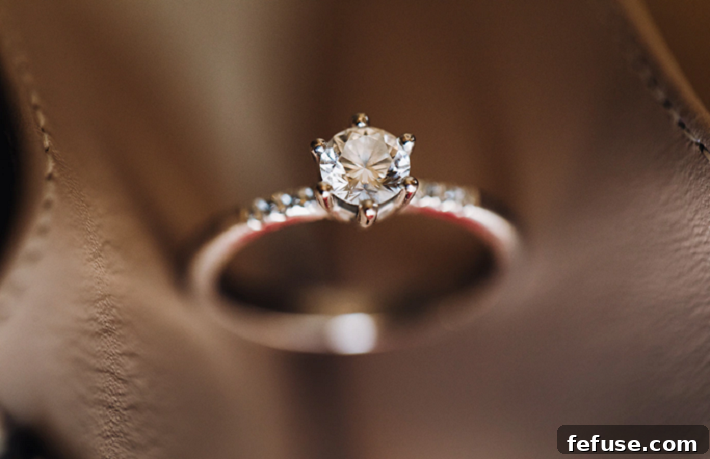
Embarking on the journey to find the perfect engagement ring is a momentous occasion, marking the beginning of a lifetime commitment. For many couples, a diamond engagement ring stands as the ultimate symbol of enduring love, purity, and unwavering dedication. However, the modern market presents an array of choices, notably the increasing popularity of lab-grown diamonds alongside their natural counterparts. Once a clear distinction, the line between these two exquisite options has blurred, prompting couples to seek deeper understanding before making such a significant purchase.
Lab-grown diamonds, often referred to as synthetic, engineered, or cultured diamonds, are not imitations. Instead, they are genuine diamonds with the exact same chemical, physical, and optical properties as diamonds unearthed from the Earth. The primary difference lies in their origin: one is created in a controlled laboratory environment, while the other is formed deep within the Earth’s crust over millions of years. This article serves as a comprehensive guide, meticulously exploring both lab-grown and natural diamonds, delving into their creation, unique benefits, and the essential factors to consider when choosing the ultimate symbol of your love.
Understanding Lab-Grown Diamonds: A Modern Marvel
The concept of creating diamonds in a laboratory might sound futuristic, but it’s a scientific reality that has revolutionized the jewelry industry. Lab-grown diamonds are produced through advanced technological processes that replicate the natural conditions under which diamonds form. This makes them chemically identical to natural diamonds, challenging traditional perceptions and offering compelling advantages.
How Lab-Grown Diamonds Are Created
The creation of lab-grown diamonds typically involves two primary methods, each meticulously designed to ensure the production of high-quality gemstones:
- High Pressure, High Temperature (HPHT): This method mimics the natural diamond formation process found deep within the Earth. A tiny diamond seed is placed in a growth chamber filled with carbon-containing material, such as graphite. The chamber is then subjected to immense pressure (around 700,000 pounds per square inch) and incredibly high temperatures (between 2,300°F and 2,900°F). These extreme conditions dissolve the carbon material, which then crystallizes around the diamond seed, growing it into a larger, fully formed diamond. HPHT diamonds often exhibit a more blocky or cuboctahedral shape during growth.
- Chemical Vapor Deposition (CVD): The CVD method involves placing a thin slice of diamond seed in a vacuum chamber. Carbon-rich gases, such as methane, are introduced into the chamber and heated to high temperatures (around 1,300°F to 1,600°F). These gases break down into a plasma of carbon atoms, which then rain down and accumulate on the diamond seed, layer by layer, eventually forming a diamond crystal. CVD diamonds typically grow in a tabular or square shape and are often revered for their potential to produce colorless diamonds.
Both HPHT and CVD methods result in diamonds that are optically, physically, and chemically identical to natural diamonds. They possess the same brilliance, fire, and scintillation, making them indistinguishable without specialized gemological equipment.
Why Consider Lab-Grown Diamonds?
The appeal of lab-grown diamonds extends beyond their scientific marvel, encompassing several significant benefits for modern couples:
- Environmental Sustainability and Ethical Sourcing: One of the most compelling reasons to choose lab-grown diamonds is their minimal environmental footprint. Unlike traditional mining, which can involve significant land disturbance and energy consumption, lab-grown diamonds are created in controlled environments. This eliminates the ethical concerns often associated with natural diamond mining, ensuring a conflict-free origin and a more sustainable choice for environmentally conscious consumers.
- Guaranteed High Quality and Purity: Lab environments allow for precise control over the diamond’s growth conditions, often resulting in diamonds with fewer inclusions and blemishes. This controlled process can lead to a consistently high standard of purity and quality. To the naked eye, a lab-grown diamond is just as stunning and flawless as a natural diamond, offering exceptional brilliance and fire that will captivate.
- Greater Affordability and Value: Generally, lab-grown diamonds are significantly more affordable than natural diamonds of comparable size and quality. This price difference allows couples to purchase a larger, higher-carat diamond, or to invest more in the ring’s setting or other aspects of their wedding. While the resale value of lab-grown diamonds is a common discussion point, for many, the initial cost savings and the ability to acquire a more impressive stone for their budget outweigh concerns about future resale potential, focusing instead on the immediate joy and symbolism of the ring.
- Innovation and Transparency: The lab-grown diamond industry prides itself on transparency, offering clear information about the origin and creation process of each stone. This level of detail provides consumers with confidence and peace of mind regarding their purchase.
The Allure of Natural Diamonds: A Timeless Legacy
Natural diamonds carry an unmatched mystique, forged over billions of years deep within the Earth. Their rarity, historical significance, and the sheer wonder of their geological formation have long made them the quintessential choice for engagement rings.
How Natural Diamonds Are Formed
Natural diamonds are nature’s ultimate treasure, formed under unimaginable conditions approximately 90 to 120 miles beneath the Earth’s surface. Extreme heat (over 2,200°F) and pressure (more than 725,000 pounds per square inch) transform carbon atoms into the crystalline structure of diamonds. These raw crystals are then brought to the Earth’s surface through volcanic eruptions, embedded in igneous rocks known as kimberlites. The journey from mine to market is one of arduous extraction, precise cutting, and meticulous polishing, transforming a rough stone into a dazzling masterpiece.
Why Choose Natural Diamonds?
The decision to choose a natural diamond is often rooted in tradition, sentiment, and the appreciation of their unique heritage:
- Naturally Made: A Billion-Year Legacy: The unparalleled age and natural origin of mined diamonds imbue them with a profound sense of wonder and permanence. Each natural diamond is a unique geological artifact, a testament to Earth’s power and time, carrying with it a story millions, if not billions, of years in the making. This connection to the ancient Earth resonates deeply with many couples, symbolizing an enduring and irreplaceable love.
- Rarity and Unique Imperfections: Natural diamonds are finite resources, and their rarity contributes to their perceived value. Each natural diamond possesses unique inclusions and characteristics – its “birthmarks” – that tell its individual story, ensuring no two natural diamonds are exactly alike. These natural inclusions, far from being flaws, are often seen as unique identifiers that celebrate the diamond’s authenticity and journey.
- Investment and Heirloom Potential: For generations, natural diamonds have been considered valuable assets, often passed down as cherished family heirlooms. Their established market and historical value provide a sense of security and investment for some buyers, who appreciate the potential for appreciation over time. While market values fluctuate, the cultural perception of natural diamonds as a tangible asset remains strong.
- Gemologist Identification (Nitrogen Count and Other Traces): While visually identical to the naked eye, professional gemologists can distinguish natural diamonds from lab-grown ones through advanced spectroscopic analysis. Natural diamonds typically contain trace amounts of nitrogen or other elements that are incorporated during their formation deep within the Earth, which are largely absent or present in different configurations in lab-grown diamonds. These subtle chemical signatures serve as definitive proof of their origin.
- Cultural Significance and Tradition: Natural diamonds have been central to engagement and marriage rituals for centuries, cementing their place in cultural tradition. The symbolism attached to a natural diamond often carries an emotional weight that resonates deeply with those who value heritage and long-standing customs.
Making the Right Choice: Factors to Consider for Your Diamond Engagement Ring
Regardless of whether you choose a lab-grown or natural diamond, the fundamental characteristics that determine a diamond’s beauty and value remain the same. These are universally known as the “4 Cs”: Color, Clarity, Cut, and Carat, complemented by the ring’s setting.
The Four C’s: Guiding Your Diamond Choice
- Color: The color of a diamond is graded on a scale from D (colorless) to Z (light yellow or brown). A truly colorless diamond (D, E, F grades) is the rarest and most valuable, allowing light to pass through unimpeded and enhancing brilliance. Near-colorless diamonds (G, H, I, J grades) offer excellent value, often appearing colorless to the untrained eye, especially when set in white gold or platinum. When choosing, consider how the diamond’s color will complement the metal of the ring band. White metals like platinum and white gold enhance the perceived whiteness of the diamond, while yellow and rose gold can subtly mask slight yellow tints in lower-grade diamonds.
- Clarity: Clarity refers to the absence of inclusions (internal flaws) and blemishes (external imperfections) within a diamond. The GIA clarity scale ranges from Flawless (FL) to Included (I3). Most imperfections are microscopic and do not affect a diamond’s beauty unless they are large, numerous, or dark. It’s often advisable to aim for an “eye-clean” diamond – one where inclusions are not visible to the naked eye, even if they are present under magnification. Consulting with a professional gemologist can help identify the ideal clarity grade that balances beauty and budget.
- Cut: Often considered the most crucial of the 4 Cs, the cut quality determines a diamond’s sparkle, brilliance, and fire. It refers not to the diamond’s shape, but to how well its facets interact with light. An expertly cut diamond maximizes light return, creating dazzling reflections. The GIA cut grading scale ranges from Excellent to Poor. Round brilliant diamonds are renowned for their exceptional cut, designed to optimize light performance. When evaluating cut, look for precise proportions, symmetry, and polish, which are all critical for achieving maximum scintillation.
- Carat: Carat refers to a diamond’s weight, not its size. One carat equals 200 milligrams. While a higher carat weight generally means a larger diamond, it also significantly impacts the price. Understanding the relationship between carat weight and visual size is important for balancing your budget with your desire for impact. For instance, some diamond shapes appear larger face-up than others of the same carat weight. It’s also possible to choose a slightly lower carat weight with an excellent cut to achieve a more brilliant diamond that appears larger than its weight suggests.
The Perfect Frame: Choosing Your Ring Setting
The engagement ring’s setting is the metal structure that holds the diamond and forms the design of the ring. It plays a pivotal role in enhancing the diamond’s beauty, reflecting personal style, and ensuring durability.
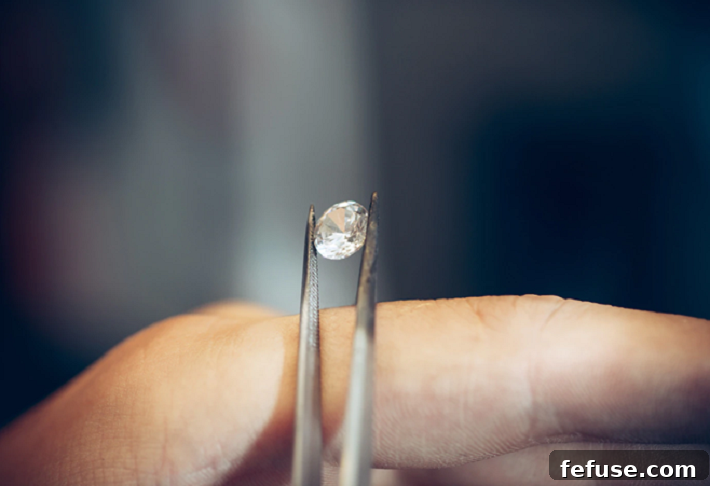
There are numerous setting styles, each offering a unique aesthetic and level of protection:
- Prong (Claw) Setting: This classic setting features small metal claws that hold the diamond in place, allowing maximum light to enter the stone and enhancing its brilliance. Solitaire settings, featuring a single diamond, often use prongs.
- Halo Setting: A halo setting encircles the center diamond with a frame of smaller pave-set diamonds. This design not only adds sparkle but can also make the center stone appear larger, making it a popular choice for maximizing visual impact while potentially saving on the center diamond’s carat weight.
- Pave Setting: In a pave setting, tiny diamonds are set closely together along the band, creating a continuous surface of sparkle. This can add immense glamour and brilliance to the overall ring.
- Bezel Setting: The bezel setting encircles the entire diamond with a metal rim, offering excellent protection for the stone and a sleek, modern look.
- Channel Setting: Commonly used for wedding bands or accent stones on an engagement ring, channel settings secure diamonds within a channel created by two strips of metal, offering a smooth, snag-free surface.
- Tension Setting: This contemporary setting holds the diamond in place through the pressure of the band, creating the illusion that the diamond is suspended in air. It’s a striking and unique choice.
When choosing a setting, consider your partner’s lifestyle, personal style, and how the setting will protect the diamond. A durable setting is crucial for daily wear, while an intricate one can add a unique touch.
Final Thoughts: A Symbol of Everlasting Love
In conclusion, the debate between lab-grown and natural diamonds is less about superiority and more about personal preference, values, and budget. Both options offer genuine, beautiful diamonds that possess the same breathtaking brilliance and fire. Lab-grown diamonds represent innovation, ethical sourcing, and affordability, making them an excellent choice for the modern, conscious consumer. Natural diamonds, on the other hand, embody timeless tradition, rarity, and a profound connection to the Earth’s ancient history, appealing to those who cherish heritage and unique geological marvels.
Ultimately, the most important decision is to choose an engagement ring that truly reflects your partner’s personality, your shared values, and the depth of your love and commitment. Whether you opt for a lab-created wonder or a natural treasure, ensure it is a high-quality piece that will be cherished for a lifetime. Take the time to research, consult with reputable jewelers, and trust your instincts. This once-in-a-lifetime moment deserves careful consideration, culminating in a symbol that beautifully encapsulates your unique love story and promises a future filled with joy.