
Navigating the New GST Regime: Empowering Gem & Jewellery Exporters for Global Competitiveness
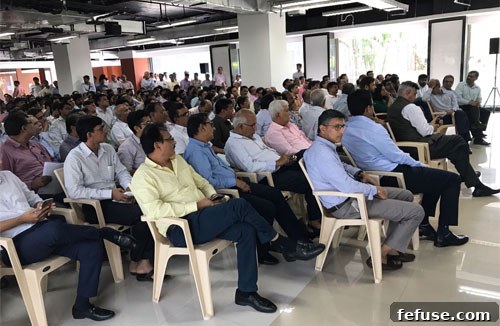
In a proactive and essential endeavor to ensure seamless transition and robust compliance for the vital export sector, the Gem & Jewellery Export Promotion Council (GJEPC), in close collaboration with the Bharat Diamond Bourse (BDB), recently hosted a highly informative and comprehensive seminar. This pivotal event, dedicated to dissecting the intricacies of the newly introduced Goods and Services Tax (GST) regime, specifically focused on its implications and operational procedures for exporters. The seminar, held within the prestigious premises of the Bharat Diamond Bourse, garnered an overwhelming attendance, underscoring the keen interest and necessity for clarity among the exporter community regarding this transformative tax reform.
A United Front: GJEPC & BDB’s Commitment to Exporter Empowerment
The GJEPC and BDB, both formidable pillars of India’s vibrant gem and jewellery industry, recognized the paramount importance of equipping exporters with accurate, timely, and practical knowledge about the new GST framework. The GST regime represented a significant overhaul of India’s indirect tax system, promising greater transparency and efficiency but also introducing new terminologies, compliance requirements, and procedural shifts. This seminar was a testament to their unwavering commitment to fostering a supportive environment where member-exporters could navigate these profound changes with confidence and clarity. By bringing together top governmental and legal experts, the organizations aimed to demystify complex provisions and provide actionable guidance, essential for maintaining India’s competitive edge in the global market.
Expert Insights from Distinguished Speakers Illuminate GST Framework
The seminar featured an esteemed panel of speakers, each bringing a unique and invaluable perspective to the discourse. Their collective expertise ensured a holistic understanding of the GST framework, ranging from high-level policy implementation to granular practical application for exporters.
Mr. Gajanan Khanande: Unveiling the Government’s Vision for GST
Mr. Gajanan Khanande, the Joint Commissioner (GST), provided attendees with an authoritative overview of the government’s foundational vision behind the GST implementation. His address shed crucial light on the broader objectives of this landmark tax reform, emphasizing its critical role in unifying India’s historically fragmented tax structure, boosting overall economic growth, and significantly enhancing the ease of doing business across various sectors. Mr. Khanande detailed the government’s steadfast commitment to simplifying tax compliance and creating a more transparent, efficient, and investor-friendly environment. He also elaborated on how GST aims to seamlessly integrate the diverse Indian economy into a single, cohesive market, thereby reducing logistical hurdles and fostering a more competitive landscape for both domestic and international trade. His insights were crucial for exporters to grasp the underlying philosophy, strategic intent, and long-term benefits of the new regime, moving beyond just the procedural aspects.
Mr. Rohan Shah: Demystifying Export Procedures and Zero-Rated Supply
A significant and highly anticipated portion of the seminar was dedicated to the detailed presentation by Mr. Rohan Shah, a distinguished Counsel, who expertly elucidated the specific procedures and critical nuances applicable to exporters under the GST regime. His presentation was particularly insightful and practical, delving deep into the pivotal concept of ‘zero-rated supply.’ This term, central to all export operations, refers to the direct export of goods or services, or the provision of goods or services (or both) to a Special Economic Zone (SEZ) developer or an SEZ unit. Mr. Shah meticulously explained that under the zero-rated supply mechanism, exporters are fundamentally eligible to either claim a refund of input tax credit paid on inputs or input services used in making such supplies, or they can export goods/services without paying Integrated Goods and Services Tax (IGST) by furnishing a Letter of Undertaking (LUT) or bond. This provision is ingeniously designed to ensure that Indian exports remain robustly competitive in international markets by completely preventing the cascading effect of domestic taxes from burdening export prices.
Mr. Shah further provided a granular and step-by-step insight into the intricate procedures for applying for refunds of IGST or Input Service Tax (IST) under these crucial categories. He meticulously outlined the precise documentation required, the exact steps involved in filing refund claims, and the various statutory clauses that govern this critical process. Understanding these intricate procedures is paramount for exporters to ensure timely and hassle-free realization of their refunds, which directly impacts their working capital liquidity and overall business profitability. Moreover, he brought to the audience’s attention several important government circulars that had been specifically issued to clarify ambiguities and streamline the refund process, offering invaluable practical advice on how to correctly interpret and apply these clarifications effectively in real-world scenarios.
Mr. Praveenshankar Pandya: An Industry Leader’s Perspective on GST
Mr. Praveenshankar Pandya, the esteemed Chairman of GJEPC, offered a comprehensive and authoritative industry perspective on the GST regime. His address highlighted with precision how this transformative tax reform impacts the vibrant and economically significant gem and jewellery sector, renowned globally for its substantial contribution to India’s exports and employment generation. Mr. Pandya discussed the myriad opportunities presented by GST, such as simplified tax structures, enhanced supply chain efficiencies, and reduced overall compliance burdens in the long run, all of which are poised to bolster the sector’s global standing and competitiveness. He also candidly addressed potential initial challenges, including the imperative adaptation required for new digital compliance mechanisms and the ongoing need for continuous education and training. His leadership role provided a crucial bridge between governmental policies and real-world industry realities, reassuring exporters that GJEPC remains at the forefront of advocating for their interests and facilitating a smooth, successful transition into the new tax landscape.
Interactive Engagement: A Robust Q&A Session for Clarity
Following the highly insightful and detailed presentations, the seminar seamlessly transitioned into an extensive and exceptionally interactive Question & Answer (Q&A) session. This segment proved to be immensely valuable, providing member-exporters with a direct and unhindered platform to voice their specific queries, express their concerns, and discuss practical challenges encountered in implementing the new GST provisions in their day-to-day operations. The distinguished speakers on the dais diligently and thoroughly addressed a wide array of questions, offering precise clarifications on various aspects ranging from specific procedural nuances to broader policy interpretations and practical application scenarios. This direct and open interaction not only resolved individual doubts but also significantly enriched the collective understanding of the new tax landscape, fostering a greater sense of confidence and operational readiness among all the attendees.
The Transformative Impact of GST on India’s Export Sector
The introduction of the Goods and Services Tax marks a monumental and transformative shift in India’s economic landscape, with profound and far-reaching implications for the entire export sector, particularly for the high-value gem and jewellery industry. Prior to GST, exporters faced a complex and often bewildering web of central and state indirect taxes, frequently leading to the undesirable cascading tax effects and cumbersome, time-consuming refund mechanisms. GST aims to comprehensively streamline this by subsuming multiple taxes into a single, unified tax, thereby simplifying the overall tax structure and significantly reducing compliance costs and complexities.
Enhanced Global Competitiveness for Indian Exports
One of the primary and most significant benefits of GST for exporters is the complete elimination of cascading taxes. Through ingenious mechanisms like zero-rated supplies and highly efficient input tax credit refunds, GST fundamentally ensures that only the value addition is taxed, making Indian exports inherently more competitive and attractive in the international market. This critical advantage allows exporters to offer their high-quality products at more competitive prices, thereby increasing their global market share and strongly supporting the government’s ambitious ‘Make in India’ initiative, which aims to boost domestic manufacturing and exports.
Simplified Compliance and Reduced Bureaucracy
While the initial phase of GST implementation may naturally involve a learning curve and some adaptation, the long-term strategic goal is to profoundly simplify compliance for businesses of all sizes. A unified tax structure across all states means fewer forms to fill, standardized procedures to follow, and significantly reduced bureaucratic hurdles. This enhanced ease of doing business is particularly beneficial for Small and Medium-sized Enterprises (SMEs) within the export sector, enabling them to focus more intensely on core business activities, innovation, and market expansion, rather than expending valuable resources navigating complex and disparate tax regulations.
Transparent and Efficient Refund Mechanism: A Boost to Working Capital
The emphasis on a transparent, standardized, and highly efficient refund mechanism for IGST and input tax credits is absolutely critical for the healthy working capital management of exporters. Timely and predictable refunds ensure that valuable capital is not locked up inefficiently within the tax system, allowing businesses to promptly reinvest in their operations, expand capacity, and drive further growth. Seminars like the one meticulously hosted by GJEPC and BDB are instrumental in clarifying these often-complex procedures, empowering exporters with the necessary knowledge and confidence to successfully claim their due refunds without undue delays or complications.
Addressing Challenges and Fostering Future Growth for the Export Sector
While the long-term benefits of GST are undeniably substantial, the transition period often brings forth a set of operational challenges. Exporters need to adapt swiftly to new IT systems, understand revised documentation requirements, and stay continuously updated with evolving regulations, circulars, and clarifications issued by the tax authorities. The GJEPC and BDB, through such dedicated educational initiatives, play an absolutely crucial role in mitigating these challenges. By providing continuous support, offering accessible clarification forums, and engaging in robust advocacy on behalf of the industry, they ensure that the gem and jewellery export sector can fully leverage the myriad advantages of GST, thereby contributing significantly to India’s economic prosperity and global trade footprint.
Conclusion: A Stepping Stone Towards Export Excellence and Global Leadership
The seminar on the new GST regime, meticulously organized by the Gem & Jewellery Export Promotion Council and the Bharat Diamond Bourse, was an unqualified success. It served as an indispensable platform for comprehensive knowledge dissemination, direct and meaningful engagement, and crucial clarification, empowering a large and diverse contingent of exporters with the essential understanding and procedural insights required to not just survive but thrive under India’s transformed tax landscape. The profound expertise shared by Mr. Gajanan Khanande, Mr. Rohan Shah, and Mr. Praveenshankar Pandya provided a comprehensive and multi-faceted view, assuring exporters of the government’s unwavering support and the industry’s steadfast commitment to facilitating their continued success.
As India continues its dynamic journey towards economic modernization and global integration, the seamless and efficient integration of its export sector into the new GST framework is paramount. Events like this highly successful seminar are critical in building exporter confidence, fostering robust compliance, and ultimately propelling the gem and jewellery industry, and indeed India’s entire export apparatus, towards unprecedented levels of global competitiveness and sustained, vigorous growth. This proactive and visionary initiative by GJEPC and BDB stands as a testament to their enduring commitment to nurturing an environment exceptionally conducive to export excellence and global leadership.
Image Caption: A significant number of gem and jewellery exporters actively participated in the insightful seminar on the Goods and Services Tax (GST) regime, eager to grasp its implications and procedures.
Source: gjepc.org