
Divergent Fortunes: Hong Kong Jewellery Sales Decline Amid Caution, While Mainland China Sees Growth
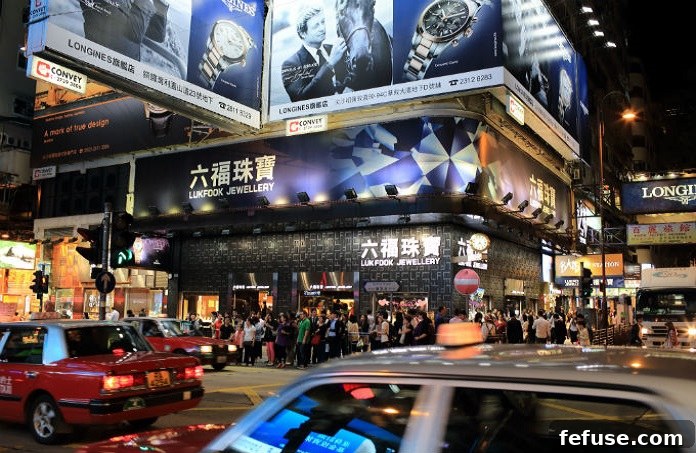
The vibrant luxury retail landscape of Asia is currently experiencing a notable divergence, with Hong Kong’s jewellery sector facing significant headwinds while mainland China demonstrates a more resilient growth trajectory. Recent government data from Hong Kong reveals a challenging period for its jewellery retailers, grappling with an overall decline in consumer confidence and a series of external economic pressures. This stands in stark contrast to the modest yet positive growth recorded in mainland China, painting a complex picture for the region’s valuable jewellery market.
In April alone, Hong Kong’s jewellery sales plummeted by a substantial 11.4 percent when compared to the corresponding period last year. This sharp decline underscores a broader trend of consumer conservatism impacting the special administrative region’s retail sector. The challenges extend beyond a single month, as figures compiled by Hong Kong’s Census and Statistics Department indicate that the cumulative retail sales for jewellery, watches and clocks, and other valuable gifts for the first four months of the year (January to April) were 4.7 percent lower than the figures reported a year ago. These statistics highlight a persistent downturn that demands closer examination of its underlying causes and potential future implications for one of the world’s premier luxury shopping destinations.
Hong Kong’s Jewellery Market Faces Significant Headwinds
The notable drop in Hong Kong’s jewellery sales is not an isolated incident but rather a symptom of deeper economic currents. A government spokesman attributed the overall weakness in April’s retail sales to a prevalent “more cautious consumption sentiment.” This cautiousness, deeply rooted in a landscape of “external uncertainties,” has led consumers to rein in discretionary spending, particularly on high-value items like jewellery and watches. These external uncertainties typically encompass global economic slowdowns, geopolitical tensions, fluctuating interest rates, and ongoing trade disputes, all of which contribute to an atmosphere of unpredictability that makes consumers hesitant to commit to luxury purchases.
The Crucial Role of Tourism and the Labour Day Effect
Adding to the woes, the timing of China’s Labour Day holidays played a significant role in exacerbating the downturn in April. Unlike the previous year when the holidays spanned parts of both April and May, this year they fell entirely in early May. This shift resulted in a “notable decline in visitor arrivals” during April. For Hong Kong, a city heavily reliant on inbound tourism, particularly from mainland China, fewer visitors directly translate to reduced retail activity. Mainland Chinese tourists are historically a vital pillar of Hong Kong’s luxury retail sector, known for their strong purchasing power and demand for high-end goods, including exquisite jewellery and valuable gifts. The absence of this key demographic during a traditionally busy period dealt a considerable blow to sales figures.
The impact of diminished visitor footfall on the luxury jewellery market cannot be overstated. Hong Kong has long been a magnet for international shoppers seeking tax-free luxury items. The reduced influx of tourists means not only fewer immediate sales but also a ripple effect across the entire retail ecosystem, affecting everything from boutique operations to employment in the sector. Retailers, already navigating a challenging economic climate, found themselves facing an additional hurdle due to this calendrical shift, further highlighting the sensitivity of Hong Kong’s retail performance to external factors and travel patterns.
Broader Economic Indicators and the Luxury Retail Landscape
The struggles faced by Hong Kong’s jewellery market reflect broader economic challenges within the city. Consumer sentiment is intricately linked to perceptions of economic stability, job security, and future prosperity. When these factors are uncertain, luxury purchases, often seen as discretionary, are among the first to be deferred or reduced. The decline in jewellery sales, therefore, serves as a significant indicator of the overall health of Hong Kong’s retail economy and the confidence levels of both local residents and potential visitors. The luxury retail landscape in Hong Kong, historically robust, is now compelled to adapt to these evolving dynamics, necessitating strategic shifts to mitigate current challenges and prepare for future uncertainties.
Glimmers of Hope: Future Support for Hong Kong Retailers
Despite the current gloomy outlook, there are rays of hope for Hong Kong’s struggling retail sector. The government spokesman expressed cautious optimism, suggesting that an “expansion in inbound tourism” and a “more stable local labour market” should provide some much-needed support to retailers in the near term. Efforts to revitalize the tourism industry, including targeted marketing campaigns and enhanced visitor experiences, are crucial to attracting tourists back to the city. A resurgence in visitor numbers would directly inject vitality into the retail sector, with luxury goods, including jewellery, being prime beneficiaries.
Furthermore, a stable local labour market plays a critical role in bolstering domestic consumption. When residents feel secure in their employment and income, their propensity to spend increases. This includes both essential goods and discretionary purchases, which can provide a valuable base of demand even during periods of reduced tourism. Government initiatives aimed at supporting local businesses and maintaining employment stability are therefore vital for cultivating a more resilient domestic retail environment, helping to offset some of the volatility caused by external factors.
The combination of renewed tourist influx and robust local spending could collectively help Hong Kong’s jewellery retailers regain their footing. However, sustained recovery will likely depend on overcoming the persistent external uncertainties and effectively adapting to evolving consumer behaviors. Retailers may need to diversify their offerings, enhance in-store experiences, and strengthen their online presence to appeal to a broader customer base and weather future economic shifts effectively.
Mainland China’s Jewellery Market Shines Brighter
In stark contrast to Hong Kong’s declining sales, mainland China’s jewellery market has demonstrated a positive, albeit modest, growth trend. Data released by the National Bureau of Statistics of China revealed that gold, silver, and jewellery sales collectively registered a year-on-year increase of 2.2 percent for the period from January to April. This figure, while not soaring, indicates a healthy underlying demand within the vast Chinese consumer market. More specifically, sales of gold, silver, and jewellery also saw a 0.4 percent rise in April compared to the same month last year, suggesting continued consumer interest despite broader global economic pressures.
Drivers of Growth in the Chinese Market
Several factors contribute to the resilience and growth observed in mainland China’s jewellery market. A primary driver is the country’s burgeoning middle class and steadily rising disposable incomes. As more Chinese citizens achieve higher economic status, their capacity and desire for luxury goods, including fine jewellery, increase significantly. This demographic shift creates a robust domestic demand that is less susceptible to fluctuations in international tourism compared to Hong Kong’s market model.
Furthermore, cultural factors play a significant role. Gold, in particular, holds immense cultural significance in China, symbolizing wealth, prosperity, and good fortune. It is often purchased for special occasions, as gifts, and increasingly, as an investment hedge against economic uncertainties. This dual appeal as both a luxury item and a store of value helps to sustain demand for gold jewellery. The market also benefits from a growing appreciation for innovative designs and branded jewellery, with both international luxury brands and strong domestic players competing for consumer attention.
Contrasting Fortunes: Hong Kong vs. Mainland China
The divergent performances of Hong Kong and mainland China highlight distinct market dynamics and underlying economic structures. Hong Kong’s retail sector, and particularly its luxury segment, has historically thrived on its status as a global shopping hub, drawing heavily on international tourism. This reliance makes it vulnerable to shifts in travel patterns, currency fluctuations, and global economic sentiment. When external factors curtail visitor arrivals, the impact on retail sales is immediate and significant.
Mainland China, on the other hand, boasts an enormous domestic market. Its growth is primarily fueled by internal consumption, supported by a rapidly expanding economy and a population increasingly affluent and eager to spend on luxury goods within their own borders. While global economic conditions certainly have an influence, the sheer scale and intrinsic growth drivers of China’s domestic market provide a degree of insulation that Hong Kong, with its smaller local base, cannot easily replicate. This fundamental difference underscores why one market might stumble while the other continues its ascent, albeit at a measured pace.
Regional Implications and the Future of Luxury Jewellery in Asia
The contrasting narratives from Hong Kong and mainland China offer critical insights into the broader Asian luxury jewellery market. They underscore the importance of diversified market strategies for retailers operating in the region. Brands that heavily depend on specific tourist demographics, particularly in Hong Kong, may need to re-evaluate their strategies, potentially shifting focus towards bolstering local engagement or exploring expansion opportunities within mainland China.
For retailers, adaptability is key. This includes embracing omni-channel approaches that seamlessly integrate online and offline experiences, investing in digital marketing to reach a tech-savvy consumer base, and innovating with personalized customer services. Understanding the unique cultural nuances and purchasing behaviors of different markets, whether it’s Hong Kong’s discerning international clientele or mainland China’s brand-conscious domestic consumers, will be paramount for sustained success.
Conclusion
The latest data paints a clear picture of divergent fortunes within the crucial Asian jewellery market. Hong Kong’s luxury retail sector is navigating a turbulent period marked by declining sales, cautious consumer sentiment, and reduced tourist traffic. The timing of holidays and broader external uncertainties have compounded these challenges, forcing retailers to confront a tougher operating environment. However, the potential for recovery exists, anchored by renewed efforts to boost tourism and the stability of the local labour market.
Conversely, mainland China’s jewellery market continues to demonstrate robust internal demand, driven by a growing middle class and cultural affinity for valuable goods, particularly gold. This resilience provides a crucial counter-narrative to Hong Kong’s struggles. The lessons from these contrasting performances are invaluable for the entire luxury sector in Asia, emphasizing the need for strategic agility, market diversification, and a deep understanding of evolving consumer landscapes to thrive in an increasingly dynamic global economy.
News Source: jewellerynet