
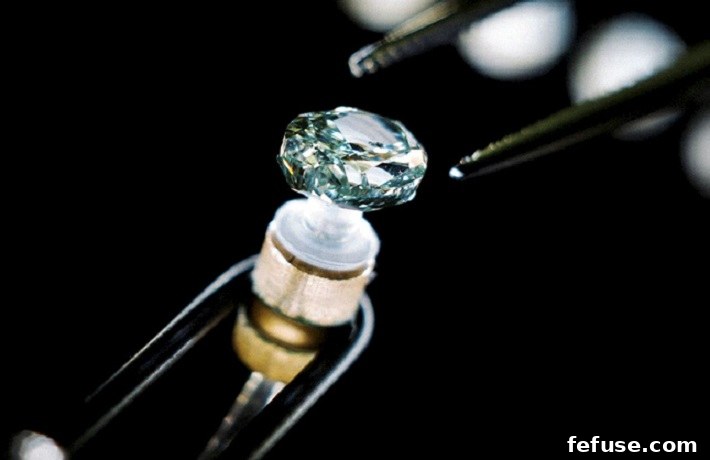
De Beers Kicks Off 2021 with Strongest Rough Diamond Sales in Three Years, Signaling Robust Market Recovery
GABORONE, BOTSWANA – De Beers Group, a leading global diamond company, has announced a significant milestone at its first sight of 2021, reporting rough diamond sales totaling an impressive $650 million. This figure represents the highest sales performance for De Beers in three years, providing a compelling indicator of renewed optimism and a strong recovery within the global diamond industry following a challenging period marked by the COVID-19 pandemic.
The remarkable sales figure reflects a critical need for the diamond industry’s midstream segment to restock its inventories. This demand is further amplified by De Beers’ strategic and more flexible approach to its selling operations, alongside an extended sight period necessitated by ongoing international travel restrictions. The provisional $650 million recorded stands as the highest sales total since January 2018, when actual sales for Sight 1 reached an even higher $672 million, underscoring the current resurgence in market confidence and activity across the entire diamond value chain.
A Glimpse into the Diamond Market’s Journey: From Pandemic Slump to Resurgence
The journey to this robust start in 2021 has been far from smooth. The year 2020 presented unprecedented challenges for the diamond sector, mirroring the broader global economic turmoil. De Beers notably recorded zero sales at Sight 3 last year, a stark illustration of the severe impact the global pandemic had on supply chains, consumer demand, and overall market liquidity. As widespread lockdowns spread and economies contracted globally, the immediate outlook for luxury goods, including precious diamonds, appeared grim, causing significant disruptions throughout the mining and retail segments.
However, the latter half of 2020 saw a gradual yet determined recovery. During Sights 8, 9, and 10 of the previous year, De Beers’ sales stabilized, reaching a plateau of approximately $450 million to $470 million. This steady improvement signaled the initial signs of market adaptation and resilience, driven by localized demand, the resurgence of e-commerce, and innovative shifts towards digital sales channels. The bounce-back observed in these later sights laid the groundwork for the exceptional performance witnessed at the beginning of 2021, demonstrating the diamond industry’s inherent capacity to navigate and recover from significant global disruptions.
Key Drivers Behind the Surge in Rough Diamond Demand
Several crucial factors converged to fuel this surge in rough diamond demand at De Beers’ first sight of the year. Parent company Anglo American, in its market assessment, attributed the high sales volumes to an expected rise in consumer demand ahead of two pivotal retail periods: the globally celebrated Chinese New Year and Valentine’s Day. These cultural and romantic holidays traditionally drive significant sales in the fine jewelry sector, particularly in key markets across Asia and the West, creating a predictable surge in retail activity that cascades up the supply chain.
Comparing the current performance with previous years highlights the extent of this recovery. The comparable sales at the corresponding Sight 1 in 2020 stood at $551 million. While a solid figure at the time, the $650 million achieved in 2021 represents a substantial increase of nearly 18%, reflecting heightened market activity and a profoundly more optimistic outlook for consumer spending on luxury items. This upward trend suggests a strong rebound not only in sales figures but also in the underlying market sentiment and consumer confidence.
Midstream Restocking and Robust Holiday Season Performance
Bruce Cleaver, CEO of De Beers Group, articulated the core dynamics underpinning this strong start to the year. He stated, “With the midstream starting the year with low levels of rough and polished inventories, and following strong sales of diamond jewellery over the key holiday season in the US, we saw good demand for rough diamonds at the first cycle of the year as midstream customers sought to restock and to fill orders from retail businesses.”
Cleaver’s insights underscore the critical role played by the midstream segment of the diamond pipeline, which encompasses cutters, polishers, and manufacturers. These businesses found themselves with significantly depleted inventories of both rough and polished diamonds by the end of 2020, primarily due to the pandemic’s initial disruption followed by unexpected consumer demand during the festive season. This lean inventory position created an urgent need to acquire new rough stones to process and prepare for upcoming retail demand. The impetus for this restocking was further intensified by surprisingly robust sales of diamond jewellery during the crucial holiday season in the United States, indicating resilient consumer appetite for luxury goods despite ongoing economic uncertainties and travel limitations.
The Significance of De Beers’ Flexible Approach and Extended Sights
De Beers’ adaptability has been a significant enabler of these strong sales figures. The extension of the sight period beyond its normal week is a direct response to the persistent global travel restrictions that continue to impact international commerce. By offering more flexibility in how sightholders access and purchase rough diamonds, De Beers has helped mitigate some of the logistical challenges faced by its customers, ensuring that vital transactions can still occur efficiently and reliably.
This flexible approach likely involves various measures, such as virtual viewing options, staggered attendance, or extended timelines for purchasing decisions, all strategically designed to facilitate trade under difficult circumstances. Such proactive strategies not only support De Beers’ sightholders – the exclusive buyers of De Beers’ rough diamonds – but also contribute significantly to stabilizing the broader diamond supply chain, which relies heavily on the smooth and consistent flow of goods from mining to cutting, polishing, and finally, to retail showrooms worldwide.
Looking Ahead: Sustaining the Momentum in the Global Diamond Market
The strong performance at De Beers’ first sight of 2021 bodes exceptionally well for the entire diamond industry. It suggests that consumer confidence in key markets is firmly returning and that demand for exquisite diamond jewelry remains robust, particularly during significant cultural and gifting occasions. This initial success sets an optimistic tone for the remainder of the year, potentially driving further investment across the entire diamond value chain, from exploration and mining to cutting, polishing, and global retail distribution.
However, the industry must remain vigilant. While highly positive, the recovery is still subject to the evolving global health situation, economic policies, and shifting consumer behaviors. Continued innovation in digital sales channels, an unwavering focus on ethical sourcing, and transparent supply chain practices will be crucial for sustaining this momentum and building long-term trust. As the world slowly but surely emerges from the pandemic’s shadow, the diamond market appears poised for a period of cautious but determined growth, with industry leaders like De Beers leading the charge and providing clear signals of market resurgence and vitality.
The interplay of depleted inventories, strong retail demand from key markets, and a proactive and flexible approach from major suppliers like De Beers paints a positive and encouraging picture for the near future of the diamond trade. This rebound not only highlights the enduring allure of diamonds as symbols of love and commitment but also underscores the industry’s remarkable capacity for resilience, innovation, and adaptation in the face of unprecedented global challenges.