
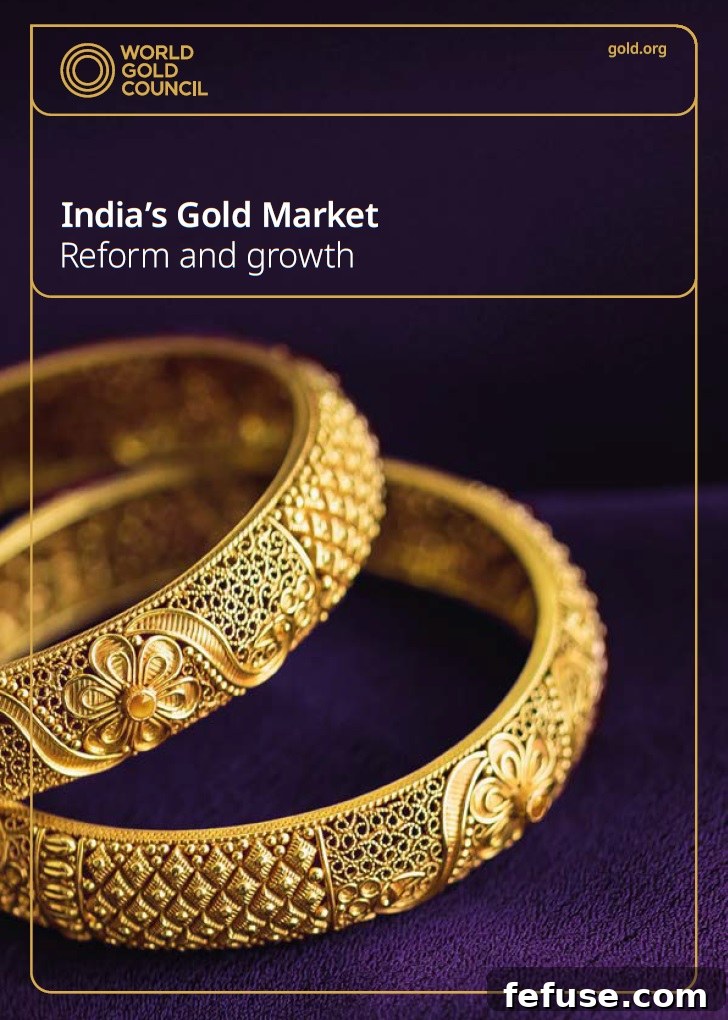
India’s Gold Market: Charting a Course Through Reform, Growth, and Unprecedented Change
India, a nation steeped in rich cultural heritage and dynamic economic growth, holds an unparalleled relationship with gold. More than just a precious metal, gold in India is interwoven into the fabric of society, serving as a symbol of wealth, status, adornment, and a crucial financial asset. Recognizing the unique complexities and immense potential of this market, the World Gold Council (WGC) has recently unveiled its seminal report titled ‘India Gold Market – Reform and growth.’ This comprehensive analysis delves deep into the multifaceted factors shaping India’s gold demand and supply landscape, meticulously examining both the inherent challenges and the exciting opportunities that lie ahead for the sector.
This latest publication serves as a vital update to the WGC’s influential 2017 report, ‘India’s Gold Market – evolution and innovation,’ which astutely highlighted the burgeoning potential of India’s gold sector. As the world’s second-largest gold consumer, only trailing China, India’s market dynamics have profound global implications. The new report goes further, providing an updated and expanded perspective on the transformative changes that have swept across the nation in recent years, demonstrating gold’s enduring relevance amidst rapid economic and social shifts.
A Comprehensive Look at India’s Dynamic Gold Ecosystem
The ‘India Gold Market – Reform and growth’ report offers an exhaustive exploration of various critical aspects defining India’s vibrant gold ecosystem. Its detailed chapters meticulously cover a broad spectrum of topics, providing unparalleled insights for investors, policymakers, and industry stakeholders:
- Drivers of Indian Gold Demand: Unpacking the intricate cultural, economic, and psychological factors that fuel the nation’s consistent appetite for gold, examining how traditional beliefs intersect with modern consumer preferences.
- Jewellery Demand and Trade: A deep dive into the nuances of the country’s prominent jewellery sector, including evolving design trends, manufacturing capabilities, and international trade flows that solidify India’s position as a major player.
- Jewellery Market Structure: Examining the evolution from traditional unorganized markets to increasingly organized retail formats, and the profound impact of regulatory frameworks like mandatory hallmarking in building consumer trust and standardizing practices.
- Gold Investment Market and Financialisation: Analyzing the shift from purely physical holdings to modern avenues for gold investment, and the growing trend towards financial products linked to gold, reflecting an increasingly sophisticated investment landscape.
- Bullion Trade: Investigating the intricacies of India’s import-dependent bullion market, including the roles of various intermediaries, import duties, and the supply chain dynamics that govern the flow of raw gold.
- Gold Refining and Recycling: Assessing the increasing importance of domestic refining capabilities, the potential for a more formalized and efficient recycling sector, and its role in reducing India’s reliance on fresh imports.
- Gold Mining in India: An overview of the nascent domestic mining industry, exploring its limited current output, and potential future developments through legislative changes and technological advancements.
Navigating a Landscape of Unprecedented Change: Insights from the WGC Foreword
In the foreword to this pivotal report, Juan Carlos Artigas, Global Head of Research at the World Gold Council, articulates the significant shifts observed since their 2017 publication. He emphasizes the dynamic environment India has navigated, stating, “Few of the global events that have rocked societal and geopolitical stability could have been imagined when our 2017 report was published. That India has had to adapt is not surprising, but the rate at which change is happening in the country is, arguably, unprecedented.” This profound sentiment underscores the urgency and relevance of the current report, which aims to provide up-to-date, actionable insights for stakeholders across the industry, ensuring gold remains a vibrant component of India’s future.
Key Drivers and Evolving Consumer Behavior in India’s Gold Market
Artigas highlights that this updated compendium “delves deeper into key factors that underpin India’s position as the second largest gold consumer in the world.” The report meticulously studies the primary drivers of gold demand, focusing on the perception and evolving behavior of Indian consumers. Despite profound global and domestic transformations, India’s population continues to demonstrate a resolute affinity for gold, especially during times of macroeconomic uncertainty. This inherent demand resilience is a testament to gold’s deep-seated value proposition in the Indian psyche.
Culturally, gold remains indispensable for celebratory occasions and is deeply embedded in the nation’s social fabric. Weddings, with their elaborate ceremonies and significant gold exchanges as gifts and dowry, are perennial anchors of demand, often representing a family’s most significant gold purchase. Similarly, major festivals like Dhanteras and Akshaya Tritiya, deeply ingrained in Hindu traditions, symbolize prosperity and mark auspicious times for acquiring gold. This cultural foundation, coupled with India’s status as one of the world’s largest markets for gold bars and coins, unequivocally demonstrates gold’s enduring prominence in the social and financial lives of millions of Indians, whether residing in bustling urban centers or tranquil rural villages, spanning across diverse socio-economic strata.
The Intricate Interplay of Economic Factors and Modern Investment Choices
The economic narrative in India is equally compelling and complex. The International Monetary Fund (IMF) projects a robust 23% increase in per capita GDP growth between 2022 and 2026. On the surface, rising living standards and increased disposable incomes typically bode well for gold demand, as consumers have more capacity for discretionary spending and investment. However, the picture is more nuanced. Artigas points out critical countervailing forces: a declining national savings rate and the government’s ambitious ‘bank the unbanked’ initiative. This latter program, aimed at comprehensive financial inclusion, is creating a sea change in investment choice and availability, introducing a plethora of new financial instruments and actively encouraging formal savings through conventional banking channels. In this evolving landscape, gold must strategically respond and innovate to successfully navigate these shifting headwinds and maintain its competitive edge as a preferred investment asset, especially among a population becoming increasingly financially literate.
Challenges and Transformative Opportunities on the Horizon for India’s Gold Sector
While the years ahead will undoubtedly present a unique set of challenges, the World Gold Council expresses immense optimism, viewing these not as burdens but as tremendous opportunities for gold to solidify and expand its integral role in India’s economy. The report meticulously outlines several key areas ripe for transformation and strategic growth, which could redefine the future trajectory of the Indian gold market.
Building Unwavering Consumer Trust Through Robust Regulation
A significant stride has already been made in enhancing consumer trust within India’s vast and diverse jewellery industry. The implementation of stringent regulations, particularly mandatory hallmarking for gold jewellery, has been a monumental game-changer. This crucial initiative ensures purity and authenticity, empowering consumers with greater confidence and transparency in their gold purchases. This move not only professionalizes the market, shifting it from largely unorganized to increasingly structured, but also significantly elevates India’s standing as a reliable and credible global gold trading and manufacturing hub. The continuous refinement and rigorous enforcement of such regulatory frameworks are paramount for fostering a transparent, ethical, and trustworthy environment, which in turn stimulates sustainable and informed gold demand.
Diversifying Gold Jewellery Export Markets and Strengthening Global Presence
Currently, India’s gold jewellery exports exhibit a fragile dependency, with a staggering 90% directed to just five countries. This high concentration presents both a strategic vulnerability and a significant opportunity for growth and diversification. The report strongly advocates for the proactive development of new export markets beyond these traditional destinations. By broadening its international reach and exploring untapped markets in regions like Latin America, Africa, and other parts of Asia, India can mitigate risks associated with market concentration and unlock substantial growth potential for its skilled artisans and advanced manufacturing sector. Investing in market research, participating in international trade fairs, and strengthening bilateral trade relationships with a wider array of nations will be instrumental in building a more resilient, dynamic, and globally competitive jewellery export platform.
Financial Inclusion and the Evolution of Gold Investment Avenues
The increasing accessibility of banking services, propelled by the government’s ambitious ‘bank the unbanked’ initiative and the proliferation of digital payment platforms, offers an unprecedented opportunity to engage a broader spectrum of investors with gold. Many Indians have long understood gold’s inherent safe-haven qualities and its protective attributes against economic volatility and inflation. However, they now find themselves navigating a plethora of new investment choices, from mutual funds to digital currencies. The challenge lies in ensuring that gold, in its various forms – physical, digital, and financial (such as Gold ETFs and Sovereign Gold Bonds) – remains an attractive, accessible, and easily understood option within this expanding financial landscape. Promoting financial literacy specifically regarding gold’s unique role as a portfolio diversifier, a long-term store of value, and a robust hedge against inflation will be key to attracting new demographics of investors who are becoming increasingly familiar with formal financial instruments and seeking balanced portfolios.
Long-Term Policy Reforms for a Self-Reliant Gold Sector
Looking further into the future, several proposed legislative and scheme-based changes hold immense promise for reducing India’s perennial reliance on imported gold and significantly strengthening its domestic supply chain. These strategic initiatives are vital for enhancing national economic resilience and fostering local industry growth:
- The Gold Monetisation Scheme (GMS): Initiated by the government, the GMS aims to mobilize the vast stocks of idle household gold, channeling it into the formal economy. By encouraging individuals and institutions to deposit their gold with banks and earn interest, the scheme seeks to reduce gold imports and boost the domestic supply of the yellow metal for jewellers, refiners, and other industries. Expanding the reach, increasing awareness, and enhancing the appeal of this scheme are vital for its success and broader impact.
- Proposed Legislative Changes in the Mining Industry: India’s domestic gold mining output is currently very limited, making the country heavily dependent on imports to meet its massive demand. Reforms in the mining sector could unlock new exploration and extraction opportunities, contributing to a more self-sufficient supply. Streamlining regulatory processes, promoting sustainable and environmentally responsible mining practices, and attracting both domestic and international investment are critical components of this potential transformation.
- Resolution of Recycling Traceability Issues: Gold recycling presents a significant, yet largely untapped, resource for India. Formalizing the recycling sector, improving traceability, and integrating it more effectively into the mainstream supply chain can significantly reduce the need for fresh imports, thus conserving foreign exchange. Addressing challenges related to the unorganized nature of this sector, establishing clear standards, and building trust among consumers to part with old gold through formal, transparent channels are crucial steps towards maximizing this valuable domestic resource.
Gold’s Enduring Relevance and Future Contribution to India
As the World Gold Council casts an optimistic gaze towards the future, the invaluable insights contained within this comprehensive report will serve as a critical guide for all stakeholders. The aim is to ensure that gold not only retains but actively increases its profound relevance to India’s burgeoning economy. By adapting to new market realities, embracing technological advancements, and leveraging strategic reforms, gold is poised to continue generating substantial employment opportunities across its extensive value chain, from mining and refining to manufacturing, retail, and financial services.
Ultimately, gold’s multifaceted role in India is irreplaceable and continues to evolve. It will continue to serve as an exquisite adornment, deeply rooted in cultural and spiritual practices that span millennia. Simultaneously, it will further solidify its position as an effective portfolio diversifier, safeguarding wealth against economic uncertainties, and acting as a robust hedge against inflation, providing financial stability to millions. The ‘India Gold Market – Reform and growth’ report paints a vivid picture of a sector ready for dynamic evolution, strategically positioned to embrace the future while honoring its timeless legacy and indispensable role in the nation.