
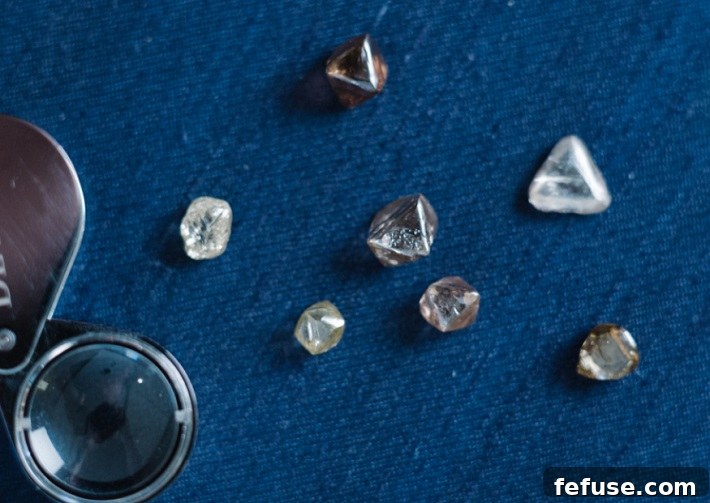
Diamond mining titan De Beers faced significant financial adjustments in the first half of 2023, reporting a noticeable decline in revenues. This downturn was primarily attributed to persistent macroeconomic challenges globally and a substantial accumulation of inventory within the crucial midstream segment of the diamond pipeline. The intricate interplay of these factors created a complex operating environment for one of the world’s leading diamond producers, underscoring the sensitivity of the luxury goods market to broader economic shifts and consumer confidence levels. Companies operating within the diamond sector, including key players like De Beers, found themselves navigating a period marked by cautious spending and an oversupply of finished goods.
For the six-month period concluding on June 30, 2023, De Beers’ total revenue saw a substantial decrease of 22% year-on-year, settling at $2.8 billion. This reduction was acutely felt in its core rough diamond sales, which plummeted by 24% to $2.5 billion. Such figures are a stark indicator of the prevailing softness in demand across the diamond market, reflecting a hesitant consumer base and a cautious approach from buyers further down the supply chain. The broader economic context, characterized by inflationary pressures, rising interest rates, and a general tightening of consumer spending, played a pivotal role in shaping these financial outcomes. As disposable incomes were squeezed and economic uncertainty loomed, luxury purchases, including diamond jewelry, became discretionary items that consumers were more reluctant to acquire. This global economic deceleration had a direct and immediate impact on the luxury sector, creating headwinds for even established industry giants.
Despite the drop in revenue and average prices, total rough diamond sales volumes remained relatively stable, reaching 15.3 million carats, largely consistent with the previous year’s period. However, this apparent stability in volume masks a significant shift in the composition of sales. De Beers noted that a higher proportion of lower-value rough diamonds were sold in 2023, directly impacting the average realized price. This metric, a critical indicator of market health and product mix, decreased by a substantial 23% to $163 per carat, down from $213 per carat in the corresponding period last year. This pronounced decline in average price reflects a more cautious and selective approach adopted by Sightholders – the exclusive group of diamond buyers invited by De Beers to purchase rough diamonds directly through long-term contracts. Faced with an uncertain macroeconomic outlook and an accumulation of polished diamond inventory in their own supply chains, Sightholders adjusted their planning for 2023 allocation schedules, favoring lower-value goods to manage their own risk and inventory levels more effectively. The ripple effect was also observed in the average rough diamond price index, which fell by 2%, further affirming the overarching softening in consumer demand for diamond jewelry and the persistent build-up of rough diamond inventory within the midstream segment.
Understanding Market Dynamics and Midstream Challenges in the Diamond Industry
The diamond midstream, comprising cutters, polishers, and traders, found itself navigating particularly turbulent waters at the beginning of 2023. Polished diamond inventory levels soared to uncomfortable heights, creating a significant bottleneck in the supply chain and severely dampening demand for new rough diamonds. This inventory glut was a direct consequence of several factors that collectively disrupted the delicate balance of supply and demand. Firstly, the highly anticipated rebound in Chinese demand following the easing of stringent Covid-19 restrictions did not materialize as expected. Instead, a fresh wave of infections in the first quarter of the year dealt a blow to nascent consumer confidence, stifling the potential for a robust recovery in what is traditionally one of the diamond industry’s most vital markets. The psychological impact of continued health crises, coupled with economic uncertainties, led Chinese consumers to prioritize essential spending over luxury items, including diamond jewelry, impacting sales significantly.
Beyond the challenges in China, the global market faced additional pressures that exacerbated the situation for midstream players. Softening polished prices, a natural consequence of oversupply and weakened demand, put significant strain on the profitability of businesses involved in cutting and polishing. With input costs for rough diamonds often remaining high, and the market value of their finished goods declining, margins were severely squeezed, making it harder for companies to sustain operations and generate healthy returns. This situation was further exacerbated by a global environment of higher financing costs. As central banks worldwide aggressively raised interest rates in an effort to combat persistent inflation, the cost of borrowing for businesses across the diamond pipeline increased dramatically. This added another layer of financial burden to an already struggling midstream, impacting liquidity and investment capacity. This combination of high inventory, weak end-consumer demand, declining polished prices, and elevated financing costs created a perfect storm, putting immense pressure on the entire diamond value chain, from rough diamond suppliers like De Beers to the retailers at the end of the line, highlighting the interconnectedness of global economic factors and the luxury market.
De Beers’ Production Performance Across Key Global Regions
In terms of raw material supply, De Beers’ H1 rough diamond production registered a slight marginal dip, moving from 16.9 million carats in the same period last year to 16.5 million carats in the first half of 2023. While the overall decline was modest, regional variations reveal strategic shifts and operational challenges that define De Beers’ global mining footprint. South Africa, a historically significant source of De Beers’ diamonds, experienced a notable reduction in production, plummeting by 59% to 1.2 million carats. This substantial decrease was a planned outcome, directly linked to the complex and capital-intensive transition of the iconic Venetia mine from its established open-pit operations to a state-of-the-art underground mining method. This strategic move, while impacting short-term output and requiring significant initial investment, is a crucial long-term investment aimed at extending the mine’s life by several decades and securing future diamond supply, reflecting De Beers’ commitment to sustainable operations and long-term value creation in the region.
Conversely, De Beers’ operations in Botswana and Namibia showcased robust and positive trends, serving as vital anchors for the company’s overall production portfolio and illustrating the diverse geological and operational strengths of its assets. Botswana, home to some of the world’s richest diamond deposits and a key partnership for De Beers through the Debswana joint venture, saw an encouraging increase of 9% in production, reaching an impressive 12.7 million carats. This surge was primarily driven by the planned treatment of higher-grade ore at its major mines, such as Jwaneng and Orapa, which allowed for greater output efficiency and higher quality yields. Similarly, Namibia, another crucial coastal and marine diamond mining hub, reported a significant 21% increase in production, achieving 1.2 million carats. This remarkable growth was attributed to the strategic expansion of mining areas, particularly within its marine operations, and optimized operational efficiencies across its land-based assets. The strong performance in Botswana and Namibia underscores the critical importance of these regions for De Beers, especially as other sites undergo transformational changes and the company navigates evolving market demands.
Strategic Focus and Capital Investments Amidst Industry Headwinds
Despite the prevailing market headwinds and the challenging macroeconomic environment, De Beers has maintained a strong strategic focus on elements within its control, particularly emphasizing the underlying and enduring demand for branded diamond jewelry. The company’s comprehensive consumer research consistently points to positive growth trends in key markets, especially China, within the resilient bridal and collection segments. This sustained interest in emotionally significant purchases, such as engagement rings, wedding bands, and milestone celebration pieces, provides a stable foundational demand even when general consumer confidence wavers for discretionary luxury items. De Beers’ continuous investment in powerful branding and sophisticated marketing initiatives for its branded jewelry offerings aims to capture and nurture this intrinsic demand, fostering deep consumer loyalty and reinforcing the enduring appeal of natural diamonds as timeless symbols of love, commitment, and personal achievement. This strategy helps to differentiate its products in a competitive market and build long-term brand equity.
In tandem with its forward-looking market strategy, De Beers’ capital expenditure saw a notable increase of 21%, reaching $302 million during the first half of the year. This significant investment primarily funded crucial long-term projects designed to secure future production and enhance operational sustainability, even amidst short-term market pressures. The Venetia underground project in South Africa was a central recipient of this capital, representing a multi-billion-dollar undertaking that is critical for transitioning the mine from its current open-pit phase to an advanced underground operation. This transformation is set to secure Venetia’s future as a major diamond producer for decades to come. Beyond Venetia, these substantial capital outlays also supported various ongoing life-extension initiatives across De Beers’ other global operations, aimed at optimizing existing resources, enhancing operational efficiency, and ensuring the long-term sustainability and environmental stewardship of its mining footprint. Such substantial investments in critical infrastructure and future capacity underscore De Beers’ unwavering long-term commitment to the diamond industry, even as it skillfully navigates short-term market volatility and economic uncertainties.
Future Outlook and De Beers’ Vision for the Diamond Industry
Looking ahead, De Beers anticipates that challenging macroeconomic conditions will likely persist, potentially impacting consumer spending on diamond jewelry through the latter half of 2023 and into the foreseeable future. Factors such as inflation, interest rate hikes, and geopolitical uncertainties are expected to continue influencing consumer behavior in key markets. However, this cautious short-term outlook is notably tempered by a robust and optimistic long-term perspective. The company’s comprehensive consumer research consistently affirms the enduring strength and intrinsic resilience of diamond demand in its key markets globally. This intrinsic desire for diamonds, deeply rooted in cultural significance and emotional value, is expected to provide a stable underpinning for the market over time, suggesting that current fluctuations represent temporary adjustments rather than a fundamental shift in long-term consumer preferences for these precious stones.
Adding to this optimistic long-term view, De Beers notes a crucial supply-side dynamic that is poised to shape the future of the industry: the global supply of rough diamonds is projected to decline significantly. This anticipated reduction is primarily due to the scarcity of significant new diamond discoveries and the natural depletion of existing mines, many of which have been operational for decades. The long lead times, immense capital investment, and extensive environmental assessments required to bring new mines online mean that new sources are unlikely to fill the gap created by dwindling existing supplies in the near future. This structural decline in global rough diamond supply is expected to act as a powerful catalyst, supporting value growth potential for natural diamonds in the medium to long term. As supply becomes more constrained relative to a resilient and growing demand base, the intrinsic value and rarity of natural diamonds are poised to appreciate, reinforcing their status as rare and precious commodities desired worldwide.
Furthermore, as part of its forward-looking strategy and commitment to responsible practices, De Beers is placing significant emphasis on enhancing diamond provenance through the innovative Tracr™ blockchain platform. This cutting-edge initiative represents a major leap forward in achieving unparalleled transparency and traceability within the global diamond industry. Tracr™ aims to provide consumers with an immutable, tamper-proof record of a diamond’s journey, meticulously tracking it from its origin at the mine, through the cutting and polishing stages, to its final setting in jewelry. By leveraging the power of blockchain technology, De Beers seeks to instill even greater confidence in the authenticity and ethical sourcing of natural diamonds, directly addressing growing consumer demand for responsible practices and verifiable origins. This advanced platform not only ensures the integrity and security of the supply chain but also empowers consumers with unprecedented detailed information about their purchases, reinforcing the brand’s unwavering commitment to ethical standards, sustainability, and transparency across its operations.
In line with its strategic planning and operational forecasts, De Beers has provided a clear production guidance for the full year 2023, estimating an output of between 30 and 33 million carats. This guidance reflects the company’s robust operational capabilities, projected market demand scenarios, and the ongoing transition and optimization efforts at its South African operations. Alongside this, De Beers has also issued a unit cost guidance of approximately $75 per carat. This cost efficiency target is crucial for maintaining profitability and competitiveness in a fluctuating market, signaling the company’s commitment to optimized operations, disciplined resource management, and continuous improvement across its mining portfolio. These detailed projections offer valuable insights into De Beers’ expected performance and its proactive measures to navigate a dynamic global diamond market while reinforcing its position as a leader committed to both commercial success and responsible industry stewardship, ensuring the long-term health and integrity of the natural diamond sector.