
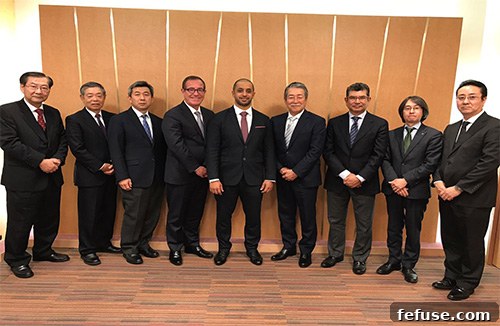
Strengthening Consumer Confidence: KP Chair’s Strategic Engagement with Japan’s Diamond Industry
In a significant move to bolster global consumer confidence and promote ethical practices within the diamond industry, Ahmed Bin Sulayem, the Kimberley Process (KP) Chair, recently concluded a series of high-level meetings in Japan. His comprehensive agenda involved strategic discussions with key industry stakeholders, including officials from the Tokyo Diamond Exchange Club, the Japan Gem Society, and senior representatives from Japan’s most influential jewellery houses. The overarching objective of these interactions was to collaboratively devise strategies that would amplify awareness of the Kimberley Process and enhance consumer trust in the broader diamond industry, particularly within the vital Japanese market.
This proactive engagement underscores the KP’s commitment to adapting to evolving market dynamics and addressing the challenges posed by shifting consumer demographics. Japan, a cornerstone of the global luxury market, holds immense strategic importance. It stands as the world’s fourth-largest consumer of diamonds, trailing only the US, China, and India. In 2014, the Japanese market alone commanded a substantial 7% share of the global diamond jewellery market, translating to an impressive $5.8 billion. Furthermore, the country’s import figures for rough diamonds reached $18.3 million in 2015, highlighting its significant role in the diamond supply chain.
Addressing the Millennial Gap: A Key Focus for Sustainable Growth
During his visit, Bin Sulayem brought particular attention to a critical demographic challenge facing the Japanese diamond market: the comparatively low engagement of millennials. He observed, “Japan is the only high profile diamond consumer market where millennial ownership is considerably lower (31%) than older customers (66%).” This disparity presents a significant opportunity for growth, as millennials globally are noted for being the demographic that purchases the most diamonds on average. The untapped potential within this younger consumer segment in Japan represents a substantial scope for increasing both awareness of the intrinsic value of diamonds and confidence in their ethical sourcing.
The implications of this millennial gap extend beyond immediate sales figures. As Bin Sulayem articulated, “Ongoing demand in this market is critical to the long-term sustainability in the diamond industry, which is an issue all stakeholders must work together collectively to address.” This statement emphasizes that the health and longevity of the entire diamond ecosystem depend on proactive engagement and adaptation to new consumer behaviors and expectations. Without fostering a strong connection with younger generations, the industry risks stagnation in key markets.
Bin Sulayem’s Vision: Strengthening Foundations and Ethical Practices
A core tenet of Bin Sulayem’s strategy, both during his tenure as KP Chair and specifically during his Japan visit, has been to strengthen the fundamental pillars of the broader diamond industry. He highlighted that one effective approach to achieving this involves showcasing the tangible role the diamond industry plays in supporting livelihoods in source markets. By illuminating these socio-economic contributions, the industry can build a more compelling narrative that resonates with consumers seeking ethical and socially responsible products. This narrative is further reinforced by spotlighting the unwavering efforts of the Kimberley Process in ensuring the diamond supply chain operates with the highest standards of ethical conduct and transparency.
Beyond the immediate concerns of conflict diamonds, the KP’s expanded focus includes initiatives aimed at enhancing transparency and fairness across the entire value chain. One such pivotal area is rough diamond valuation. Bin Sulayem emphasized that seeking out ways to support major diamond-consuming markets, like Japan, to more effectively appeal to customers by actively countering misconceptions about the industry, is another critical area where the KP believes it can add significant value. This proactive approach involves not only dispelling myths but also educating the public about the positive contributions and robust regulatory frameworks in place.
Driving Transparency: Permanent UN Secretariat and Common NGO Fund
In his discussions with Japanese industry leaders, Bin Sulayem elaborated on concrete initiatives designed to foster greater trust and accountability. “This is why we are actively working with the representatives of the Japanese diamond industry to discuss ways we can educate the public about initiatives such as the establishment of a Permanent UN Secretariat and a common NGO fund,” he stated. These two proposals represent significant advancements for the Kimberley Process:
- Permanent UN Secretariat: The establishment of a permanent secretariat under the United Nations would provide the Kimberley Process with enhanced institutional stability, continuity, and greater international recognition. This permanent body would streamline administrative processes, ensure consistent oversight, and provide a dedicated platform for long-term strategic planning and implementation, thereby strengthening the KP’s ability to address evolving challenges and maintain its vital role in preventing the trade of conflict diamonds. It would also lend more weight to the KP’s resolutions and compliance mechanisms, fostering greater confidence among governments, industry, and civil society.
- Common NGO Fund: The creation of a common fund dedicated to Non-Governmental Organizations (NGOs) would significantly empower civil society participation within the Kimberley Process. NGOs play a crucial role in monitoring, reporting, and advocating for ethical practices at the ground level in diamond-producing regions. A dedicated fund would provide these organizations with the necessary resources to conduct independent research, conduct on-site investigations, and ensure robust oversight of the diamond supply chain, thereby enhancing the credibility and effectiveness of the KP’s certification scheme. This collaboration with civil society is essential for maintaining transparency and accountability.
These initiatives are crucial for demonstrating the industry’s commitment to continuous improvement and its proactive approach to ensuring the integrity of every diamond reaching the consumer.
A Collaborative Effort: Key Stakeholders in Discussion
The discussions in Japan were marked by the enthusiastic participation of prominent figures from across the Japanese diamond and jewellery sectors, underscoring a collective commitment to these goals. Among those who contributed to the insightful talks were:
- Michio Iwasaki, President of the Tokyo Diamond Exchange Club, and Yoshiaki Yamaka, its esteemed Secretary General, representing the central hub for diamond trading in Japan.
- Nilam Alawdeen, Vice President of the Japan Gem Society, a leading authority on gemology and industry standards.
Furthermore, critical dialogues were held with senior representatives from Japan’s most respected jewellery companies, who play a direct role in bringing diamonds to the consumer market. These included:
- Keita Nagahori, President of Nagahori, a prominent name in Japanese fine jewellery.
- Masanobu Edisutani, Associate Director at Tasaki, renowned for its pearls and diamond jewellery.
- Hisao Kato, Chairman of Kashikey, a respected high-end jewellery brand.
- Yoshinobu Narukawa, President of Galart, known for its exquisite designs.
- Ueno Kenji, GM of the Jewellery Division at Seiko, a globally recognized brand diversifying into luxury jewellery.
The breadth of participation from these key industry leaders highlights the seriousness with which the Japanese market approaches the issues of ethical sourcing, consumer confidence, and sustainable growth. Their insights and commitment are invaluable in shaping strategies that will resonate effectively with the Japanese consumer.
Beyond Japan: A Regional Vision for Ethical Diamonds
The strategic visit to Japan was not an isolated event but part of a broader regional engagement by the UAE KP Chair. Following the productive discussions in Japan, Ahmed Bin Sulayem continued his mission by visiting the Republic of Korea. This subsequent visit signifies a concerted effort to engage with key markets across Asia, fostering a unified approach to strengthening the Kimberley Process and promoting consumer confidence in ethical diamonds throughout the region. The goal is to build a robust, interconnected network of stakeholders committed to the highest standards of integrity and transparency in the global diamond industry.
The Future of Diamonds: Trust, Transparency, and Targeted Engagement
Ahmed Bin Sulayem’s strategic visit to Japan served as a powerful reminder of the global interconnectedness of the diamond industry and the paramount importance of consumer trust. By directly engaging with Japanese stakeholders, the KP Chair addressed the unique challenges of this mature market, particularly the need to bridge the gap with millennial consumers. The emphasis on supporting livelihoods, ensuring ethical supply chains through initiatives like rough diamond valuation, and advocating for a Permanent UN Secretariat and a Common NGO Fund demonstrates a forward-thinking approach to the industry’s long-term sustainability. The collaborative spirit fostered during these meetings lays a strong foundation for a future where every diamond not only sparkles with beauty but also with the assurance of its ethical journey, reinforcing its timeless value for generations to come.
News Source: gjepc.org