
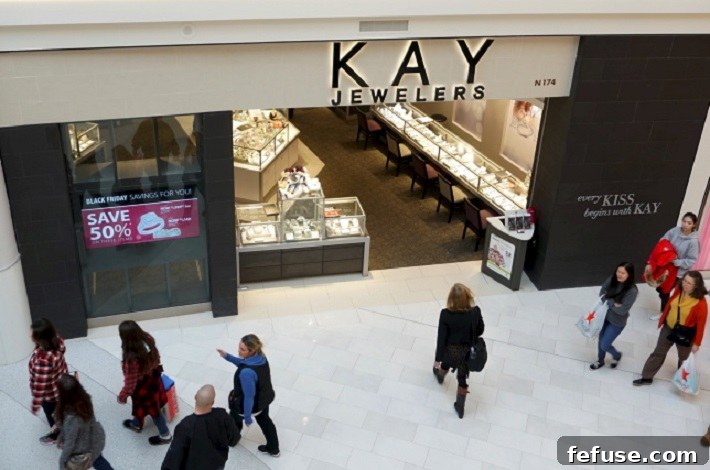
Signet Jewelers Navigates “Engagement Gap” with Revised Outlook and Strategic Store Closures
Signet Jewelers, the world’s largest retailer of diamond jewelry and the parent company behind iconic brands such as Kay Jewelers, Zales, and Jared, has recently announced a significant recalibration of its full-year financial outlook. The company has trimmed its sales forecasts by approximately seven percent and unveiled plans to shutter up to 150 underperforming stores. This strategic pivot comes as Signet grapples with the pervasive influence of what its leadership terms the “engagement gap,” a unique market challenge stemming from demographic and social shifts.
The revised total sales forecast for the fiscal year has been adjusted from an initial range of $7.67 billion to $7.84 billion down to a more conservative $7.1 billion to $7.3 billion. This downward revision underscores the macroeconomic headwinds and evolving consumer behaviors that are shaping the contemporary jewelry market, particularly within the crucial bridal segment.
Understanding the “Engagement Gap” and Its Origins
At the heart of Signet’s updated outlook is the “engagement gap”—a direct consequence of the widespread disruption to dating patterns three years ago, largely attributed to the global COVID-19 pandemic. CEO Virginia Drosos elaborated on this phenomenon during a call with investors following the publication of the company’s Q1 results for 2024, which concluded on April 29th. Drosos stated, “We expected the low double-digit decline in engagements that we saw this quarter.” This candid admission highlights a critical demographic slowdown in the pool of individuals ready to tie the knot, profoundly impacting the demand for engagement rings.
The pandemic, while a global health crisis, had unforeseen ripple effects on social milestones. Lockdowns, social distancing, and general uncertainty led to fewer new relationships forming or progressing at a typical pace. Now, three years on, the jewelry industry is experiencing the downstream effect of this subdued romantic activity. For a company like Signet, where roughly half of its total revenue is derived from bridal sales, any shift in engagement trends directly translates into substantial financial implications.
Adding another layer of complexity to this challenge, Drosos noted, “Similar to the fourth quarter, we expected to see units decline, but we also expected growth in average transaction value, which did not materialize.” This indicates that not only are fewer people getting engaged, but those who are proceeding with proposals are opting for more budget-conscious choices, impacting the overall revenue per transaction for engagement rings and related bridal jewelry.
Strategic Optimization: Closing 150 Underperforming Stores
In response to these market dynamics and to streamline its operational footprint, Signet Jewelers has announced plans to close up to 150 underperforming stores over the next year. This move is a calculated strategic adjustment aimed at enhancing profitability and efficiency across its extensive network of approximately 2,800 outlets. The majority of these closures are slated for traditional mall locations, where leases are expiring, offering a natural point for reassessment and optimization.
This initiative reflects a broader trend in retail, where companies are consolidating their physical presence in favor of more robust online platforms and strategically located, high-performing brick-and-mortar stores. By shedding less productive locations, Signet can reallocate resources towards improving the customer experience in its more viable stores and further investing in its burgeoning digital channels, which include prominent online players like JamesAllen.com and Rocksbox. This strategic culling is not merely a cost-cutting measure but a proactive step towards building a more resilient and agile retail model, better equipped to serve modern consumers who increasingly blend online and offline shopping experiences.
Analyzing Signet’s Q1 2024 Performance
The first quarter of fiscal year 2024 presented a mixed bag for Signet Jewelers. Total sales during Q1 amounted to $1.7 billion, representing a 9.3 percent decrease compared to the same period in the previous year. More significantly, same-store sales—a key metric for retail health—experienced a sharper decline of 13.9 percent. These figures vividly illustrate the direct impact of the “engagement gap” and the broader economic pressures on consumer spending habits.
Despite these challenging statistics, CEO Virginia Drosos highlighted the Signet team’s resilience, stating, “Our Signet team delivered our revenue and bottom-line commitments in Q1 despite macroeconomic headwinds that worsened late in the quarter.” This suggests that while sales volumes were lower than anticipated, the company managed its operational costs and financial obligations effectively, mitigating the full impact of reduced revenue. The macroeconomic environment, characterized by inflation, rising interest rates, and evolving consumer confidence, undeniably played a role in dampening discretionary spending, particularly on luxury items like fine jewelry.
CEO Insights and Future Market Dynamics
Virginia Drosos’s insights provide a crucial window into Signet’s strategic thinking and adaptability. The company had, to a degree, anticipated the “low double-digit decline in engagements” due to the aforementioned COVID-19 impact on dating. This foresight allowed Signet to prepare for a contraction in the bridal market. However, the unexpected absence of growth in average transaction value for engagement rings presented an additional challenge, indicating a shift towards more value-conscious purchasing decisions even among those celebrating engagements.
This trend suggests that while the emotional significance of an engagement remains, consumers are becoming more discerning about price points. This could be influenced by a variety of factors, including the rising cost of living, evolving perceptions of value, and the increasing popularity of alternative options like lab-grown diamonds, which offer comparable beauty at a lower price point. Signet, with its diverse portfolio of brands catering to various price segments (from accessible options like Banter by Piercing Pagoda to premium offerings like Diamonds Direct), is uniquely positioned to adapt to these evolving consumer preferences.
Broader Trends in the Jewelry Industry and Signet’s Adaptability
Beyond the “engagement gap,” the broader jewelry industry is navigating a period of significant transformation. Consumer preferences are shifting towards personalized experiences, sustainable and ethically sourced products, and seamless omnichannel shopping journeys. Companies that can effectively blend a compelling in-store experience with a robust, intuitive online presence are best positioned for long-term success.
Signet’s strategy reflects an understanding of these trends. The store closures, while seemingly a contraction, are part of a larger plan to optimize its retail footprint and invest in more profitable channels. This includes enhancing digital platforms, improving inventory management, and fostering a more customer-centric approach across all touchpoints. The company’s diverse brand portfolio, which includes everything from traditional jewelers to modern piercing studios and online-only retailers, allows it to cater to a wide spectrum of customer needs and adapt to changing tastes.
The focus on maintaining “revenue and bottom-line commitments” in a challenging quarter demonstrates Signet’s operational discipline and its ability to manage expenses while facing external pressures. As the company moves forward, its success will increasingly depend on its ability to innovate within product offerings, leverage data analytics to understand consumer behavior, and provide exceptional value and service that resonates with a new generation of jewelry buyers.
Conclusion: Navigating Challenges with Strategic Vision
Signet Jewelers is currently navigating a complex landscape marked by a unique “engagement gap” and broader macroeconomic uncertainties. The decision to trim its full-year outlook and strategically close 150 underperforming stores are not just reactions to market headwinds but rather proactive steps within a carefully considered strategy for long-term resilience and profitability. By acknowledging the impact of past social trends on current demand and by adapting its retail footprint, Signet is demonstrating a commitment to agility and efficiency.
The company’s leadership remains focused on managing through these transitional periods, emphasizing strong operational execution and a deep understanding of evolving consumer behaviors, particularly within the critical bridal sector. As Signet continues to adapt its business model, streamline its operations, and innovate across its diverse brand portfolio, it aims to maintain its position as a global leader in the jewelry industry, prepared for the challenges and opportunities that lie ahead in a dynamic retail environment.