
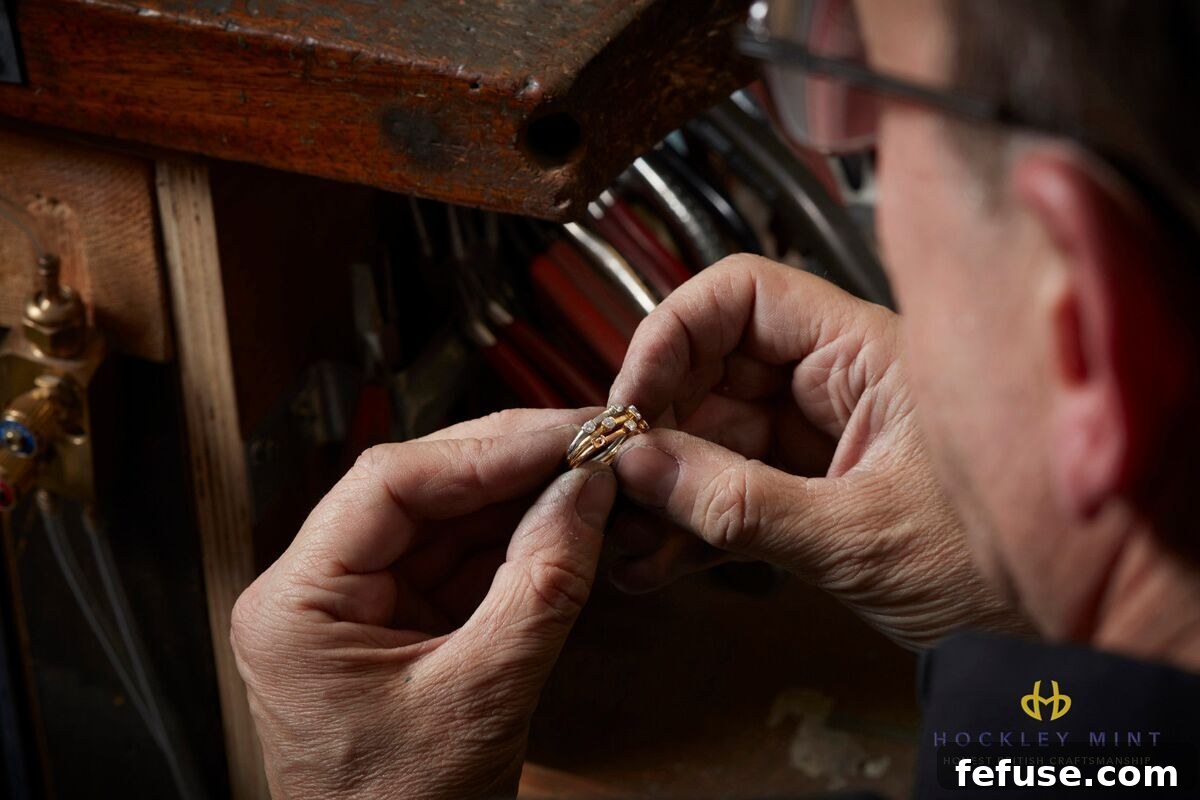
The Enduring Luster of British Jewellery: Why ‘Made in Britain’ Matters More Than Ever
The United Kingdom boasts a jewellery industry rich in heritage, unparalleled craftsmanship, and innovative design. From the bustling workshops of Hatton Garden to the historic Jewellery Quarter in Birmingham, British artisans and manufacturers consistently produce pieces of exceptional quality, making the UK a global leader in fine jewellery. This deep-rooted tradition of excellence, however, has not always been fully appreciated by consumers, both domestically and internationally. Yet, in today’s evolving landscape, the narrative is shifting, and the call to celebrate and support ‘Made in Britain’ jewellery has become more resonant than ever before.
At a time when global uncertainties and economic shifts have prompted consumers to rethink their purchasing decisions, there’s a growing inclination towards products that embody trust, transparency, and enduring value. This period of introspection presents a golden opportunity for the UK jewellery sector to proudly showcase its strengths and the myriad benefits of choosing British-made goods. It’s an invitation for the industry to not just compete, but to truly shine, highlighting the integrity, artistry, and ethical foundations that define its craft.
Unveiling the Legacy: The Hallmark of British Craftsmanship
Great Britain is home to an extraordinary community of jewellery suppliers, ranging from large-scale manufacturers leveraging cutting-edge technology to independent goldsmiths meticulously handcrafting bespoke creations. This diversity ensures a vibrant market capable of meeting a vast spectrum of consumer demands, all while upholding the highest standards of quality. The mere mention of iconic centres like Hatton Garden in London and Birmingham’s Jewellery Quarter conjures images of generations of skilled artisans, master craftsmen, and pioneering designers who have shaped the industry’s formidable reputation.
These hubs are not just commercial centres; they are living testaments to a continuous legacy of excellence. Here, traditional techniques are passed down through apprenticeships, while innovative methods are embraced, ensuring that British jewellery remains at the forefront of design and manufacturing. The commitment to perfection, the attention to detail, and the passion embedded in each piece are what set British-made jewellery apart, making it a symbol of true artistry and enduring value.
Navigating the Modern Market: Consumer Trust and Conscious Choices
The political and economic shifts of recent years, particularly the UK’s departure from the European Union, have undeniably introduced periods of unrest and uncertainty. This environment has had a tangible impact on consumer behaviour, leading to a tightening of purse strings and a more considered approach to spending. Shoppers are now more discerning than ever, asking deeper questions about provenance, production methods, and the inherent value of their purchases before making a final decision. This change isn’t a challenge; it’s an opportunity for British manufacturers to align with evolving consumer priorities.
As Oli Sutton, Managing Director at Charles Green, astutely observes, while political uncertainty presented challenges like a weaker pound, it also created significant opportunities. He notes, “One would hope that in light of impending Brexit, consumers take more of an interest in where their jewellery is manufactured.” This sentiment is echoed by Chantelle Serrell-Cooke, Marketing Coordinator at Domino, who emphasizes the growing importance of provenance. She states, “I think the British jewellery market is only going to grow in popularity. Gone are the days where people are looking for a bargain, consumers are looking for quality products, that are ethically sourced and will last a lifetime.” This shift signifies a move away from transient trends towards investments in quality, ethics, and longevity, areas where British jewellery excels.
The Undeniable Value of ‘Made in Britain’
While the initial cost of a British-made piece might sometimes appear higher than imported alternatives, today’s enlightened consumer understands that true value extends far beyond the price tag. The decision to buy British is an investment in quality, trust, and ethical integrity that many shoppers consider priceless. Gary Ingram, CEO of The Diamond Store, encapsulates this perfectly: “UK customers, as well as global consumers, trust British made goods. When something is ‘made in Britain’, it immediately implies that the product is of a high quality, made ethically, comes with reassuring customer service and is backed by the integrity of the UK jewellery industry.”
This perception of reliability and ethical production is a powerful differentiator in a crowded global market. Award-winning British jewellery designer Alex Monroe further reinforces this point, anticipating a positive future for British-made jewellery. He concedes that competing with imported products can be challenging, but confidently asserts, “the quality we can offer by making in Britain can easily outshine overseas manufacturers.” This intrinsic quality, combined with robust ethical standards and superior customer service, builds a formidable case for choosing British. Consumers aren’t just buying jewellery; they’re investing in a promise of excellence and responsible craftsmanship.
Strategic Alliances: Boosting British Production and Brand Recognition
Recognizing the immense potential and the need to amplify the ‘Made in Britain’ message, the National Association of Jewellers (NAJ) has forged a strategic partnership with Made in Britain – a dynamic community dedicated to promoting British manufacturing. This collaboration is a significant step forward, designed to empower and promote UK-based manufacturers and designer-makers across the country.
The agreement, which is now fully operational, offers NAJ members preferential rates to use the prestigious ‘Made in Britain’ marque. This distinctive mark serves as an immediate visual assurance of origin and quality, allowing consumers to easily identify and trust British-made products. Beyond discounted access to the marque, manufacturing members who join the scheme will benefit from invaluable publicity on both the NAJ and Made in Britain websites. Crucially, the initiative also proposes the right to use an optional mark directly on the jewellery itself, a powerful statement of origin at the point of sale. Currently, British assay officers hallmark gold and silver to verify metal purity, but not the country of origin. The introduction of a dedicated ‘country of origin’ mark is widely hoped to significantly boost sales and enhance the perceived value of British goods in the global marketplace, providing consumers with explicit confirmation of the product’s roots.
A Call for Industry Unity: Protecting and Promoting UK Manufacturing
The success of the ‘Made in Britain’ initiative hinges on collective effort and unwavering commitment from across the industry. Gary Wroe, NAJ Deputy Co-Chairman and Managing Director at Hockley Mint, passionately advocates for this unity: “Hopefully we can continue to bang the drum for UK manufactured goods and drive the Made in Britain initiative in our sector to the consumer. They make the ultimate decision, we have to be reactive and offer flexibility to all of our customers. British made jewellery needs to shout more about being Made in Britain and the introduction of the new Made in Britain hallmark will help us in that task. Hockley Mint will be one of the first to provide this additional hallmark.” His statement underscores the proactive role manufacturers must play in championing their origins.
Wroe further emphasizes the critical need for industry solidarity, particularly when facing competition from imported goods. He articulates, “The NAJ has taken the lead on the Made in Britain stance; as UK manufacturers we need to embrace the idea that our major competition is from imported goods. We need to stand together to showcase what is good about UK manufacturing — if we don’t then there is the potential that it will diminish and the 95% imported figure will in fact move to 96% and upwards. We employ and look after over 100 staff and their families we, as I know others, will fight to protect our UK industry.” This highlights the broader societal impact of supporting local manufacturing, safeguarding jobs, skills, and the economic well-being of communities.
Empowering Retailers: Bridging the Gap to the Consumer
For the ‘Made in Britain’ message to truly resonate, retailers play a pivotal role. They are the direct link to the end consumer, and their understanding and enthusiasm for British-made products are paramount. UK suppliers and manufacturers are proactively supporting retailers by offering comprehensive training, factory tours, and educational resources. This empowers retail staff to confidently articulate the unique selling points and exceptional quality of British jewellery.
As Chantelle Serrell-Cooke from Domino explains, “It is important that retailers understand how British jewellery is made and the quality behind the products. At Domino we work hard to ensure our retailers visit our production line and discover for themselves the technologies and the hand-crafted bench skills that lie behind each piece. They can then pass on the story to their customers.” This immersive experience transforms abstract concepts of quality and craftsmanship into tangible stories that resonate with customers, creating a stronger emotional connection to the product and its origin.
The Future Shines Bright: Optimism for British Jewellery
Looking ahead, there is widespread optimism among UK suppliers and manufacturers that ‘Made in Britain’ will become an increasingly important factor in consumer purchasing decisions over the next year and beyond. This positive outlook is already manifesting in tangible ways. Roseberry London, a company poised to be among the first to implement the new ‘Made in Britain’ mark, has reported a significant surge in interest from retailers keen to expand their stock of British-made products.
Raphael Gutwirth, co-founder of Roseberry London, highlights this trend: “With Roseberry being British-made we have had many enquiries into expanding the range so that multiple/independent jewellers can increase the amount of British-made products versus Far East.” He further predicts, “We foresee an increase in public awareness of British made goods due to its quality, after sales services (i.e. repair and alterations) and overall people’s perception of sourcing locally — the understanding that buying British helps retain the skill and craftsmanship in the UK.” This holistic view emphasizes not just the initial product quality, but also the long-term benefits of robust after-sales support and the invaluable contribution to preserving national skills and craftsmanship.
The journey towards fully realizing the potential of the ‘Made in Britain’ marque is an ongoing one, but the foundations are strong. With a concerted effort from manufacturers, retailers, and industry bodies, combined with a growing consumer appetite for authenticity and quality, the UK jewellery industry is poised for a period of renewed growth and recognition. The unique brilliance of British craftsmanship, infused with integrity and tradition, is ready to captivate a global audience once more, reaffirming its status as a beacon of excellence in the world of fine jewellery.