
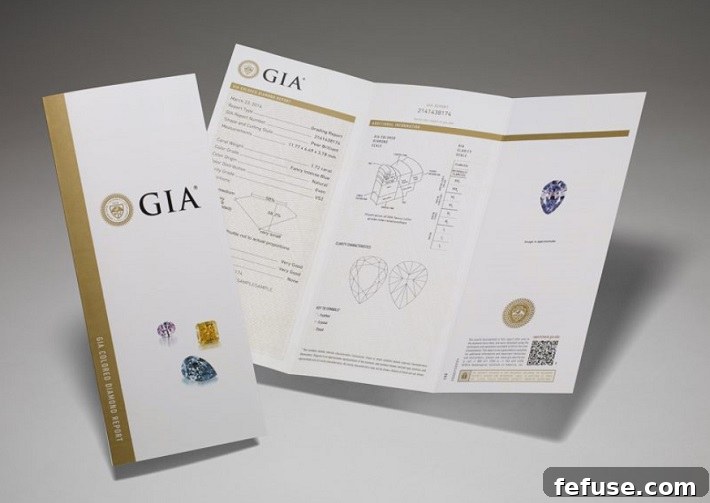
GIA Takes Decisive Action Against Diamond Fraud: Safeguarding Trust in the Gemstone Industry
In an industry where trust and transparency are paramount, the Gemological Institute of America (GIA) is making a resolute stand against sophisticated fraudulent practices. Recent reports have unveiled a concerning trend: laboratory-grown diamonds are being cut with precision to mimic the specifications of GIA-graded natural diamonds, then illicitly inscribed with counterfeit GIA report numbers. This deceptive practice undermines the integrity of the global diamond market and, more importantly, erodes consumer confidence. Recognizing the critical threat this poses, GIA is implementing a series of robust measures designed to protect the public and uphold the unwavering standards it has maintained for decades.
The fraudulent activities involve lab-grown diamonds or even treated natural diamonds being presented with falsified GIA inscriptions that correspond to a legitimate report for a natural, untreated diamond. This creates an illusion of authenticity, deceiving buyers who rely on GIA’s reputation for impartial grading and identification. Such practices not only harm consumers but also damage the credibility of the entire diamond supply chain, from miners and manufacturers to retailers and certification bodies. GIA’s immediate and comprehensive response underscores its foundational commitment to ethical commerce and consumer protection.
Introducing GIA’s Same-Day Inscription Verification Service
Beginning in the coming week, GIA will launch a groundbreaking same-day service specifically designed to verify GIA inscriptions. This innovative initiative will allow clients to confirm, with unprecedented speed and accuracy, that a diamond bearing a GIA inscription precisely matches its corresponding GIA report number. While specific operational details of this pivotal service are slated for a swift announcement, its introduction marks a significant leap forward in combating fraud directly at the point of inspection.
This new verification service is a direct answer to the challenges posed by increasingly sophisticated counterfeiting techniques. By providing immediate verification, GIA empowers dealers, retailers, and ultimately, consumers, with the tools to quickly ascertain the authenticity of a diamond’s inscription. It significantly reduces the window of opportunity for fraudulent stones to circulate undetected, thereby reinforcing the security and reliability of GIA grading reports. The aim is to create an ironclad layer of protection, ensuring that every GIA-inscribed diamond can be confidently traced back to its legitimate report, thus eliminating ambiguity and restoring absolute trust.
A Firm Stance: Protecting the GIA Brand and Consumer Trust
“Combatting this fraud is vital to protecting the public and ensuring their confidence in gems and jewellery – this is GIA’s mission,” stated GIA President and CEO Susan Jacques. Her powerful message resonates deeply within the industry, underscoring GIA’s unwavering dedication to its core principles. Jacques further emphasized the institute’s determination, stating, “We, like Tiffany, Cartier and other well-known global companies who are vigilant about protecting their valuable brands from counterfeiting and fraud, will take vigorous action to protect GIA and the trust consumers place in us.”
This comparison to luxury brands renowned for their intellectual property protection highlights the severity with which GIA views these fraudulent activities. GIA’s brand is synonymous with unbiased expertise, scientific rigor, and ethical practices. Any attempt to counterfeit its inscriptions is not merely an act of fraud but a direct assault on the foundation of trust upon which the entire gem and jewelry industry is built. GIA’s proactive and aggressive stance is a clear signal that it will not tolerate such deceit, employing all necessary resources to safeguard its reputation and the confidence of millions of consumers worldwide who rely on its certifications for informed purchasing decisions.
Understanding the Scope of the Fraudulent Activity
For several years now, GIA has been at the forefront of identifying and reporting instances where laboratory-grown or treated natural diamonds were meticulously cut to align with the precise attributes and measurements of GIA-graded natural, untreated diamonds. In these specific cases, the fraudulent stones bore counterfeit inscriptions, each featuring a GIA report number that genuinely belonged to a nearly identical natural, untreated diamond. This level of precision in mimicking legitimate characteristics speaks to the sophisticated nature of the perpetrators involved in these schemes.
The problem is not isolated. GIA has noted that other respected organizations within the gemological community are now reporting similar occurrences of counterfeit GIA inscriptions. This broader trend indicates a systemic issue that demands a concerted industry-wide response. The continuous monitoring and reporting by GIA have provided crucial intelligence, allowing the institute to anticipate and react to evolving threats. This historical context underscores GIA’s long-standing vigilance and its role as a sentinel for the industry against emerging forms of deception, thereby ensuring that the market remains as transparent and trustworthy as possible for all stakeholders.
Empowering Law Enforcement and Fostering Industry Collaboration
GIA’s commitment to combating fraud extends beyond its immediate services; for decades, the institute has played a vital role in educating law enforcement officers. Through specialized training programs, GIA has equipped these officers with fundamental diamond and gem identification knowledge, enabling them to better comprehend the intricacies of the industry, including sophisticated counterfeiting operations. This invaluable partnership ensures that legal authorities are well-prepared to investigate and prosecute fraudulent activities effectively.
The institute pledges to continue and enhance its collaboration with law enforcement agencies on this critical issue. GIA will diligently report the specifics and intricacies of counterfeiting and fraud directly to the appropriate trade and law enforcement bodies. This proactive reporting is essential for building robust cases against perpetrators and dismantling illicit networks. Furthermore, GIA strongly encourages any other gemological laboratory, industry organization, company, or individual to report any instance of counterfeiting of GIA inscriptions. Providing GIA with detailed information about fraudulent stones and the individuals or organizations submitting them is crucial. GIA commits to taking all appropriate measures, including rigorous legal action, to ensure that those responsible for and complicit in these fraudulent schemes are brought to justice, thereby reinforcing ethical standards across the entire global supply chain.
The Evolving Landscape: The Rise of Lab-Grown Diamonds
The backdrop to these escalating concerns is the rapid proliferation of laboratory-grown diamonds. Statistics illustrate the scale of this burgeoning sector: it is estimated that China alone houses approximately 10,000 high-pressure, high-temperature (HPHT) presses actively producing lab-grown diamonds. Simultaneously, India boasts nearly 7,000 carbon vapor deposition (CVD) reactors, collectively capable of manufacturing as much as one million carats of lab-grown diamonds each month, with ambitious plans for substantial increases in production capacity.
This phenomenal growth in lab-grown diamond production presents both opportunities and challenges for the industry. While lab-grown diamonds offer a compelling alternative for consumers, their increasing availability also creates a fertile ground for misrepresentation and fraud, especially when sophisticated techniques are employed to mimic natural stones and their certifications. The sheer volume of these diamonds entering the market necessitates heightened vigilance and robust identification protocols to maintain clear distinctions and prevent deceptive practices. GIA’s decisive actions are therefore not just a response to current fraud but a forward-looking strategy to ensure integrity in an increasingly complex and evolving diamond market landscape, safeguarding both the natural and lab-grown diamond sectors from dishonest exploitation.
A Future Built on Transparency and Trust
GIA’s proactive measures against diamond fraud represent a critical reinforcement of its unwavering commitment to consumer protection and market integrity. By introducing immediate verification services, strengthening partnerships with law enforcement, and actively encouraging industry-wide vigilance, GIA is setting a clear standard for ethical conduct. The institute understands that the trust placed in its reports is fundamental to the stability and reputation of the entire gem and jewelry industry.
As the diamond market continues to evolve, especially with the increasing presence of lab-grown diamonds, the demand for transparent and reliable certification services will only grow. GIA remains dedicated to leading this charge, ensuring that every diamond, whether natural or laboratory-grown, is accurately represented and can be purchased with absolute confidence. These decisive actions reaffirm GIA’s role as a global leader in gemological research and education, fostering an environment where honesty and integrity prevail, protecting both the trade and the millions of consumers who cherish the beauty and value of diamonds.