
In the vibrant and competitive world of luxury craftsmanship, where artistry meets commerce, the protection of unique designs and intellectual property stands paramount. Across the picturesque landscapes of Ireland, a significant legal battle is unfolding, pitting a renowned Irish jeweler, Brían de Staíc, against a store opened by his former employees. This highly publicized dispute brings into sharp focus the intricate challenges of safeguarding creative legacies and established brand identities in a bustling marketplace.
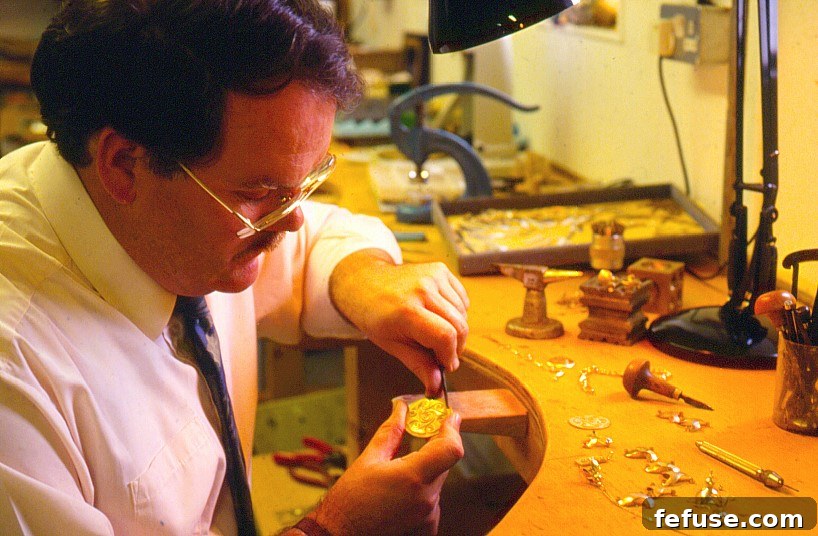
Brían de Staíc, a name synonymous with exceptional Irish jewelry for over four decades, is widely recognized as a master goldsmith and artist. His exquisite creations have adorned many, earning him the moniker “goldsmith to the stars.” With a network of successful boutiques strategically located in the popular tourist hubs of Cork and Kerry, de Staíc has meticulously built a brand revered for its quality, originality, and deep connection to Irish heritage. At the heart of the current controversy lies his acclaimed “Ogham Stone collection,” a range of products that elegantly blends ancient Irish history with contemporary design, capturing the imagination of customers worldwide, particularly those visiting Ireland.
The core of the legal challenge, as reported by outlets such as the Independent IE, revolves around accusations of copyright infringement and “passing off.” De Staíc alleges that AJ Bácéir Teoanta, trading as Dingle Goldsmiths, a rival establishment founded by his former staff members, is deliberately manufacturing and selling products strikingly similar to his distinctive Ogham Stone collection. This claim has initiated High Court proceedings, with de Staíc seeking an injunction to prevent Dingle Goldsmiths from continuing these alleged practices, arguing that they undermine his intellectual property rights and cause considerable confusion among the purchasing public.
The Genesis of the Dispute: A Tale of Two Goldsmiths
The narrative of this legal confrontation began to unfold when Jerry and Aideen Bácaéir, the directors behind Dingle Goldsmiths, decided to embark on their entrepreneurial journey. Prior to establishing their own venture, both individuals had been integral members of Brían de Staíc Teo for a significant period. During their tenure, they would undoubtedly have gained invaluable experience in the intricate art of jewelry making, retail operations, and, crucially, an intimate understanding of de Staíc’s signature collections, including the highly successful Ogham Stone line. This experience provided them with unique insights into the established market and de Staíc’s business model.
Their new boutique, Dingle Goldsmiths, opened its doors in April 2017, just seven doors away from Brían de Staíc’s well-established outlet on Green Street in Dingle. This strategic proximity, combined with the nature of the products allegedly offered, forms a critical component of de Staíc’s “passing off” claim. The close physical location is argued to enhance the likelihood of customer confusion, leading patrons to mistakenly believe that Dingle Goldsmiths’ offerings are either affiliated with, or originate from, Brían de Staíc’s renowned brand.
Unpacking the Ogham Stone Collection: A Legacy of Irish Artistry
To fully grasp the gravity of de Staíc’s claims, one must understand the significance of the Ogham Stone collection. Ogham is an ancient alphabet, unique to Ireland, believed to have been used from the 4th to the 6th century AD. It consists of a series of lines and notches carved into stone, primarily found on monumental inscriptions throughout the Irish landscape. These Ogham stones represent a tangible link to Ireland’s early history, language, and cultural identity.
Brían de Staíc’s genius lay in transforming this historical script into wearable art. His Ogham Stone collection is not merely jewelry; it is a celebration of Irish heritage, meticulously crafted pieces that encapsulate centuries of tradition. Each design typically features the distinctive linear markings of the Ogham alphabet, often integrated into elegant silver or gold settings, sometimes adorned with precious stones. The collection’s appeal stems from its unique aesthetic, its historical resonance, and the masterful craftsmanship involved in each piece. It offers tourists and locals alike a tangible connection to Ireland’s rich past, making it a highly sought-after souvenir and a cherished keepsake. The success of this collection is a testament to de Staíc’s vision, artistic skill, and years of dedicated brand building, particularly in tapping into the lucrative US tourist market and the steady flow of tour buses visiting Dingle.
The Allegations: Copyright Infringement and the Doctrine of “Passing Off”
The legal action initiated by Brían de Staíc centers on two pivotal areas of intellectual property law: copyright infringement and the common law tort of “passing off.”
Copyright Infringement in Design
Copyright law protects original artistic and literary works, and this extends to original jewelry designs. For a design to be protected by copyright, it must be original – meaning it was independently created by the author and possesses at least a minimal degree of creativity. De Staíc contends that his Ogham Stone collection embodies such originality and creative expression, making its specific designs and aesthetics subject to copyright protection. Copying these designs without permission, therefore, constitutes an infringement of his exclusive rights as the creator.
The accusation implies that Dingle Goldsmiths has not merely drawn inspiration from Irish heritage, but has allegedly replicated the specific artistic interpretations and design elements that distinguish de Staíc’s collection. This form of alleged infringement can directly impact the original creator’s ability to profit from their work and dilute the uniqueness of their artistic contribution to the market.
Understanding “Passing Off”
“Passing off” is a legal action used to protect the goodwill or reputation of a business from misrepresentation. It occurs when one business misleads consumers into believing that its goods or services are those of another, more established business, or are somehow associated with it. De Staíc’s claim of passing off is multi-faceted, asserting that Dingle Goldsmiths is:
- Selling products that bear a strong resemblance to his Ogham Stone collection.
- Employing similar advertising and marketing strategies that evoke de Staíc’s established brand identity.
- Operating in such close proximity that it creates an environment ripe for consumer confusion.
The essence of the passing off claim is that the actions of Dingle Goldsmiths are calculated to make the public believe that their Ogham Stone-like products are, in fact, Brían de Staíc’s, or that Dingle Goldsmiths is an authorized retailer or an associated entity. This, de Staíc argues, constitutes a deliberate attempt to “piggyback” on the immense success, reputation, and goodwill his retail business has painstakingly cultivated over decades. The target market, particularly the often-bustling US tourist sector and the steady stream of tour buses that frequent Dingle, is seen as especially vulnerable to such confusion. Tourists, often unfamiliar with the local market nuances, might easily mistake one “Ogham Stone” collection for another, especially given the historical context and the shared location.
The Stakes: Why This Case Matters for Artisans and Businesses
This High Court injunction highlights the critical importance of intellectual property protection within the creative industries. For artisan jewelers like Brían de Staíc, their designs are not just products; they are extensions of their artistic vision, their brand, and their life’s work. The cost of developing unique collections, establishing a market presence, and building customer loyalty represents a significant investment of time, creativity, and financial resources.
If competitors are permitted to reproduce or imitate successful designs without consequence, it can stifle innovation, erode brand value, and create an unfair competitive landscape. This case serves as a powerful reminder of the legal avenues available to protect original creations and prevent unfair commercial practices that seek to capitalize on another’s hard-earned success. The outcome will undoubtedly have implications for how intellectual property is viewed and protected across the Irish craft and luxury goods sectors, potentially setting precedents for future disputes.
Moreover, the dispute underscores the ethical considerations in business competition. While healthy competition fosters innovation and benefits consumers, it is crucial that businesses operate within the bounds of fairness and respect for intellectual property rights. The line between inspiration and imitation can sometimes be blurred, but legal frameworks like copyright and passing off are designed to provide clarity and recourse when that line is crossed.
For Dingle, a town celebrated for its vibrant artisan community and a magnet for tourists seeking authentic Irish experiences, this legal battle also casts a spotlight on the local economy. The unique products offered by local craftspeople like Brían de Staíc are an integral part of Dingle’s allure, contributing significantly to its reputation as a destination for quality Irish craftsmanship. Protecting these unique contributions is vital for the sustained appeal and economic vitality of such regions.
The Ongoing Legal Proceedings
The legal proceedings are currently underway in the High Court, a testament to the complex nature and high stakes of intellectual property disputes. With the case set to return next week, both parties are preparing to present their arguments before the judiciary. The court’s decision will hinge on a meticulous examination of the evidence, including detailed comparisons of the designs, marketing materials, and an assessment of consumer perception. The resolution of this case will not only determine the future commercial rights related to the Ogham Stone collection but also underscore the fundamental principles of fair competition and the safeguarding of creative endeavors in Ireland’s thriving artisan sector.
News Source: professionaljeweller.com