
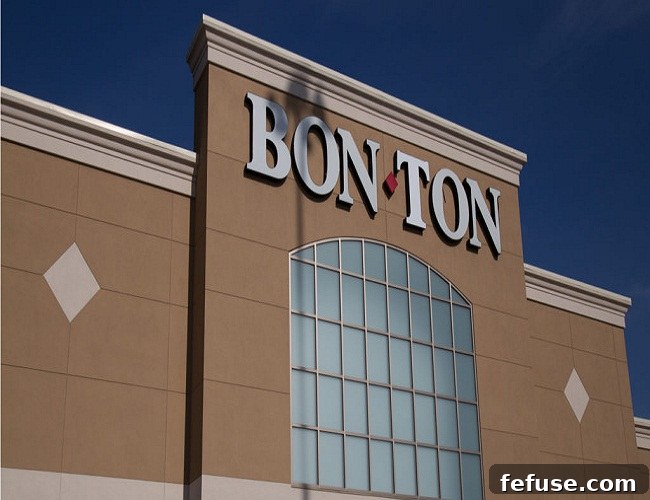
The Precarious State of Bon-Ton: Vendor Caution and Leadership Turmoil Signal Deepening Retail Crisis
The traditional department store model is facing unprecedented challenges in the modern retail landscape, and for Bon-Ton Stores, these pressures appear to be reaching a critical point. Recent reports from Bloomberg indicate a significant shift in vendor behavior towards the beleaguered retailer, mirroring the cautious stance suppliers adopted ahead of Toys R Us’s widely publicized bankruptcy. This development is a stark red flag, signaling profound underlying financial distress and raising serious questions about Bon-Ton’s future viability.
Vendors, crucial partners in any retail operation, are increasingly insisting on more secure payment terms for shipments to Bon-Ton’s 260 locations. According to the news agency, citing unnamed sources familiar with the situation, suppliers are demanding payment via letters of credit (LCs) or cash on delivery (COD). This move is far from standard practice in healthy business relationships; instead, it’s a defensive strategy employed when confidence in a buyer’s ability to fulfill its financial obligations begins to erode significantly. For suppliers, the primary concern is mitigating the risk of non-payment, especially in an industry segment already fraught with bankruptcies and liquidations.
Letters of credit, for instance, offer vendors a guarantee of payment from a bank, rather than directly from the retailer, once certain conditions (like proof of shipment) are met. This shifts the payment risk from the supplier to the bank, a much more secure position. Cash on delivery, on the other hand, is the most direct form of risk aversion, ensuring that goods are only exchanged for immediate payment. While a spokeswoman for Bon-Ton told Bloomberg that the company “maintains constructive relationships with its vendors,” the market’s actions speak louder than corporate reassurances. The discrepancy between official statements and the operational adjustments demanded by suppliers underscores a growing chasm between perception and reality regarding the company’s financial health.
The Echoes of Toys R Us: A Troubling Precedent for Retail
The comparison to Toys R Us is particularly unsettling for anyone monitoring the retail sector. Before the iconic toy retailer filed for bankruptcy, a similar pattern emerged: vendors, wary of the company’s escalating debt and declining sales, began tightening credit terms and demanding upfront payments. This defensive posture by suppliers often serves as an early warning signal of impending financial collapse. When a retailer can no longer secure favorable credit terms, its operating costs surge, cash flow becomes constrained, and its ability to stock shelves with desirable merchandise is severely hampered. This creates a vicious cycle: fewer goods lead to fewer sales, further exacerbating financial woes and eroding consumer confidence.
For Bon-Ton, a regional department store chain that operates under various banners including Bon-Ton, Bergner’s, Boston Store, Carson’s, Elder-Beerman, Herberger’s, and Younkers, such vendor caution can have catastrophic consequences. A constrained supply chain means reduced inventory, which directly impacts customer experience. Empty shelves, limited selection, and a lack of trending products can quickly drive shoppers away to competitors who can maintain a consistent and attractive merchandise assortment. In an already fiercely competitive environment, where e-commerce giants and fast-fashion retailers are constantly innovating, any disruption to product availability can be a death knell for traditional brick-and-mortar stores.
Leadership Instability: A Symptom of Deeper Strategic Misalignments
Beyond the immediate concerns of vendor relationships, Bon-Ton has also faced significant turbulence at the very top of its corporate structure. Earlier this year, company CEO Kathryn Bufano stepped down from her position. Her departure marked the end of a relatively short tenure, which was then followed by the appointment of William Tracy as her replacement. What makes this leadership change particularly striking, and indicative of deeper systemic issues, is the fact that Tracy is the company’s fourth CEO in just five years. This rapid turnover at the helm is a glaring sign of instability and a potential lack of clear, consistent strategic direction within the organization.
A revolving door of chief executives can be profoundly detrimental to a company’s ability to execute long-term plans, build employee morale, and, crucially, maintain external confidence – especially among investors and suppliers. Each new leader typically brings their own vision, often leading to shifts in strategy that can be costly and disruptive if not given adequate time to mature. For a company already grappling with financial difficulties, a lack of consistent leadership can further erode trust, both internally and externally. Vendors, for example, rely on stable management to ensure the longevity and reliability of their business partners. Frequent changes at the top can breed uncertainty, making suppliers even more hesitant to extend credit or commit to long-term contracts.
The Broader Retail Context: Department Stores Under Siege
Bon-Ton’s struggles are not occurring in a vacuum; they are emblematic of the broader crisis facing traditional department stores across the United States. For years, these once-dominant retail anchors have been buffeted by a perfect storm of converging challenges. The relentless rise of e-commerce, spearheaded by Amazon and other online retailers, has fundamentally altered consumer shopping habits. Shoppers increasingly prioritize convenience, speed, and competitive pricing, often finding these attributes more readily available online.
Furthermore, the decline of shopping malls, once the thriving ecosystems for department stores, has severely impacted foot traffic. Many malls are struggling with vacancies, dated aesthetics, and a lack of appealing tenants, creating a less attractive environment for consumers. Changing demographics and evolving consumer preferences, particularly among younger generations, have also shifted demand away from traditional department store offerings towards more niche, experience-driven, or direct-to-consumer brands.
Aggravating these market forces is the heavy debt load that many legacy retailers, including Bon-Ton, have accumulated over the years, often as a result of leveraged buyouts or expensive restructuring efforts. This debt limits their ability to invest in necessary upgrades, such as enhancing their online presence, renovating stores, or modernizing supply chains. Without significant capital infusions and radical strategic shifts, many department stores find themselves in a perpetual struggle to adapt to the fast-changing retail landscape, ultimately leading to store closures, restructurings, and, in some cases, outright bankruptcies.
The Ripple Effect: What Vendor Caution Means for Bon-Ton’s Operations and Future
The insistence by vendors on letters of credit or cash on delivery imposes a significant operational and financial burden on Bon-Ton. Firstly, it ties up valuable working capital that could otherwise be used for other critical functions, such as marketing, store improvements, or employee training. Paying upfront means less cash available for day-to-day operations and strategic investments. Secondly, it complicates the procurement process, potentially slowing down the delivery of goods and making it harder to respond quickly to seasonal demand or fashion trends. In a fast-paced retail environment, delays in getting products onto shelves can directly translate to lost sales and decreased competitiveness.
Moreover, the signal sent by cautious vendors can damage a retailer’s reputation and further erode supplier confidence. Other vendors, seeing their peers demand stricter payment terms, may follow suit, creating a snowball effect. This can lead to a shrinking pool of willing suppliers or an increase in the cost of goods, as vendors demand a premium for the added risk they perceive. Ultimately, a breakdown in vendor relationships can lead to inconsistent inventory levels, empty shelves, and a poor shopping experience, driving away the very customers Bon-Ton needs to retain.
The road ahead for Bon-Ton appears fraught with challenges. To navigate this treacherous environment, the company would likely need to undertake a comprehensive and decisive restructuring. This could involve significant store closures, a re-evaluation of its product assortment, a substantial investment in its e-commerce capabilities, and potentially a complete overhaul of its financial structure to reduce debt. The ability to restore vendor confidence, secure stable leadership, and adapt to the modern consumer will be paramount to its survival. The current indicators, from supplier demands to leadership changes, suggest that Bon-Ton is at a critical juncture, facing an existential threat that mirrors the fate of many traditional retailers struggling to find their place in an evolving market.