
Strategic Dialogue: GJEPC Addresses GST Challenges in India’s Diamond Sector
Elevating India’s Gem and Jewellery Industry Through Policy Advocacy
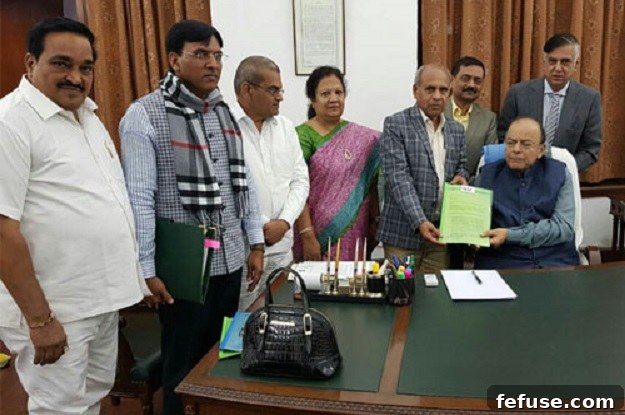
India’s gem and jewellery sector stands as a cornerstone of the nation’s economy, a vibrant industry renowned globally for its unparalleled craftsmanship and robust export capabilities. As a leading player in the world’s diamond and jewellery trade, the sector significantly contributes to employment, skill development, and foreign exchange earnings. Recognizing the critical importance of a conducive policy environment for this vital industry, the Gem & Jewellery Export Promotion Council (GJEPC), the apex body for the promotion of India’s gem and jewellery exports, consistently engages with government stakeholders to address industry concerns and advocate for supportive policies. A pivotal moment in this ongoing dialogue occurred on January 4, 2018, when a high-level delegation from the GJEPC met with the Hon’ble Minister of Finance, Government of India (GoI), Shri Arun Jaitley, to discuss the implications of the newly introduced Goods and Services Tax (GST) on the diamond sector.
The High-Powered Delegation and Key Stakeholders
The GJEPC delegation was spearheaded by its esteemed Chairman, Shri Praveenshankar Pandya, a veteran leader in the industry, whose vision and expertise have significantly propelled the sector’s growth. He was accompanied by Shri Sabyasachi Ray, the Chief Executive Director (CED), who brings a wealth of administrative and strategic insights to the council’s operations. The delegation also included Babubhai N. Gujarati, President of the Surat Diamond Association, representing the heartland of India’s diamond manufacturing and trading. Their collective presence underscored the unified voice of the industry in seeking governmental intervention on crucial tax matters. The significance of this meeting was further amplified by the presence of several key political figures, indicating the government’s acknowledgment of the sector’s strategic importance. These included Cabinet Minister Shri Mansukh Mandaviya; Members of Parliament Smt. Darshana Jardosh and Shri C.R. Patil, both representing regions intrinsically linked to the diamond industry; and Shri Nanubhai Vanani, a former minister from Gujarat, who possesses deep understanding of the local industrial landscape. Such a high-profile gathering demonstrated the seriousness with which both the industry and the government approached the critical discussion on GST’s impact.
Navigating the Goods and Services Tax (GST) Landscape for Diamonds
The introduction of the Goods and Services Tax (GST) in July 2017 marked a monumental reform in India’s indirect tax regime, aimed at creating a unified national market, simplifying the tax structure, and enhancing transparency. While the overarching goal of GST was to streamline business operations and improve the ease of doing business across various sectors, its implementation presented unique challenges for specific industries, particularly those with complex value chains and significant export orientation, like the diamond sector. The meeting on January 4, 2018, served as a crucial platform to meticulously discuss the practical ramifications of GST on the diamond industry. The delegates outlined in detail how certain aspects of the new tax system were creating liquidity constraints, increasing compliance burdens, and potentially eroding the competitive edge of Indian diamond businesses in the global market. The intricate process of diamond manufacturing, from the import of rough diamonds to their cutting, polishing, and eventual export or domestic sale, involves multiple transactions. Each stage, under the new GST framework, brought forth questions regarding tax liability, input tax credits, and the overall cash flow management for businesses operating on traditionally thin margins for high-value goods. The industry sought a pragmatic approach that would align the progressive intent of GST with the operational realities and global competitiveness requirements of the diamond trade.
Key Industry Proposals for GST Rationalization
In a bid to safeguard the industry’s health and ensure its continued growth, the GJEPC delegation presented two primary proposals to the Finance Minister, alongside other critical points. These proposals were carefully crafted to address the specific pain points identified post-GST implementation:
1. Implementing a ‘No-Tax Situation’ for Import-to-Export Transactions
The first and foremost request was for the Government of India to introduce a scheme under GST that would ensure all transactions between the import of rough diamonds and their subsequent export as finished polished diamonds are in a ‘no-tax situation’. This demand stems from the fundamental principle that exports should ideally be zero-rated to ensure that domestic taxes do not make export goods more expensive and less competitive in the international market. For the diamond industry, which is heavily reliant on importing rough stones, processing them, and then exporting the finished product, any blockage of working capital due to tax payments (even if refundable later) significantly impacts liquidity. The existing GST framework, while allowing for input tax credit and refunds on exports, often leads to delays in the refund process, thereby tying up crucial capital. A ‘no-tax situation’ would effectively mean that these intermediary transactions, which are part of the export value chain, would be exempt from GST, or subject to a nil rate, thereby eliminating the need for businesses to pay tax and then seek a refund. This would be a crucial step towards maintaining India’s competitive edge against other diamond manufacturing hubs that already benefit from similar facilitative tax regimes.
2. Emulating International Best Practices: The Belgium and Israel Model
The delegation further requested the introduction of a specific scheme designed to emulate the successful models adopted by key international competitors like Belgium and Israel, which are prominent global diamond trading centers. The proposal involved creating a special ‘GST group’ under the provisions of Section 148 of the CGST Act / SGST Acts 2017. Within this proposed framework, all transactions occurring between registered members of this designated GST group would either be exempted (while still allowing for input tax facility), nil-rated, or taxed at a nominal value. This sophisticated mechanism aims to streamline operations and significantly reduce the tax burden within the defined group of businesses involved in the diamond trade. By allowing for input tax credit even with exemptions or nil-rating, the industry sought to avoid the cascading effect of taxes, which could otherwise make Indian diamonds more expensive. Such a group mechanism would facilitate smoother transactions, reduce the compliance load, and enhance the overall efficiency of the diamond supply chain, mirroring the operational ease experienced by competitors in leading global diamond exchanges. This innovative approach would not only ease the financial burden but also foster greater collaboration and integration within the domestic diamond industry, making it more resilient and responsive to global market dynamics.
3. Addressing Refund Mechanisms and Presumptive Tax Issues
Beyond the core proposals, the delegation also highlighted other critical issues, namely the complexities surrounding refund mechanisms and the potential applicability of a presumptive tax. The refund process under GST, especially for exporters, was often cumbersome and time-consuming, leading to significant liquidity blockages. The industry urged for a more efficient, automated, and timely refund system to ensure that exporters’ working capital is not unnecessarily tied up. Furthermore, the concept of a presumptive tax for smaller players within the diamond sector was discussed. Presumptive taxation, a simplified method of taxation where tax is paid on an estimated income rather than actual profits, could potentially reduce the compliance burden for numerous small and medium-sized enterprises (SMEs) that form the backbone of the diamond cutting and polishing industry. This would allow them to focus more on their core business activities rather than grappling with intricate tax compliance procedures, thereby fostering growth and entrepreneurship at the grassroots level.
Government’s Receptiveness and Future Outlook
The Hon’ble Finance Minister, Shri Arun Jaitley, extended a patient and attentive hearing to the GJEPC delegation, acknowledging the intricate challenges faced by the gem and jewellery sector. His assurance that the various points raised during the extensive discussion would be thoroughly looked into was a significant positive takeaway for the industry. This constructive engagement signaled the government’s willingness to understand and address specific sectoral concerns within the broader framework of GST. Such high-level dialogues are crucial for fine-tuning policy implementation and ensuring that economic reforms yield their intended benefits without inadvertently harming vital industries. The GJEPC and the broader gem and jewellery community viewed this meeting as a pivotal step towards a more favorable and supportive tax regime. Should the proposed changes be implemented, they are expected to significantly boost India’s diamond exports, enhance the industry’s international competitiveness, improve liquidity for businesses, and further solidify India’s position as a global leader in the diamond trade. The commitment to ongoing dialogue between the industry and the government remains a crucial factor in navigating future economic landscapes and ensuring sustainable growth for this dynamic sector.
Conclusion: Paving the Way for Sustainable Growth
The strategic meeting between the GJEPC delegation and the Hon’ble Finance Minister on January 4, 2018, underscored the critical importance of a responsive and adaptive tax policy for the sustained growth of India’s gem and jewellery sector. By meticulously detailing the impact of GST and proposing well-reasoned solutions, the industry articulated its need for a tax regime that supports its export-oriented nature and global competitiveness. The specific proposals for a ‘no-tax situation’ for import-to-export transactions and the adoption of an international ‘GST group’ model akin to Belgium and Israel were aimed at resolving liquidity challenges, streamlining operations, and reducing compliance burdens. The positive reception from the Finance Minister, coupled with his assurance to examine these crucial points, instilled optimism within the industry. As India continues to cement its position as a global powerhouse in the diamond and jewellery trade, a tax framework that fosters ease of doing business, ensures capital fluidity, and aligns with international best practices will be paramount. This dialogue represented a significant stride towards creating an even more vibrant, efficient, and globally competitive Indian gem and jewellery sector, driving economic prosperity and reinforcing the nation’s leadership in the global market.