
Signet Jewelers Navigates Challenging Market: Q4 Performance and Optimistic Outlook for Fiscal 2025
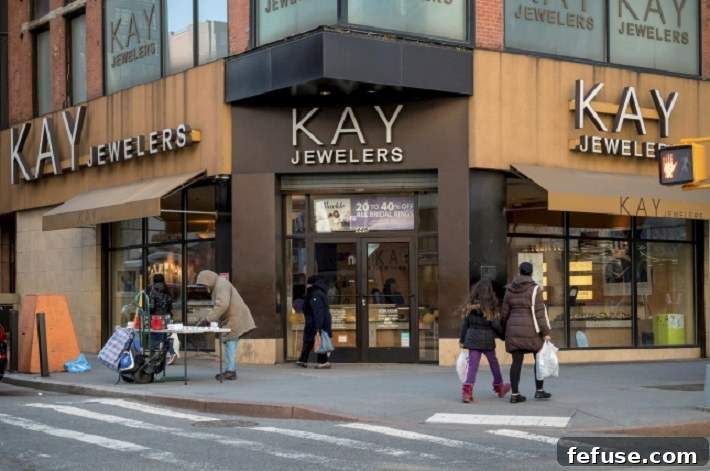
Signet Jewelers, the world’s largest retailer of diamond jewelry, recently announced its fourth-quarter results, revealing a challenging period marked by a significant decline in sales. The company, which operates an extensive network of 2,700 outlets and encompasses renowned brands such as Kay, Zales, Jared, and Blue Nile, reported a 6.3 percent fall in net sales for Q4, alongside a more pronounced 9.6 percent drop in same-store sales. These figures underscore the evolving landscape of the jewelry market and the specific pressures faced by traditional retailers.
For the three months ending February 3, Signet’s total sales amounted to $2.5 billion, a notable decrease of $168.6 million compared to the previous year. This performance highlights the complexities of operating within a sector influenced by shifting consumer preferences, economic fluctuations, and intensifying competition. Despite these headwinds, Signet’s leadership has articulated a clear strategy and maintains a cautiously optimistic perspective for the upcoming fiscal year.
Understanding the Q4 Sales Decline: Key Factors at Play
The reported sales decline for Signet in the fourth quarter was attributed to a confluence of factors, primarily fewer engagements and increased competition. The diamond jewelry market, particularly the bridal segment, is highly sensitive to social trends and economic conditions. A dip in engagement rates directly impacts demand for engagement rings, a cornerstone of Signet’s business. Societal shifts, such as couples delaying marriage or choosing alternative forms of commitment, can ripple through the industry, affecting sales volumes for traditional retailers.
Beyond demographic shifts, the competitive landscape has undergone a dramatic transformation. The rise of lab-grown diamonds has emerged as a significant disruptor. These ethically sourced, often more affordable alternatives to mined diamonds have gained considerable traction among consumers, particularly younger demographics, who value transparency, sustainability, and value for money. Lab-grown diamonds, frequently offered at heavily discounted prices compared to their natural counterparts, present a formidable challenge to traditional diamond retailers. This shift necessitates a strategic re-evaluation for companies like Signet, which have historically built their reputations on mined diamonds.
The economic climate also played a role. Consumer discretionary spending often tightens during periods of economic uncertainty, and luxury items like diamond jewelry are frequently among the first purchases to be deferred. High inflation, interest rate hikes, and general cost-of-living pressures can lead consumers to prioritize essential goods over high-value discretionary items, further contributing to a subdued retail environment for the jewelry sector.
Leadership’s Perspective and Strategic Initiatives for Recovery
Virginia C. Drosos, Signet’s CEO, acknowledged the challenging conditions during the quarter but emphasized that the results were largely in line with the company’s internal expectations. This suggests that Signet had anticipated a difficult period and had perhaps adjusted its outlook accordingly. More importantly, Drosos conveyed a message of resilience and optimism, outlining strategic pillars designed to navigate the current environment and foster future growth.
Looking ahead to Fiscal Year 2025, Signet is forecasting a sequential improvement in same-store sales throughout the year. This optimism is predicated on the expectation that engagement rates will gradually recover, providing a natural uplift to the bridal jewelry segment. However, the company is not solely relying on market recovery; it is actively pursuing several strategic initiatives to drive its own growth and capture new market share.
One core strategic pillar is enhanced marketing personalization. In an increasingly competitive digital landscape, a one-size-fits-all approach no longer suffices. Signet aims to leverage data and technology to create highly personalized marketing campaigns that resonate with individual customer preferences and purchasing behaviors. This could involve tailored product recommendations, personalized offers, and a more bespoke shopping experience, both online and in its physical stores. By understanding and anticipating customer needs, Signet seeks to strengthen customer loyalty and attract new buyers.
Another key focus is the introduction of “consumer-inspired product newness.” This strategy emphasizes innovation and responsiveness to evolving consumer tastes. The jewelry market is not static; design trends, material preferences, and ethical considerations are constantly shifting. By actively listening to consumer feedback and monitoring market trends, Signet plans to introduce fresh, contemporary designs and product lines that directly appeal to modern buyers. This could include a broader range of styles, customizable options, and a more diverse offering that caters to various price points and lifestyle choices, potentially incorporating lab-grown diamonds more prominently within its portfolio.
Furthermore, Signet is committed to an “aggressive expansion of its service business.” This represents a smart diversification strategy. Beyond the initial sale of jewelry, services such as repairs, cleaning, appraisals, custom design, and extended warranties offer recurring revenue streams and strengthen customer relationships. By establishing itself as a trusted provider of comprehensive jewelry care, Signet can enhance customer lifetime value and create additional touchpoints that reinforce its brand presence. This focus on service also differentiates Signet from online-only competitors and leverages the expertise and infrastructure of its extensive store network.
Fiscal 2025 Outlook and Broader Industry Context
For Fiscal Year 2025, Signet has provided a sales forecast ranging from $6.66 billion to $7.02 billion. While this forecast still indicates a potential reduction in overall sales compared to historical peaks, it reflects the company’s strategic adjustments and expectations for a more stable, albeit challenging, market. This range suggests that Signet anticipates the headwinds to persist to some degree but is confident in its ability to manage these challenges and stabilize its performance through its proactive strategies.
The jewelry industry as a whole is undergoing a profound transformation. Beyond the rise of lab-grown diamonds, sustainability and ethical sourcing are becoming paramount concerns for consumers. Brands that can transparently demonstrate their commitment to responsible practices are gaining an edge. Signet’s diverse portfolio of brands positions it uniquely to address these varied consumer segments. Kay and Zales appeal to broad customer bases, Jared targets higher-end purchases, and Blue Nile, an online pioneer, caters to digitally native consumers and those seeking competitive pricing and convenience.
The balance between online and brick-and-mortar retail also remains a critical factor. While e-commerce continues to grow, the tactile and experiential nature of jewelry purchasing ensures that physical stores retain significant importance. Signet’s strategy likely involves optimizing its omnichannel presence, seamlessly integrating its online platforms with its extensive physical footprint to offer a flexible and convenient shopping experience tailored to individual customer preferences.
Navigating Challenges, Embracing Opportunities
Signet Jewelers’ latest earnings report underscores the dynamic and often unpredictable nature of the retail sector, particularly for high-value discretionary items like diamond jewelry. The pressures from evolving consumer behaviors, particularly fewer engagements, and the disruptive impact of heavily discounted lab-grown diamonds, are significant and demand robust strategic responses.
However, CEO Virginia Drosos’s articulation of a clear path forward, focusing on marketing personalization, product innovation, and an expanded service business, indicates a proactive approach to these challenges. These strategies aim not just to mitigate current difficulties but to position Signet for long-term relevance and growth in an increasingly competitive marketplace.
As Signet Jewelers looks to Fiscal 2025, its ability to execute on these strategic initiatives, adapt to shifting consumer demands, and effectively integrate new market trends like lab-grown diamonds into its core business model will be crucial. The company’s journey through this evolving landscape will serve as an important case study for the broader luxury retail industry as it navigates the complexities of modern commerce and consumer expectations.