
Farfetch’s Remarkable Journey: Pioneering the Future of Luxury E-commerce
In a rapidly evolving global market where digital transformation is paramount, Farfetch has emerged as a quintessential game-changer in the luxury fashion sector. This London-based e-tail behemoth, which confidently asserts its position as the “world’s largest marketplace for luxury,” marked a monumental achievement in September 2018. The company successfully completed its initial public offering (IPO), raising an impressive $885 million. This financial milestone was not merely a testament to investor confidence in Farfetch’s innovative vision but also a clear signal of the surging demand for sophisticated digital solutions within the traditionally exclusive realm of high-end fashion, exquisite watches, and bespoke jewelry.
The IPO’s success was immediate and profound. Farfetch shares, initially priced at $20, quickly captivated market interest, demonstrating robust growth by soaring over 50 percent shortly after their debut. This remarkable performance underscored the company’s perceived long-term value and its potential for sustained growth in the dynamic global luxury market. Farfetch’s ability to attract such significant investment highlights the increasing shift in consumer behavior towards online luxury purchasing and the critical role technology plays in enabling this evolution.
A Disruptive Business Model: The Core of Farfetch’s Innovation
What fundamentally differentiates Farfetch from established luxury e-commerce competitors, such as Net-a-Porter, is its uniquely disruptive and highly effective business model. Unlike conventional luxury retailers that acquire and maintain extensive physical inventory, Farfetch operates primarily as an “asset-light” virtual marketplace. This ingenious approach fosters a direct connection between a vast global ecosystem of luxury boutiques, prestigious designers, and leading brands, and a discerning international consumer base. By circumventing the need for substantial proprietary stock, Farfetch adeptly mitigates the considerable financial risks and capital intensity typically associated with traditional retail. Instead, its strategic focus is squarely on streamlining transactions, enhancing platform functionality, and delivering an unparalleled digital shopping experience.
The genesis of Farfetch dates back to 2008, driven by the visionary Portuguese entrepreneur José Neves. Neves identified a critical gap in the luxury market: while smaller, independent boutiques possessed unique, often exquisite, selections of high-end products, they frequently lacked the sophisticated digital infrastructure and global reach required to compete effectively in an increasingly online-centric world. Farfetch was conceived as the solution, providing a powerful, centralized platform where these diverse entities could impeccably showcase their curated collections – from limited-edition timepieces and handcrafted jewelry to exclusive designer apparel – to a truly international audience. This not only democratized access to luxury goods for consumers worldwide but also unlocked unprecedented market opportunities for these often-overlooked sellers, effectively bridging geographical divides in the luxury retail landscape.
The Farfetch Experience: Seamless Luxury, Global Reach, Consistent Quality
Despite its inherently decentralized network of thousands of sellers across the globe, Farfetch is meticulously engineered to deliver a remarkably cohesive and consistently premium shopping experience. This experience is designed to rival, and in many aspects surpass, that offered by a traditional luxury department store. José Neves eloquently articulated this foundational philosophy, emphasizing, “Our marketplace is very centralized. The experience of when you shop in Farfetch is very similar to the experience of when you shop in a luxury department store. There’s one checkout, the same set of terms and conditions for everyone, it’s one customer service centre. Although [the customer service center] is scattered all around the world really, it’s one company, one touchpoint. So we really make sure the experience is consistent and it’s well curated.”
This unwavering commitment to a singular, high-quality customer journey is paramount to Farfetch’s success. Shoppers benefit from a unified, intuitive interface, streamlined and secure checkout processes, and exceptionally consistent customer service, regardless of whether their chosen luxury items originate from a chic Parisian boutique, a sartorial haven in Milan, or a trendsetting store in Tokyo. This sophisticated integration of a globally dispersed supply chain forms the bedrock of Farfetch’s compelling value proposition. It offers unparalleled access to an incredibly diverse array of luxury products while rigorously maintaining the elevated standards and meticulous curation expected by its discerning clientele. The platform efficiently manages every aspect of the transaction, from secure payment processing and customs declarations to complex international logistics, ensuring a smooth, reliable, and delightful purchasing experience from the initial click to the final delivery. This meticulously curated approach not only significantly enhances customer satisfaction but also cultivates invaluable trust and fosters long-term loyalty, which are critical elements for sustainable success in the high-stakes world of luxury retail.
An Expansive Network and Impressive Growth Trajectory
The sheer scale of Farfetch’s operations is genuinely extraordinary and speaks volumes about its market penetration. According to its comprehensive prospectus, the platform proudly hosts close to 1,000 distinct luxury companies, collectively representing an astounding 3,200 different brands. This vast and diverse ecosystem translates into an immense digital catalog, with nearly 5.7 million unique luxury items available for immediate sale at any given moment. This unparalleled breadth and depth of choice serve as a key differentiator, attracting a global clientele actively seeking unique, often hard-to-find, and exclusive pieces that may not be readily available through conventional retail channels or other online platforms. It’s a treasure trove for luxury enthusiasts.
From a financial perspective, Farfetch has consistently demonstrated robust and impressive growth, clearly reflecting its escalating dominance within the online luxury sector. In 2017 alone, the company reported total revenues amounting to $386 million, marking a substantial 60 percent increase from the preceding year. This rapid expansion is primarily powered by its highly effective commission-based revenue model, wherein Farfetch earns a percentage from every sale successfully facilitated through its advanced platform. While the company, typical of many high-growth technology ventures, had not yet posted a net profit at the time of its IPO – a common characteristic for businesses heavily investing in market expansion, technological innovation, and brand building – its substantial revenue growth and continuously expanding market share presented a compelling narrative of its formidable long-term potential and inherent viability. Investors often prioritize aggressive market penetration and robust top-line growth in such innovative ventures, anticipating that profitability will naturally follow as significant scale and operational efficiencies are progressively achieved across its global operations.
Understanding the Farfetch Customer: A Glimpse into the Future of Luxury Consumption
Farfetch’s burgeoning popularity, particularly among younger, digitally native demographics, is a profoundly critical indicator of its astute strategic alignment with evolving global consumer trends. The platform boasts a rapidly expanding customer base, evidenced by a significant surge in active customers, growing from 796,297 to an impressive 1.1 million in a remarkably short span of just one year. This substantial increase unequivocally underscores its magnetic appeal to a new generation of luxury shoppers who are inherently digital-first, expecting unparalleled convenience, boundless global access, and a diverse array of choices literally at their fingertips.
In-depth customer surveys further illuminate the precise characteristics of Farfetch’s core demographic. Approximately 66 percent of its extensive customer base identifies as female, indicating a strong and resonant connection with women’s luxury fashion, high-end accessories, and designer wear. The average age of these discerning shoppers is a youthful 36, suggesting a demographic that is financially established enough to comfortably afford luxury goods yet remains highly adept and comfortable with online purchasing. Furthermore, an average household income of $121,500 firmly places its clientele within the affluent segment, signifying their capability for frequent and significant luxury expenditures. This rich data not only profoundly informs Farfetch’s targeted marketing strategies but also powerfully highlights its remarkable success in capturing the attention and loyalty of the increasingly influential millennial and Gen Z luxury consumer, who often prioritize authenticity, meticulously curated experiences, and a brand’s social responsibility in their purchasing decisions, signaling a pivotal shift in luxury consumption habits.
Strategic Evolution: Bridging the Digital and Physical Divide with Browns
Acknowledging the enduring and significant importance of the physical retail experience, even amidst an increasingly digital-first global landscape, Farfetch executed a highly strategic move in May 2015 by acquiring the iconic British luxury retailer Browns. Browns, a historically renowned name in high-end fashion, operates two exquisitely curated physical retail stores, thereby providing Farfetch with invaluable, firsthand insights into the intricate nuances of brick-and-mortar operations. This acquisition was far more than a simple expansion of Farfetch’s retail footprint; it represented a deliberate and strategic investment specifically aimed at profoundly deepening its understanding of the offline luxury customer journey, mastering the complexities of physical inventory management, and perfecting the art of personalized service within a tangible, physical setting.
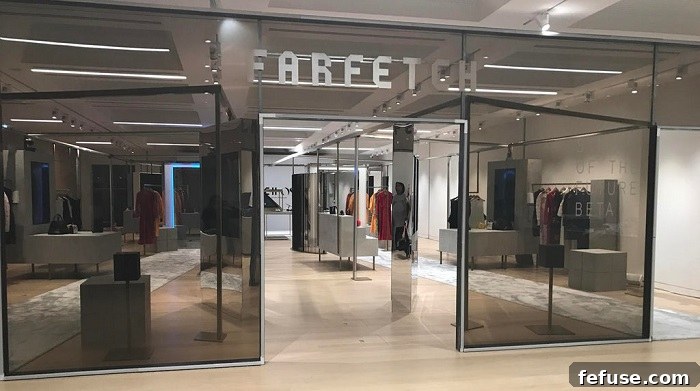
The extensive knowledge and experiential learning garnered from the management and operation of Browns have proven instrumental in shaping Farfetch’s broader, forward-thinking omnichannel strategy. This includes pivotal initiatives such as its innovative “Store of the Future” concept. This groundbreaking concept seeks to seamlessly integrate cutting-edge technology directly into physical retail spaces, thereby offering a hyper-personalized, interactive, and utterly seamless shopping experience that masterfully blurs the traditional lines between the online and offline worlds. By actively experimenting with advanced technologies such as augmented reality, sophisticated connected fitting rooms, and highly personalized product recommendations within Browns’ physical stores, Farfetch is uniquely positioned to rigorously test, refine, and optimize innovative retail solutions. These proven solutions can then be strategically scaled to benefit its vast and growing network of partner boutiques globally. This incredibly forward-thinking approach ensures that Farfetch not only remains at the absolute forefront of luxury retail innovation but also proactively adapts to the ever-changing, dynamic demands of the modern, sophisticated consumer, solidifying its position as a true pioneer.
Farfetch’s Enduring Impact on Global Luxury
Farfetch has undeniably cemented its indelible position as a transformative and influential leader within the global luxury market. Its pioneering marketplace model has not only empowered hundreds of independent boutiques and prestigious brands with unprecedented global reach and visibility but has also fundamentally redefined how discerning consumers discover, engage with, and ultimately purchase high-end fashion, luxurious watches, and exquisite jewelry. The resounding success of its initial public offering, coupled with its aggressive and consistent growth trajectory, strategic acquisitions, and unwavering commitment to technological innovation, paints a vivid and compelling picture of a company exceptionally well-poised for continued expansion, profound influence, and sustained market leadership for years to come.
As the luxury sector continues its rapid and irreversible embrace of digital platforms and innovative technologies, Farfetch’s core commitment to providing a seamless, meticulously curated, and globally connected shopping experience strategically positions it to not only capitalize on current market trends but also to anticipate and shape future ones. By continually investing in advanced technology, diligently expanding its vast network of partners, and keenly understanding its dynamic and evolving customer base, Farfetch is doing more than just participating in the evolution of luxury e-commerce; it is actively shaping its very future. This ensures that the inherent allure, exclusivity, and excitement of high fashion remain accessible, relevant, and captivating for generations of luxury consumers globally. Farfetch’s remarkable journey serves as an compelling and powerful case study in how strategic innovation, combined with an unparalleled understanding of both seller and buyer needs, can effectively carve out a dominant and enduring presence in even the most exclusive and competitive of global markets.
News Source: Jckonline.com