
The global diamond market experienced a dynamic and somewhat contradictory landscape in February, marked by shifting consumer preferences, geopolitical interventions, and regional disparities. While January had hinted at a nascent recovery, February brought a more complex picture, particularly concerning price movements for various clarity grades. According to the Rapaport Group, prices for higher clarity diamonds notably declined, contrasting with a positive trend observed in the preceding month. This shift underscored a burgeoning demand for diamonds of SI (Slightly Included) qualities, signalling a potential recalibration in consumer priorities towards value and accessibility within the luxury sector. These evolving trends highlight the diamond industry’s continuous adaptation to economic pressures and changing market sentiments worldwide.
Navigating the RapNet Diamond Index (RAPI): A Detailed Look at February’s Price Fluctuations
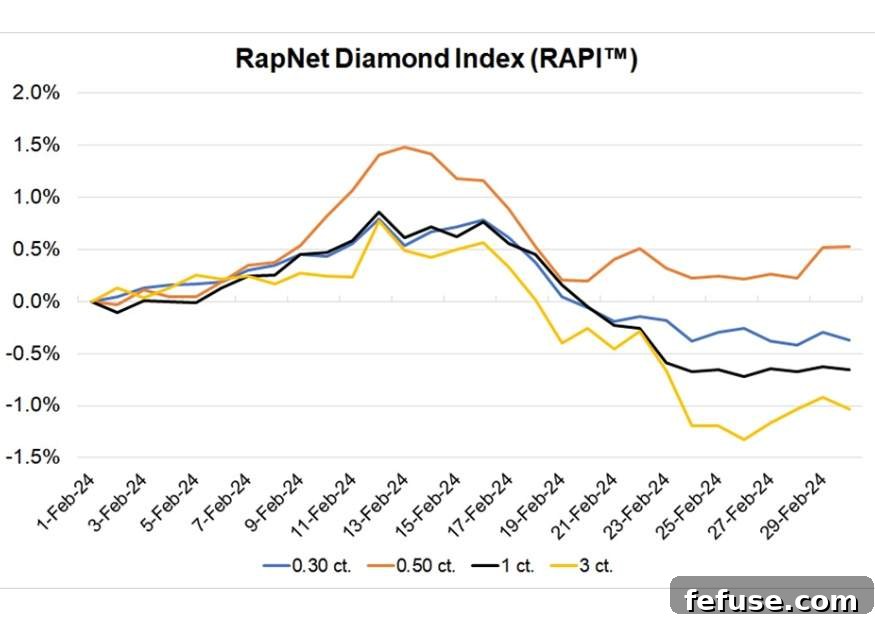
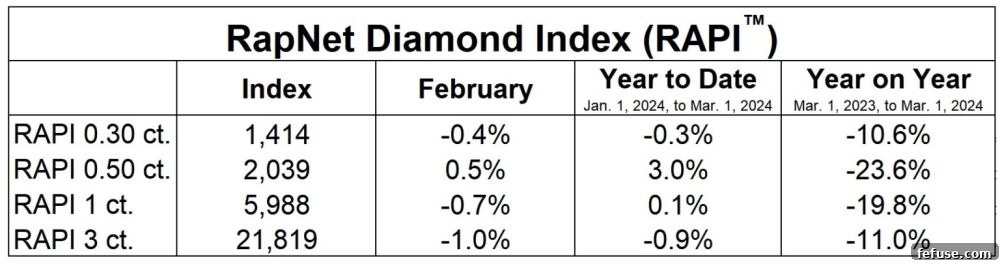
The RapNet Diamond Index (RAPI™), a crucial benchmark for tracking polished diamond prices, reflected the month’s volatility, experiencing an initial ascent in the first half of February before a subsequent weakening towards the latter half. This intra-month fluctuation often indicates underlying uncertainties or a cautious approach from buyers and sellers reacting to immediate market signals. For the bellwether 1-carat diamonds—encompassing round, D to H colour, and IF to VS2 clarity goods—the RAPI recorded a 0.7% decline for the entire month. This segment is frequently seen as a proxy for the overall health of the polished diamond market, making its dip a significant indicator.
Further delving into specific size categories, the RAPI for 0.30-carat diamonds also saw a modest decline of 0.4%, suggesting a consistent pattern of price softening across smaller, yet popular, engagement ring sizes. Larger stones, specifically 3-carat goods, experienced a more pronounced drop of 1%, indicating potential hesitations among high-end buyers or an excess in supply for these substantial diamonds. Interestingly, the 0.50-carat RAPI bucked the trend by gaining 0.5%, despite also experiencing a slight slip in the final two weeks of the month. This resilience in the half-carat category could be attributed to strong demand for accessible luxury, potentially driven by a sweet spot in price and perceived size, making them highly attractive to a broader demographic of consumers seeking quality without the premium attached to larger, higher-clarity stones.
Industry analyses by Rapaport confirmed that lower clarity diamonds generally outperformed their VVS counterparts. There was robust demand, specifically for round, 0.50-, 1- and 2-carat diamonds in the D to H colour range, with SI1 to SI2 clarities, particularly those meeting RapSpec A3+ standards. This strong preference for SI clarity stones suggests a growing consumer focus on optimizing value, where minor inclusions that are not visible to the naked eye become acceptable in exchange for a more attractive price point. In contrast, VVS (Very, Very Slightly Included) diamonds, traditionally associated with top-tier luxury, experienced slower sales, indicating a temporary shift in market priorities away from ultra-high clarity. Meanwhile, melee diamonds, which are small, accent stones, continued to demonstrate consistent sales performance, underscoring their perennial utility in various jewellery designs and steady demand from manufacturers.
Geopolitical Tensions and Trade Adjustments: The G7 Ban on Russian Diamonds
February also brought significant geopolitical developments poised to reshape the global diamond supply chain. The United States, in conjunction with other Group of Seven (G7) members, formally introduced a sweeping ban on “Russian Source” diamonds weighing 1 carat or larger. Crucially, this prohibition extends even to diamonds that may have been manufactured or polished in a third country, aiming to comprehensively restrict the flow of Russian-origin diamonds into G7 markets regardless of their processing location. This measure is a direct response to ongoing international efforts to impose economic sanctions against Russia, intending to curb its revenue streams.
The implementation of this ban, however, has not been without its complexities and challenges. As an enforcement mechanism, the U.S. government announced a requirement for self-certification, placing the onus on importers and traders to verify the non-Russian origin of their diamonds. The timing of this announcement—made on February 29th, merely a day before the new rules officially took effect on March 1st—created considerable apprehension and logistical hurdles within the diamond trade. The abruptness of the notice left many industry participants scrambling to understand and implement the necessary compliance protocols. Concerns have been raised regarding the practicality and reliability of self-certification alone for proving a diamond’s ultimate origin, especially given the intricate and often opaque global supply chain for diamonds, where stones frequently pass through multiple hands and countries for cutting and polishing. This ban is expected to instigate profound changes in traceability requirements and trade routes, potentially leading to increased costs and a re-evaluation of established sourcing practices across the industry.
Rough Diamond Market: Stability Amidst Shifting Polished Demand
In a notable contrast to the fluctuating polished market, rough diamond prices demonstrated a measure of stability during De Beers’ February sight. The term “sight” refers to the highly structured sales events where De Beers offers its rough diamonds to a select group of approved buyers, known as sightholders. This stability in rough prices, following a previous decline in January, provided a degree of relief and predictability to manufacturers. Sightholders exhibited solid demand for additional “ex-plan” goods—diamonds offered beyond their contracted allocations—indicating a renewed, albeit cautious, confidence in the downstream polished market and an assessment that current rough prices offered viable margins for cutting and polishing operations. This demand suggests that cutters and polishers were replenishing inventories or fulfilling specific orders, anticipating a certain level of sustained demand, particularly for categories that performed well, like SI clarities and specific carat sizes. The steadiness in rough prices is a critical factor influencing the profitability of the entire diamond value chain, as it impacts the cost of raw materials for the thousands of businesses involved in transforming rough stones into dazzling finished jewellery.
Regional Market Insights: US, Asia, and India
The performance of various key consumer markets painted a diverse picture in February, reflecting different economic conditions and cultural influences. In the United States, the crucial Valentine’s Day selling period yielded mixed results for jewellers. While there was a noticeable bump in orders for classic heart-shaped diamonds and romantic themed pieces, overall sales momentum was tempered. American dealers displayed a significant reluctance to commit to substantial inventory purchases, a cautious stance primarily driven by the seasonal slowdown that typically follows the intense holiday shopping period. Retail activity naturally dips after the festive season, leading to reduced foot traffic and more conservative consumer spending on luxury items. This hesitancy among dealers also reflects broader economic uncertainties and a desire to avoid overstocking in an unpredictable market environment. Despite this, the U.S. market’s underlying strength and large consumer base mean it retains paramount importance for the global diamond industry, especially as other regions face challenges.
Across Asia, particularly in Hong Kong, diamond shows—traditionally vibrant hubs for trade and discovery—experienced sluggish traffic and sales. This downturn was largely attributed to a continued decline in demand from mainland Chinese consumers. The Chinese market, once a powerhouse for luxury goods, has been affected by a combination of economic deceleration and evolving consumer preferences. Increasingly, mainland Chinese consumers seeking investment opportunities are showing a stronger inclination towards gold rather than diamonds. Gold’s historical status as a safe-haven asset, combined with its cultural significance and recent price appreciation, has made it a more attractive option for wealth preservation amidst economic uncertainties. This shift poses a significant challenge for the diamond industry, which must work to re-emphasize the enduring value and emotional appeal of diamonds to a discerning Chinese clientele.
Meanwhile, the Indian domestic market continued to provide vital support, especially for higher-quality goods under 1 carat. India’s robust internal demand, driven by its vibrant wedding season and cultural affinity for jewellery, has historically been a significant stabilizing force. However, Rapaport noted the impending conclusion of the wedding season, which typically signals a potential cooling of this domestic demand. This anticipated slowdown in India further accentuates the critical role of the U.S. market in the current global diamond landscape. As major Asian markets face headwinds and a crucial domestic season in India draws to a close, the steadfast demand from American consumers becomes even more indispensable for maintaining stability and driving growth across the international diamond industry.
The Evolving Diamond Landscape: Challenges and Opportunities Ahead
The February market report from Rapaport paints a vivid picture of an industry at a crossroads, grappling with a confluence of economic, geopolitical, and cultural shifts. The nuanced performance of different diamond clarity and carat sizes highlights a market becoming increasingly segmented, where value-conscious consumers are driving demand for SI qualities, while ultra-luxury segments face temporary headwinds. The G7 ban on Russian-origin diamonds, despite its immediate logistical complexities, is set to fundamentally alter supply chain dynamics, compelling greater transparency and potentially accelerating the adoption of advanced traceability technologies. This shift towards verified origin will redefine ethical sourcing standards and consumer trust.
Looking forward, the global diamond industry faces the imperative to adapt with agility. Marketing strategies will need to be refined to resonate with diverse consumer bases, particularly in markets like China where gold currently holds greater investment appeal. In the U.S., while post-holiday caution prevailed, its foundational strength as a consumer market remains undeniable, making it a critical focus for sales and inventory management. The Indian market, though facing a seasonal shift, continues to demonstrate the power of deeply ingrained cultural traditions in sustaining demand. The coming months will undoubtedly test the resilience and innovative spirit of the diamond industry, requiring a delicate balance between navigating new regulatory frameworks, understanding evolving consumer desires, and maintaining the intrinsic allure of these precious stones in an ever-changing global economy. Industry players who prioritize transparency, adapt to new sourcing requirements, and effectively communicate the enduring value and emotional significance of natural diamonds will be best positioned for sustained success.