
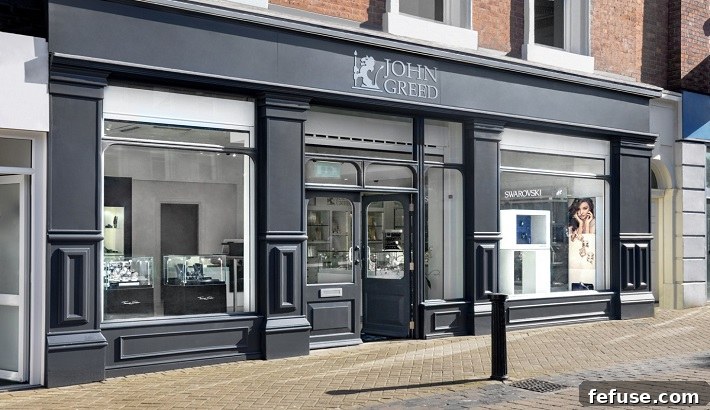
John Greed Jewellery Navigates Market Headwinds and Strategic Shifts: A Look at 2018 Performance and Future Outlook
The dynamic landscape of retail, particularly within the luxury goods sector like jewellery, presents a constant stream of challenges and opportunities for independent businesses. For John Greed Jewellery, a prominent independent retailer known for its curated collections and strong online presence, the financial year ending June 2018 marked a period of consolidation and strategic recalibration. While the company continued to demonstrate resilience, it also faced significant market pressures that resulted in a marginal dip in both turnover and profitability, foreshadowing crucial adjustments to its future business model.
Understanding the Financial Snapshot: A Glimpse into 2018 Performance
According to reports meticulously filed with Companies House, John Greed Jewellery experienced a slight contraction in its financial metrics during the 2018 fiscal year. Turnover for the esteemed independent jewellery retailer decreased by 3.72%, settling at £12.1 million. This modest reduction, while noteworthy, points to a generally stable operation amidst a competitive environment. More significant, however, was the impact on the company’s operating profit, which saw a considerable decline of 124%, moving from a robust £1 million down to £235,888. Despite these shifts, the profit for the financial year stood at £191,034, reflecting ongoing profitability even under pressure.
The firm explicitly attributed this notable dip in operating profit primarily to increased expenditures in marketing and advertising. In an increasingly crowded digital marketplace and with evolving consumer habits, maintaining visibility and attracting new customers often necessitates substantial investment in promotional activities. Director John Greed, in his statement within the official report, acknowledged these strategic choices: “Despite continued tight cost control where possible within the business there have been increases in both marketing and advertising costs which have resulted in the inevitable decrease in operating profit for the year.” This insight highlights the delicate balance independent retailers must strike between necessary investments for growth and their immediate impact on the bottom line. It underscores a proactive approach to defending market share and engaging customers, even if it comes with short-term profit sacrifices.
Market Pressures and the Evolving Retail Landscape for Jewellery
The “increased market pressures” cited by John Greed Jewellery are indicative of broader trends impacting the independent jewellery sector. These pressures can encompass a multitude of factors, including intensified competition from both established chains and emerging online-only retailers, shifts in consumer spending patterns, economic uncertainties influencing discretionary purchases, and the rising costs associated with digital marketing and e-commerce infrastructure. Independent jewellers, by their very nature, often thrive on unique offerings and personalized service. However, they must continuously innovate and adapt their business models to effectively compete with larger entities that benefit from economies of scale and extensive marketing budgets.
In this challenging environment, John Greed Jewellery’s commitment to “consolidating its activities” suggests a strategic focus on streamlining operations, optimizing existing resources, and perhaps refining its product assortment. This consolidation is a common adaptive measure for businesses aiming to strengthen their core competencies and improve efficiency, ensuring a leaner and more agile operation capable of responding swiftly to market shifts. Such a strategy becomes even more critical when external factors begin to reshape fundamental aspects of the business.
The Pandora Chapter Closes: A Pivotal Strategic Shift
Looking ahead from the 2018 financial year, John Greed Jewellery identified a significant strategic development that would undeniably influence its future trajectory: the termination of its contract to sell Pandora online. Pandora, a global jewellery giant, had become an exceptionally “huge part of the retailer’s business.” John Greed Jewellery had invested considerable effort and resources into becoming a “go-to Pandora stockist,” particularly within the online sphere, leveraging the brand’s immense popularity and widespread appeal to drive significant traffic and sales.
The decision by Pandora to terminate the agreement, a culmination of ongoing negotiations, represents a critical juncture for John Greed Jewellery. This move is emblematic of a broader trend where major brands, including those in the jewellery sector, are increasingly opting to consolidate their online sales channels, enhance their direct-to-consumer (DTC) presence, or tighten control over their distribution networks. While this strategy offers brands greater control over pricing, brand image, and customer data, it simultaneously presents substantial challenges for long-standing third-party retailers who have built significant portions of their business around these partnerships.
The director, John Greed, openly acknowledged the profound implications of this development: “Subsequent of the year end these negotiations have culminated in the termination of the Pandora agreement and as a consequence this will have an effect on levels of future turnover and profitability.” The loss of a key brand, especially one that contributes significantly to turnover, necessitates a comprehensive re-evaluation of sales strategies, inventory management, and marketing efforts. The immediate impact on revenue streams is almost inevitable, requiring proactive measures to mitigate potential losses and identify new avenues for growth.
Investing in the Future: Building a Robust Infrastructure for Resilience
Despite the challenges, John Greed Jewellery has demonstrated a forward-thinking approach to navigating these turbulent waters. The company’s leadership expressed confidence in its ability to adapt and continue trading profitably. A cornerstone of this confidence stems from “continued additional investment in systems and people during the year.” This strategic investment is crucial for building a resilient business capable of weathering significant changes, such as the discontinuation of a major brand partnership.
Investing in “systems” typically encompasses upgrades to e-commerce platforms, improved inventory management systems, enhanced customer relationship management (CRM) tools, and sophisticated data analytics capabilities. These technological advancements are vital for optimizing online operations, personalizing customer experiences, and making data-driven decisions. In the absence of a high-volume brand like Pandora, the efficiency and sophistication of these systems become even more critical for maximizing conversion rates and operational effectiveness.
Equally important is the investment in “people.” This could include training existing staff in new sales techniques, e-commerce best practices, or customer service excellence, as well as recruiting new talent with specialized skills in digital marketing, brand development, or technical support. A well-trained and motivated team is the backbone of any successful retail operation, especially one undergoing strategic transformation. This combined investment in infrastructure and human capital positions John Greed Jewellery to “deliver profits in a controlled and managed way,” emphasizing a sustainable and strategic approach to future growth.
Charting a New Course: Strategies for Sustained Profitability
The immediate task for John Greed Jewellery, post-Pandora, will be to diversify its offerings and reinforce its unique selling propositions. This may involve seeking out new, emerging jewellery brands that align with its aesthetic and customer base, or significantly expanding its own-brand collections. Developing exclusive lines or collaborating with independent designers can create a distinctive identity and reduce reliance on external brands. Furthermore, enhancing the online customer experience through personalized recommendations, engaging content, and seamless navigation will be paramount in retaining existing customers and attracting new ones.
The directors have “assessed the impact that this will have on the online business and consider that with the plans they have in place the company will continue to trade profitably, albeit on a reduced basis.” This statement reflects a realistic yet optimistic outlook. It acknowledges the immediate financial adjustments that will be necessary but underscores a clear strategic roadmap to ensure long-term viability. These “plans” likely encompass a multi-faceted approach: intensifying digital marketing efforts to promote alternative brands and own-brand collections, optimizing conversion funnels, strengthening customer loyalty programs, and potentially exploring new market segments or geographical expansion.
For any independent jewellery retailer, adaptability is key. The ability to pivot quickly, embrace new technologies, and understand evolving consumer preferences is what distinguishes successful enterprises in a highly competitive market. John Greed Jewellery’s proactive investments and strategic foresight, even in the face of significant challenges, suggest a resilient business poised to redefine its market position and continue its legacy within the vibrant world of independent jewellery retail.
NewsSource: ProfessionalJeweller