
Pandora Becomes a Hot Target: Private Equity Giants Circle Danish Jewellery Brand Amidst Market Turmoil
The world of luxury jewellery is abuzz with speculation as Danish brand Pandora finds itself at the center of potential acquisition talks. Following a dramatic decline of over 50 percent in its share value since May, several prominent private equity groups, including KKR & Co, Bain Capital, and Carlyle, are reportedly reviewing a potential takeover of the company. This intriguing development was initially brought to light by the Italian financial newspaper Il Sole 24 Ore, which first published the story without citing specific sources, and subsequently picked up by Reuters, sending ripples through global financial markets.
The mere rumor of such high-profile interest was enough to ignite investor confidence, with Pandora’s shares surging by as much as 10 percent in trading sessions following the news. This immediate positive reaction underscores the market’s perception of Pandora’s underlying value, even amidst its recent struggles, and the potential for a strategic turnaround under new ownership, away from the immediate pressures of public markets.
As is typical in high-stakes financial maneuvers, direct comments from the involved parties remain scarce. Pandora and Bain Capital have reportedly declined to offer statements, while KKR and Carlyle were not immediately available for comment, maintaining the veil of confidentiality often associated with preliminary acquisition discussions. This silence, however, only fuels further speculation regarding the depth and seriousness of these takeover considerations.
The Genesis of Decline: Unpacking Pandora’s Recent Challenges
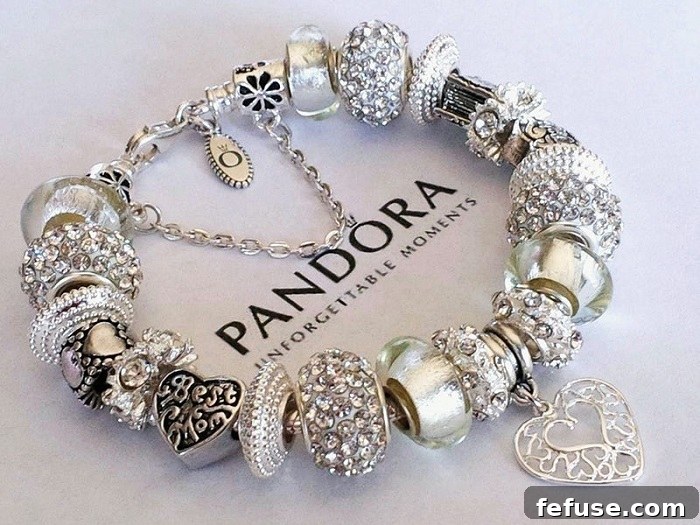
To truly understand the current takeover interest, it’s crucial to delve into the factors that led to Pandora’s precipitous share price fall. The company, renowned globally for its customizable charm bracelets and affordable luxury jewellery, has faced a turbulent period marked by declining sales, intensified competition, and significant shifts in consumer preferences. The most significant blow came last month when Pandora issued a profit warning, a declaration that sent shockwaves through the market and wiped out an estimated $1 billion from the company’s share value almost overnight.
This profit warning was not merely a financial blip; it signaled deeper operational and strategic issues within the company’s core business model. For years, Pandora had enjoyed rapid growth, capitalizing on the popularity of its charm bracelet concept. However, market saturation, evolving fashion trends, and a struggle to innovate beyond its flagship products began to erode its competitive edge. Investors, already wary of slowing growth projections, responded by severely punishing the stock, effectively transforming Pandora from a high-growth darling into a potential bargain for firms specializing in corporate restructuring and value creation.
Leadership Under Scrutiny: The Ousting of CEO Anders Colding Friis
Amidst the escalating financial turmoil, Pandora’s leadership also underwent a significant and highly publicized change. Chief Executive Anders Colding Friis was ousted from his position last month, a move widely perceived as a direct consequence of the company’s faltering performance and the critical profit warning. His three-year tenure at the helm was met with increasing scrutiny from investors, who largely blamed him for a perceived lack of transparency and ineffective communication regarding the company’s true financial health and strategic direction. Critics argued that the market was not adequately prepared for the extent of the challenges Pandora was facing, leading to amplified negative reactions when the issues finally came to light.
The departure of a CEO in such circumstances often signals a company’s acknowledgement of the need for a fresh perspective and a new strategic impetus. For private equity firms, such leadership changes can sometimes present an opportune moment, as a new management team, potentially installed or heavily influenced by the acquiring entity, can implement necessary reforms and steer the company toward a new growth trajectory more easily, often with less resistance from entrenched corporate structures.
An Interim Solution: Navigating Towards Stability
In the immediate aftermath of Friis’s departure, Pandora moved swiftly to establish an interim leadership structure designed to stabilize operations and guide the company through this crucial transitional phase. Jeremy Schwartz, a seasoned retail veteran and former CEO of The Body Shop, was appointed to jointly run the company alongside newly named Chief Financial Officer Anders Boyer. This interim arrangement is intended to provide steady, experienced leadership while the board conducts a comprehensive global search for a permanent Chief Executive Officer, a critical decision that will undoubtedly shape Pandora’s future trajectory. The combined experience of Schwartz in managing and revitalizing consumer brands and Boyer in navigating complex financial landscapes is hoped to offer a robust temporary solution to steer the company through its current challenges.
Why Private Equity Sees Value in Pandora: A Strategic Play
The interest from powerhouses like KKR, Bain Capital, and Carlyle is not random; these firms are renowned for their expertise in identifying undervalued assets, executing ambitious turnaround strategies, and ultimately, delivering significant returns to their investors. Pandora, despite its recent woes, possesses several inherent strengths that make it an attractive target for these financial architects:
- Strong Brand Recognition and Equity: Pandora is a globally recognized brand with a distinct identity and, crucially, a loyal customer base, particularly for its iconic charm bracelets. This strong brand equity represents a significant, tangible asset that, with strategic investment and revitalized marketing, can be leveraged and re-energized.
- Extensive Global Footprint: With a vast network of physical stores across continents and a significant international presence, Pandora offers a ready-made platform for market expansion and deeper penetration into existing markets, which is difficult and costly to build from scratch.
- Scalable Business Model and Production: The company’s established production facilities and distribution capabilities, though currently challenged by market demand, are fundamentally scalable. This allows for efficient growth and optimization once strategic issues related to product innovation and market positioning are effectively addressed.
- Potential for Operational Efficiency and Profitability: Private equity firms often specialize in identifying and implementing operational efficiencies, streamlining processes, cutting unnecessary costs, and optimizing supply chains. There’s a strong assumption that Pandora could significantly benefit from such a comprehensive overhaul to improve its profitability margins and operational agility.
- Market Consolidation Opportunity: In a somewhat fragmented luxury and affordable jewellery market, a stronger, revitalized Pandora under private ownership could play a significant role in future market consolidation or emerge as an even stronger competitor against both established luxury houses and agile direct-to-consumer online brands.
Private equity firms typically operate with a medium-term investment horizon, usually spanning 3 to 7 years. During this period, their objective is to significantly enhance a company’s value through strategic interventions, operational improvements, and financial restructuring, before ultimately exiting their investment, often through an initial public offering (IPO) or a sale to another strategic buyer. Their involvement brings not just capital but also critical strategic expertise, rigorous operational discipline, and a decisive willingness to make tough decisions necessary for long-term health and value creation.
The Broader Context: Challenges and Opportunities in the Jewellery Market
Pandora’s struggles are also indicative of broader shifts and challenges within the global jewellery market. While the high-end luxury sector generally remains resilient, the “affordable luxury” segment, where Pandora primarily operates, faces unique and intensifying pressures:
- Changing Consumer Tastes and Demographics: Younger generations, particularly Gen Z and Millennials, are increasingly prioritizing experiential purchases, personalized items, and brands with strong sustainability credentials, often moving away from traditional jewellery aesthetics and mass-produced items.
- Intensified Competition Across Segments: The market is saturated with both long-established luxury houses (e.g., Tiffany & Co., Cartier) and agile, digitally native, direct-to-consumer online brands that offer competitive pricing and unique designs, all vying for consumer attention and discretionary spending.
- E-commerce Dominance and Digital Transformation: The accelerating shift towards online shopping demands robust digital strategies, seamless e-commerce platforms, engaging online user experiences, and efficient global logistics. Traditional brick-and-mortar retailers, including Pandora, have sometimes lagged in fully embracing and executing these digital imperatives.
- Global Economic Headwinds: Macroeconomic uncertainties, including inflation, recessions, and geopolitical instability, can significantly impact consumer discretionary spending, directly affecting sales of non-essential items like jewellery.
However, these very challenges also present significant opportunities for a re-energized Pandora. Under new, decisive ownership, the company could pivot towards innovative new product lines that resonate with modern consumers, invest heavily in digital transformation to enhance its online presence and customer engagement, reinforce its sustainability and ethical sourcing credentials to appeal to conscious buyers, or even explore strategic partnerships to diversify its offerings and regain its market dominance. The brand’s core appeal – enabling personal expression through customizable pieces – remains a powerful differentiator that, if properly managed and innovated upon, could fuel substantial future growth.
What Lies Ahead for Pandora? Potential Scenarios and Market Implications
The path forward for Pandora is uncertain but brimming with possibilities. If a takeover by one of these private equity behemoths materializes, several distinct scenarios could unfold, each with profound implications for the company’s future:
- Delisting and Private Ownership: The company could be taken private, a common strategy that allows new owners to implement deep structural changes, significant investments, and potentially unpopular decisions away from the intense scrutiny of public markets and quarterly earnings reports. This often facilitates quicker, bolder decisions essential for a true turnaround.
- Strategic Repositioning and Brand Overhaul: A new owner might initiate a significant brand overhaul, product diversification strategy, or a revised marketing approach to appeal to new demographics, refresh its image, or reinforce its core appeal, moving beyond its traditional charm-focused offerings.
- Operational Overhaul and Efficiency Drives: Expect a strong focus on cost efficiencies, supply chain optimization, and a potentially more aggressive push into e-commerce and digital channels to enhance profitability and reach.
- Leadership Reinforcement: A new, permanent CEO with a strong track record in turnaround situations and a clear vision for the brand would likely be installed to execute the new strategic direction, backed by the financial and operational support of the private equity firm.
For the broader market, a successful private equity acquisition of Pandora could be seen as a positive signal, indicating renewed confidence in the brand’s long-term viability and potential for revitalization. It could also set a precedent for similar movements in the affordable luxury segment. Conversely, if no deal materializes, Pandora would be left to navigate its challenges as a publicly traded company, under the continued pressure of shareholders and analysts, with its interim leadership team tasked with executing a credible standalone turnaround strategy while facing market skepticism. The coming months will be critical for Pandora, its employees, investors, and loyal customers. Whether through a private equity takeover or a self-driven resurgence, the Danish jewellery giant faces a pivotal moment in its history, one that could redefine its place in the competitive global market.
About the Potential Acquirers: KKR, Bain Capital, and Carlyle
KKR & Co. Inc. is a leading global investment firm that offers alternative asset management as well as capital markets and insurance solutions. Founded in 1976, KKR is well-known for pioneering the leveraged buyout model and has a long history of investing across various asset classes, including private equity, energy, infrastructure, real estate, and credit. The firm is recognized for its strategic expertise in transforming businesses and driving significant value creation.
Bain Capital, LP is one of the world’s leading private multi-asset alternative investment firms with approximately $180 billion in assets under management. Established in 1984, its expertise spans private equity, credit, public equity, venture capital, and real estate. Bain Capital has a strong track record of investing in and growing companies across a diverse range of industries, particularly within the retail and consumer goods sectors, making it a formidable contender for a brand like Pandora.
The Carlyle Group Inc. is a global investment firm that originates, structures, and acts as a lead equity investor in management-led buyouts, strategic minority equity investments, equity private placements, consolidations, and growth capital financings. With a significant focus on various sectors, Carlyle has extensive experience in consumer and retail investments, possessing the industry insight and capital necessary to orchestrate a complex acquisition and subsequent turnaround for a globally recognized brand like Pandora.
News Source: gemkonnect.com