
Apple Watch Series 4: The Next Evolution in Smartwatch Design, Health, and Performance
For years, the Apple Watch has been a familiar and indispensable companion on millions of wrists worldwide. Its iconic, streamlined shape and intuitive interface have become synonymous with modern wearable technology. While its design has undergone subtle refinements over the years, the core aesthetic has remained largely consistent. However, the landscape of Apple’s flagship wearable is poised for a dramatic transformation. Industry whispers and highly credible reports indicate that the upcoming Apple Watch Series 4, expected to launch later this year, will feature a groundbreaking new look and a suite of advanced capabilities, marking a significant departure from its predecessors.
The excitement surrounding the Series 4 is not without foundation. A pivotal report from KGI Securities, a firm with an impressive track record for accurately predicting Apple’s future product strategies, has set the tech world abuzz. This report details Apple’s ambitious plans to fundamentally redesign the world’s most popular wearable. Key anticipated improvements include a substantially larger display, cutting-edge enhanced health monitoring features, and a critical boost to battery life. These rumored enhancements position the Series 4 not merely as an incremental upgrade, but as a potential game-changer that could redefine the smartwatch experience for users globally.
A Vision of the Future: The Series 4 Redesign and Larger Display
One of the most compelling aspects of the Apple Watch Series 4 is the widely anticipated design overhaul, with the display taking center stage. According to renowned KGI analyst Ming-Chi Kuo, a trusted authority on Apple’s supply chain and product roadmap, the new model is projected to boast a remarkable 15 percent larger display. This isn’t just a minor adjustment; it represents a significant leap in screen real estate, promising a more immersive and informative user experience on the wrist.
Achieving a 15 percent larger display on a device that needs to remain compact will likely involve a dramatic reduction in the surrounding bezels. This “edge-to-edge” display concept, similar to what we’ve seen on the iPhone X, would allow the screen to stretch closer to the watch’s edges, maximizing the viewable area without necessarily increasing the overall physical size of the watch itself. Such a design would offer several tangible benefits: more space for complications and widgets on the watch face, larger text and icons for improved readability, and a more expansive canvas for applications and fitness data. Furthermore, a modernized display could lead to new interaction paradigms, making the Apple Watch even more intuitive and powerful for quick glances and complex interactions alike. This aesthetic refresh would not only enhance functionality but also imbue the Series 4 with a distinctly contemporary and premium feel, attracting a wider range of consumers.
Pioneering Health Monitoring: Beyond Current Capabilities
Beyond its visual appeal, the Apple Watch Series 4 is expected to significantly advance its role as a personal health and wellness companion. Ming-Chi Kuo’s report highlights a “spate of health upgrades” and substantial enhancements to the watch’s internal sensors. Apple has already established itself as a leader in wearable health technology, offering features such as accurate heart rate tracking, irregular rhythm notifications, and comprehensive activity monitoring. The Series 4, however, aims to elevate this commitment to an unprecedented level.
While specifics remain under wraps, speculation points to a variety of potential innovations. One highly anticipated feature could be the introduction of an electrocardiogram (ECG or EKG) function, allowing users to record an EKG directly from their wrist. This would be a groundbreaking addition for a consumer-grade device, offering valuable insights into heart health and potentially aiding in the early detection of conditions like atrial fibrillation. Other possible enhancements include more sophisticated sleep tracking capabilities, allowing for deeper analysis of sleep stages and patterns, as well as advanced stress level monitoring, and even more granular data on workout recovery and overall physiological well-being. Apple’s long-term vision has consistently positioned the Watch as a critical health tool, and the Series 4 appears to be a major step towards realizing this ambitious goal, potentially solidifying its medical credentials and expanding its utility for proactive health management.
The Crucial Pursuit of Extended Battery Life
A recurring desire among smartwatch users is improved battery life, and the Apple Watch Series 4 is rumored to directly address this critical concern. While precise figures for the expected increase are not yet available, any significant boost in battery endurance would dramatically enhance the device’s practicality and versatility. Longer battery life would facilitate more continuous health monitoring throughout the day and night, enabling features like comprehensive overnight sleep tracking without the inconvenience of daily charging. It would also empower users to utilize power-intensive features such as GPS, cellular connectivity, and extended workout tracking more freely, without the constant anxiety of a rapidly draining battery.
Achieving this extended longevity could involve a combination of strategic improvements. Apple might integrate a more energy-efficient S4 chip, specifically designed for optimizing power consumption. Furthermore, enhancements to the watchOS software could lead to more intelligent power management algorithms. Physically, a slightly larger battery might be accommodated through internal design efficiencies, or potentially even a marginally thicker chassis that could house more robust power cells. Regardless of the specific engineering solutions, a notable increase in battery life would be a transformative upgrade for many users, firmly establishing the Apple Watch as an always-ready, indispensable companion for all-day use.
Market Dominance: Robust Sales Projections and Strategic Pricing
Ming-Chi Kuo’s analysis extends beyond the technical specifications, offering a highly optimistic outlook on the Apple Watch Series 4‘s market performance. He confidently predicts that the combination of its refreshed, “trendier design” and Apple’s astute strategy of lowering prices on older Apple Watch models will result in exceptionally strong sales for the new Series 4. This calculated, two-pronged approach is a hallmark of Apple’s market strategy: introduce a state-of-the-art flagship to excite early adopters, while simultaneously making previous generations more accessible to a broader consumer base, thereby expanding the reach of its robust ecosystem.
Kuo forecasts that Apple is on track to sell an impressive 22–24 million Apple Watch units this year alone, representing a substantial year-over-year increase of approximately 30 percent. This upward trend underscores the burgeoning demand for smartwatches and Apple’s commanding leadership within this competitive market segment. Looking further ahead, Kuo’s long-term projection is even more ambitious, estimating that annual sales of the Apple Watch could eventually soar to 50 million units. Such figures would firmly establish the Apple Watch as a blockbuster product within Apple’s diverse portfolio, rivaling the success of the iPhone in its category and becoming a powerful engine for the company’s lucrative services revenue.
The strategic pricing of older Apple Watch models (Series 3, Series 2) will allow budget-conscious consumers to enter the Apple ecosystem, benefiting from core features and seamless integration at a more affordable entry point. Concurrently, the Series 4, with its advanced features and redesigned aesthetics, will cater to those who desire the pinnacle of wearable technology. This tiered product strategy is expertly designed to capture market share across a wide array of consumer segments, further solidifying Apple’s unparalleled dominance in the rapidly evolving wearables landscape.
Anticipated Launch Timeline and the Inevitable Design Leaks
The Apple Watch Series 4 is widely expected to make its grand global debut alongside the highly anticipated new iPhone models later this year, typically during Apple’s signature fall keynote event. This synchronized launch strategy allows Apple to maximize the synergy and excitement surrounding both its flagship smartphone and its leading wearable, ensuring both products receive maximum media attention and consumer interest. As is customary with major Apple product launches, the period leading up to the official unveiling will undoubtedly be filled with a flurry of leaks and speculative rumors.
Notably, news outlet Wareable specifically suggests that consumers and industry watchers can anticipate the commencement of design “leaks from China” starting as early as this summer. These leaks, which often originate from deep within the manufacturing facilities or along the intricate supply chain, typically provide the first visual cues and detailed specifications of what the Series 4 will truly look like. From computer-aided design (CAD) renders and component photographs to early prototype images, these unofficial glimpses offer invaluable insights for enthusiasts and industry observers, helping to shape expectations and generate buzz long before Apple CEO Tim Cook officially takes the stage. While unofficial, these leaks frequently paint an accurate picture of the final product, serving to build palpable excitement and anticipation among the tech community.
Broader Ecosystem Synergy: A New, More Accessible iPhone on the Horizon
In a related but equally significant report, KGI Securities shared with MacRumors in February details about another pivotal product: Apple’s next iPhone. This new device, rumored to feature a 6.1-inch display, is expected to incorporate several desirable premium features found in the current flagship iPhone X, such as advanced Face ID technology. Crucially, it is anticipated to be offered at a more accessible price point due to a less complex design. With current high-end iPhone models hovering just under the $1,000 mark, the prospect of a more affordable iPhone offering an X-like experience is indeed welcome news for a broad spectrum of potential buyers.
This strategic move by Apple underscores its commitment to democratizing its innovative technologies, making them available to a wider audience. This has significant and positive implications for the Apple Watch ecosystem. A more affordable entry point into the iPhone family could naturally lead to increased adoption of the Apple Watch, given the seamless and integrated experience the two devices offer when paired together. The powerful synergy between a new, more accessible iPhone and a radically redesigned, feature-rich Apple Watch Series 4 could ignite an unprecedented wave of upgrades and new user acquisitions, further cementing Apple’s unparalleled dominance and expansive reach in the consumer technology landscape.
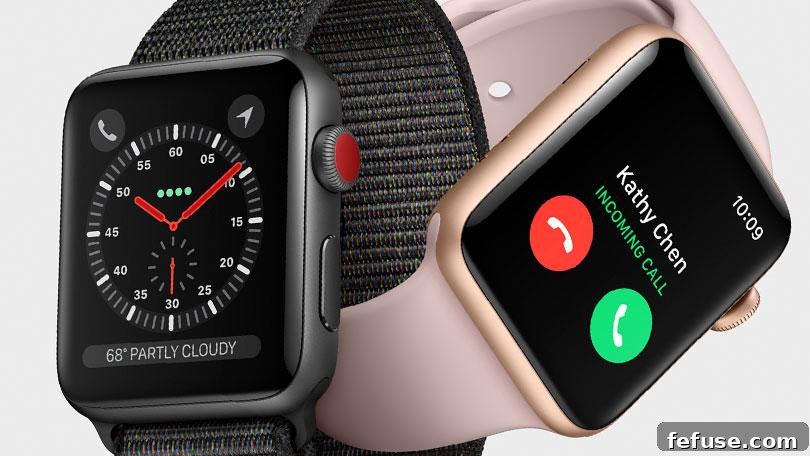
(Top image: Apple Watch Series 3; courtesy of Apple)