
Forging a Path to Responsible Gemstone Sourcing: CIBJO’s Landmark Engagement in Colombia
The global demand for ethically sourced and sustainably produced gemstones has reached an unprecedented level, compelling the jewellery industry to re-evaluate and fortify its supply chains. At the forefront of this crucial movement, the World Jewellery Confederation (CIBJO) is actively engaging with key producing nations to develop inclusive and effective solutions. In a significant recent initiative, CIBJO President Gaetano Cavalieri undertook a comprehensive visit to Colombia, a nation renowned for its exquisite emeralds and vibrant colored gemstone sector. His mission: to foster collaborative discussions with governmental and industry stakeholders, aiming to establish robust frameworks for responsible sourcing, particularly those tailored to meet the unique needs of small-scale and artisanal miners.
This pivotal visit by Dr. Cavalieri underscored the growing imperative for an internationally recognized system to monitor colored gemstone mining practices. Such a system is vital to ensuring that all stages of the supply chain adhere to the principles of responsible sourcing, encompassing fair labor practices, environmental stewardship, and socio-economic development. The urgency for such a framework has intensified as consumers, retailers, and regulatory bodies increasingly scrutinize the origins of precious materials, demanding transparency and accountability from mine to market.
A Landmark Visit: Bridging International Standards with Local Realities
Dr. Gaetano Cavalieri’s presence in Colombia was not merely a diplomatic gesture but a strategic engagement, initiated at the express invitation of Jorge Martín, President of Expojoyas Colombia – the organizer of the nation’s premier jewellery and gemstone trade fair – and the esteemed Chamber of Commerce of Bogotá. This joint invitation highlighted the eagerness of Colombian authorities and industry leaders to proactively address the challenges and opportunities presented by responsible sourcing initiatives. It signaled a clear recognition that collaborating with international bodies like CIBJO could pave the way for more sustainable and equitable practices within their thriving gemstone industry.
The discussions held during the visit were far-reaching, encompassing dialogues with high-ranking officials from the Ministry of Mines and Energy of Colombia, alongside representatives from the local mining, colored gemstone, and jewellery trades. These conversations revealed a palpable readiness within Colombia to consider and implement a structured system for monitoring the gemstone supply chain. However, a consistent and fundamental condition emerged from these consultations: any proposed system must not, under any circumstances, compromise the basic interests, livelihoods, and economic stability of the individuals and communities who are profoundly dependent on the revenues and employment generated by small-scale mining operations.
Understanding the Colombian Perspective: The Core of Ethical Gemstone Mining
Dr. Cavalieri eloquently summarized the sentiment he encountered: “What was apparent both from the thoughts expressed by officials from the Ministry of Mines and Energy of Colombia, as well as representatives of the local mining, colored gemstones and jewellery trades, is that there is a readiness to consider a structured system that will help monitor the chain of supply, on condition that it does not compromise the basic interests of individuals and communities that are dependent on the revenues and jobs provided by small-scale mining.” This statement encapsulates the central challenge and opportunity in developing truly effective responsible sourcing protocols for colored gemstones.
The Challenge of Small-Scale Mining: A Cornerstone of Local Economies
The vast majority – upwards of 80 percent – of the world’s rough colored gemstone output originates from small-scale and artisanal mining operations. In regions like Colombia, these operations are not merely industrial activities; they are often the economic lifeline for entire communities, providing essential income and employment in areas where other opportunities are scarce. These miners, often working with traditional methods and limited resources, are deeply integrated into the social and economic fabric of their localities. Implementing traceability and ethical standards in such a dispersed and often informal sector presents unique complexities that demand nuanced solutions, far beyond a one-size-fits-all approach.
The task of developing a viable international system that can effectively monitor this intricate industry, while respecting the grassroots realities of artisanal mining, is undoubtedly complex. However, Dr. Cavalieri expressed profound optimism, stating, “The task of developing a viable international system that can monitor the colored gemstone industry… will be made considerably easier if we can do so with the cooperation of government, community and business leaders in the producing countries.” This emphasizes CIBJO’s belief in a collaborative, stakeholder-driven approach, where solutions are co-created with those who will be most impacted, ensuring their practicality and long-term sustainability. Without this localized engagement, any well-intentioned initiative risks being perceived as an external imposition, potentially leading to resistance and counterproductive outcomes.
Dialogue and Collaboration: The Path Forward for Ethical Gemstones
Building on his experiences in Colombia, Dr. Cavalieri reinforced his conviction that a viable and inclusive responsible sourcing system is not only possible but achievable. He stressed that success hinges on “maintaining a spirit of goodwill.” This goodwill translates into genuine consultation, open dialogue, and a commitment to understanding and integrating the perspectives of all parties involved, especially those at the mining frontlines. Attempts to push through solutions without consulting the people on the ground, who ultimately will be those most affected, are almost certainly doomed to be counterproductive, failing to address the true needs and realities of mining communities.
The CIBJO President’s direct engagement in Colombia serves as a powerful testament to this philosophy. By directly engaging with miners, local leaders, and government officials, CIBJO sought to understand the unique socio-economic landscape of Colombia’s gemstone sector. This on-the-ground understanding is invaluable for developing monitoring systems that are not only rigorous but also flexible and adaptable enough to support, rather than hinder, the livelihoods of artisanal miners. Such an approach fosters trust and builds a foundation for long-term commitment to ethical practices.
A Glimpse into Porvenir Emerald Mine: First-Hand Experience
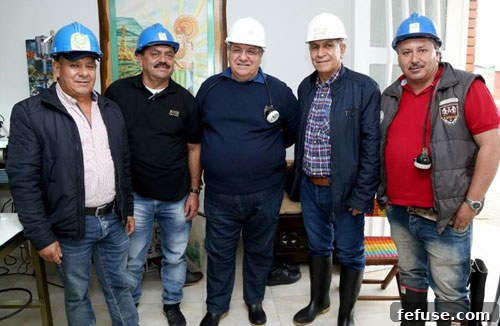
During his visit, Dr. Cavalieri made it a point to tour the Porvenir emerald mine, situated near the town of Chivor, approximately 160 kilometers from Bogotá in the picturesque State of Boyaca. This direct experience provided him with invaluable first-hand insights into the day-to-day operations and challenges faced by small-scale gemstone producers. At the mine, he met with the mine’s owner, the Mayor of Chivor, and influential local business leaders. These meetings were crucial for understanding the profound significance of the gemstone mining sector to the life, economy, and overall well-being of the local inhabitants. The personal stories and perspectives shared reinforced the imperative of finding solutions that empower these communities.
Reflecting on this visit, Dr. Cavalieri remarked, “It was an enlightening experience. These are people who have a vested interest in the integrity of their business and also in continuing economic opportunities in their community. Increasingly they realize that the two are interlinked.” This observation is critical. It highlights a growing awareness among local stakeholders that the long-term sustainability and profitability of their operations are inextricably linked to ethical practices and responsible engagement with the global market. They understand that transparency and traceability are not just external demands but pathways to greater market access and fairer prices, ultimately securing their future.
CIBJO’s Commitment to Sustainable Practices: A Global Imperative
Throughout his extensive discussions with various stakeholders in Colombia, Dr. Cavalieri consistently underscored CIBJO’s unwavering support towards attaining a viable, robust, and sustainable system for monitoring responsible sourcing in the colored gemstone sector. As the global representative body for the jewellery industry, CIBJO plays a vital role in setting standards, advocating for best practices, and facilitating collaborative initiatives that promote integrity and sustainability across the entire supply chain. Their commitment extends beyond mere guidelines, actively seeking practical, implementable solutions.
The Role of the CIBJO Congress 2017: A Platform for Progress
The insights gathered during the Colombian visit, particularly those concerning the unique challenges and opportunities presented by small-scale mining, were slated to form a significant part of the agenda at the highly anticipated 2017 CIBJO Congress. Scheduled to take place in Bangkok, Thailand, from November 5-17, 2017, this global gathering served as a critical forum for presenting and debating potential solutions for responsible sourcing. The congress brought together industry leaders, policymakers, NGOs, and experts from around the world to collectively refine strategies that would support the ethical production and trade of colored gemstones globally. The learnings from Colombia were expected to provide crucial empirical data and human-centric perspectives, enriching the discourse and leading to more practical and equitable outcomes.
The discussions at the CIBJO Congress focused on developing comprehensive guidelines that address key aspects such as environmental protection, fair labor standards, health and safety, and community development. By incorporating the voices and experiences of primary producers like those in Colombia, CIBJO aimed to ensure that any proposed international monitoring system is not only robust in its ethical principles but also pragmatic and effective in its implementation, fostering a truly sustainable global gemstone market.
The Broader Impact: Transforming the Global Gemstone Industry
The successful development and implementation of a responsible sourcing system, particularly one that genuinely supports small-scale and artisanal miners, holds immense potential for transforming the entire global colored gemstone industry. For consumers, it offers the assurance that their beautiful gemstones are acquired without social or environmental detriment. For miners, it can mean improved working conditions, fairer prices, and greater access to international markets, leading to enhanced livelihoods and community development. For the industry at large, it strengthens reputation, mitigates risks, and ensures long-term viability by aligning with evolving global ethical standards.
Colombia, with its rich history of emerald mining and its proactive engagement with CIBJO, is poised to become a leading example in establishing a model for responsible gemstone sourcing. The lessons learned and the systems developed through this collaborative effort could serve as a blueprint for other gemstone-producing nations facing similar challenges with their artisanal mining sectors, thus amplifying the positive impact across the globe.
Conclusion: A Vision for a Responsible Future
Dr. Gaetano Cavalieri’s visit to Colombia marked a vital step forward in the ongoing journey towards a more ethical and sustainable colored gemstone industry. By prioritizing direct engagement, understanding local realities, and fostering a spirit of goodwill and collaboration, CIBJO is actively working to bridge the gap between global demands for responsible sourcing and the complex realities of mining communities. The readiness of Colombian stakeholders to embrace a structured monitoring system, provided it safeguards the interests of small-scale miners, offers a powerful testament to the industry’s potential for positive transformation. As the global jewellery confederation continues to champion these vital initiatives, the vision of an industry where beautiful gemstones are sourced with integrity, transparency, and respect for all, moves ever closer to becoming a tangible reality.
Image Caption:
CIBJO President Gaetano Cavalieri (centre), during his impactful visit to the Porvenir emerald mine in the State of Boyaca, Colombia. He is flanked (from left) by Rafael Daza Montenegro, the mine’s dedicated owner; Carlos Perilla, the esteemed Mayor of the nearby town of Chivor; Jorge Martín, President of Expojoyas Colombia, a key facilitator of this dialogue; and Hugo Orlando Sanchez, a respected jewellery maker from Chivor, representing local craftsmanship.
News Source:
gjepc.org