
The global diamond market experienced a period of quiet contemplation in late December, as is customary with wholesalers stepping away for holiday breaks between Christmas and New Year. This seasonal lull, however, was underscored by a palpable sense of caution within the industry, primarily driven by persistent sluggishness in US consumer demand and the ever-increasing competitive pressure from lab-grown diamonds. Industry participants keenly observed market indicators, bracing for shifts while reflecting on a challenging yet transformative year.
Navigating a Shifting Retail Landscape: Holiday Sales & Consumer Priorities
The crucial holiday selling season for the broader jewellery market concluded largely in line with expectations, albeit registering weaker performance compared to the robust sales figures of 2022. According to a report by Mastercard SpendingPulse, US jewellery sales witnessed a modest 2% year-on-year decline for the pivotal period spanning November 1st to December 24th. This slight contraction, while not catastrophic, signals a cautious consumer approach to discretionary spending, particularly within the luxury goods sector.
A significant trend emerging from this period was the noticeable reallocation of consumer budgets. Mastercard’s data highlighted a robust 7.8% increase in restaurant revenues, a stark contrast to the jewellery market’s performance. This trend unequivocally points towards a broader consumer preference for experiences over tangible products, a macroeconomic shift that has gained momentum in recent years. Consumers, having accumulated goods during pandemic-era lockdowns, are now prioritizing travel, dining, and leisure activities, impacting sectors like jewellery that traditionally rely on product acquisition.
Beyond the US, the critical Chinese diamond market continued to grapple with subdued demand. An ongoing economic slump, coupled with property market woes and a general cautious sentiment among consumers, suppressed luxury spending. China, a vital growth engine for the global diamond industry in previous decades, currently presents a formidable challenge, requiring suppliers and retailers to adapt their strategies to a more conservative consumer base.
Inventory Adjustments and Price Stabilization: The Impact of India’s Freeze
Despite the broader challenges in retail, polished diamond prices exhibited a nuanced recovery in most categories during December. This improvement was largely a direct consequence of India’s proactive, two-month voluntary freeze on rough diamond imports, a measure that concluded on December 15th. This strategic pause by the world’s largest diamond manufacturing hub successfully curbed the influx of new rough stones, leading to a significant reduction in existing polished diamond inventories across the supply chain.
The effectiveness of this measure was evident in the dramatic statistics: India’s rough diamond imports for November plummeted by an astounding 76% year-on-year, reaching a mere $314 million. This drastic reduction in raw material procurement had a profound impact on manufacturing dynamics. With less capital tied up in acquiring expensive rough diamonds, manufacturers experienced reduced pressure to liquidate their polished stock quickly. This alleviated the urgent need for cash flow, allowing them to hold out for better prices rather than engaging in distressed sales, thereby contributing to the stabilization and even slight appreciation of polished prices.
Furthermore, the holiday buying period, even if weaker than the previous year, provided crucial support for specific categories of polished diamonds. Prices for 1- to 3-carat stones, particularly those in the F-I color range and VS-SI clarity grades, meeting RapSpec A3+ standards, benefited from renewed retailer interest in preparation for Christmas sales. These specifications represent popular choices for engagement rings and significant jewellery pieces, indicating a resilient demand for classic, high-quality diamonds despite overall market softness.
RapNet Diamond Index (RAPI™): A Glimmer of Recovery Amidst Yearly Declines
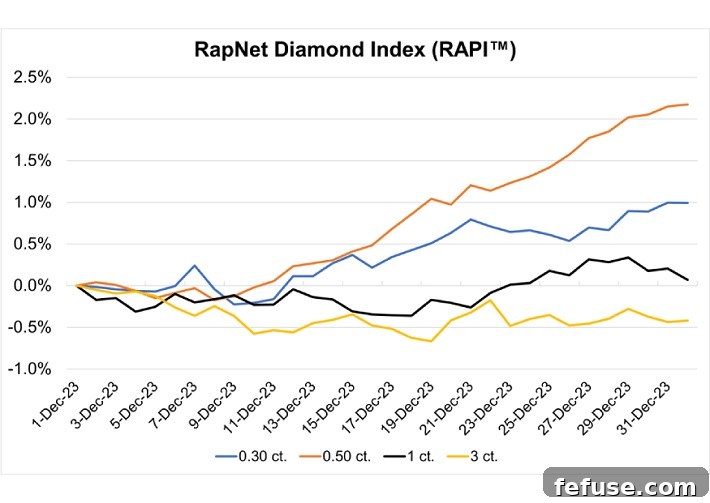
The RapNet Diamond Index (RAPI™), a benchmark for polished diamond prices, provided key insights into the market’s performance. While the overall picture for the year remained challenging, December offered a glimmer of recovery.
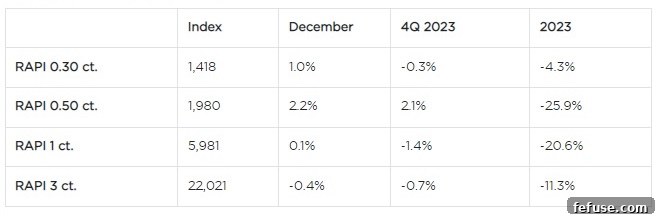
Specifically, the RAPI for 1-carat diamonds registered a modest increase of 0.1% in December. Smaller stones showed more significant gains, with the index for 0.30-carat diamonds climbing 1% and the 0.50-carat RAPI rising by a more substantial 2.2%. This performance indicates a potential strengthening in demand for specific sizes, possibly driven by retail restocking for popular items. Conversely, prices for fancy shaped diamonds generally remained stable or experienced slight declines, suggesting a continued preference for traditional round brilliants in a cautious market or perhaps an oversupply in certain fancy shape categories.
Reflecting on a Record Year of Decline and Emerging Stability
Despite the positive momentum observed in December, the full-year performance for key RAPI categories underscored the severity of the market downturn in 2023. The 0.50-carat and 1-carat RAPI categories recorded their worst full year on record, plummeting by 26% and 21% respectively. This steep decline reflects a confluence of factors including inflationary pressures, a slowdown in major consumer markets, and the increasing market penetration of lab-grown diamonds, which offer a more affordable alternative to natural stones.
However, a notable turnaround began to manifest from November onwards. This improvement was largely attributed to two critical factors: renewed purchasing activity from US retailers stocking up for the holiday season, and the deliberate reduction in polished diamond production by Indian factories following the rough import freeze. This coordinated market adjustment helped to clear excess inventory and rebalance the supply-demand equilibrium, laying the groundwork for more stable pricing. The number of diamonds listed on RapNet, a key indicator of available inventory, fell by 8% throughout 2023, totaling 1.6 million stones on January 1st, 2024. This reduction signifies a healthier inventory level entering the new year, a positive sign for market stability.
Anticipating Future Dynamics: Rough Prices, Supply Chains, and Geopolitics
As the industry transitions into the new year, several critical factors are poised to shape the diamond market’s trajectory. Expectations are high among sightholders that De Beers, the world’s leading diamond producer, will implement a reduction in rough diamond prices during its January sight. Such a move would be a strategic effort to stimulate demand for rough stones, providing much-needed impetus to manufacturers and encouraging greater activity across the supply chain. A cut in rough prices could have an immediate and significant impact on polished prices, potentially trickling down to benefit consumers at the retail level.
However, Rapaport cautions that manufacturers must exercise prudence to prevent an oversupply scenario, a situation that plagued the market for much of 2023. It is imperative that their rough diamond purchases are meticulously matched with genuine polished demand. Disconnecting rough procurement from actual market consumption risks creating a new inventory glut, undermining any gains made in price stability.
January also marks the initial phase of broader restrictions imposed by the Group of Seven (G7) nations on Russian diamonds. These measures, designed to curtail Russia’s revenue streams from its diamond exports, are set to escalate significantly. An expanded ban, encompassing any polished diamonds that result from Russian rough material, is scheduled to commence on March 1st. This comprehensive prohibition introduces substantial complexities into the global diamond supply chain, necessitating robust traceability and verification mechanisms.
The implementation of these G7 sanctions is expected to profoundly affect supply dynamics. The industry will need to navigate new compliance requirements, potentially reconfigure sourcing strategies, and invest in technologies to ensure the ethical and verifiable origin of diamonds. While the long-term goal is to align the diamond trade with international geopolitical objectives, the short-to-medium term challenges of adapting to these new regulations could lead to disruptions, shifts in trade routes, and potential price volatility, further complicating the already intricate global diamond market.