
Unveiling the Future: Key Trends Shaping the Global Jewellery Industry
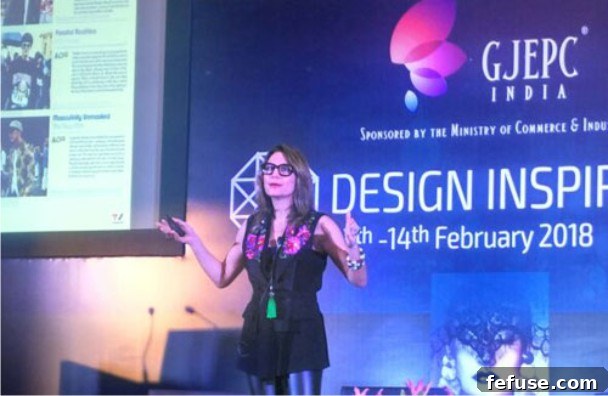
The dynamic world of jewellery is constantly evolving, driven by shifting consumer preferences, technological advancements, and broader societal changes. Understanding these underlying currents is paramount for industry players seeking to innovate and thrive. At the forefront of this crucial task is Paola De Luca, founder of The Futurist Ltd, a pioneering force in jewellery trend forecasting. A regular and insightful speaker at the annual Design Inspiration series, meticulously organised by The Gem & Jewellery Export Promotion Council (GJEPC), De Luca consistently provides invaluable insights into the forces that will define tomorrow’s market.
During a compelling two-part presentation, Paola De Luca delved deep into the macro trends observed globally, offering a strategic compass for the industry. Her sessions, particularly the opening one at the conclusion of Day 1, set the stage for a comprehensive exploration of consumer behaviour and design innovation. De Luca’s expertise is not merely about predicting passing fads but about deciphering profound shifts that have long-term implications for how people engage with jewellery.
Beyond Fashion: Understanding the True Nature of Trends
At the outset of her insightful discourse, Paola De Luca drew a clear and essential distinction: “Trends are not to be confused with fashion or fads.” This clarification is fundamental to her methodology. Instead, she asserts, a true trend represents a deeper understanding of ongoing social changes. It’s about meticulously observing how these societal metamorphoses will inevitably influence what people choose to wear, what they decide to purchase, and how they allocate their spending power. This holistic perspective moves beyond superficial style observations, rooting predictions in the fundamental shifts of human values and lifestyles.
De Luca meticulously defines her craft, stating, “Forecasting is the use of historical data to determine the direction of future trends.” This data-driven approach is far from arbitrary; it provides a robust framework for companies to strategically plan their future endeavours, particularly in critical areas such as product development and marketing initiatives. She further elaborates on the profound impact of this discipline, declaring, “Forecasting literally translates to strategy. Business strategy.” This underscores the point that trend prediction is not an abstract exercise but a concrete, actionable tool essential for long-term commercial success and resilience in a competitive landscape.
Rethinking Consumer Segmentation: Beyond the Millennial Obsession
A significant point of emphasis in Paola De Luca’s presentation was her belief that the current industry focus on Millennials, while understandable, often overshadows other equally vital consumer segments. She critically questioned the prevailing narrative, stating, “The Millennials are all those born after 1980. So what about those born about 10-20 years earlier? Are they dead? Are they not consumers?” This poignant inquiry highlighted a crucial oversight: older generations possess substantial purchasing power, established tastes, and often a desire for quality and timeless pieces, yet they are frequently underserved by marketing and product strategies heavily geared towards a younger demographic. De Luca advocated for a more inclusive and nuanced understanding of the diverse consumer base.
To address this, the ace trend forecaster introduced a comprehensive and insightful segmentation of consumers, broadly categorising them into three distinct groups, each accompanied by an evocative tagline that encapsulates their essence and buying motivations:
- The Midult: Past References – This innovative concept refers specifically to women aged between 35 and 55 years. This demographic, often overlooked, represents a powerful segment with significant disposable income, a keen sense of personal style, and a yearning for quality. Their appreciation for “Past References” translates into a desire for jewellery that subtly nods to classic designs, heritage, or carries a sense of nostalgia, yet is reinterpreted with a contemporary sensibility. They seek pieces that are both meaningful and stylish, reflecting their life experience and sophistication.
- Parallel Realities: Retro Futurist – This segment embodies a fascinating blend of the past and the future, where traditional craftsmanship meets innovative design and technological influence. “Retro Futurist” consumers are drawn to jewellery that bridges historical aesthetics with cutting-edge materials, unusual forms, or conceptual narratives. They appreciate the tension between the familiar and the novel, seeking pieces that challenge conventional boundaries and reflect a world where digital and physical experiences seamlessly merge. This often manifests in designs that combine vintage inspiration with modern minimalist lines, or traditional gem-setting with unexpected materials.
- The Gender Neutralist or Masculinity Unmasked: The New Man – This category speaks to a profound societal shift in gender perceptions and self-expression. As traditional definitions of masculinity evolve, so too does the desire for men to express themselves through adornment. “Masculinity Unmasked” highlights a growing segment of men who are confidently embracing jewellery as a form of personal expression, moving beyond conventional wedding bands or watches. They seek pieces that are not confined by traditional gendered aesthetics, often opting for designs that are bold, minimalist, textured, or carry symbolic meaning. This trend also encompasses broader gender-neutral appeal, where jewellery transcends specific gender assignments.
Paola De Luca’s presentation went beyond mere definitions, illustrating how these segments translate into tangible design choices. For each category, she not only proposed specific colour palettes but also meticulously sketched out the types of jewellery most likely to resonate, delving into various sub-categories of design, material, and form factor that would appeal to their distinct tastes and values. This practical application of trend forecasting offers designers and manufacturers clear guidance on how to cater effectively to diverse consumer needs.
Emerging Design Principles and Consumer Desires
Several significant points emerged from Paola De Luca’s comprehensive presentation, collectively painting a vivid picture of the evolving desires of today’s jewellery consumers:
- The Quest for Personalisation: A profound desire for individuality drives demand for one-of-a-kind, “different” pieces. Consumers increasingly seek jewellery that tells a unique story, reflects their identity, or can be customised to their specific preferences, moving away from mass-produced uniformity.
- Embracing Imperfection: In a world striving for flawlessness, imperfection is paradoxically seen as a sign of authenticity and uniqueness. This translates into a growing appreciation for asymmetrical designs, mismatched patterns, and organic forms that celebrate natural beauty and a handmade aesthetic.
- The Art of Mixing and Matching: The rigid confines of traditional jewellery sets are losing their appeal. Consumers now prefer to curate their own looks, mixing different styles, metals, and gemstones. This trend encourages versatility and personal expression, allowing for endless combinations.
- The Phygital Merge: The boundaries between the digital and physical worlds are increasingly blurred. This “Phygital” reality impacts how consumers discover, experience, and purchase jewellery, from virtual try-ons to seamless online-to-offline shopping journeys.
- The Allure of the Artisanal Touch: There is a strong desire for handcrafted pieces, or at least the appearance of handcrafting, even for machine-made jewellery. Consumers crave authenticity, textures, and the tangible sense of human touch and skill embedded in a piece.
- Organic and Nature-Inspired Designs: A clear trend towards organic forms, natural motifs, and designs inspired by the environment reflects a broader cultural appreciation for sustainability, mindfulness, and the beauty of the natural world.
- The Amusement Factor: Jewellery is no longer solely about preciousness or status; it’s also about joy, playfulness, and self-expression. Designs incorporating an “amusement” factor, whether through whimsical elements, interactive features, or bold colours, are gaining traction.
- Men Embracing Jewellery: Building on the “Masculinity Unmasked” segment, there is a significant and growing cohort of men who have come into their own, confidently wearing a variety of jewellery pieces, from necklaces and bracelets to rings and earrings, as an integral part of their personal style.
Insights from Industry Innovators: Roza Topolnicka and John Varghese
The Design Inspiration series also featured other prominent voices, further enriching the discourse on the future of jewellery. Earlier in the afternoon, two speakers took the floor in the post-lunch sessions, providing additional perspectives on consumer engagement and technological disruption.
Roza Topolnicka from Swarovski Gemstones, widely recognised for her stewardship of their popular jewellery trend book, Gem Visions, underscored the critical importance of the experience factor for modern consumers. She stressed that innovation on all fronts – from product design to retail environments and marketing strategies – would be a key differentiator. Topolnicka offered several compelling examples of brands that have successfully stepped outside conventional boundaries. She cited Stephen Webster for his pioneering work in store design, creating immersive and unforgettable retail experiences. Perhaps most memorably, she highlighted a prime example of audacious marketing: a high-end luxury brand teaming up with McDonald’s. This unexpected collaboration involved McDonald’s offering stackable rings, cleverly packaged in their burger boxes and dubbed “Bling Mac,” as prizes for a promotional contest. Roza emphasized the brilliance of this campaign, noting, “A big trend of the future will be the fun factor.” She went on to define the evolving characteristics and significance of three key jewellery items: charms, earrings, and rings, showcasing how these staples are being reinvented to meet contemporary tastes and demands for versatility and self-expression.
Following this, John Varghese of IBM captivated the audience with his presentation on the “Changing Virtual-Real Landscape,” where he explored the intricate contours of what he aptly termed the “Phygital World” in which we now reside. Varghese’s message was clear and urgent: “Digital disruption knows no bounds.” He forcefully stressed that India, in particular, was uniquely poised for profound digital disruption and that the nation stood on the cusp of a transformative technology revolution. Projecting forward, Varghese stated, “The digital economy will be a trillion-dollar economy by 2025.” He then issued a powerful exhortation to the jewellery industry, urging them to heed these monumental shifts. He implored them to critically re-evaluate and align their business strategies to fully integrate the digital world into their plans, exploring how they could effectively leverage these technological advancements for the sustained growth of their individual companies and the industry as a whole. This call to action highlighted the imperative for digital adoption, from e-commerce and marketing to supply chain management and customer experience, as a non-negotiable path to future success.
Charting a Course for Success in a Transforming Landscape
The insights shared by Paola De Luca, Roza Topolnicka, and John Varghese at the GJEPC Design Inspiration series collectively painted a comprehensive picture of the challenges and opportunities facing the global jewellery industry. From understanding nuanced consumer segments like the Midult and the Gender Neutralist, to embracing design principles of personalisation and imperfection, and navigating the profound impact of the “Phygital World,” the message was clear: adaptation and innovation are not merely options, but necessities. The future belongs to those who meticulously forecast societal shifts, strategically cater to diverse consumer desires, and boldly embrace the transformative power of digital technologies. By integrating these forward-thinking strategies, the jewellery industry can not only sustain its rich legacy but also forge an even more brilliant and prosperous future.
Pic courtesy: Paola De Luca of The Futurist Ltd speaks at Design Inspirations 2018
News Source : gjepc.org