
While most consumers readily recognize the deep, mesmerizing blue of sapphires—often exemplified by iconic engagement rings like those worn by Princess Diana and Princess Kate—the true spectrum of this magnificent gemstone extends far beyond a single hue. Indeed, sapphires unveil a breathtaking rainbow of colors, ranging from vibrant yellows and fiery oranges to regal purples and delicate greens. As one of America’s “Big Three” most coveted gems, alongside diamonds, rubies, and emeralds, sapphires hold a prominent place in the world of fine jewelry. All sapphires, regardless of their captivating color, are a testament to nature’s enduring strength, boasting an impressive 9 on the Mohs’ scale of mineral hardness, second only to diamonds.
The Dazzling World of Sapphires: Beyond the Classic Blue
For centuries, the sapphire has been a symbol of royalty, wisdom, and divine favor. Its rich history is intertwined with legends and lore, making it a gemstone that transcends mere beauty. While the traditional blue sapphire has captivated hearts and minds, modern connoisseurs and designers are increasingly drawn to the fascinating array of “fancy sapphires”—a term used to describe any sapphire that isn’t blue. These less common, yet equally stunning, varieties offer unique expressions of color and personality, inviting a fresh appreciation for this versatile gem. From the intense blues of legendary Kashmir origins to the rare and exquisite pinkish-orange known as padparadscha, sapphires offer a journey through nature’s most vivid palette.
What Exactly is a Sapphire? A Gemological Perspective
At its core, a sapphire is a precious gemstone belonging to the mineral species corundum, which is an aluminum oxide. What makes corundum so special is its exceptional hardness and its ability to host a stunning array of colors. While red corundum is known as ruby, all other color varieties of corundum are classified as sapphires. This fundamental distinction is crucial in understanding the gemological relationship between these two highly prized stones. The presence of trace elements within the corundum crystal lattice during its formation dictates the final color of the sapphire. For instance, iron and titanium create the classic blue, while chromium contributes to pinks and purples, and iron alone can lead to yellow or green hues.
Beyond their captivating beauty, sapphires are renowned for their remarkable durability. With a Mohs hardness rating of 9, they are incredibly resistant to scratching and daily wear, making them an ideal choice for engagement rings and heirloom pieces designed to last generations. This robustness, combined with their incredible range of colors, ensures sapphires remain a favorite among jewelers and collectors alike, solidifying their status as a truly timeless gem.
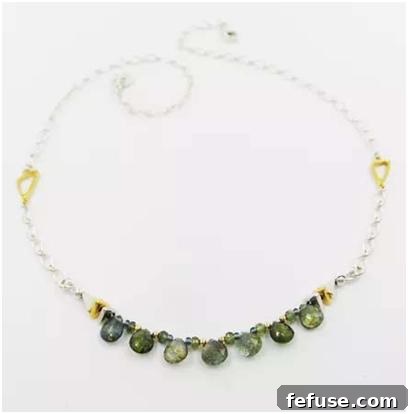
Necklace in sterling silver and 22k gold vermeil with sapphire briolettes, $178; Arlee Kasselman
Exploring the Magnificent Spectrum of Fancy Sapphires
The term “fancy sapphire” encompasses a dazzling array of colors that diverge from the traditional blue. These extraordinary gems challenge conventional perceptions and open up a world of possibilities for unique jewelry designs. Each color possesses its own charm, character, and often, its own symbolism, making the choice of a sapphire a deeply personal one. The diversity of these hues ensures that there is a sapphire to match every mood, style, and occasion, offering a personalized touch to any jewelry collection.
The Iconic Blue Sapphire: Royalty and Lore
The allure of the blue sapphire is undeniable. Its deep, velvety blues have long been associated with nobility, fidelity, and spiritual enlightenment. Historically, the finest blue sapphires were unearthed in the legendary mines of Kashmir, renowned for their intense, cornflower blue with a slightly violet tint, often described as “velvety” or “sleepy” due to minute rutile inclusions. These Kashmir sapphires set a gold standard for other blues, commanding exceptional prices and admiration due to their scarcity and unparalleled color saturation.
Other significant sources include Sri Lanka (Ceylon), known for its lighter, brighter blues, and Madagascar, which produces a wide range of blue hues. Australian sapphires are typically darker, often exhibiting a deep inky blue, while those from Montana, USA, often exhibit unique teal or denim blue shades, some of which are entirely natural and unheated. The deep blues of sapphires are not just visually striking; they evoke a sense of calm, wisdom, and truth, making them a popular choice for significant life events, from engagements to milestone anniversaries. The enduring appeal of the blue sapphire lies not only in its exquisite beauty but also in its profound symbolism and rich historical tapestry, forever linking it to power and prestige.
The Enchanting Padparadscha: A Rarity Among Gems
Among the pantheon of fancy sapphires, the padparadscha stands out as one of the rarest and most coveted. Its name, derived from the Sinhalese word for “lotus flower,” perfectly describes its delicate yet vibrant pinkish-orange hue, reminiscent of a tropical sunset. This unique color combination is what makes the padparadscha so special; it’s not simply pink, nor simply orange, but a harmonious blend of both, often exhibiting a subtle salmon tone. The ideal padparadscha possesses a perfect balance, with neither pink nor orange dominating, and should display a medium saturation to truly capture its distinctive glow.
Predominantly found in Sri Lanka, and occasionally in Madagascar and Tanzania, true padparadscha sapphires are exceedingly scarce. Their rarity significantly contributes to their high value, often placing them among the most expensive colored gemstones per carat. Gemologists meticulously evaluate the color to ensure it truly falls within the strict definition of padparadscha, as many stones might be marketed as such but lack the precise color balance and optimal saturation. Owning a padparadscha sapphire is akin to owning a piece of nature’s poetry, a gem that radiates warmth and exquisite beauty, making it a truly unique and highly sought-after addition to any fine jewelry collection, embodying grace and sophistication.
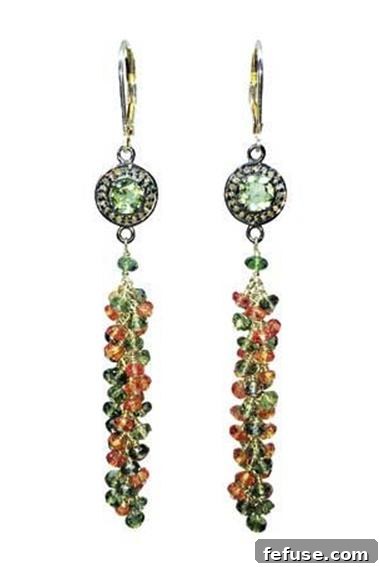
Earrings in oxidized sterling silver with 4 cts. t.w. green and orange sapphire rondels, 0.38 ct. t.w. faceted green sapphires, and 0.2 ct. t.w. diamonds, $975; Melinda Lawton
A Kaleidoscope of Hues: Other Fancy Sapphire Colors
Beyond the celebrated blue and the rare padparadscha, sapphires enchant with a breathtaking array of other colors, each offering distinct beauty and character:
- Pink Sapphires: Ranging from delicate pastels to vivid fuchsias, pink sapphires have surged in popularity, often chosen for their romantic appeal and femininity. They are a beautiful and durable alternative to pink diamonds, offering excellent brilliance and a wide range of shades to suit various preferences. Their vibrant sparkle makes them perfect for contemporary and classic designs alike, symbolizing love, compassion, and playful charm.
- Yellow Sapphires: Exuding warmth and cheerfulness, yellow sapphires come in shades from pale lemon to intense golden honey. Often associated with prosperity, wisdom, and good fortune, these bright gems are a fantastic choice for those seeking a vibrant splash of color. They provide a joyful glow and are increasingly popular in various jewelry settings, from engagement rings to elegant pendants, offering a sunny disposition and positive energy.
- Green Sapphires: These unique gems display a spectrum of greens, from subtle olive to deep forest hues, often with a hint of blue or yellow. Green sapphires are less common in mainstream jewelry but are highly prized by collectors for their distinctive, earthy charm and natural beauty. They offer an elegant and understated alternative to more traditional green gemstones like emeralds, with the added benefit of superior hardness and durability, making them an excellent choice for everyday wear.
- Purple Sapphires: Regal and sophisticated, purple sapphires can range from soft lavender to rich, deep violet. Their captivating color often exhibits pleochroism, meaning they can display different colors when viewed from various angles, adding to their mystique and dynamic appeal. Purple sapphires symbolize wisdom, spiritual awakening, and luxury, making them a truly enchanting and unique choice for those who appreciate distinction.
- Orange Sapphires: Fiery and bold, orange sapphires radiate energy and passion. Their hues vary from soft tangerine to intense burnt orange, often with undertones of red or yellow, giving them a warm, autumnal glow. These vibrant gems are perfect for making a statement, offering an exotic allure that captures attention and symbolizes enthusiasm, creativity, and joy. They bring a lively and unconventional sparkle to any piece of jewelry.
- White Sapphires: Also known as colorless sapphires, these gems are often used as a more affordable, ethical, and durable alternative to diamonds. While they lack the fire and dispersion of a diamond, their exceptional brilliance and clarity make them a beautiful choice for engagement rings and other jewelry where a colorless stone is desired. They represent purity, clarity, and new beginnings, offering understated elegance.
- Black Sapphires: Opaque and mysterious, black sapphires offer a striking contrast in jewelry design. Often faceted to maximize their luster and create a unique play of light, they are popular in men’s jewelry and contemporary, avant-garde designs, providing a bold and sophisticated statement. They symbolize protection, grounding, and quiet strength, offering a modern edge.
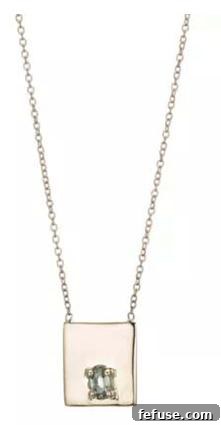
Drew necklace in 14k gold with 0.32 ct. pale green sapphire, $1,100; Mara Carrizo Scalise
Beyond Color: Unique Sapphire Varieties
Some sapphires exhibit remarkable optical phenomena that add another layer of intrigue and wonder to their inherent beauty:
- Star Sapphires: Perhaps the most famous of these unique varieties, star sapphires display a phenomenon called asterism. This is a six-rayed star that appears to float across the surface of the gem when light hits it. This magical effect is caused by inclusions of fine, needle-like rutile crystals (often referred to as “silk”) aligned in specific directions within the sapphire’s crystal structure. Star sapphires are typically cut into a cabochon (domed, unfaceted) shape to best showcase this captivating star. They come in various colors, with blue and black star sapphires being the most common, and are highly valued for their distinctive charm and mesmerizing optical display.
- Color Change Sapphires: These rare and fascinating sapphires exhibit a distinct change in color when viewed under different lighting conditions. For example, a color change sapphire might appear blue in daylight or fluorescent light and shift to a purplish-pink under incandescent light. This chameleon-like quality is due to the presence of specific trace elements, such as chromium and vanadium, that absorb different wavelengths of light depending on the light source. This makes them a truly captivating and dynamic gem, offering two distinct looks from a single stone.
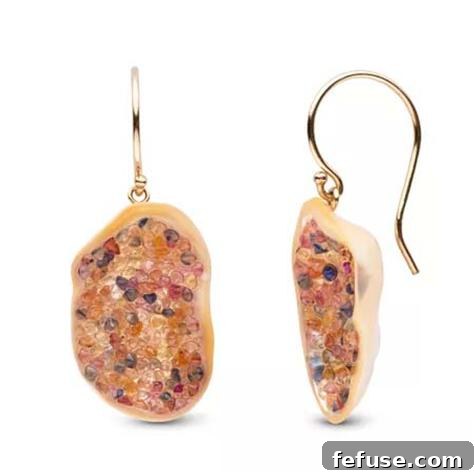
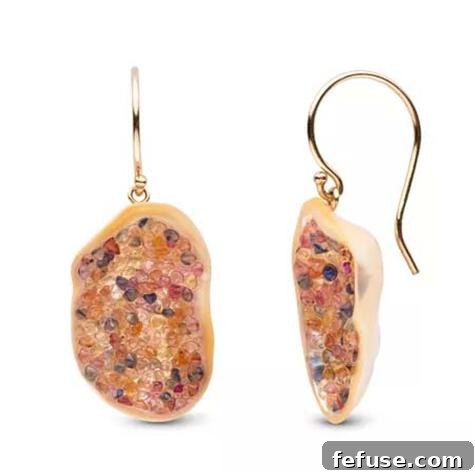 Confetti earrings in 14k yellow gold with sliced freshwater soufflé pearls set with 6.2 cts. t.w. multicolor sapphires, $2,850; little h Jewelry
Where Do Sapphires Come From? Global Origins
Sapphires are found in various locations around the globe, with each mine often producing stones with distinct characteristics, influencing their color, clarity, and overall appeal. The geological conditions in different regions contribute to the unique qualities observed in sapphires from various origins. Key sapphire-producing regions include:
- Sri Lanka (Ceylon): Renowned for centuries, Sri Lanka is famous for producing a wide range of colors, including vibrant blues, delicate pinks, brilliant yellows, and the exquisite padparadscha. Ceylon sapphires are often characterized by their bright, lively hues and good clarity, making them highly desirable.
- Madagascar: A relatively newer source that has become a major player in the sapphire market, Madagascar yields an impressive spectrum of sapphire colors, from fine blues mimicking Kashmir quality to various fancy colors. Its diverse geology allows for a wide array of high-quality gems.
- Kashmir, India: Historically significant, the now largely depleted mines of Kashmir produced the legendary “cornflower blue” sapphires, which are among the most valuable and sought-after gems in the world. Their unique velvety appearance and intense color remain a benchmark for blue sapphires.
- Myanmar (Burma): While more famous for rubies, Myanmar also produces high-quality sapphires, often with intense colors and excellent crystal structure, though they are less frequently seen on the international market.
- Australia: Known for producing darker, often inky blue sapphires, as well as significant quantities of green and yellow varieties. Australian sapphires are often found in alluvial deposits and are prized for their natural, earthy tones.
- Montana, USA: The Yogo Gulch mine in Montana is particularly famous for producing unique, untreated blue sapphires with a distinctive cornflower or denim-like hue, which are highly valued for their natural color and clarity. Other Montana mines offer a wider range of fancy colors.
- Thailand and Cambodia: Historically important for their blue sapphires, especially from regions like Chanthaburi and Pailin, though production has varied over time, these areas are also known for their gem cutting and trading centers.
The origin of a sapphire can significantly impact its value and desirability, with stones from historically prestigious locations often commanding higher prices, especially when accompanied by proper certification.
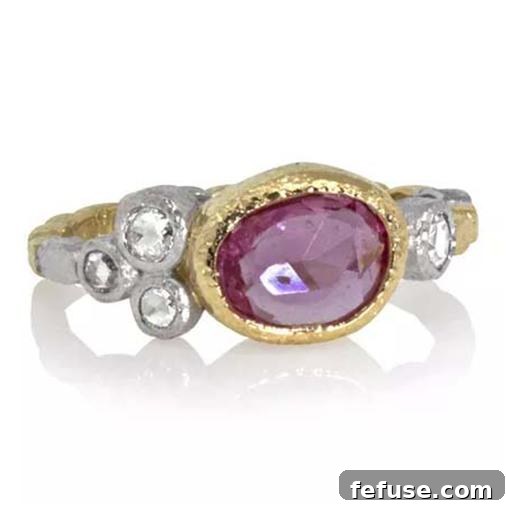 Skinny Pebbles ring in 18k gold and palladium with 0.2 ct. t.w. free-form rose-cut pink sapphire and rose-cut diamonds, $2,450; Rona Fisher
Enhancing Sapphire Beauty: Understanding Treatments
Like many natural gemstones, sapphires often undergo various treatments to enhance their color or clarity. It’s important for consumers to understand these treatments, as they can affect a gem’s value and how it should be cared for. The most common and widely accepted treatment is heat treatment. Heating sapphires to high temperatures (typically between 500°C and 1800°C) can intensify or modify their color, dissolve silk inclusions to improve clarity, or even transform milky stones into transparent, vibrant gems. Heat treatment is permanent and stable, and a significant majority of sapphires on the market, including many high-quality stones, have been heat-treated. Reputable jewelers will always disclose if a sapphire has been heat-treated.
Other treatments, such as diffusion treatment, involve introducing color-causing elements (like titanium) into the surface layer of the sapphire at high temperatures. This creates a thin layer of color on the gem’s exterior. While diffusion-treated sapphires can be attractive, the color is not throughout the stone and can be lost if the gem is re-polished or chipped. Therefore, diffusion-treated sapphires are generally less valuable than heat-treated or untreated stones. Understanding these treatments is crucial when purchasing sapphires, as they directly impact the gem’s value and long-term durability. Untreated sapphires, particularly those with exceptional natural color and clarity, are the rarest and command the highest prices.
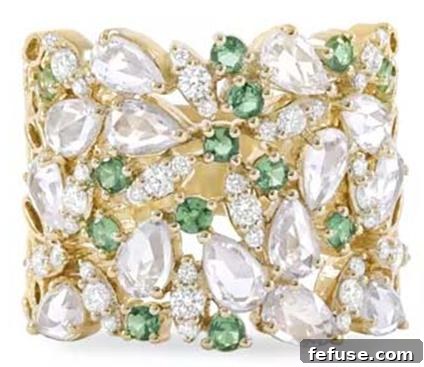 Diadem earrings in 18k gold with 1.1 cts. t.w. purple sapphires and 0.33 ct. t.w. diamonds, $4,100; Unhada
Caring for Your Sapphire Jewelry: Longevity and Luster
Given their impressive hardness and durability, sapphires are relatively easy to care for, making them an excellent choice for everyday wear, including engagement rings and heirloom pieces. To maintain their dazzling luster and beauty, a few simple care steps are recommended, ensuring your sapphire jewelry remains as brilliant as the day you acquired it:
- Regular Cleaning: Sapphires can be safely cleaned at home with warm soapy water and a soft brush. Gently scrub the stone and setting to remove dirt, oils, and grime that can dull its appearance. Rinse thoroughly under clean running water and dry with a soft, lint-free cloth to avoid water spots.
- Professional Cleaning: For a more thorough clean, sapphires can generally be safely cleaned using ultrasonic cleaners and steam cleaners. However, caution should be exercised with stones that have significant fractures, certain types of inclusions (especially those near the surface), or specific treatments like diffusion. Always consult a professional jeweler for advice on specific pieces, especially if they contain other gems or intricate settings, to prevent any potential damage.
- Proper Storage: Store sapphire jewelry separately from other pieces, especially diamonds, which are harder and can scratch sapphires. A soft cloth pouch, a fabric-lined jewelry box with individual compartments, or even a simple plastic baggie is ideal to prevent scratching and damage from other items.
- Avoid Harsh Chemicals: While durable, sapphires can be affected by strong chemicals, especially those containing chlorine, bleach, or harsh abrasives. Remove sapphire jewelry before engaging in activities involving household cleaners, gardening, or swimming in chlorinated water, as these substances can dull the metal settings and potentially damage the stone’s surface over time.
With proper care, your sapphire jewelry will continue to sparkle and be cherished for generations, serving as a lasting testament to its inherent beauty and your thoughtful stewardship.
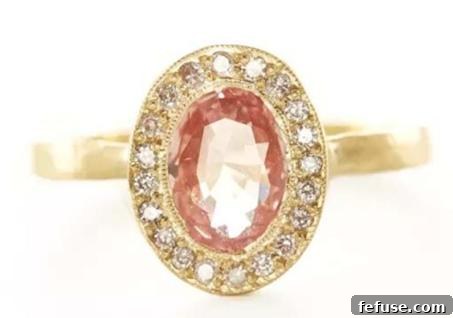 Hammered ring in 18k yellow gold with 0.72 c.t. padparadscha sapphire and 0.15 ct. t.w. pink diamonds, $5,375; Jennifer Dawes
Choosing Your Perfect Sapphire: A Buyer’s Guide
When selecting a sapphire, understanding the key factors that determine its quality and value is essential. These are often referred to as the “4 Cs,” adapted for colored gemstones, and considering them will help you make an informed decision for a beautiful and lasting purchase:
- Color: This is arguably the most crucial factor for sapphires. For blue sapphires, look for intense, saturated colors without being too dark or inky, and avoid overly pale stones. For fancy sapphires, the desirability depends on the rarity and beauty of the specific hue; a vibrant, evenly distributed color with good saturation is always preferred. The specific undertones and vibrancy are key.
- Clarity: Sapphires are natural stones, and most will have some inclusions (internal characteristics). The ideal is “eye-clean,” meaning no inclusions are visible to the naked eye. Avoid stones with prominent inclusions that affect the gem’s brilliance, transparency, or durability, especially those reaching the surface. Small, well-distributed inclusions are acceptable and are a testament to the stone’s natural origin.
- Cut: The cut of a sapphire significantly impacts its sparkle, brilliance, and how well its color is displayed. A well-cut sapphire will maximize its brilliance, minimize windowing (areas where light passes through the bottom of the stone), and present its color uniformly. Common cuts include oval, cushion, round, and emerald cuts, but fancy shapes are also popular. An excellent cut enhances the gem’s overall beauty and life.
- Carat Weight: As with all gemstones, larger sapphires are rarer and thus more valuable. However, a smaller sapphire with exceptional color, clarity, and cut can be significantly more valuable than a larger one with poor quality. It’s important to balance carat weight with the other three Cs to find the best value and beauty.
Additionally, always consider the gem’s origin (if known and verifiable) and any treatments it may have undergone. Always purchase from a reputable jeweler who provides full disclosure, offers certification from independent gemological laboratories (like GIA, AGS, or GRS) for your sapphire, and can answer all your questions confidently and transparently. Ethical sourcing is also a growing concern for many buyers, so inquire about the gem’s journey from mine to market.
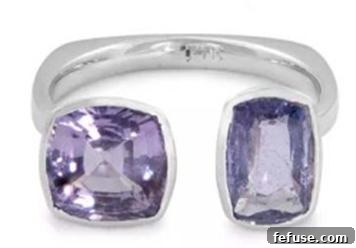 Split ring in 14k white gold with a 5.25 cts. cushion- and elongated-cushion-cut sapphires, $7,245; Julez Bryant
The Enduring Symbolism of Sapphires
Throughout history, sapphires have been imbued with deep symbolism across various cultures and civilizations, making them more than just beautiful ornaments. They are often associated with wisdom, truth, sincerity, and faithfulness, making them a popular choice for engagement rings and gifts that signify lasting commitment and deep affection. Ancient Persians believed the Earth rested on a giant sapphire, which painted the sky blue with its reflection, a testament to its profound cosmic significance.
In many cultures, sapphires were believed to possess protective qualities, guarding against evil, envy, and poisoning. They were also thought to bring peace of mind, spiritual insight, and good fortune to the wearer, fostering clear thought and promoting honesty. Royalty across the world, from ancient kings to modern monarchs, has favored sapphires, considering them symbols of divine favor, protection, and wise rule. This legacy continues today, solidifying the sapphire’s status as a gem of prestige and profound meaning. Whether chosen for its captivating color or its rich symbolism, a sapphire is more than just a beautiful stone; it’s a wearable piece of history, meaning, and timeless elegance.
Conclusion: The Timeless Allure of Sapphires
From the iconic deep blues that have graced royal fingers for centuries to the vibrant, unexpected hues of fancy sapphires, this extraordinary gemstone continues to captivate and inspire. Sapphires are not merely beautiful; they are a testament to nature’s artistry, offering unparalleled durability, a kaleidoscope of colors, and a rich tapestry of history and symbolism. Whether you’re drawn to the classic elegance of a blue sapphire, the exotic rarity of a padparadscha, or the cheerful brilliance of a yellow sapphire, there is a sapphire for every taste, personality, and occasion, each promising a unique connection.
As we continue to explore the depths of this remarkable corundum mineral, the diverse and enchanting world of sapphires reminds us that true beauty often lies beyond the most familiar paths, inviting us to discover and cherish the full spectrum of its timeless appeal. Investing in a sapphire means acquiring a piece of enduring beauty, strength, and heritage that will be treasured for generations to come, a vibrant reflection of nature’s endless creativity and enduring charm.