
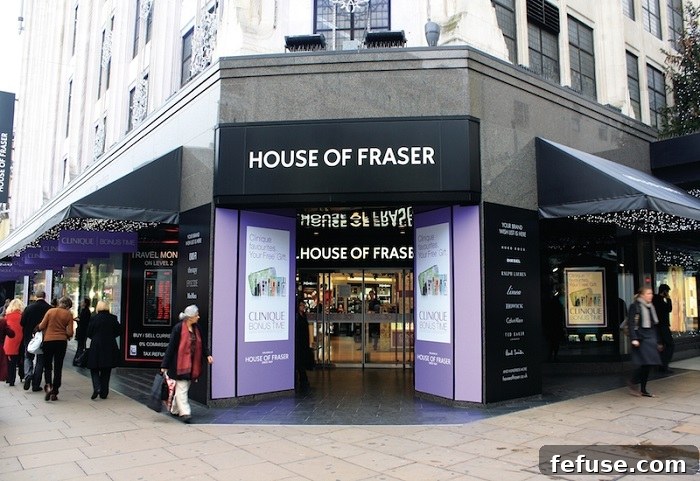
The fate of House of Fraser, a cornerstone of the British high street for generations, has been a topic of intense speculation and concern across the retail landscape. Following its acquisition by Mike Ashley, the astute and often polarizing chief executive of Sports Direct, the roadmap for the iconic department store chain is now clearer. Ashley, who secured House of Fraser out of administration for a reported £90 million last month, has revealed which of its UK outlets will continue to operate and which will unfortunately close their doors permanently.
Mike Ashley Confirms House of Fraser Store Decisions: Three Outlets to Close Amid Rent Negotiations
In a pivotal moment for the struggling British high street, Mike Ashley has delivered a definitive update on the future of House of Fraser stores. While the retail magnate, known for his aggressive business strategies and a growing portfolio of distressed brands, has successfully brokered deals to save the majority of the chain’s locations, three prominent stores are set for closure. This announcement marks a significant step in the ongoing restructuring efforts aimed at revitalizing the historic department store brand under new ownership.
The past few weeks have seen Mike Ashley engaged in strenuous discussions with landlords across the UK, meticulously negotiating rent terms that he deems sustainable for the future of House of Fraser. These intricate and often fraught negotiations have yielded positive results for a substantial portion of the estate, directly preventing the closure of 20 stores and, crucially, safeguarding approximately 3,500 jobs across these locations. This outcome underscores the delicate balance between commercial viability and the preservation of employment within the challenging retail sector.
The Stores Facing Closure: Edinburgh, Hull, and Swindon
Despite the widespread success in securing agreements, the department store’s outlets in Edinburgh, Hull, and Swindon will unfortunately be closing. These closures stem from an inability to reach mutually agreeable new rent terms with the respective landlords. For hundreds of dedicated staff members employed at these locations, the news is particularly difficult, as they now face the prospect of redundancy and are currently undergoing consultation processes. The impact of these closures extends beyond the immediate job losses, affecting local economies and leaving significant voids in city centres where these stores have long been anchors.
The High Stakes of Landlord Negotiations
The negotiations between Mike Ashley and landlords have been a central theme of House of Fraser’s post-acquisition journey. Ashley’s well-documented strategy often involves demanding significantly reduced, or in some cases, even zero rents for a period, as a condition for keeping stores open. This approach, while aggressive, reflects the harsh economic realities facing traditional bricks-and-mortar retail in the age of e-commerce and rising operational costs. Landlords, however, are naturally reluctant to agree to such terms, as it impacts their own property valuations, rental income streams, and potentially sets precedents for other struggling tenants. This tension highlights the fundamental clash between the need for retail survival and the commercial interests of property owners.
Mike Ashley’s Statement and Vision for the High Street
In a public statement addressing the outcomes, the billionaire businessman articulated his perspective on the collaborative efforts required to rescue British retail. “We’ve showed what we can achieve on the British high street when we work together with landlords,” Ashley declared, emphasizing the success stories born from cooperation. However, his statement also conveyed a degree of frustration towards those who did not align with his vision for a revitalized House of Fraser. “I am disappointed that in my opinion a small number of greedy landlords still refuse to be reasonable,” he added, directly attributing the closures to an uncompromising stance from certain property owners.
This assertion underscores the complex ecosystem of the high street, where the survival of retailers is increasingly interdependent on the flexibility and forward-thinking approach of landlords and local authorities. Ashley further appealed for a collective effort: “I am calling on everybody to pull together, including landlords and local authorities in order to help to save as many House of Fraser stores and jobs as possible on the great British high street.” His call to action highlights a broader sentiment within the retail industry, advocating for a more holistic and collaborative strategy to combat the ongoing challenges posed by changing consumer habits, soaring business rates, and relentless online competition. The future prosperity of many town centres hinges on such cooperative models, ensuring that iconic retail brands like House of Fraser can adapt and thrive.
The Broader Context of UK Retail Challenges
House of Fraser’s journey into administration and its subsequent acquisition by Sports Direct is symptomatic of a much larger crisis gripping the UK retail sector. For years, department stores, once the bastions of local communities, have struggled to adapt to the digital age. Increased competition from online giants, coupled with high operating costs, inflexible lease agreements, and shifting consumer preferences towards experiential shopping or pure e-commerce, have created an incredibly challenging environment. Mike Ashley’s intervention, while saving many jobs and stores, is a stark reminder of the urgent need for fundamental changes in the commercial property market and government policy to support the high street. His aggressive tactics, while sometimes controversial, are often seen as a necessary evil to force these systemic changes.
Looking Ahead: The Future of House of Fraser Under Frasers Group
With the initial wave of store rationalization complete, the focus for House of Fraser now shifts towards strategic rejuvenation. Under Mike Ashley’s Frasers Group (the parent company of Sports Direct), the vision for House of Fraser has often been articulated as transforming it into the “Harrods of the high street.” This ambitious goal implies a significant investment in store refurbishment, an elevated product offering, and a premium customer experience. While the closures are regrettable, they are likely a necessary step in creating a leaner, more agile business capable of delivering on this upscale ambition. The remaining stores will be crucial in demonstrating whether Ashley’s long-term vision for luxury-focused department stores can truly succeed in a highly competitive market. This involves not only effective stock management and brand curation but also a seamless integration of online and in-store shopping experiences.
List of House of Fraser Stores That Will Remain Open:
The following House of Fraser stores have successfully secured their future and will continue to welcome customers, offering a lifeline for thousands of employees and maintaining a vital retail presence in their respective communities:
- Altrincham
- Aylesbury
- Birkenhead
- Camberley
- Carlisle
- Darlington
- Doncaster
- Grimsby
- High Wycombe
- Lincoln
- London (Oxford Street)
- Middlesbrough
- Plymouth
- Skipton
- Telford
- Huddersfield
- Leeds
- Maidstone
- Solihull
- Sutton Coldfield
The retail landscape continues to evolve at a rapid pace, and the decisions surrounding House of Fraser stores reflect the intense pressures and strategic maneuvers required for survival. While the closure of stores in Edinburgh, Hull, and Swindon is a somber reminder of these challenges, the preservation of 20 other locations offers a renewed sense of hope for the brand and the thousands of jobs it supports. Mike Ashley’s tenure at the helm of House of Fraser promises to be a defining chapter in the ongoing narrative of the British high street.
News Source: professionaljeweller.com