
The global landscape is undergoing a profound transformation, particularly concerning women’s roles, rights, and representation. This pivotal moment necessitates that the UK jewellery industry not only acknowledges but actively embraces significant shifts in its attitudes towards enhancing opportunities and support for women within its ranks. To overlook this burgeoning movement would be to lag behind a societal evolution that promises richer, more diverse, and ultimately more successful enterprises.
While some voices within the UK trade may contend that gender-related issues are non-existent, asserting claims such as ‘women are adequately supported,’ ‘they enjoy the same opportunities as their male counterparts,’ or questioning the very need to discuss gender dynamics, such a stance would be profoundly short-sighted. The notion that the jewellery industry is somehow immune to the broader challenges of inequality is a dangerous illusion, especially when empirical evidence consistently highlights disparities across various sectors of business and employment. Ignoring these realities not only hinders progress but also risks alienating a significant portion of the workforce and customer base.
For those who might dismiss these concerns, the resounding success and rapid growth of the Women’s Jewellery Network (WJN), launched in 2017, serves as an undeniable counter-narrative. The WJN’s emergence clearly signals a profound unmet need for greater support, connection, and advocacy for women in the industry. Positioned strategically, the WJN is now a powerful catalyst, poised to inspire and facilitate essential, positive changes across the entire UK jewellery landscape, fostering an environment where every individual can thrive.
The WJN’s debut at International Jewellery London last year offered an early, compelling glimpse into this demand. An inaugural drop-in session, designed to introduce women and men to the WJN’s ambitious plans, was met with an overwhelming response. A space configured for merely 25 attendees was utterly inundated by approximately 100 individuals – women and men from all sectors and roles within the industry. This extraordinary turnout was not just a testament to curiosity but a clear articulation of a collective yearning for change, demonstrating a widespread desire for a more inclusive and supportive professional community.
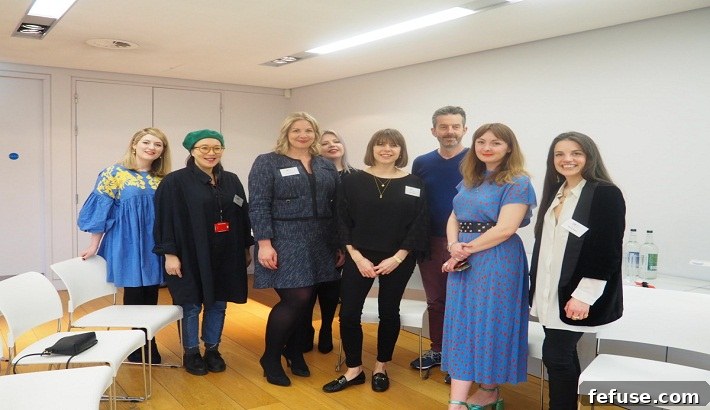
Further solidifying this mandate for change were our recent sold-out events in London and Birmingham, meticulously organized to commemorate International Women’s Day. These gatherings unequivocally demonstrated that women working within the UK jewellery trade are actively seeking enhanced career support, professional development, and meaningful pathways for advancement. Crucially, they are also ready and eager to engage in constructive dialogue with those in leadership positions, advocating for the necessary evolutions in industry culture and practice.
In London, direct conversations with audience members unveiled the deep-seated motivations behind their attendance. A recurring theme was the desire for greater connection; many expressed feeling isolated or lonely in their roles, highlighting a profound need for peer interaction and a sense of community. Beyond this, attendees sought engagement in business-focused discussions, yearned for inspiration, and were actively looking for opportunities within an environment where they felt secure and confident enough to openly share their plans, innovative ideas, and professional concerns without apprehension. This desire for a supportive ecosystem underscores a significant gap the WJN is committed to filling.
Panel discussions at the London event brought to light some of the more challenging experiences faced by women. Several participants candidly shared stories of bullying and intense competitiveness within their workplaces, notably citing issues with female colleagues. They sought practical advice on how to navigate such professional complexities with grace and efficacy. Others spoke of feeling patronized by prevailing attitudes within the trade, a sentiment that often led to apprehension about asking questions of peers or confidently asserting themselves to pursue professional growth. These narratives paint a clear picture of the cultural barriers that, unfortunately, still persist and impede the progress of many talented individuals.
However, the tide is undeniably turning. Women are not merely articulating their expectations for greater opportunities within the jewellery industry; they are proactively making their indelible mark and extending support to others through decisive action. Pioneers like Jennifer Ewah of Eden Diodati are leveraging their design expertise to create collections that not only inspire but also empower craftswomen in disadvantaged communities globally, embedding social responsibility into the very fabric of their businesses. Similarly, Dinny Hall ingeniously uses jewellery design as a powerful medium to convey crucial social messages, such as commemorating and celebrating the enduring legacy of the suffragette movement, thereby transforming adornment into advocacy.
Beyond individual initiatives, concerted efforts are underway to significantly boost women’s career prospects through structured mentoring and apprenticeship programs. Encouragingly, statistics from the Goldsmiths’ Centre’s Foundation and Apprentice Programme reveal that 33% of its apprentices are women, with over 50% of its recent pre-apprentices being females aged 16 to 19, indicating a promising pipeline of future talent. In the digital sphere, the online education platform Mastered reports that a remarkable 80% of professionals undertaking its Accessories: Mastered course are women intently seeking further career development and specialized skills within the industry. As 2018 progresses and beyond, events meticulously hosted by the Women’s Jewellery Network will continue to serve as vital platforms, empowering countless others to forge robust professional connections, cultivate self-confidence, and navigate their career trajectories with greater clarity and assurance.
So, why is this critical transformation unfolding with such momentum now? The answer lies partly in the jewellery industry’s historically slow pace of adaptation. For too long, many of its foundational facets have been deeply rooted in patriarchal structures, causing it to dawdle in its response to rapidly evolving societal attitudes and expectations concerning women’s roles. This inertia has created a chasm between the industry’s practices and modern values. It is now imperative for the trade to proactively and comprehensively address diversity at all organizational levels. Feedback garnered from our recent events consistently highlights an urgent need for industry networks to become demonstrably more open, accessible, and truly inclusive, reflecting the diverse talent pool and consumer base they serve.
A stark illustration of the deep-seated disparities can be found in recent figures from a joint study by the Financial Times and Richemont Group, which spotlight the dramatic contrast in leadership representation for women at the very pinnacle of the corporate hierarchy. Richemont, a global luxury conglomerate that owns prestigious brands like Cartier and Van Cleef & Arpels, famously maintained an all-white board consisting of 18 men and just a single woman, underscoring a severe lack of diversity at its highest echelons. It was only this year that the company inducted its first-ever female CEO for a jewellery and watch brand, Chabi Nouri, who now commendably leads at Piaget. While a significant step, this belated appointment underscores the immense journey that still lies ahead for truly equitable representation.
Similarly, we have witnessed other pioneering women shatter long-standing traditions within the UK. Stella Layton and, more recently, Judith Cobham-Lowe have commendably held senior positions at UK Assay Offices, breaking decades of male dominance to become the first female leaders in these historically male-centric roles. Their appointments are not just symbolic but represent tangible shifts in leadership paradigms. Likewise, WJN founder Victoria McKay stands as the first Chief Operating Officer of the London Diamond Bourse, a prestigious position she has held with immense pride and efficacy since her appointment in 2014. Her presence in what was traditionally an exclusively male environment has been transformative, directly correlating with a significant and encouraging rise in female membership within the Bourse, proving that visible female leadership inspires and attracts new talent.
It is crucial to emphasize, however, that this fervent call for heightened industry awareness and action is not about fostering a divisive “women versus men” dynamic. Quite the contrary, men are actively encouraged to join the Women’s Jewellery Network and participate in its initiatives. Indeed, it is often to the men within our industry that we direct our most earnest appeals: we invite you to attend our events, to inquire how you can contribute to this vital cause, or how the WJN can potentially support you in your own professional journey. We urge you to critically examine how the businesses you operate within could evolve to more effectively meet the diverse needs of both your female employees and your valued female customers. True progress necessitates collaboration, empathy, and a shared vision for a more equitable future.
With influential figures such as London Mayor Sadiq Khan boldly declaring himself a feminist, and, closer to home, the new CEO of the National Association of Jewellers (NAJ), Simon Forrester, explicitly pledging his unwavering support for women in the trade, the momentum for gender equality is undeniable and irreversible. Those who choose to remain closed to the essential conversation of empowering and supporting women within the industry will ultimately find their opinions and perspectives rendered obsolete and irrelevant by the march of progress. The landscape of leadership and societal values has shifted irrevocably, demanding an inclusive approach from all stakeholders.
In his own profound words, Simon Forrester has expressed his staunch support for Victoria McKay’s insightful statement that the WJN is actively provoking “a positively disruptive conversation” within the UK industry. Forrester himself demonstrated his commitment by attending our Birmingham International Women’s Day event, where he attentively listened to discussions that underscored the critical need to make traditional trade networks more accessible and welcoming to women. He also heard impassioned calls for a steadfast commitment to evolving company cultures and leadership structures to be more inclusive and forward-thinking. Since that event, he has unequivocally stated that it is high time for the entire industry – across its myriad divisions – to wholeheartedly embrace change, to diligently nurture the burgeoning leaders of tomorrow, and to help every individual achieve their fullest potential. The Women’s Jewellery Network eagerly anticipates collaborating with the NAJ on future initiatives designed to further empower and support women across all facets of our dynamic industry.
The Women’s Jewellery Network fundamentally believes that now is the opportune moment for open, candid, and constructive discussions. It is time to actively cultivate and create tangible opportunities for women at every stage of their professional journey – whether they are just embarking on their careers in the jewellery industry, returning to work after maternity leave, or perhaps contemplating a significant change in career direction. Our mission is to connect women with peers – male or female – who will not only mentor but actively nurture their professional development and provide invaluable guidance.
Crucially, this transformative work must be conducted within professional settings, fostering an atmosphere that is inherently respectful, candid, and, above all, profoundly conscious of the monumental shifts the world has experienced in recent years. As a collective industry, we should proudly and unapologetically strive for genuine equality for all, recognizing that a diverse, equitable, and inclusive environment is not just morally right, but strategically essential for sustained innovation, growth, and enduring success. The future of the UK jewellery industry depends on it.