
King Charles III & Queen Camilla’s Historic Dunfermline Visit: A Royal Tribute to Scottish Heritage and Culture
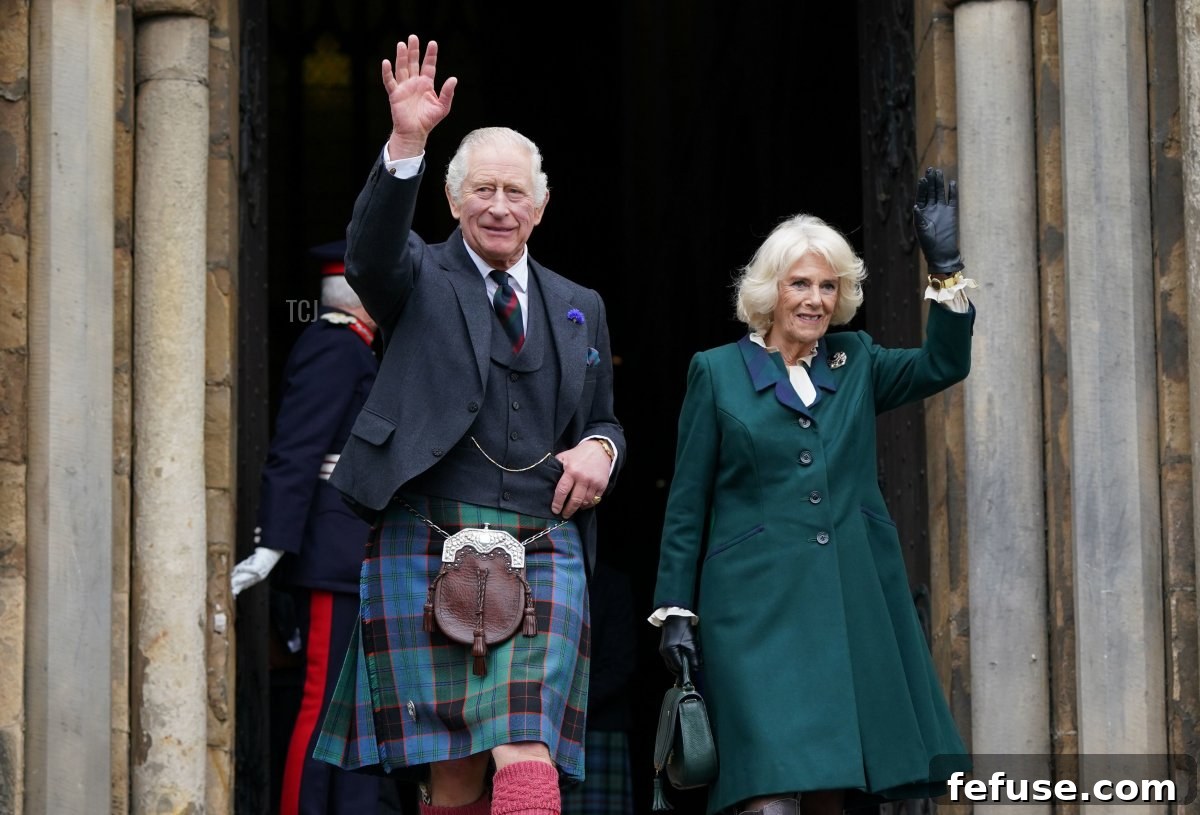
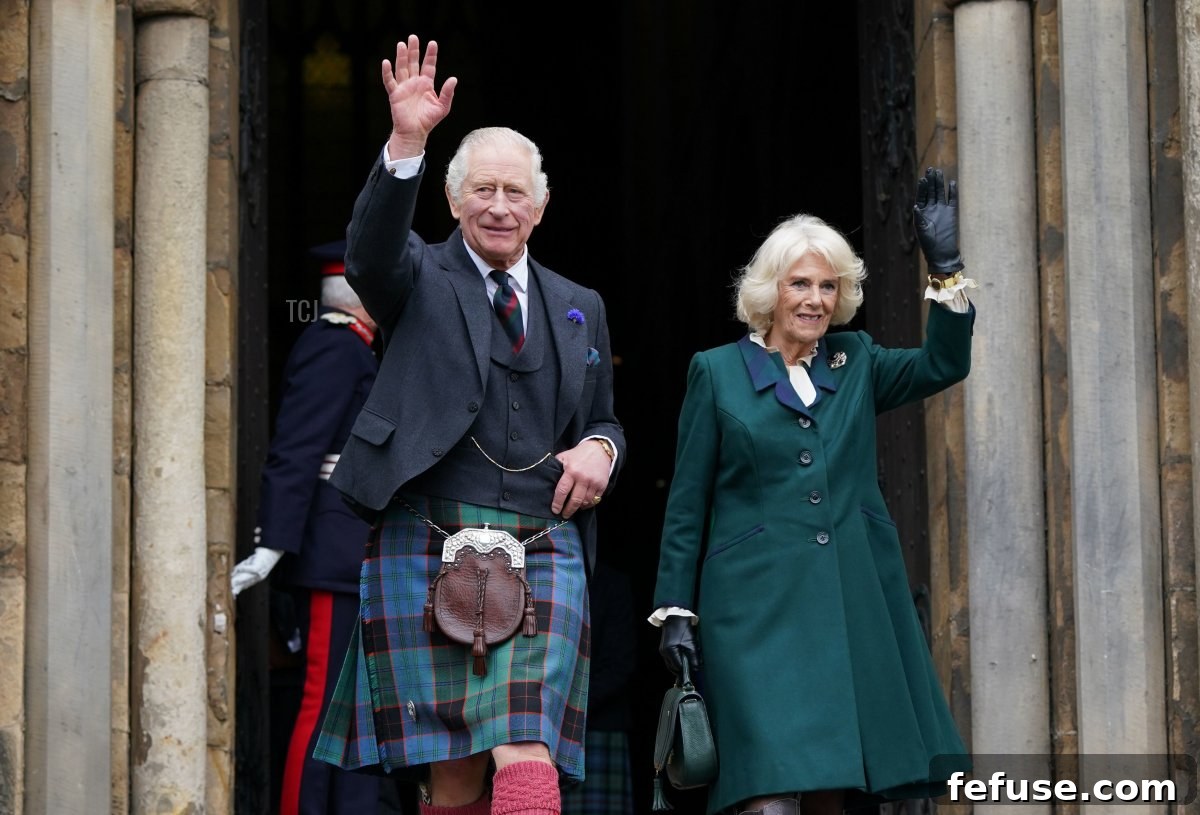
On a momentous Monday in October 2022, King Charles III and Queen Camilla undertook a significant royal engagement in Scotland, focusing their visit on the historic region of Fife. This particular occasion was marked by profound cultural resonance and deep respect for Scottish heritage. As they honored Dunfermline’s newly conferred city status and celebrated a major anniversary for its venerable Abbey, Queen Camilla’s choice of jewelry subtly conveyed a powerful message, featuring a distinctive brooch imbued with special local meaning and a rich history.
Dunfermline’s Royal Recognition: A New City with Ancient Roots
The primary purpose of Their Majesties’ visit was to formally acknowledge and celebrate Dunfermline’s elevation to city status. This prestigious honor was bestowed as one of eight communities across the United Kingdom during Queen Elizabeth II’s Platinum Jubilee celebrations. For Dunfermline, a town steeped in centuries of Scottish history, this designation represented a significant milestone, recognizing its vibrant community, cultural importance, and enduring legacy as a former royal burgh and ancient capital of Scotland. Its transformation into a city reaffirms its place as a cornerstone of national heritage and a thriving modern hub.
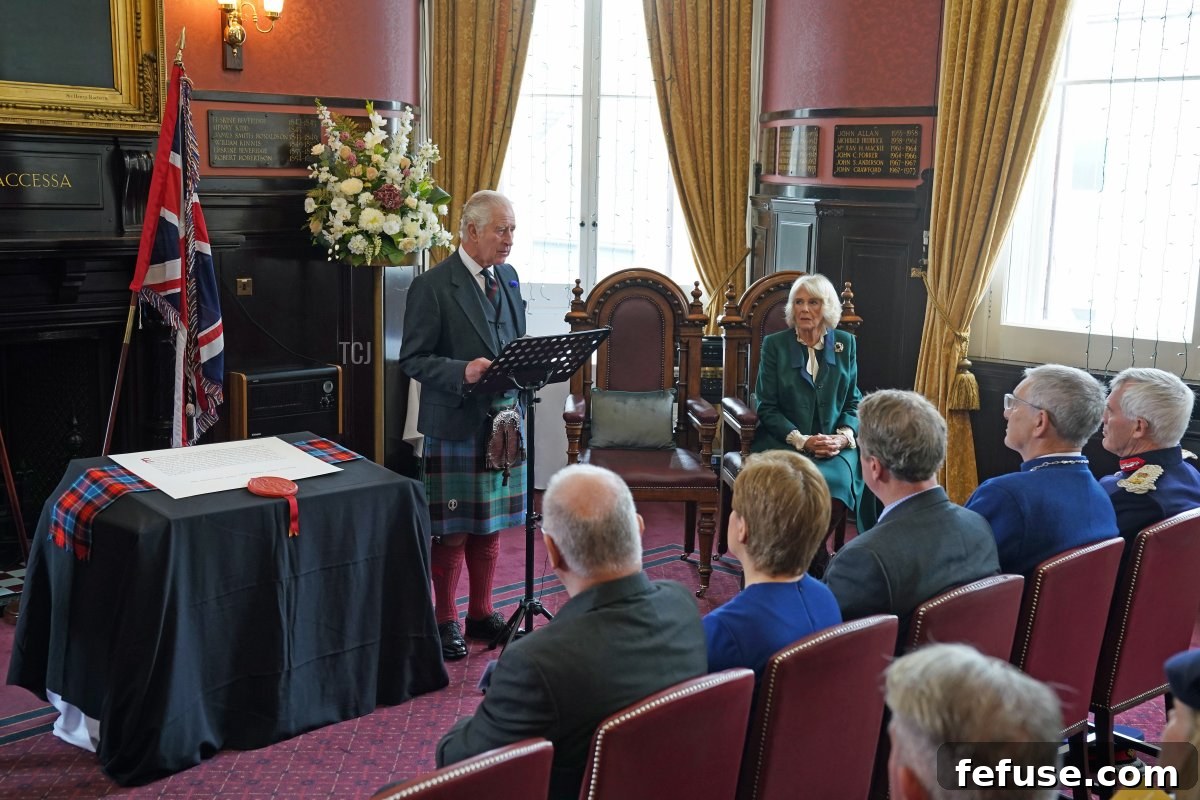
The royal itinerary included a pivotal stop at the Dunfermline City Chambers, where King Charles III presided over an official council meeting. Here, he formally marked the conferral of city status, a moment of immense civic pride for the residents. Following this, the royal couple proceeded to the magnificent Dunfermline Abbey, a site of profound historical and spiritual importance, to commemorate its remarkable 950th anniversary. This ancient abbey, once the burial place of Scottish kings and queens, including the iconic Robert the Bruce, stands as a powerful symbol of Scotland’s deep royal connections and rich ecclesiastical past. The visit underscored the enduring link between the Scottish monarchy and the nation’s spiritual and historical foundations, honoring centuries of tradition and heritage.
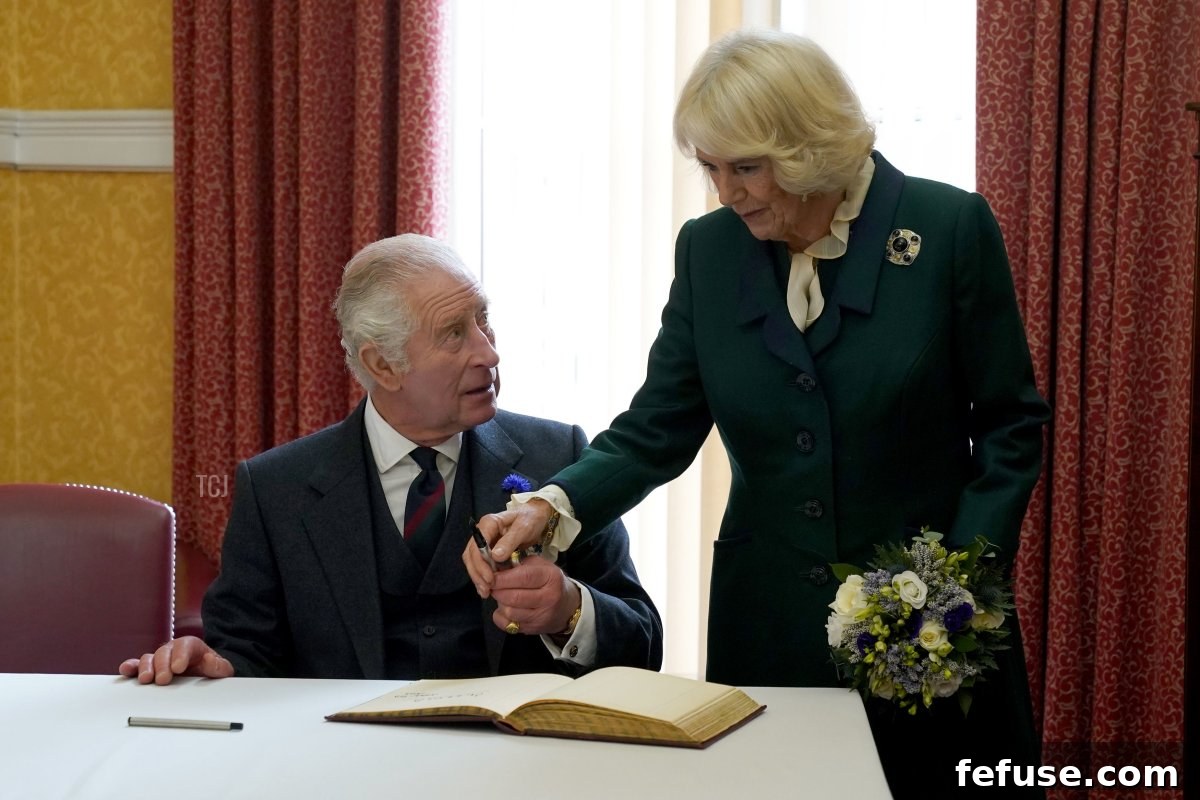
A ceremonial highlight at the City Chambers involved King Charles III and Queen Camilla signing the official visitor’s book. This traditional gesture allowed the royal couple to personally acknowledge Dunfermline’s momentous achievement and leave a lasting record of their historic visit for future generations. The act was performed with grace, signifying the monarchy’s commitment to recognizing local triumphs and participating in the ceremonial life of the nation.
Royal Attire: A Fusion of Scottish Tradition and Regal Elegance
For their engagements in Dunfermline, both King Charles III and Queen Camilla carefully selected outfits that not only exuded royal dignity but also paid homage to their Scottish surroundings. King Charles III, renowned for his appreciation of Scottish culture, chose to wear a traditional kilt. This iconic garment is more than just clothing; it is a potent symbol of Scottish identity, history, and allegiance, and his choice resonated deeply with the local populace, reinforcing his personal connection to Scotland.
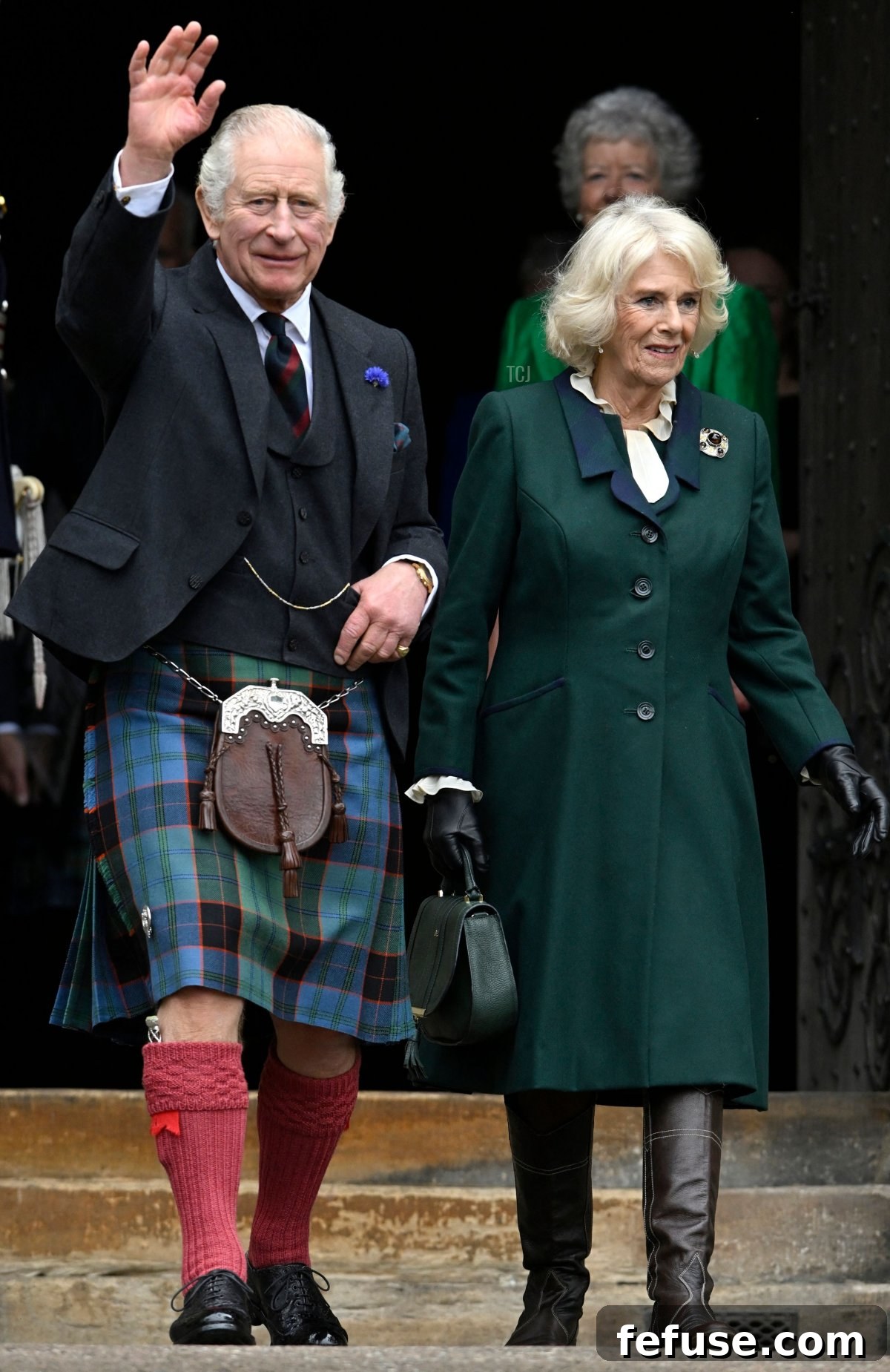
Queen Camilla’s ensemble perfectly complemented the King’s traditional attire. She appeared in a stylish dark green coat, a color choice that subtly mirrored the lush Scottish landscape. Beneath the coat, a ruffled blouse added a touch of sophisticated flair, while tall, practical leather boots completed her look, ensuring comfort and elegance throughout the busy day. This thoughtful combination reflected a blend of formal royal protocol and a practical approach to navigating various public engagements, including greeting well-wishers on the streets of Dunfermline.
Queen Camilla’s Scottish Brooch: A Gemstone Ode to Local Craftsmanship
Queen Camilla’s choice of jewelry frequently carries deeper symbolism, and her selection for the Dunfermline visit was no exception. Adorning her dark green coat was a magnificent traditional Scottish brooch from her personal collection, serving as a heartfelt tribute to the heritage and artistry of Scotland. This particular piece, with its intricate design, can be categorized most accurately as a “plaid brooch” or a “Cairngorm brooch,” names that evoke rich historical and geographical associations within Scottish jewelry.
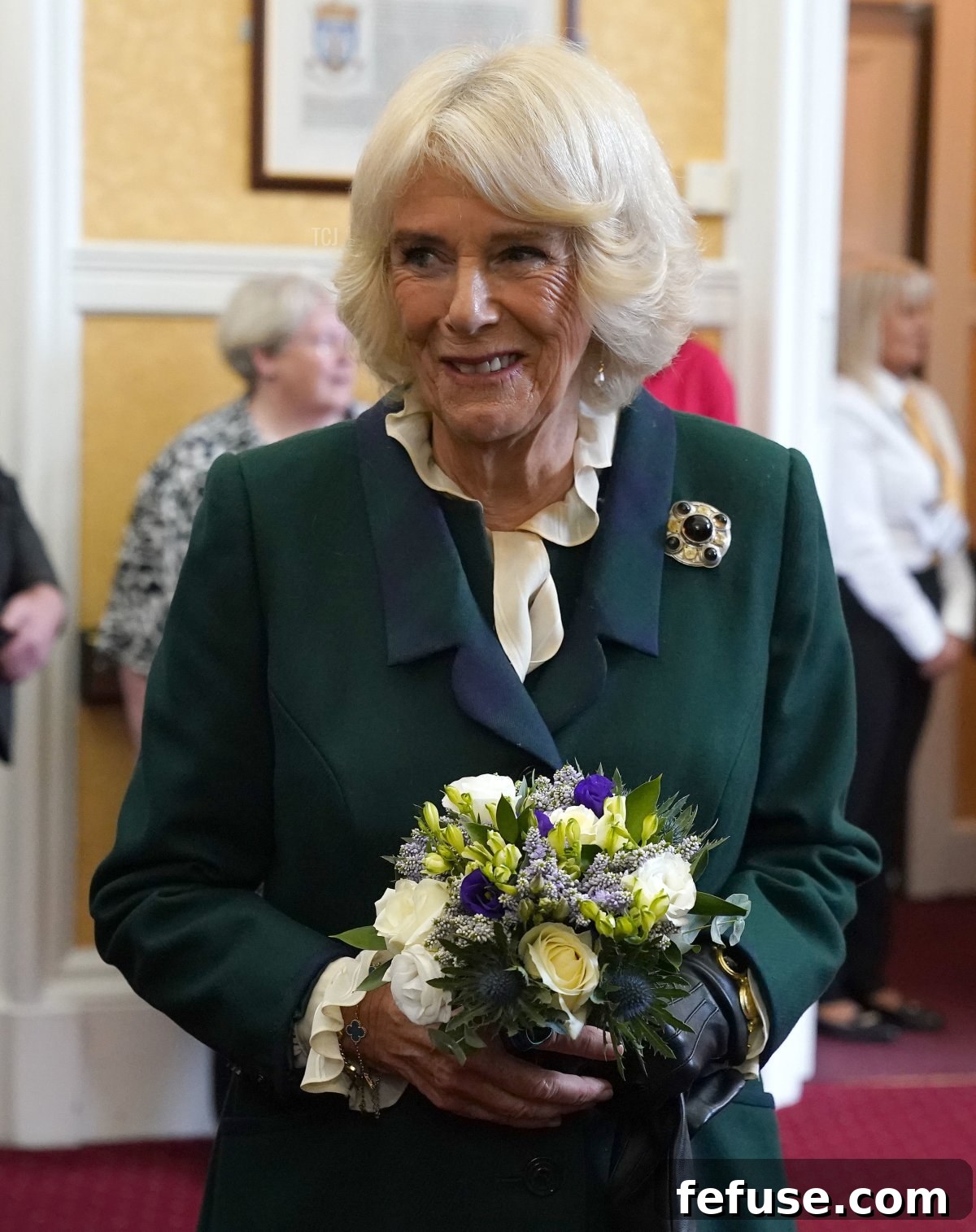
Historically, a plaid brooch served a functional role in Scottish Highlander dress, fastening the heavy folds of a tartan plaid on the shoulder, before evolving into an exquisite piece of decorative art. A Cairngorm brooch, meanwhile, is typically characterized by the incorporation of quartz gemstones, often smoky quartz, sourced from the majestic Cairngorm Mountains of Scotland. Camilla’s brooch, crafted from both silver and gold, features an array of highly polished cabochon gemstones, which appear to be agates. Agate is a cornerstone material in traditional Scottish jewelry, prized for its natural beauty and diverse patterns, and has been used in adornments for centuries, representing a tangible connection to Scotland’s rugged landscapes and geological richness. By wearing this distinctively Scottish piece, the Queen Consort made a thoughtful and respectful gesture, celebrating the nation’s unique cultural identity, its skilled craftsmanship, and its deep-rooted traditions.
A Royal Relic: Tracing the Brooch’s Journey Through Camilla’s Engagements
This particular Scottish brooch is far from a recent acquisition; it has been a cherished part of Queen Camilla’s royal jewelry collection since the nascent years of her marriage to King Charles III (then Prince Charles). Its recurrent appearance at various Scottish events underscores a consistent and personal appreciation for the country’s unique cultural expressions and the exquisite artistry of its jewelers. Each time the brooch is worn, it not only adds a touch of regal elegance but also weaves another thread into the narrative of her deep connection with Scotland.
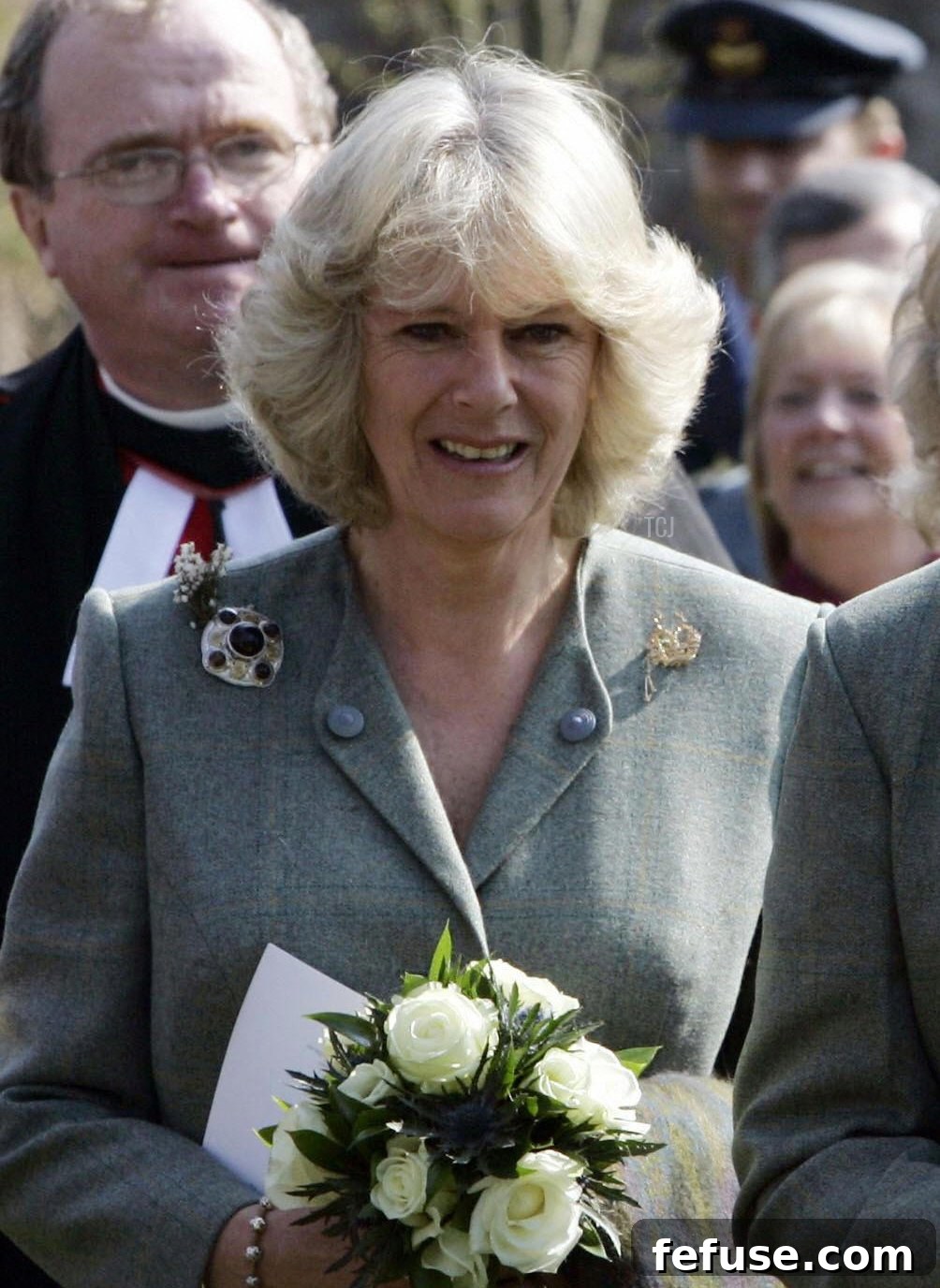
One of its earliest notable public appearances dates back to April 24, 2005, when Queen Camilla wore it for a poignant memorial service at the Gordon Highlanders Regimental Museum in Aberdeen. This somber occasion commemorated the lives of soldiers who had made the ultimate sacrifice in active service. The Gordon Highlanders, a highly decorated Scottish infantry regiment, hold a significant and revered place in the nation’s military heritage. Complementing the brooch, Camilla also wore the cap badge of the Gordon Highlanders as a gold pin on the opposite side of her jacket, a gesture that further underscored her profound respect for the regiment and its history. This early display solidified her connection to Scottish military traditions through her thoughtful choice of adornment, demonstrating a deep empathy and honor for those who served.
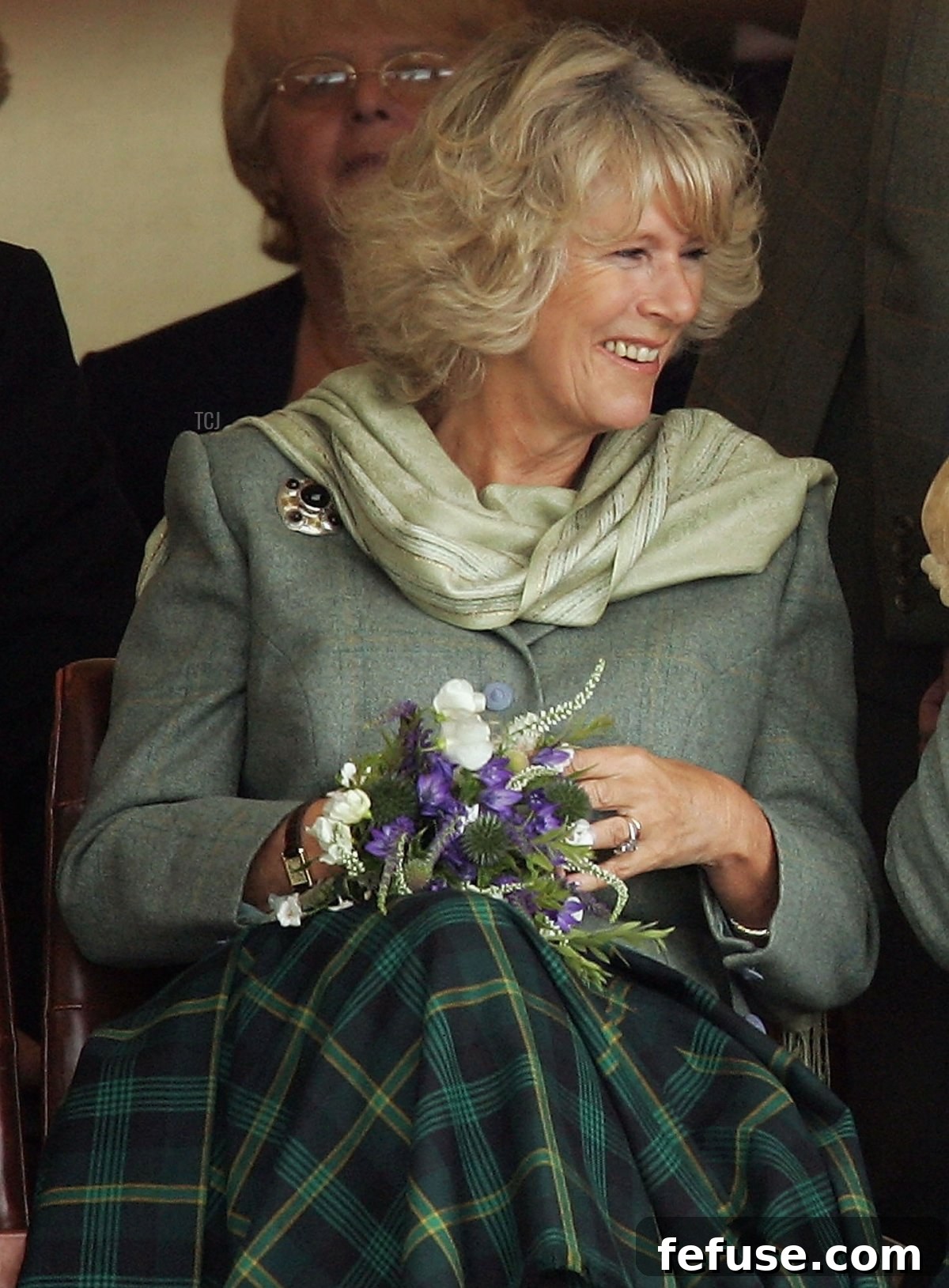
In August of the same year, 2005, the brooch graced another culturally significant event: the annual Mey Games, held at Queens Park in Caithness. These traditional Highland games, vibrant with Scottish sports, music, and dance, take place near the historic Castle of Mey, a beloved former residence of the late Queen Mother. Camilla’s decision to wear the Scottish brooch at an event so deeply rooted in Highland tradition and so personally connected to the Royal Family through the Queen Mother’s legacy further highlighted her enduring commitment to embracing and celebrating Scotland’s rich and diverse heritage.
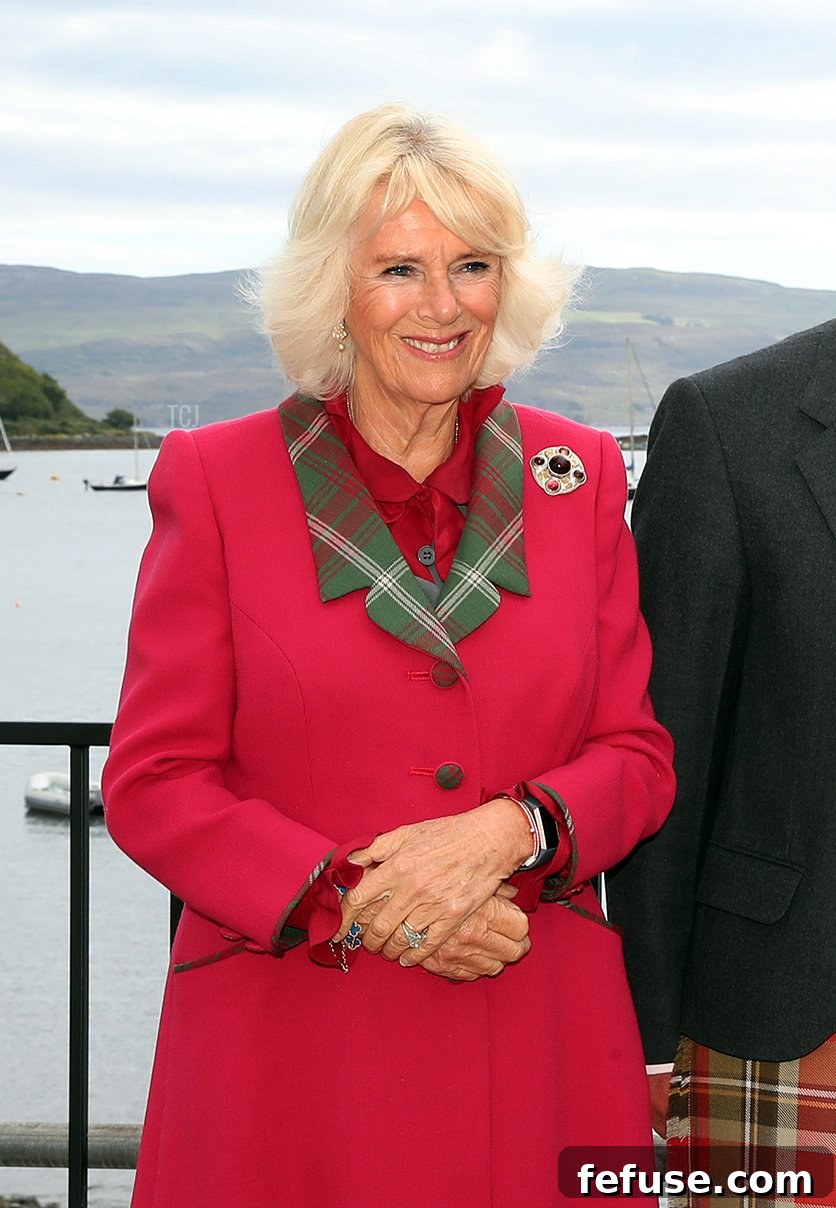
More recently, in September 2021, the distinctive brooch was again seen adorning Queen Camilla during a visit to the breathtaking Isle of Skye. Renowned for its dramatic landscapes, ancient myths, and vibrant Gaelic culture, the Isle of Skye is a truly iconic part of Scotland. Her consistent choice to wear this specific piece during her engagements across such diverse and culturally significant regions of Scotland – from the military memorials of Aberdeen to the festive Mey Games and the enchanting Isle of Skye – powerfully conveys her personal and heartfelt connection to the nation’s enduring cultural narrative and its people. Each appearance of this brooch reinforces a story of continuous royal appreciation for Scottish identity, bridging historical events with contemporary royal duties.
The Completing Touches: Diamond Elegance and Intricate Bracelets
While the Scottish brooch undeniably served as the centerpiece of Queen Camilla’s ensemble, her other jewelry choices for the Dunfermline engagement provided a perfect balance, complementing its traditional elegance with a touch of modern sophistication. To accompany the historically significant brooch, she selected a delicate pair of diamond drop earrings from her extensive collection. These exquisite earrings, shimmering with a timeless brilliance, offered a subtle yet luxurious contrast to the more culturally resonant brooch, harmonizing the overall aesthetic with undeniable grace and refinement.
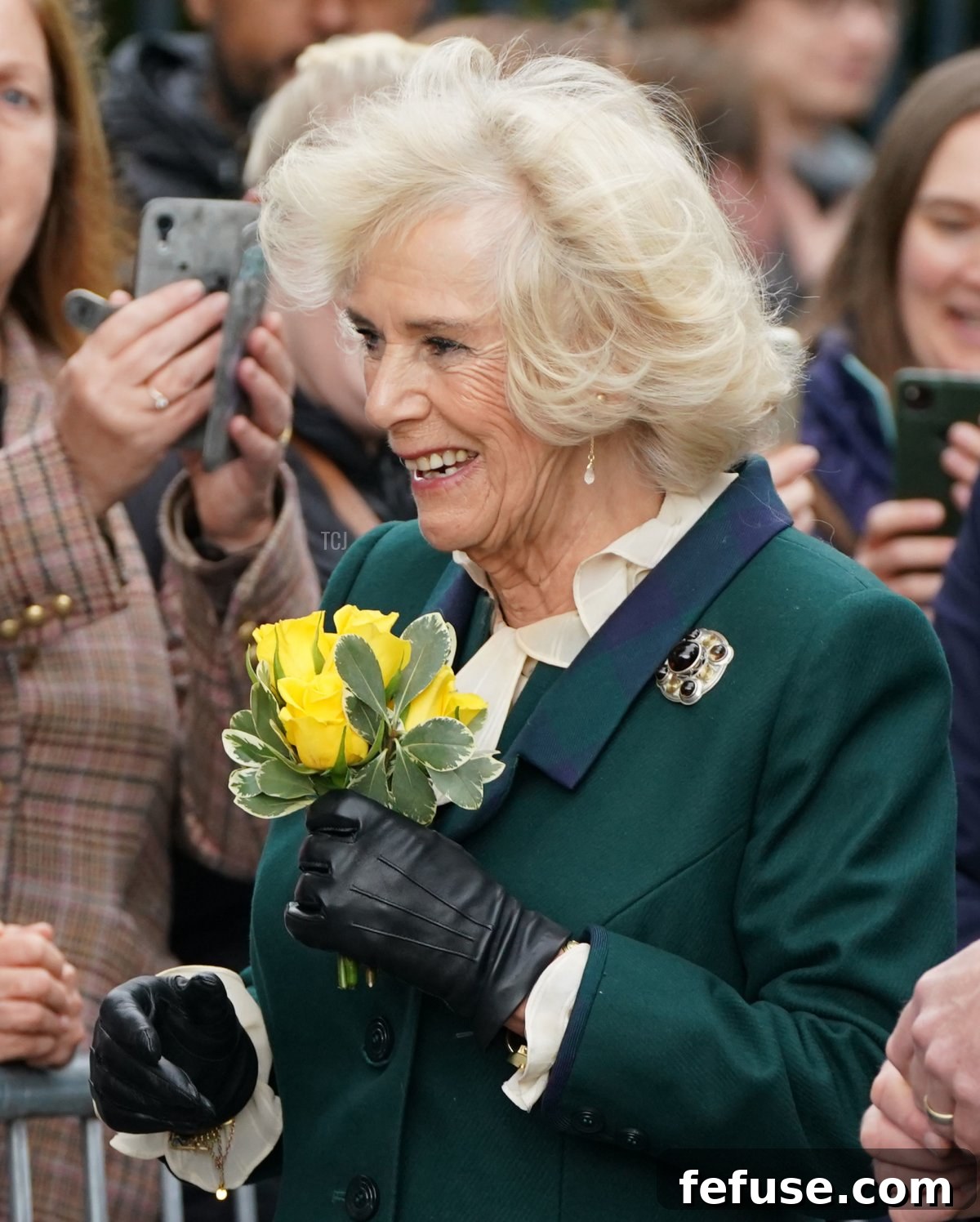
On her right wrist, Queen Camilla maintained her customary stack of elegant bracelets, a personal style signature that adds an element of understated glamour to her public appearances. A particularly noteworthy moment captured by photographers during the visit to the City Chambers in Dunfermline was when she was seen fastening a distinct bracelet on her left wrist. This intimate detail offered a glimpse into the personal rituals of preparing for her royal duties, showcasing her meticulous attention to every aspect of her presentation.
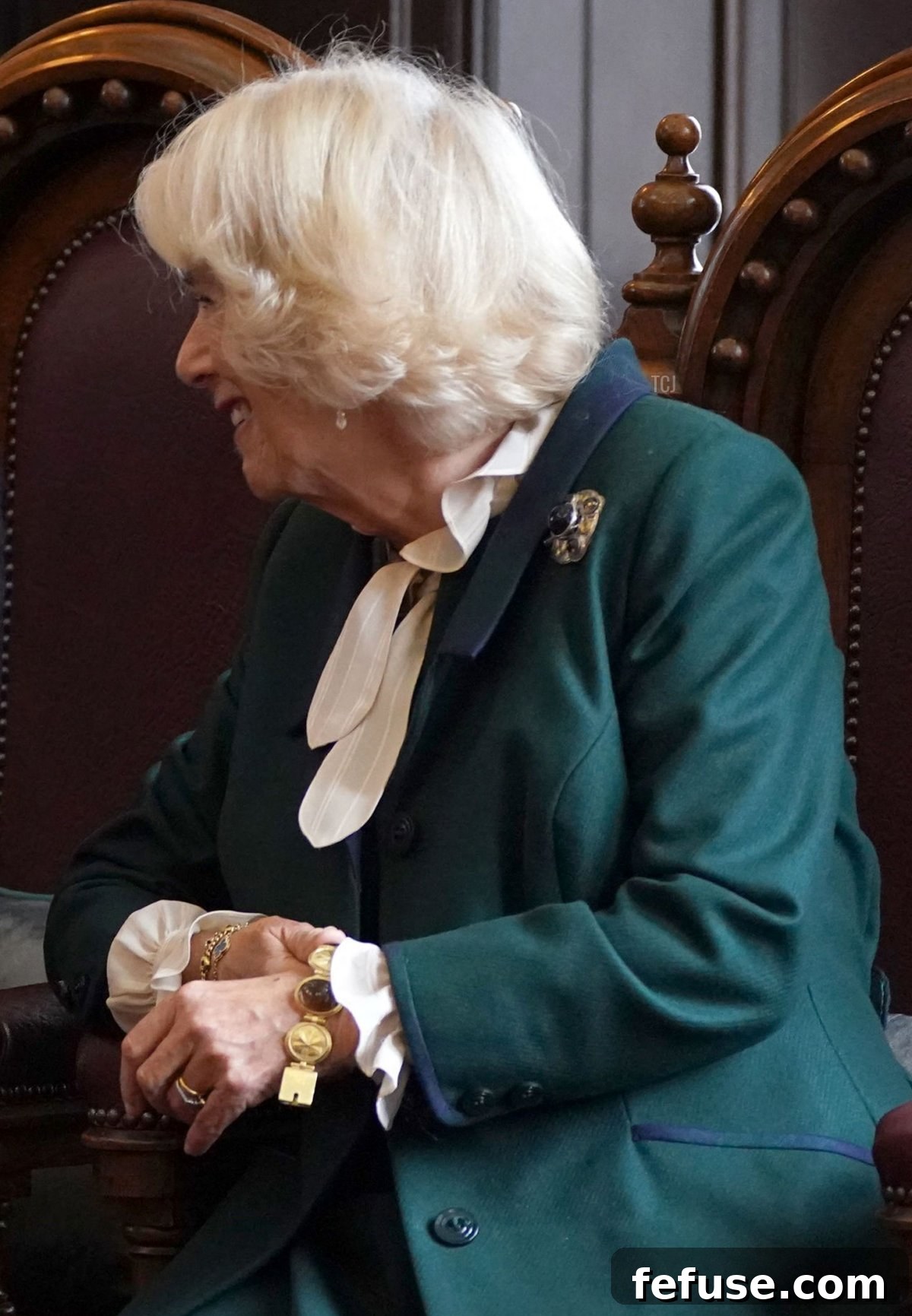
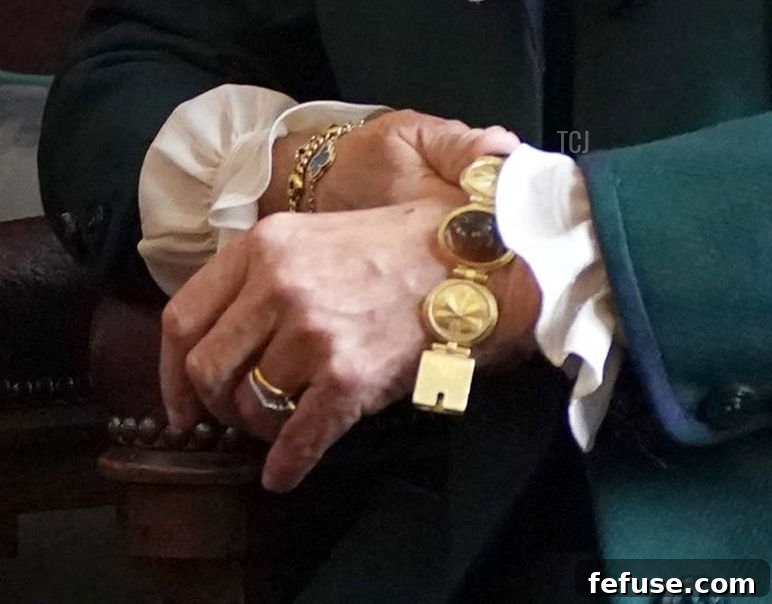
A closer examination of this particular gold bracelet reveals it to be intricately designed with multiple plaques, each seemingly featuring carved gemstones. This exquisite detailing hints at a piece chosen not only for its inherent beauty but also potentially for its unique craftsmanship or symbolic value, perhaps subtly echoing further connections to Scottish artistry or holding a special personal significance for the Queen Consort. Collectively, all these elements of her attire and adornment—from the traditional Scottish brooch to the sparkling diamonds and intricately carved bracelet—masterfully showcased a thoughtful synthesis of personal style, royal tradition, and a profound, respectful acknowledgment of Scotland’s rich cultural tapestry, rendering her appearance in Dunfermline truly memorable and deeply meaningful.
The Enduring Royal Connection to Scotland
The visit of King Charles III and Queen Camilla to Dunfermline transcended a mere formal engagement; it served as a vibrant reaffirmation of the deep and enduring bond between the British monarchy and Scotland. By officially marking Dunfermline’s new city status and celebrating Dunfermline Abbey’s remarkable 950th anniversary, the royal couple powerfully underscored the significance of local communities, historical continuity, and national pride. King Charles III’s choice of the traditional kilt and Queen Camilla’s distinctive Scottish brooch were not simply sartorial decisions but potent visual symbols of profound respect and genuine affection for Scotland’s rich cultural tapestry. These thoughtful gestures highlight the monarchy’s vital role in honoring regional identities and cherished traditions, fostering a sense of shared heritage and belonging across the United Kingdom.
Queen Camilla’s consistent choice to wear her Scottish brooch at various engagements throughout Scotland—from the somber memorials in Aberdeen to the joyful celebrations of the Mey Games and the breathtaking landscapes of the Isle of Skye—speaks volumes about her genuine appreciation and heartfelt connection to the nation. It stands as a subtle yet potent declaration of her respect for Scottish history, its vibrant art, and its resilient people. Such thoughtful sartorial decisions not only enhance her public image but also deepen the public’s perception of the Royal Family as intimately invested in and respectful of the diverse cultures that collectively form their realm.
The Dunfermline visit thus stands as a compelling testament to the monarchy’s evolving role in the 21st century: serving as a vital bridge between cherished tradition and modern progress, embodying a powerful symbol of national unity, and acting as a steadfast champion of local pride. Through their dignified presence, their engaging interactions, and their meticulously chosen attire and jewelry, King Charles III and Queen Camilla continue to skillfully weave new threads into the rich and intricate tapestry of royal history, affirming their unwavering commitment to all the diverse parts of the United Kingdom, most particularly the beloved landscapes, profound history, and vibrant heritage of Scotland.