
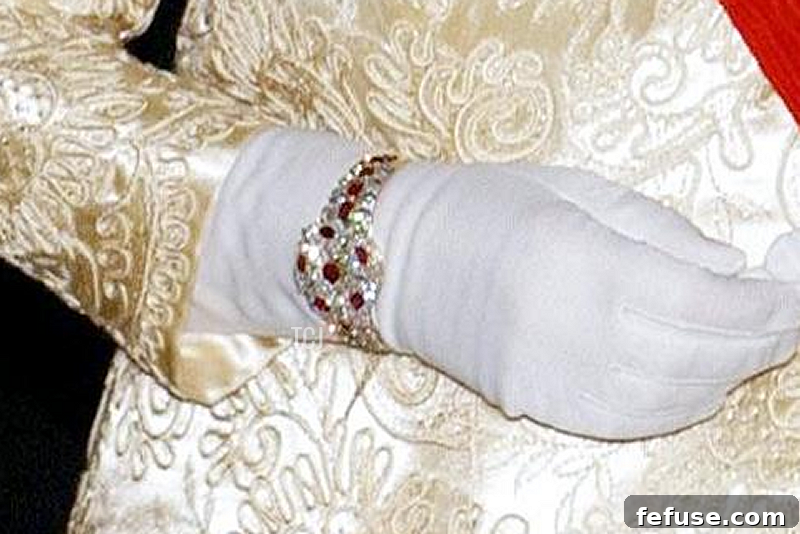
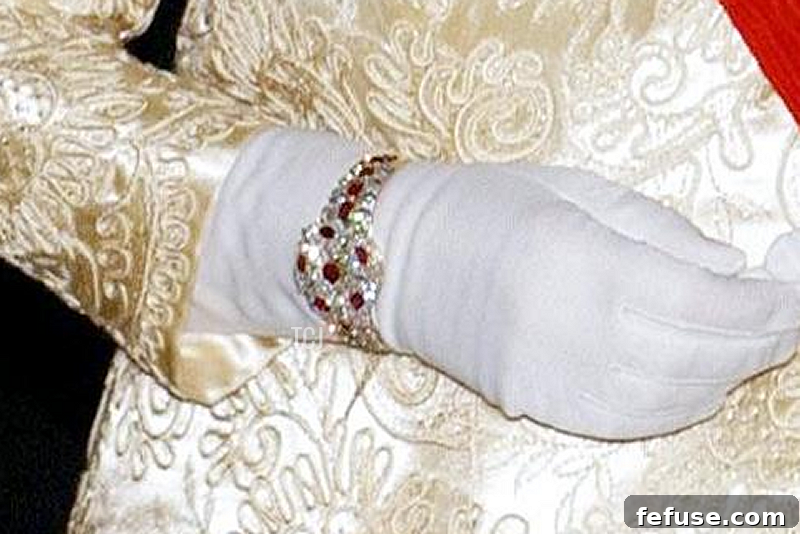
The British Royal Family’s jewelry collection is a treasure trove of history, sentiment, and unparalleled craftsmanship. Among these magnificent pieces, one particular item stands out for its rich provenance and enduring charm: the Cornwall Rose of York Bracelet. Originally a cherished wedding gift for Queen Mary, this exquisite ruby and diamond bracelet traversed generations to become a beloved staple in Queen Elizabeth II’s extensive jewelry repertoire. This article delves into the fascinating history, intricate design, and royal wearers of this iconic heirloom, offering a glimpse into the grandeur and personal stories embedded within Britain’s monarchical jewels.
The story of the Cornwall Rose of York Bracelet begins in 1893, a year that marked a significant milestone for Princess Victoria Mary of Teck, soon to be known as Queen Mary. On July 6th of that year, she married Prince George, Duke of York, who would later ascend to the throne as King George V. Their wedding was a grand affair, celebrated throughout the British Empire, and it garnered an outpouring of gifts from various counties and communities eager to present tokens of affection to the royal couple. Among these numerous presents, the bracelet commissioned by the Cornish Royal Wedding Committee holds a special place, not only for its beauty but also for the heartfelt sentiment it encapsulated.
The formation of the Cornish Royal Wedding Committee underscores a charming tradition of regional loyalty and pride. Local committees across Britain would often raise funds through public subscriptions to commission bespoke gifts for royal weddings, intending to present something unique that symbolized their county’s heritage or industry. For Cornwall, this collective effort was spearheaded by figures like Emily Eliot, the Countess of St. Germans, whose ancestral seat at Port Eliot in the parish of St. Germans was deeply rooted in Cornish history. In a letter published in the Royal Cornwall Gazette on the very day of the wedding, the Countess provided an update on the committee’s successful endeavors.
Eliot proudly reported that, after meticulously collecting subscriptions from the people of Cornwall, the committee had purchased a truly splendid present for the future Queen Consort. She detailed the thoughtful process behind their choice, explaining, “After having ascertained the wishes of HSH the Princess May, the committee selected as the Cornish wedding gift a diamond and ruby bracelet, the centre of which is in the shape of the Rose of York, and can be worn separately as a brooch.” This detail highlights the personal touch involved, indicating that Princess May (as Queen Mary was then known) had some input, ensuring the gift would be genuinely appreciated and frequently worn. This personal consultation was a customary courtesy extended to royal brides, ensuring that the outpouring of public generosity resulted in gifts that truly resonated with them.
The chosen jeweler for this significant commission was Carrington, a highly esteemed London firm known for its exceptional craftsmanship and reputation within aristocratic circles. Carrington produced a magnificent piece, meticulously crafted from diamonds and rubies. The centerpiece, a delicate representation of the Rose of York, was designed with clever versatility, allowing it to be detached and worn independently as a brooch. This ingenious feature added practical value to the ceremonial gift, making it suitable for various occasions. The Rose of York itself carries deep historical symbolism, representing the House of York, one of the two main factions in the Wars of the Roses, and later incorporated into various royal emblems, signifying lineage and heritage.
The presentation of the bracelet took place at Princess May’s residence, White Lodge in Richmond. Countess Eliot noted that Princess May “was graciously pleased to accept the offering made to her on behalf of the county” and “expressed herself much pleased with the bracelet.” This warm reception would have been a source of immense pride for the people of Cornwall. To ensure its provenance was permanently recorded, an inscription was discreetly placed inside the bracelet: “From Cornwall, One and All, July 6, 1893.” This simple yet powerful message served as a lasting tribute to the Cornish people’s collective generosity and enduring loyalty, forever linking the piece to its origins.
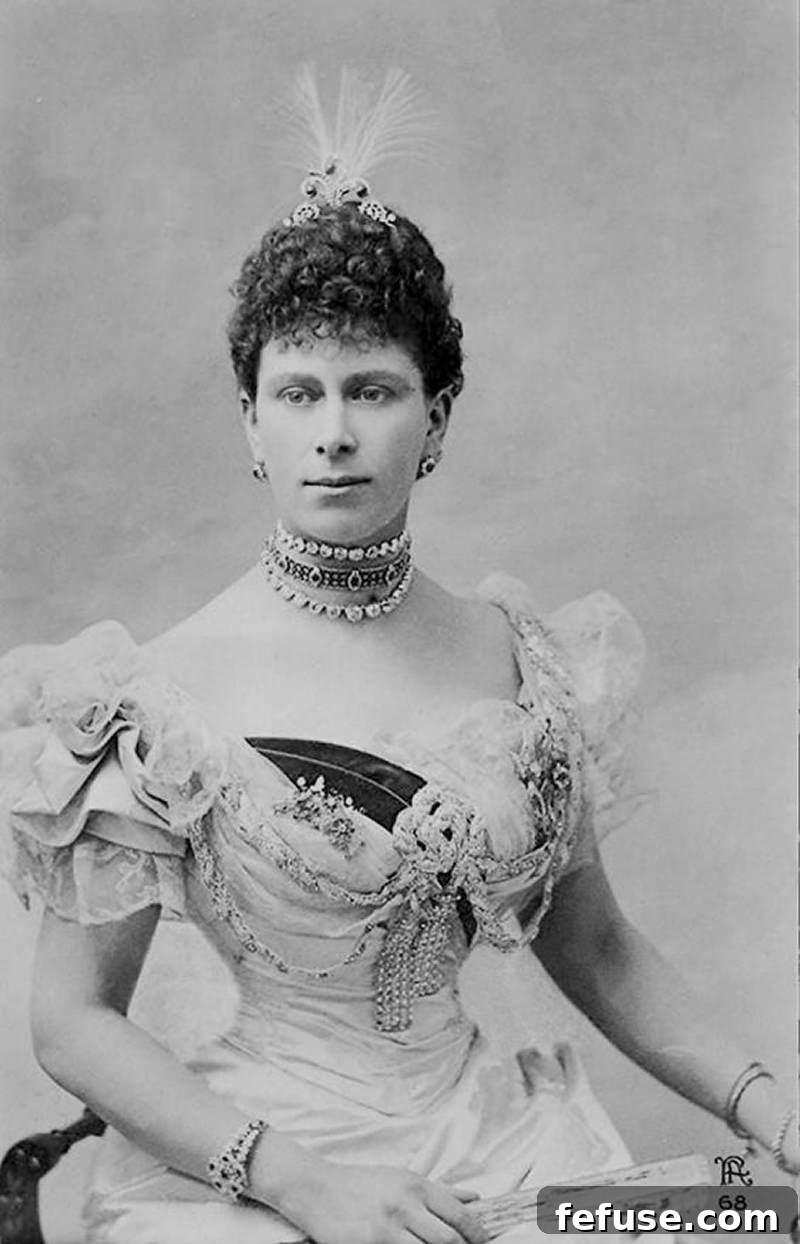
Not long after her wedding, in a beautiful portrait captured around the 1890s when she was still the Duchess of York, Queen Mary is seen elegantly wearing the Cornwall Rose of York Bracelet. In this image, she expertly pairs the bracelet with an array of other exquisite diamond and ruby jewels, showcasing her discerning taste and her burgeoning royal collection. This early appearance of the bracelet confirms its immediate integration into her jewelry wardrobe, cementing its status as a favored piece right from the start of her royal journey. Queen Mary, a formidable collector and connoisseur of fine jewelry, would ensure that many of her prized possessions, including this bracelet, would be preserved and cherished for future generations of the monarchy.
Indeed, the tradition of passing down significant jewels through the generations is a cornerstone of royal heritage, imbues each piece with layers of personal and historical meaning. The Cornwall Rose of York Bracelet continued its remarkable journey through the House of Windsor. In November 1947, as Princess Elizabeth prepared for her own wedding to Lieutenant Philip Mountbatten, her grandmother, Queen Mary, made a deeply personal and significant gesture. She chose the Rose of York Bracelet as one of the special pieces to gift to her beloved granddaughter, marking the beginning of Princess Elizabeth’s own collection of royal heirlooms. This act of transference not only bestowed upon Elizabeth a beautiful piece of jewelry but also connected her directly to her grandmother’s legacy and the rich history of the British monarchy.
From the moment she received it, the future Queen Elizabeth II embraced the Cornwall Rose of York Bracelet, integrating it seamlessly into her extensive collection. Throughout her remarkably long life and reign, she wore the piece steadily and with great affection, showcasing its versatility and timeless elegance. The bracelet became a familiar sight, often paired with various other diamond and ruby jewels, demonstrating her consistent appreciation for rubies and her skill in creating coordinated ensembles for countless public engagements and private occasions.
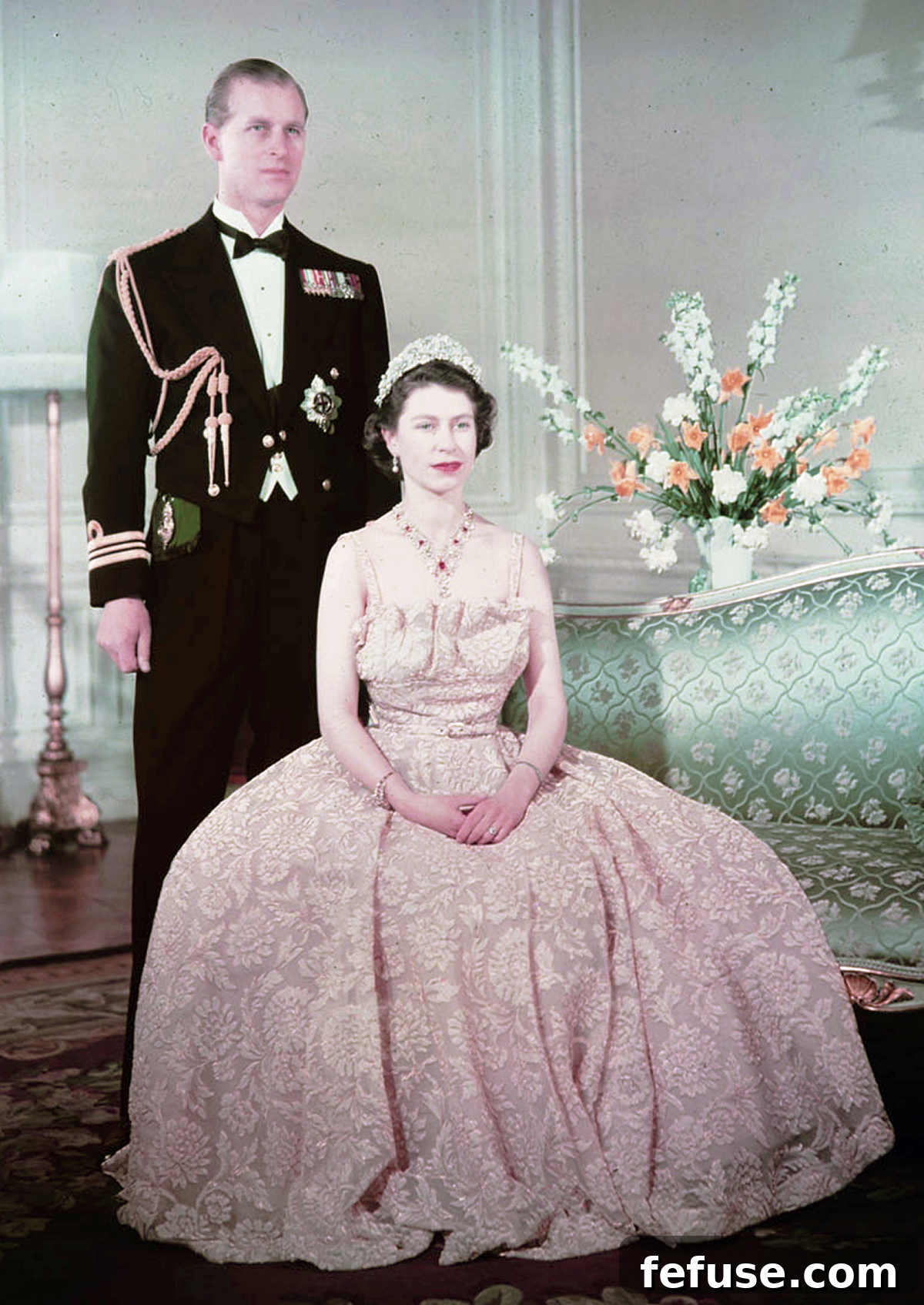
One notable appearance of the bracelet in Queen Elizabeth II’s early reign can be seen in a captivating portrait taken around 1950, shortly after her marriage and before her ascension to the throne. In this striking image with Prince Philip, she demonstrates her innate ability to combine grand heirloom pieces with contemporary grace. The Cornwall Rose of York Bracelet is prominently featured, harmonizing beautifully with other significant wedding gifts she received. These include the magnificent Nizam of Hyderabad Tiara, a spectacular floral design gifted by the Nizam of Hyderabad, the stunning Greville Ruby Necklace, known for its bold geometric design, and the elegant Bahrain Pearl Drop Earrings. This ensemble, worn during her early years as a royal, perfectly illustrates the beginning of her distinguished jewelry journey and her immediate embrace of the Rose of York Bracelet as a cherished component of her collection.
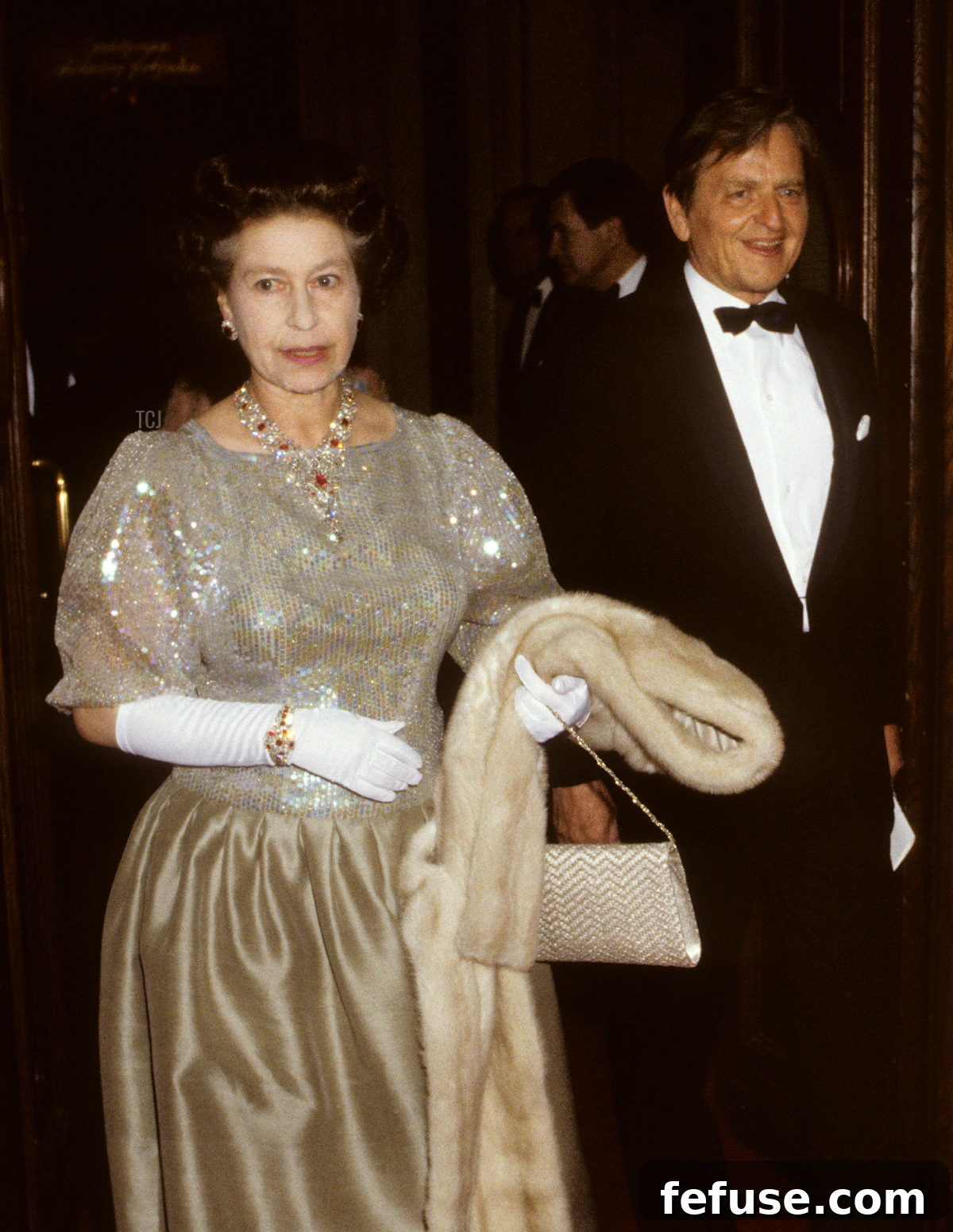
Decades later, in May 1983, the Queen once again showcased the Cornwall Rose of York Bracelet during her state visit to Sweden. State visits are meticulously planned diplomatic events, where the choice of attire and jewelry often carries symbolic weight, representing national heritage and fostering cultural ties. For an evening at the opera house in Stockholm, Her Majesty opted for a dazzling ruby parure that included the bracelet. She masterfully paired it with the striking Greville Ruby Necklace and the elegant Queen Mary’s Ruby Cluster Earrings. This coordinated selection of rubies created a regal and cohesive look, perfectly befitting the grand occasion. The vibrant red of the jewels complemented her gown, ensuring she cut a majestic figure as she was accompanied by then-Prime Minister Olof Palme, further solidifying the bracelet’s role in high-stakes diplomatic fashion.
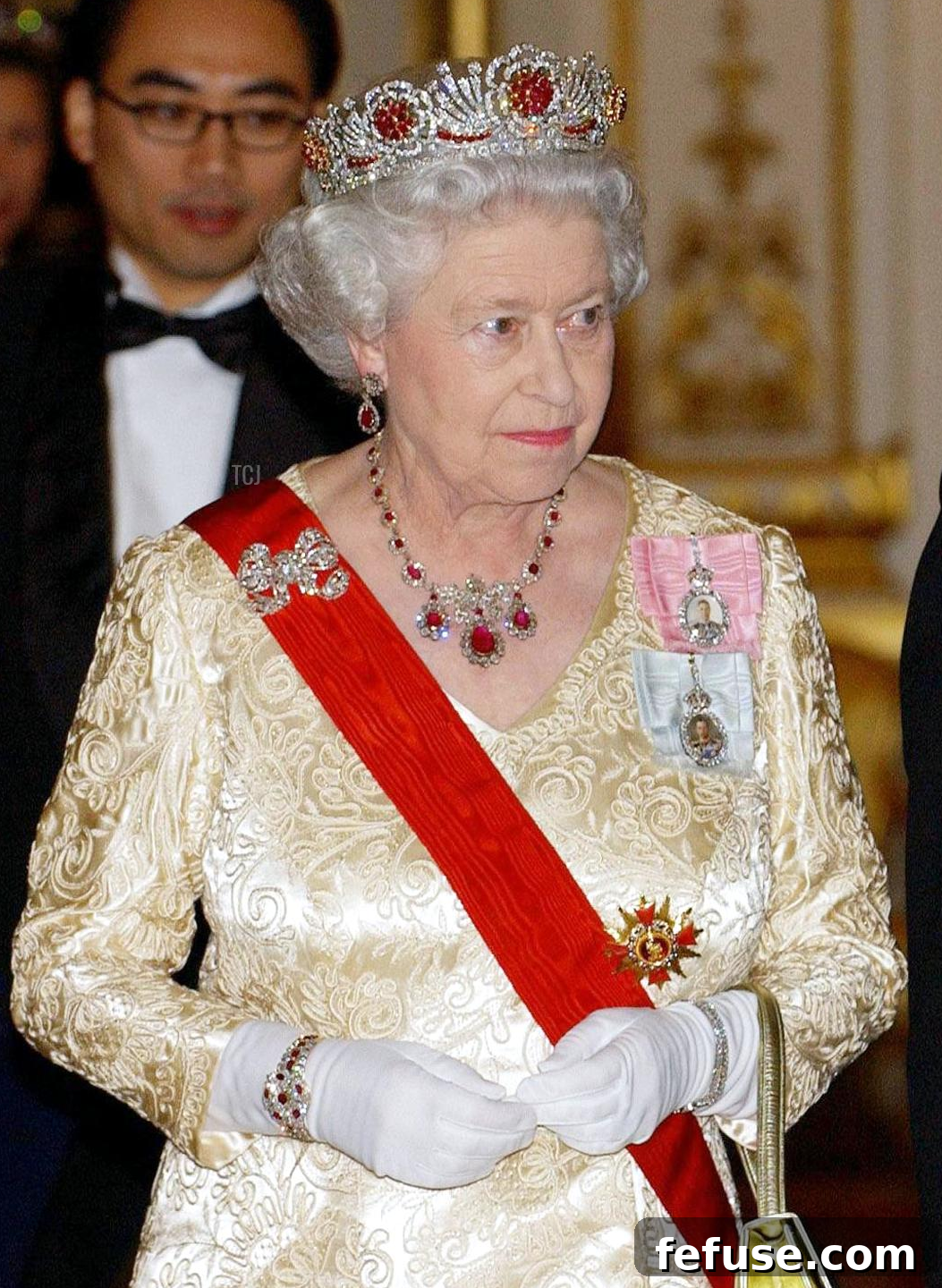
The Cornwall Rose of York Bracelet continued to shine well into the 21st century. In December 2004, during a state visit from South Korean President Roh Moo-Hyun to London, Queen Elizabeth II once again selected the bracelet for a prestigious state banquet at Buckingham Palace. State banquets are among the most formal and significant events in the royal calendar, demanding the finest of royal jewels. On this occasion, the rubies of the bracelet provided a stunning visual harmony with the red sash of her South Korean decoration, the Grand Order of Mugunghwa, demonstrating her meticulous attention to detail and respect for her guests. For this grand dinner, she chose an awe-inspiring combination of jewels, wearing the magnificent Burmese Ruby Tiara, renowned for its dazzling array of rubies and diamonds, and the elegant Baring Ruby Necklace. Adding another layer of sparkle, she also adorned herself with the Dorset Bow Brooch, further enhancing her majestic appearance. The inclusion of the Rose of York Bracelet alongside these grand pieces underscored its versatility and importance within her collection, affirming its status as a foundational royal heirloom capable of complementing even the most spectacular parures.
The Cornwall Rose of York Bracelet represents far more than just a beautiful piece of jewelry. It is a tangible link to a bygone era, a testament to regional pride, and a symbol of continuity within the British monarchy. From its origins as a heartfelt wedding gift from the people of Cornwall to Princess May, crafted by the esteemed Carrington jewelers, to its cherished place in Queen Mary’s collection, and finally, its consistent and prominent wear by Queen Elizabeth II across decades and countless significant events, the bracelet has woven itself into the fabric of royal history. Its journey reflects the enduring traditions of the monarchy, the personal connections forged between the Crown and its people, and the timeless allure of expertly crafted royal jewels. This ruby and diamond masterpiece remains a shining example of royal legacy, its sparkle telling a story of love, loyalty, and unwavering elegance.