
Princess Margaret’s Enduring Sparkle: The Legacy of the Lady Mount Stephen Diamond Necklace
Princess Margaret, renowned for her impeccable style and passion for exquisite jewels, possessed a magnificent collection of diamond necklaces, each with its own captivating history. Among these dazzling treasures, one piece stands out for its rich provenance and regal connections: the Lady Mount Stephen Diamond Necklace. This extraordinary rivière, a continuous string of individually set diamonds, was a cherished personal possession of the Princess, gracing countless gala occasions throughout her life and becoming an indelible part of her iconic image. Today, we delve into the fascinating journey of this remarkable diamond necklace, tracing its origins from a close friend of Queen Mary to its eventual star turn at auction.
A Glimpse into Royal Splendor: Princess Margaret and Her Jewels
Princess Margaret’s status as a style icon of the 20th century was undeniable. Her fashion choices and her penchant for statement jewelry often set trends and captivated public imagination. While she famously wore many borrowed or gifted pieces, her personal collection held a special significance. Of the two diamond rivières she personally owned, the Lady Mount Stephen Necklace remains a focal point of discussion among royal jewelry enthusiasts. A “rivière” necklace, from the French word for “river,” aptly describes the fluid cascade of diamonds that encircle the wearer’s neck, creating an unbroken stream of brilliance. This particular rivière, with its storied past and luminous diamonds, perfectly encapsulated the elegance and grandeur associated with the British royal family.
The Illustrious Origins: Lady Mount Stephen, Queen Mary’s Confidante
Gian Tufnell: A Life Entwined with Royalty
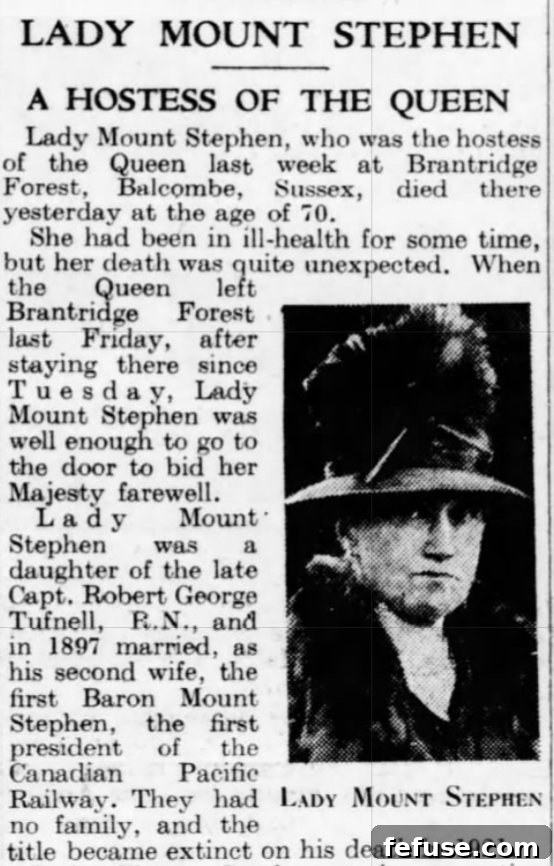
As its name suggests, the Lady Mount Stephen Necklace first belonged to Gian Tufnell, who became the second Lady Mount Stephen. Born Gian Tufnell, she was a figure of considerable influence within British aristocratic circles and a particularly close friend and trusted confidante to several members of the British royal family. Her relationship with Queen Mary was especially notable, with contemporary press often describing her as Queen Mary’s “most intimate friend.” This deep bond was forged through years of shared experiences and mutual respect. Before her marriage, as Miss Tufnell, she was frequently seen in the company of the Teck family, Queen Mary’s relatives, further cementing her connections to royalty. In 1892, her commitment to royal causes was evident when she served as the honorary secretary of the committee responsible for raising funds to acquire the Girls of Great Britain & Ireland Tiara, a piece that would later become one of Queen Elizabeth II’s most iconic jewels. Her standing within royal circles was so significant that in 1897, it was reportedly with the explicit encouragement of the royal family that Gian married the 1st Baron Mount Stephen. He was a Scottish-Canadian businessman, recognized as one of the wealthiest men of his era, and their union further elevated Gian’s position in society.
A Legacy of Friendship and Diamonds
Gian was more than thirty years younger than her husband, outliving him by more than a decade. Her profound friendship with Queen Mary remained steadfast and true until her very last days. Indeed, in a testament to their enduring closeness, Queen Mary was a houseguest at Gian’s country estate, Brantridge Forest in Sussex, just a week before Gian’s passing. The *Telegraph* obituary for Gian highlighted her well-being on Friday, April 28, 1933, noting she was fit enough to personally bid farewell to Queen Mary upon her departure. This made her sudden death from a heart attack on Tuesday, May 2, all the more shocking and sorrowful to her extensive network of friends, particularly to Queen Mary.
Queen Mary’s Coveted Inheritance: Two Diamond Rivières
In her meticulously prepared will, Lady Mount Stephen generously bequeathed numerous items to members of the royal family, reflecting her deep connections and affection. Princess Alice, Countess of Athlone, for instance, received a unique diamond brooch, famously set with a piece of the final spike used to complete the Canadian Pacific Railway—a poignant nod to Baron Mount Stephen’s business empire. Princess Louise, the Princess Royal, also received an array of valuable items, including an exquisite dessert service. However, it was Queen Mary, her dearest friend, who was the primary recipient of Gian’s most significant and personal bequests.
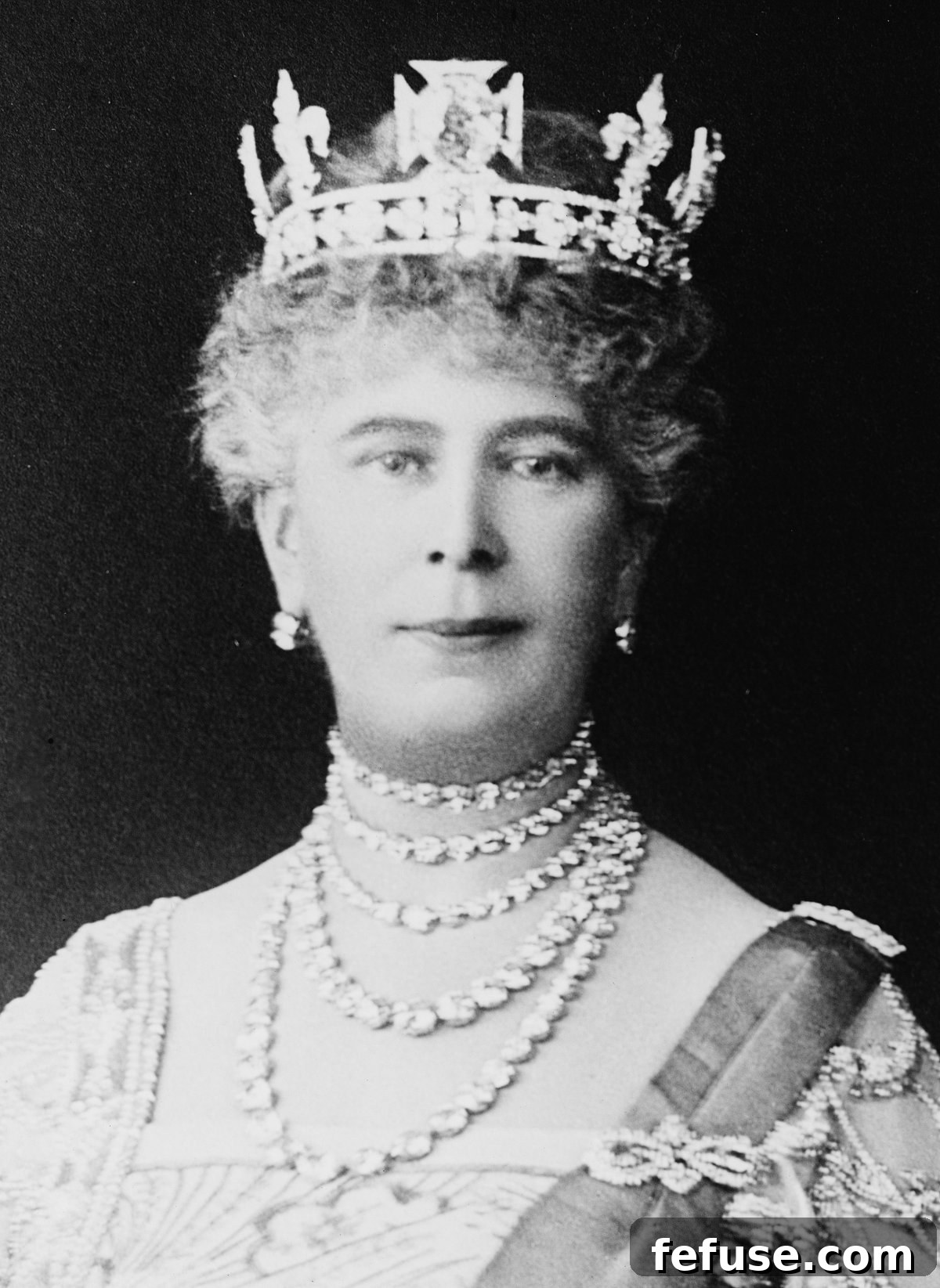
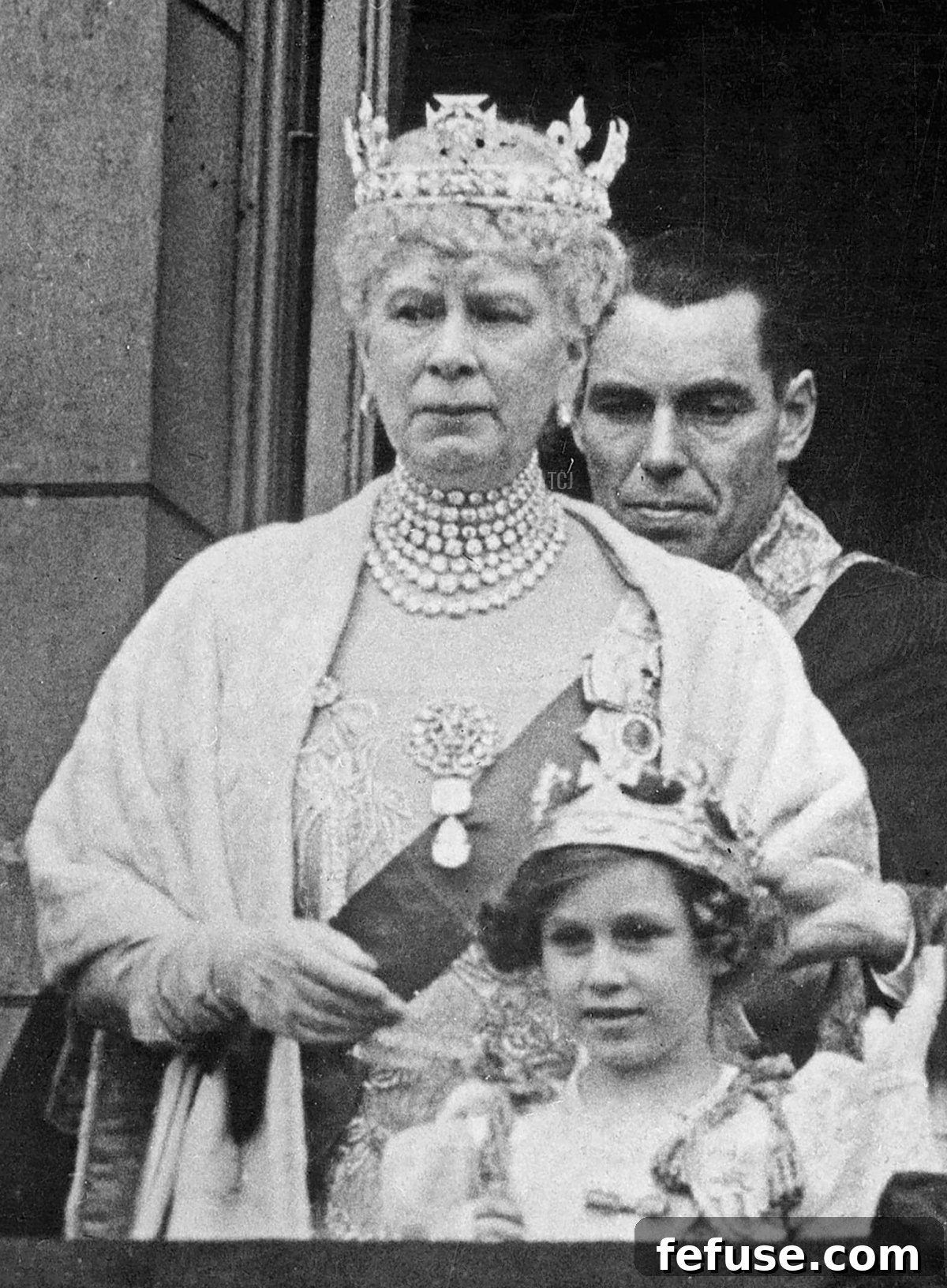
Among the treasures left to Queen Mary were several royal portraits and an elegant ivory bust of Queen Victoria. Crucially for our story, Gian also left Mary a magnificent pair of diamond necklaces. The *Belfast Telegraph*, reporting on Gian’s impressive estate, described these two necklaces as “her diamond riviere of 34 stones” and “her diamond riviere of old Brazilian stones with a square diamond in the center.” This choice of legacy jewels was a testament to Gian’s profound understanding of her friend’s passions. Queen Mary was an avid collector of jewelry, particularly diamond necklaces. The portrait above, taken around 1923, vividly illustrates this, showing her already bedecked in no fewer than five diamond necklaces! Queen Mary was known for her distinctive style of stacking multiple rivières, creating a formidable, almost turtleneck-like collar of diamonds in her later years. Two additional, exquisite rivières would undoubtedly have been a welcome and cherished addition to her already formidable collection, enabling her to further perfect this signature look.
Unveiling the Lady Mount Stephen Necklace: A Masterpiece of Georgian Craftsmanship
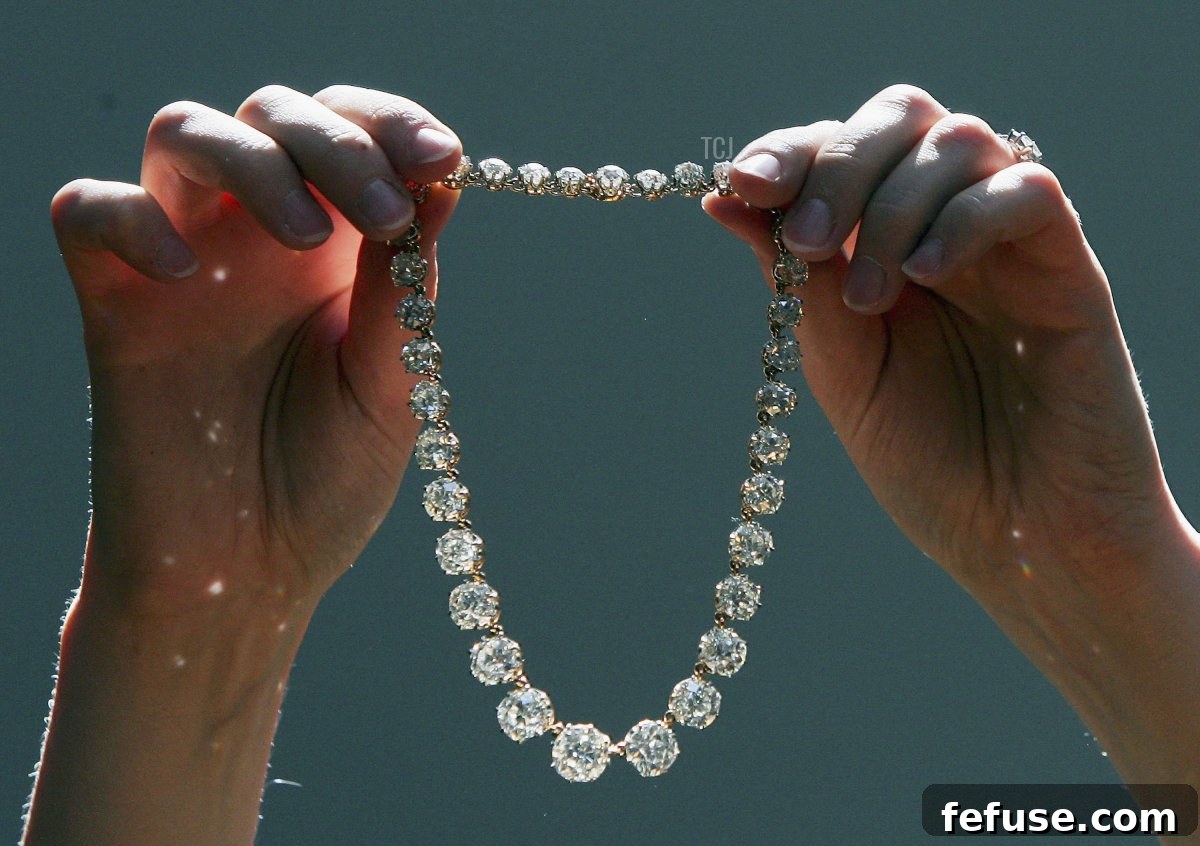
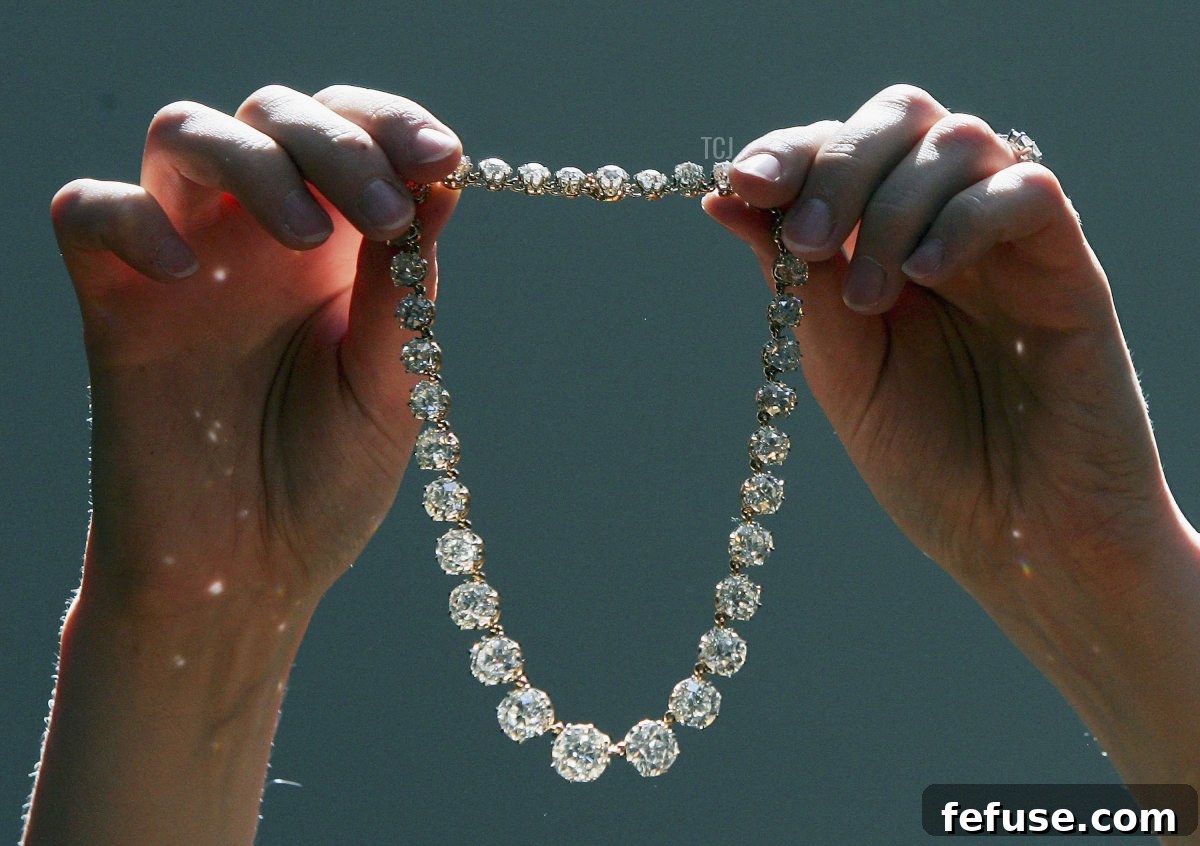
Let’s take a closer look at the first necklace described in the *Belfast Telegraph* article: the “diamond riviere of 34 stones.” This particular piece is an exquisite example of early 20th-century jewelry artistry. The diamonds are predominantly old-cut stones, a style of diamond cutting prevalent before the advent of modern brilliant cuts. Old-cut diamonds are characterized by their charming faceting, often featuring a small table, a high crown, and a noticeable culet, which allows light to penetrate and reflect, producing a unique, warm sparkle often described as “fire.” These beautiful diamonds are meticulously set in a silver and gold framework, a common practice around 1900 where silver was used to enhance the white brilliance of diamonds, while gold provided structural integrity and durability. The necklace’s impressive scale is highlighted by the fact that its seven largest diamonds each measure between four and seven carats, contributing significantly to its overall grandeur and scintillation. Adding to its historical charm and authenticated provenance, the necklace resides in a specially fitted case crafted from luxurious turquoise velvet. This case bears the distinctive logo of Tessiers Ltd., a reputable London jewelry firm that operated under that name from 1920, underscoring the necklace’s prestigious history and careful preservation.
From Queen Mary to Princess Margaret: A Royal Heirloom Transformed
The magnificence of the 34-diamond necklace in Queen Mary’s possession is vividly captured in a photograph from May 1937. On this momentous occasion, the coronation of her son, King George VI, Queen Mary proudly displayed an awe-inspiring stack of seven diamond rivières, a testament to her legendary love for elaborate jewelry. The 34-diamond Lady Mount Stephen Necklace formed a vital part of this spectacular ensemble, radiating unparalleled brilliance. Standing gracefully in front of Queen Mary in that historic photograph is a young Princess Margaret, perhaps unaware of the glittering destiny that awaited this particular necklace. Over time, Queen Mary either gifted or bequeathed this exquisite 34-diamond necklace to her granddaughter, Princess Margaret. This chain of inheritance is why the necklace is sometimes referred to as “Queen Mary’s Diamond Rivière,” acknowledging its royal lineage. However, due to its initial owner and its distinct design, it is more commonly known and celebrated as the “Lady Mount Stephen Necklace,” honoring its earliest, influential patron.
Princess Margaret’s Personal Collection: The Lady Mount Stephen and the King George VI Diamond Necklace
Distinguishing Margaret’s Rivières: A Connoisseur’s Challenge
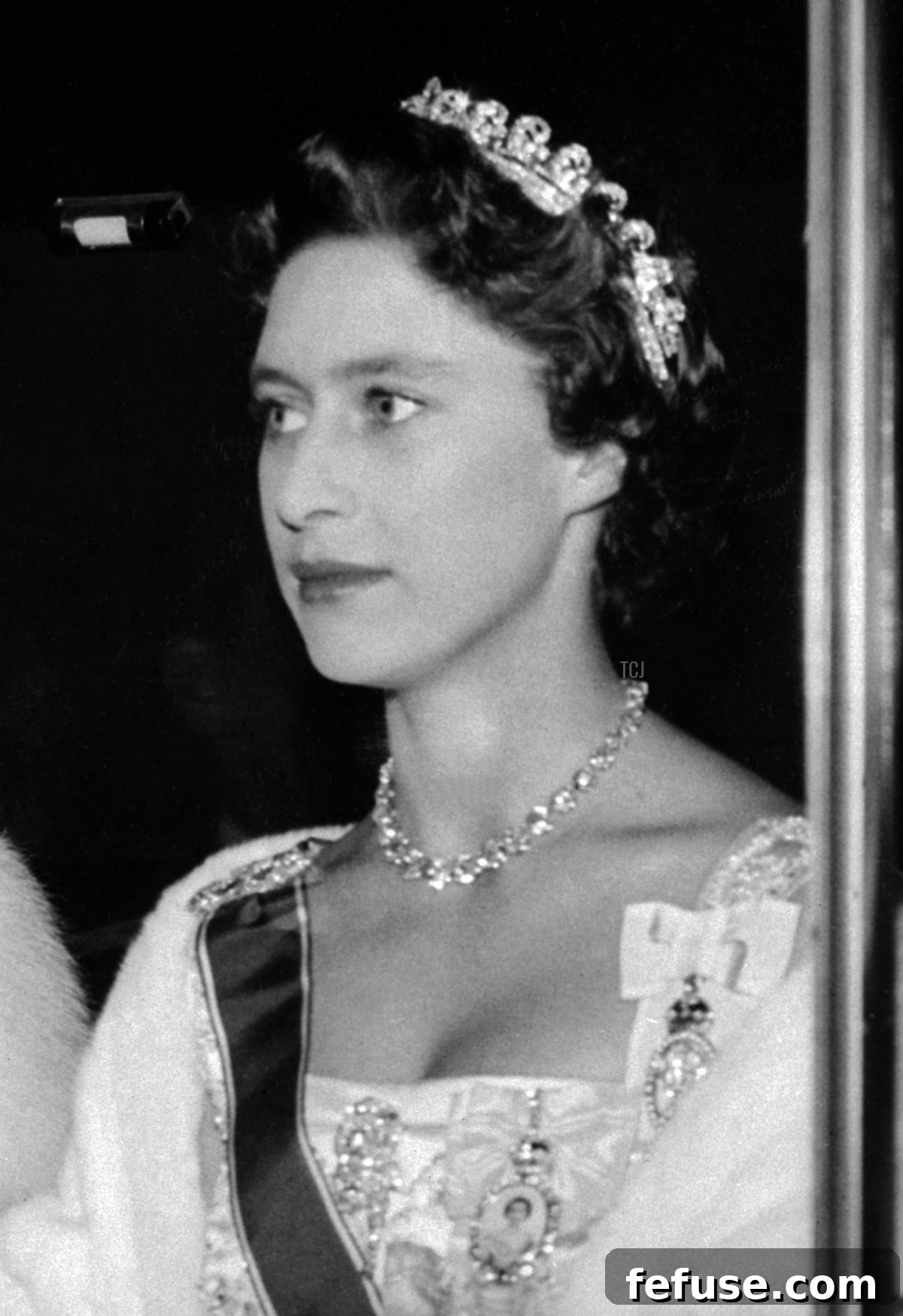
Princess Margaret, throughout her illustrious life, was photographed wearing a multitude of diamond necklaces. Yet, it is believed she personally owned only two rivières, with the Lady Mount Stephen Necklace being one of them. Identifying specific diamond necklaces in photographs can be notoriously challenging, given their often similar appearance and the way light plays on their facets. However, careful observation of length, setting style, and the overall drape can often provide clues. In this striking photo, taken en route to a glamorous gala event in the 1950s, Princess Margaret is believed to be wearing the Lady Mount Stephen Necklace. Her ensemble is further enhanced by the magnificent Cartier Halo Tiara, a piece now famously associated with Catherine, Princess of Wales. The Lady Mount Stephen Necklace in this image rests elegantly and neatly in the gentle dip between Margaret’s collarbones, showcasing its perfect length and classic Rivière design.
The King George VI Diamond Necklace: A Father’s Gift
The second diamond necklace that Princess Margaret personally owned offers a slightly different aesthetic. This piece features a tighter, more choker-like setting, designed to sit higher on the neck. While it is marginally shorter than the Lady Mount Stephen Necklace, the difference in length is subtle and often difficult to discern without a direct comparison. The precise provenance of this particular diamond rivière has been a subject of some debate among royal jewelry historians. However, renowned royal jewelry author Leslie Field provides compelling insight, stating that Margaret received “a rivière of diamond collets” as “a twenty-first birthday gift from her father,” King George VI. Based on photographic evidence, this description appears to align perfectly with this shorter necklace, which Princess Margaret is seen wearing in the photograph from August 1955.
Embed from Getty Images (Lady Sarah Chatto wearing the necklace for her 21st birthday)
Lady Sarah Chatto’s Inheritance: Continuing the Legacy
This second, shorter diamond necklace, which we will henceforth refer to as the King George VI Diamond Necklace, was occasionally loaned by Princess Margaret to her daughter, Lady Sarah Chatto. Following Margaret’s passing, Lady Sarah inherited this cherished piece, continuing its journey through the royal lineage. Significantly, Lady Sarah famously wore the King George VI Diamond Necklace for her own 21st birthday celebration, a poignant choice that strongly supports Leslie Field’s account of its provenance as a 21st birthday gift within the family. Much later, in June 2012, Lady Sarah elegantly showcased this necklace once again during a solemn service of thanksgiving held during the Queen’s Diamond Jubilee. On this occasion, she masterfully layered it with another beautiful pearl and diamond necklace that also originated from her grandmother, Queen Mary, and subsequently belonged to Princess Margaret, demonstrating the enduring legacy of these exquisite royal jewels.
Princess Margaret’s Iconic Styling: A Glimpse Through Decades
The Art of Layering: Queen Mary’s Influence on Margaret
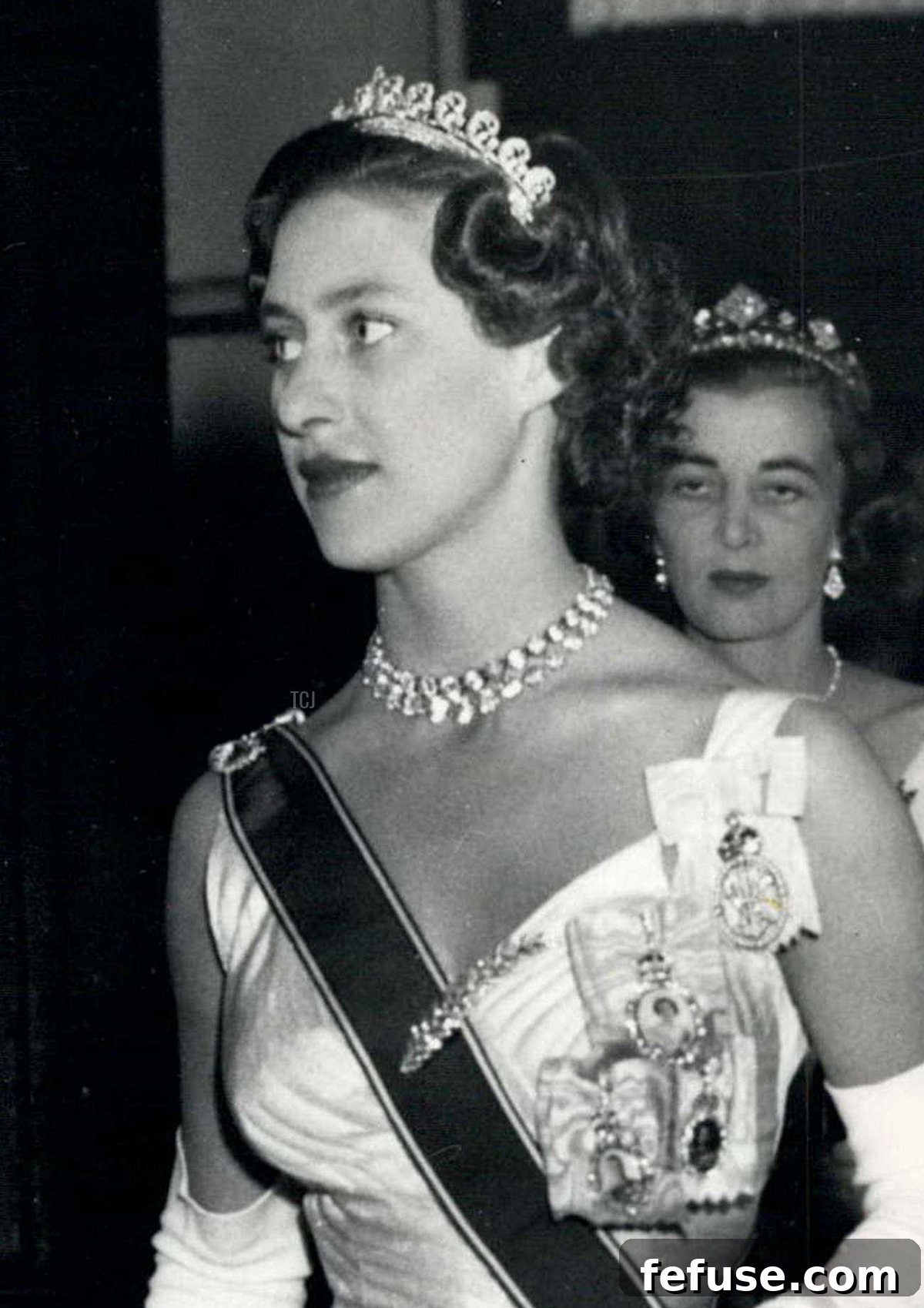
Princess Margaret, much like her grandmother Queen Mary, had a flair for dramatic jewelry styling. She sometimes chose to wear both the King George VI Diamond Necklace and the Lady Mount Stephen Necklace together, creating an impressive stacked effect. This layering technique provided an additional layer of sparkle and grandeur to her already exquisite gala ensembles, reminiscent of Queen Mary’s maximalist approach. A superb example of this can be seen in the image from the Swedish state visit to London in the summer of 1954. For this prestigious occasion, Princess Margaret presented a truly regal appearance, wearing the elegant Cartier Halo Tiara (a loan from her sister, the Queen) and her exquisite Diamond Wheat-Ear Brooch (a piece now cherished in Lady Sarah Chatto’s jewelry box). In addition to these magnificent jewels, she was adorned with numerous decorations, including the vibrant sash of the Royal Victorian Order, the ribbon and badge of the Order of the Crown of India, and the Royal Family Orders of George V, George VI, and Elizabeth II. In this elaborate display, the King George VI Necklace is clearly visible as the shorter piece, nestled closer to Margaret’s chin, while the Lady Mount Stephen Necklace is positioned directly below it. This photograph perfectly illustrates how incredibly close the two necklaces are in length and, consequently, how easily they could be confused or misidentified in other images.
Coronation Grandeur and Glamorous Evenings
While distinguishing between Margaret’s two personal rivières can be a delightful challenge for enthusiasts, several key appearances provide strong evidence for the Lady Mount Stephen Necklace’s presence. For instance, there’s near certainty that Princess Margaret wore the Lady Mount Stephen Necklace at her sister, Queen Elizabeth II’s, coronation in June 1953. On this historic and solemn occasion at Westminster Abbey, she paired it majestically with the Cartier Halo Tiara and her charming Cartier Rose Brooch, completing a truly royal ensemble.
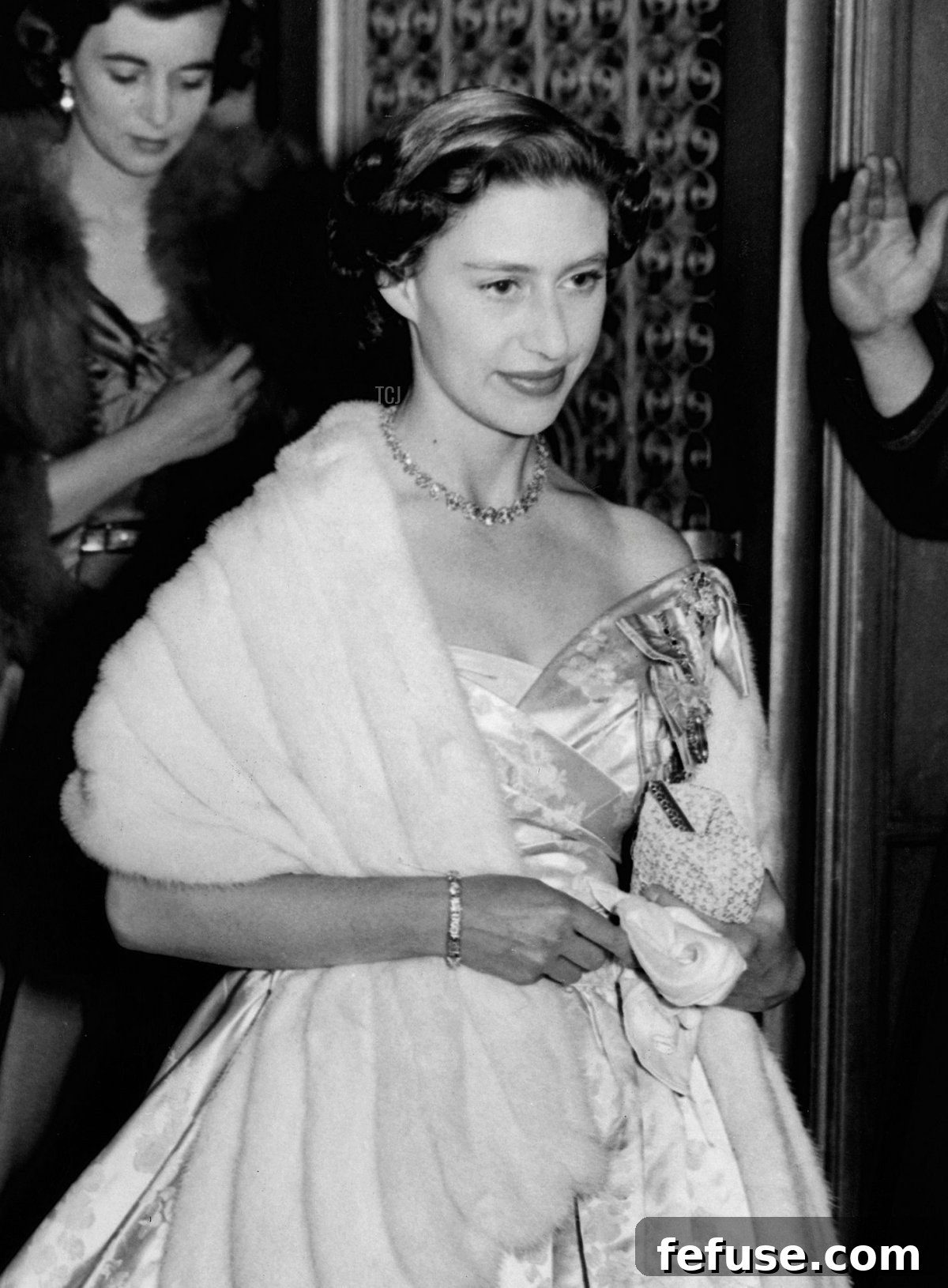
A glamorous photograph taken in June 1953, shortly after the coronation, also captures Princess Margaret wearing a striking diamond necklace. Given its distinct length and elegant drape, positioning it perfectly relative to her collarbones, it is strongly believed to be the magnificent Lady Mount Stephen Necklace, further solidifying its presence in her early royal engagements.
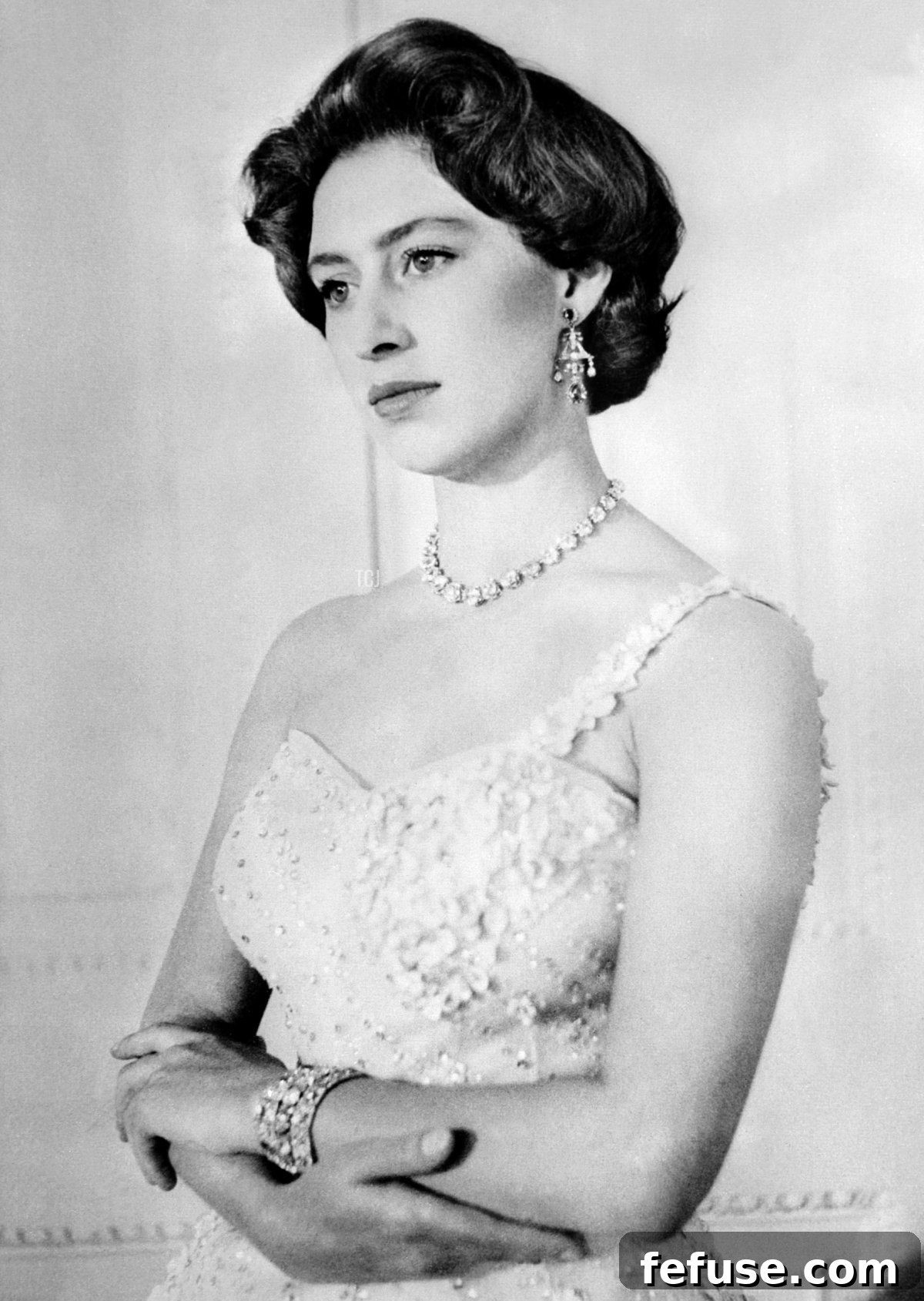
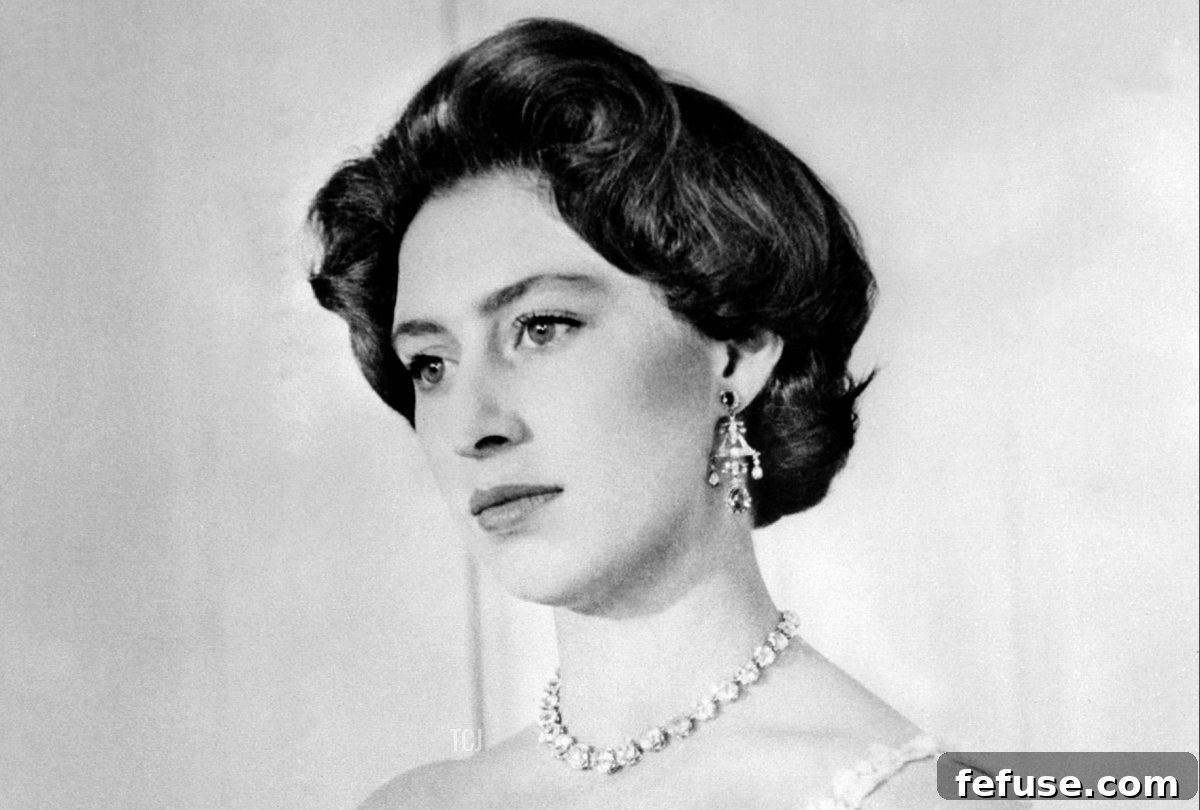
This evocative official portrait, captured by the celebrated photographer Cecil Beaton in August 1956, was taken to commemorate Princess Margaret’s 26th birthday. In this moody yet resplendent image, she proudly displays the Lady Mount Stephen Necklace, elegantly complemented by her stunning Ruby Girandole Earrings and a sparkling array of diamond bracelets, creating a truly regal and timeless portrayal.
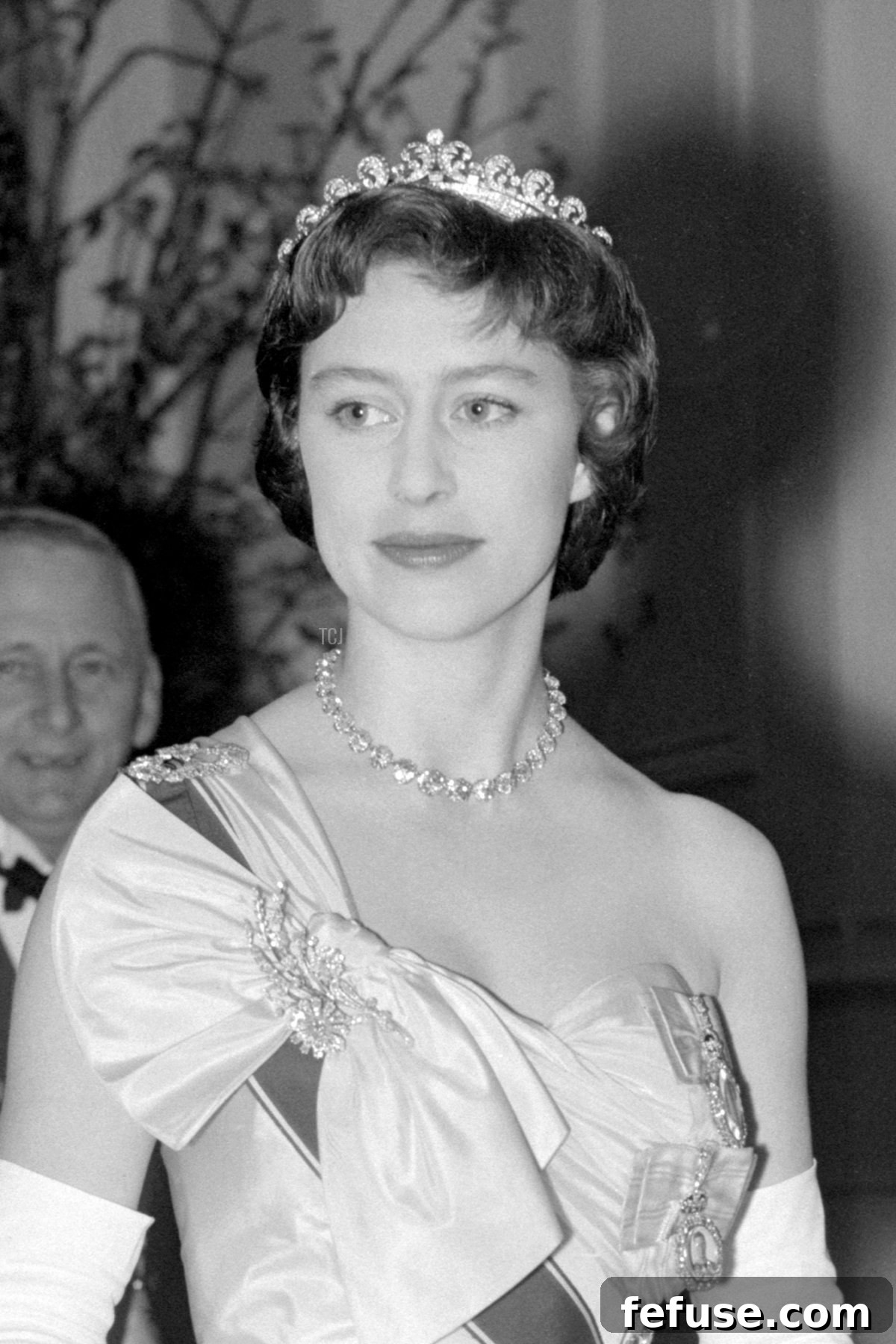
Princess Margaret was again seen wearing the majestic Lady Mount Stephen Necklace in April 1958, on the occasion of a celebratory dinner marking the 40th anniversary of the Royal Air Force. For this significant event, she paired the necklace with the exquisite Cartier Halo Tiara and a duo of elegant diamond brooches – one styled as a buckle, the other a delicate floral design – showcasing her sophisticated taste and her ability to curate dazzling formal ensembles.
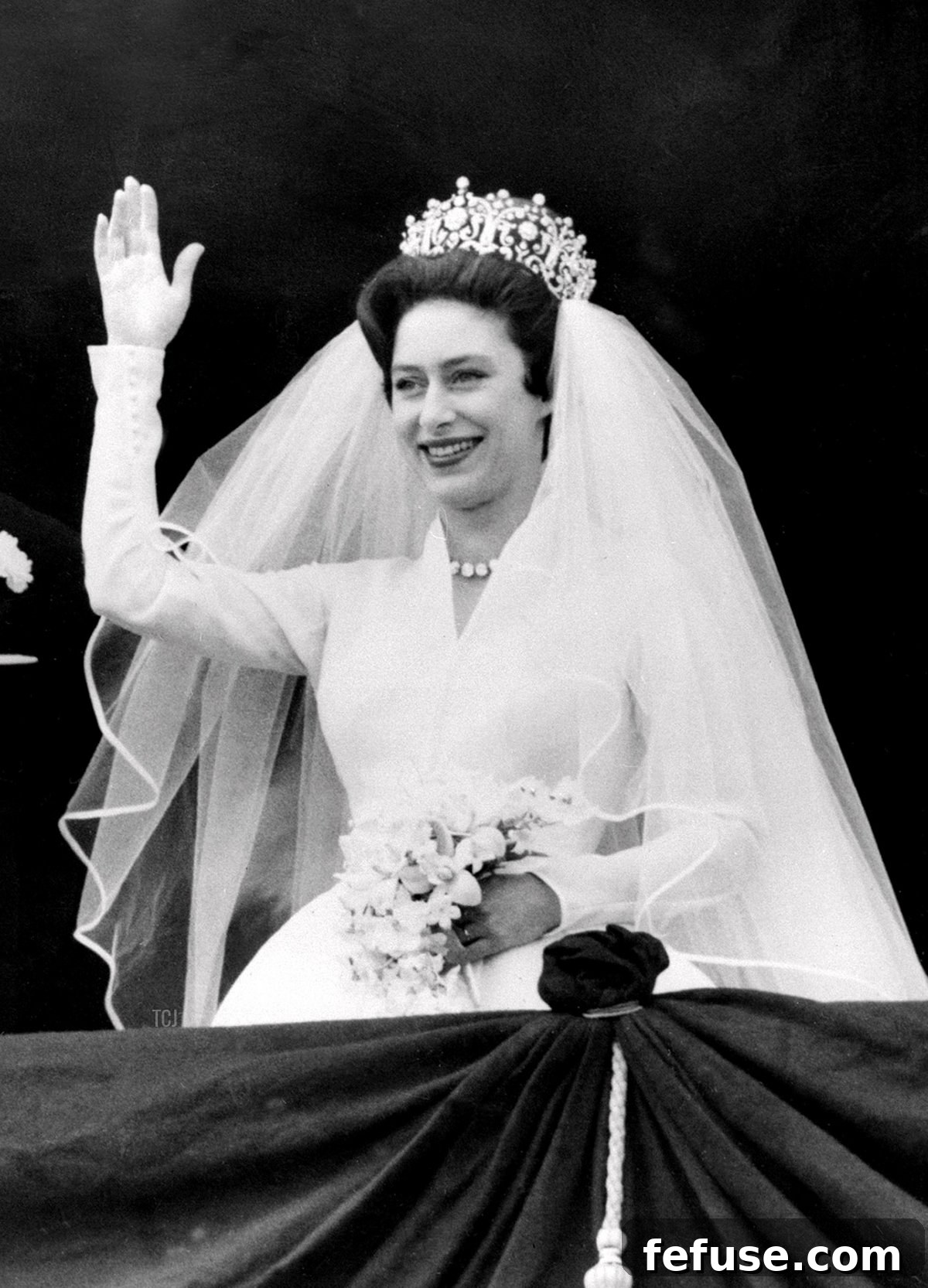
On her wedding day in May 1960, a momentous occasion for the British royal family, Princess Margaret made a breathtaking statement by pairing the Lady Mount Stephen Necklace with the grand diadem she had personally chosen and purchased for herself: the iconic Poltimore Tiara. This combination of significant jewels underscored the importance of the day and highlighted her bold, individual style.
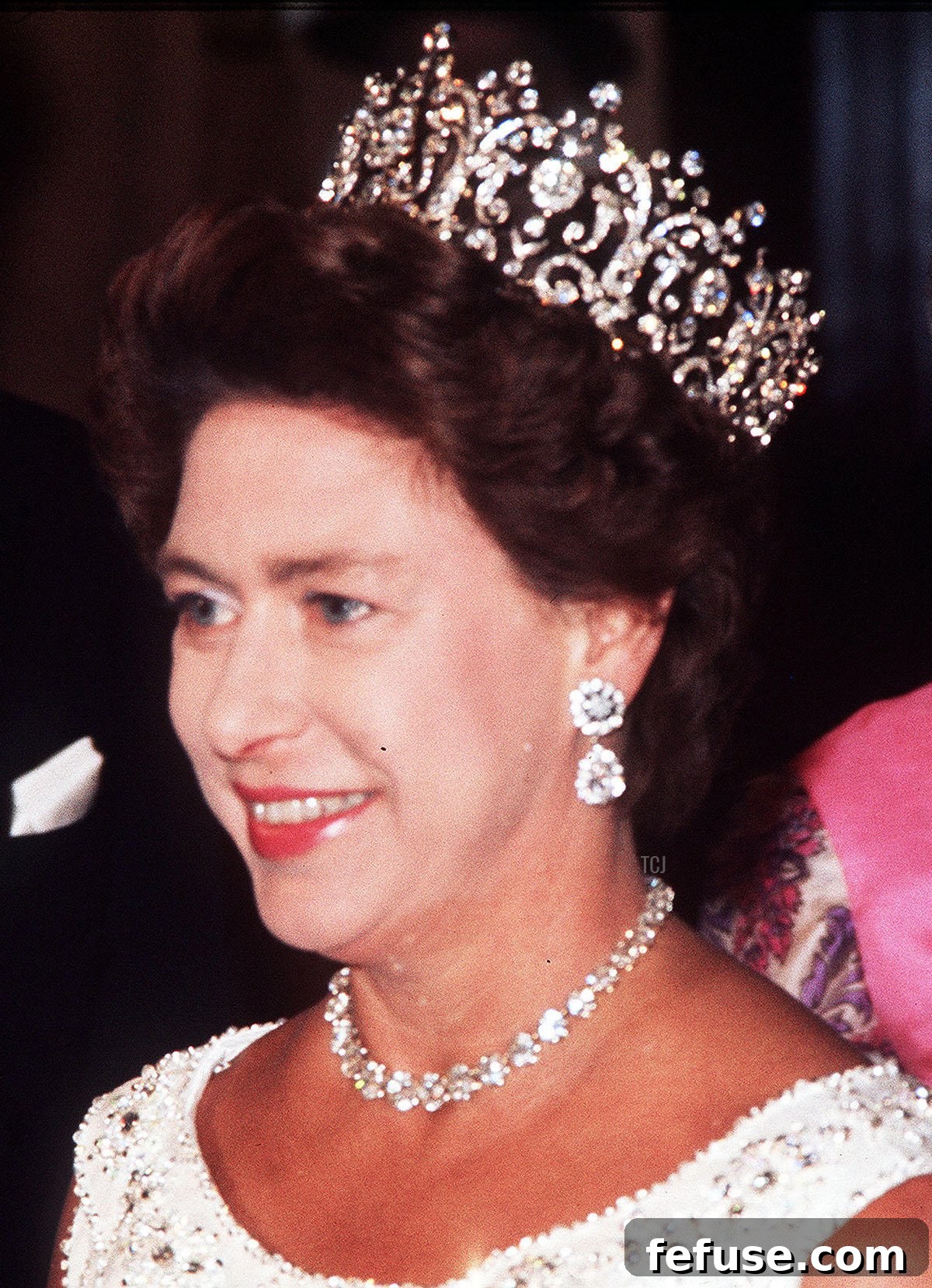
Princess Margaret often demonstrated a fondness for pairing the magnificent Poltimore Tiara with the Lady Mount Stephen Necklace, frequently accentuating this combination with a pair of classic diamond drop earrings. This elegant and consistent pairing was notably seen in May 1977, when she wore the full ensemble for a lavish gala at Covent Garden, held as part of the Queen’s Silver Jubilee celebrations. Her choice of jewels for such a significant national event highlighted their importance within her personal collection.
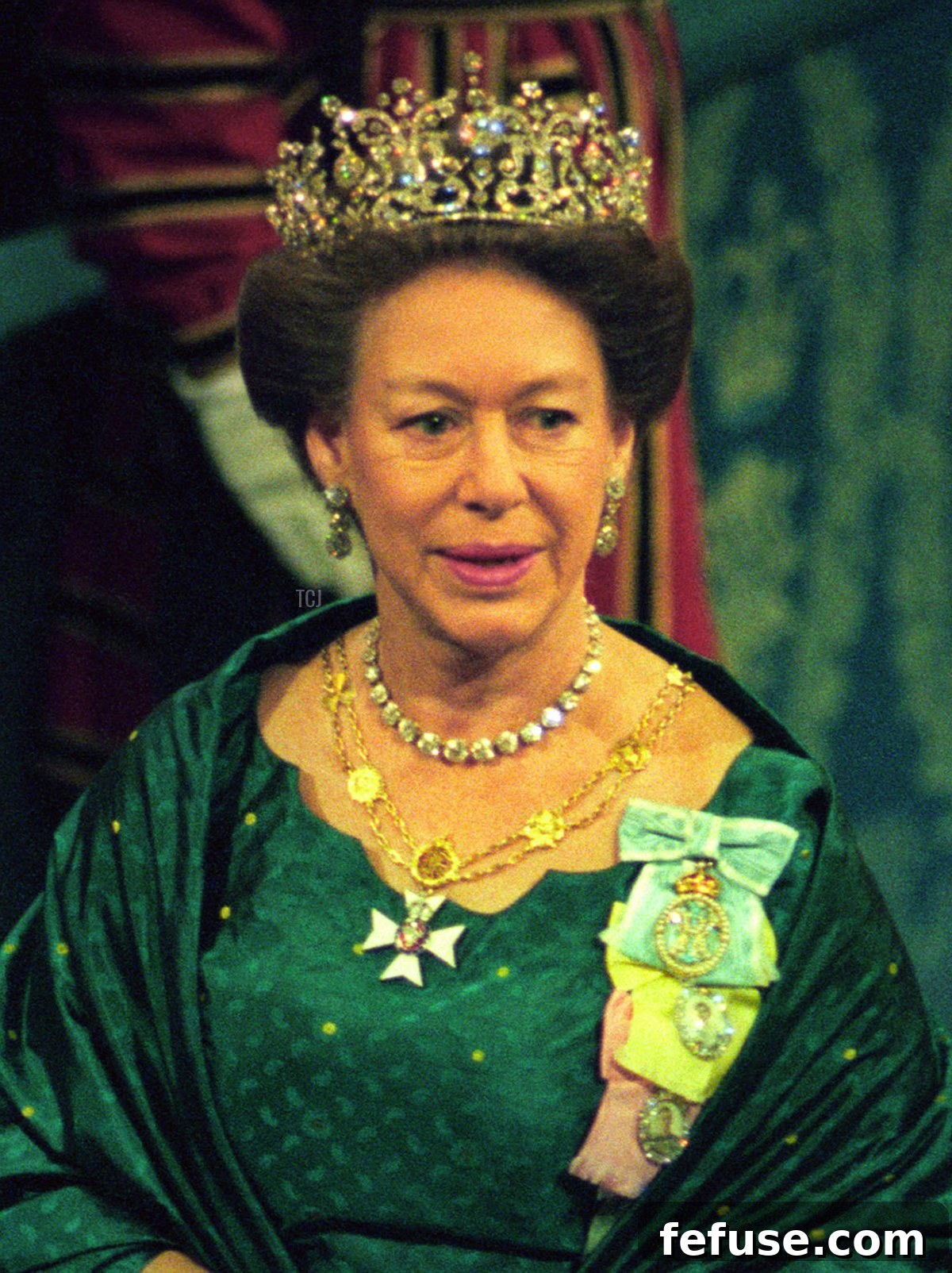
Almost two decades later, in October 1996, Princess Margaret was seen wearing this same iconic combination of jewels for the State Opening of Parliament. This enduring preference underscored the timeless appeal of both the Poltimore Tiara and the Lady Mount Stephen Necklace in her collection. It is worth noting that the other “necklace” she wore on this occasion was the prestigious Royal Victorian Chain, an order of chivalry that is only given to the reigning monarch and other high-ranking members of the royal family or foreign heads of state.
The Lady Mount Stephen Necklace at Auction: A Historic Sale
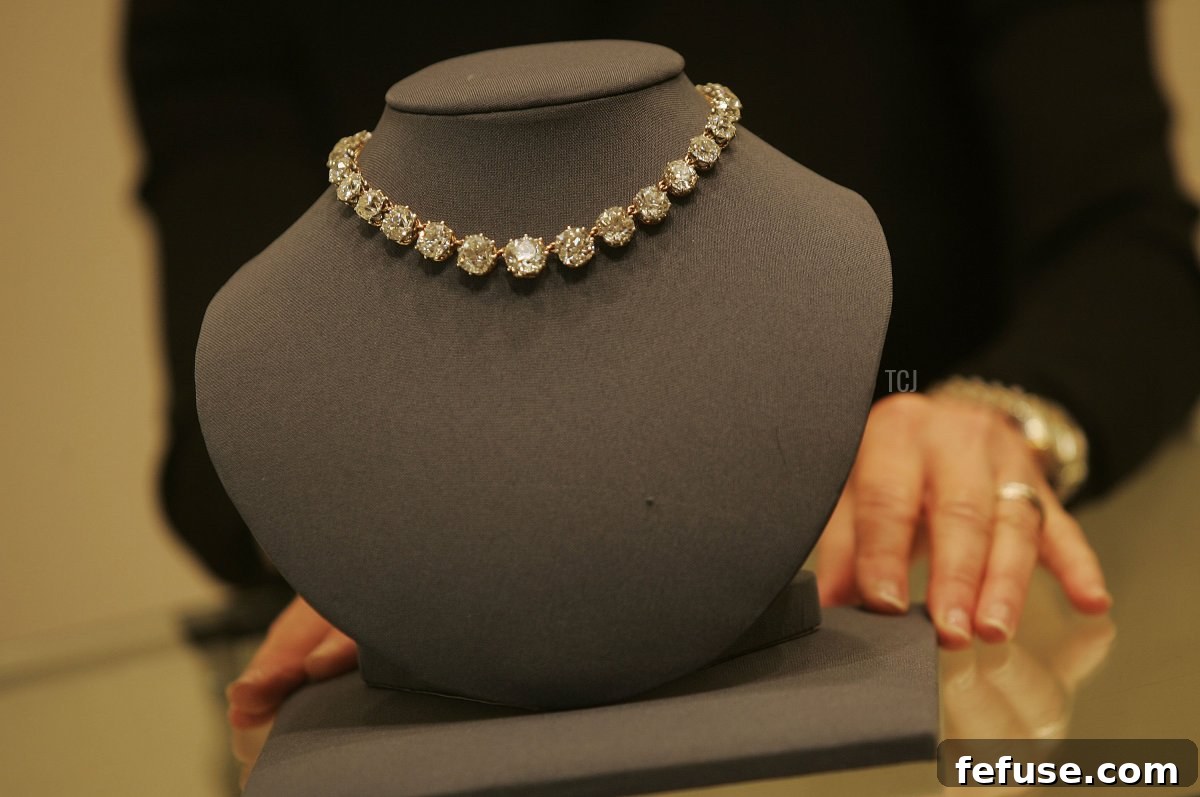
Following Princess Margaret’s passing in 2002, her children, Viscount Linley and Lady Sarah Chatto, faced the difficult decision of managing her estate. To help cover the substantial inheritance taxes, they made the decision to auction some of her exquisite jewelry collection. From the two significant diamond necklaces she personally owned, they chose to sell the Lady Mount Stephen Necklace. Lady Sarah, as previously mentioned, retained the King George VI Necklace, which held immense sentimental value as a gift from her grandfather. The Lady Mount Stephen Necklace was subsequently put on display at an open house at Christie’s in New York, generating considerable buzz and anticipation among collectors and royal enthusiasts, before its eventual sale in London. When the auctioneer’s hammer finally fell on this magnificent necklace in June 2006, it fetched an astonishing sum: £993,600, equivalent to more than $1.8 million USD at the prevailing exchange rate. This remarkable price solidified its status as the most expensive jewelry item in the entire sale, even surpassing the monumental price achieved by the mighty Poltimore Tiara, which was another highlight of Princess Margaret’s collection. The sale marked the end of an era for the necklace, as it transitioned from royal hands into a new private collection, yet its historical significance and dazzling beauty remain undiminished.
A Legacy of Dazzling Diamonds
The Lady Mount Stephen Diamond Necklace is more than just a collection of precious stones; it is a tangible thread connecting generations of royal history and personal narratives. From its initial owner, Lady Mount Stephen, a trusted friend to Queen Mary, to its celebrated years as a signature piece for Princess Margaret, this rivière has witnessed pivotal moments in British royal history. Its journey, culminating in a record-breaking auction, underscores not only its intrinsic value but also its profound cultural and historical significance. The necklace embodies the timeless allure of royal jewels and remains a glittering testament to Princess Margaret’s unforgettable style and the enduring legacy of dazzling diamonds within the British royal family.