
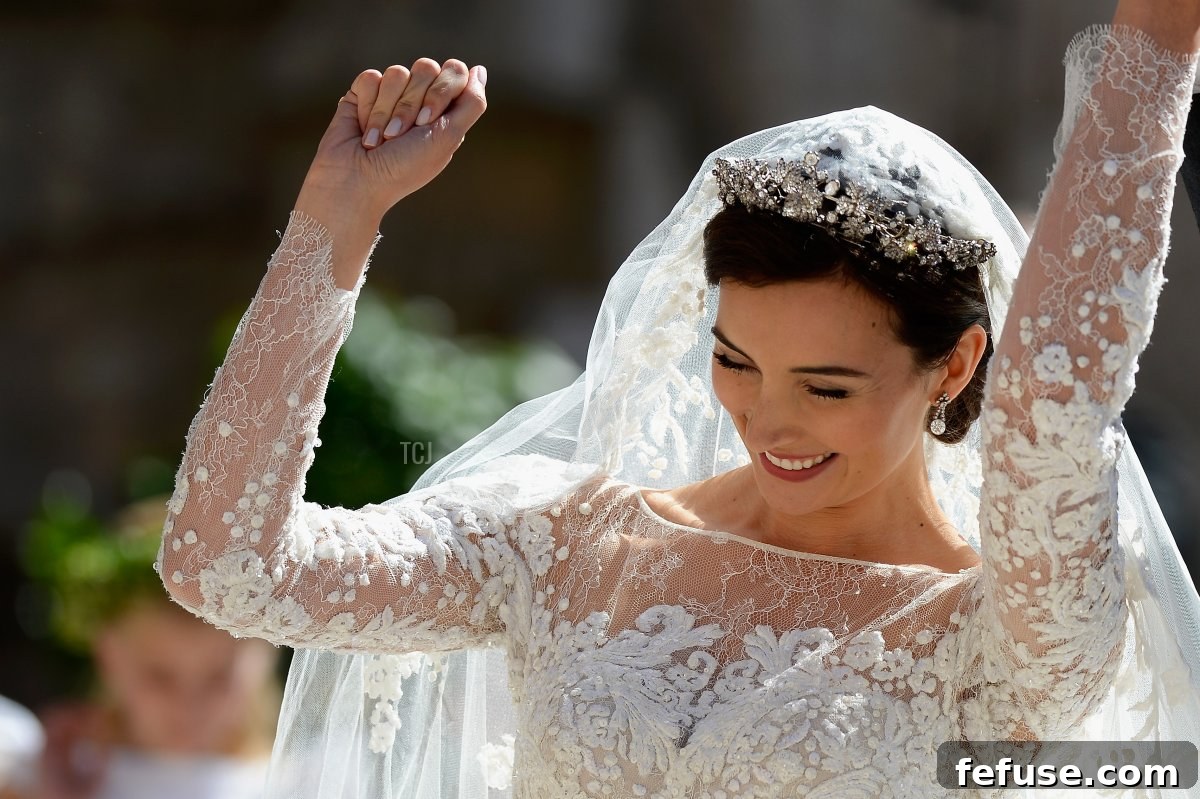
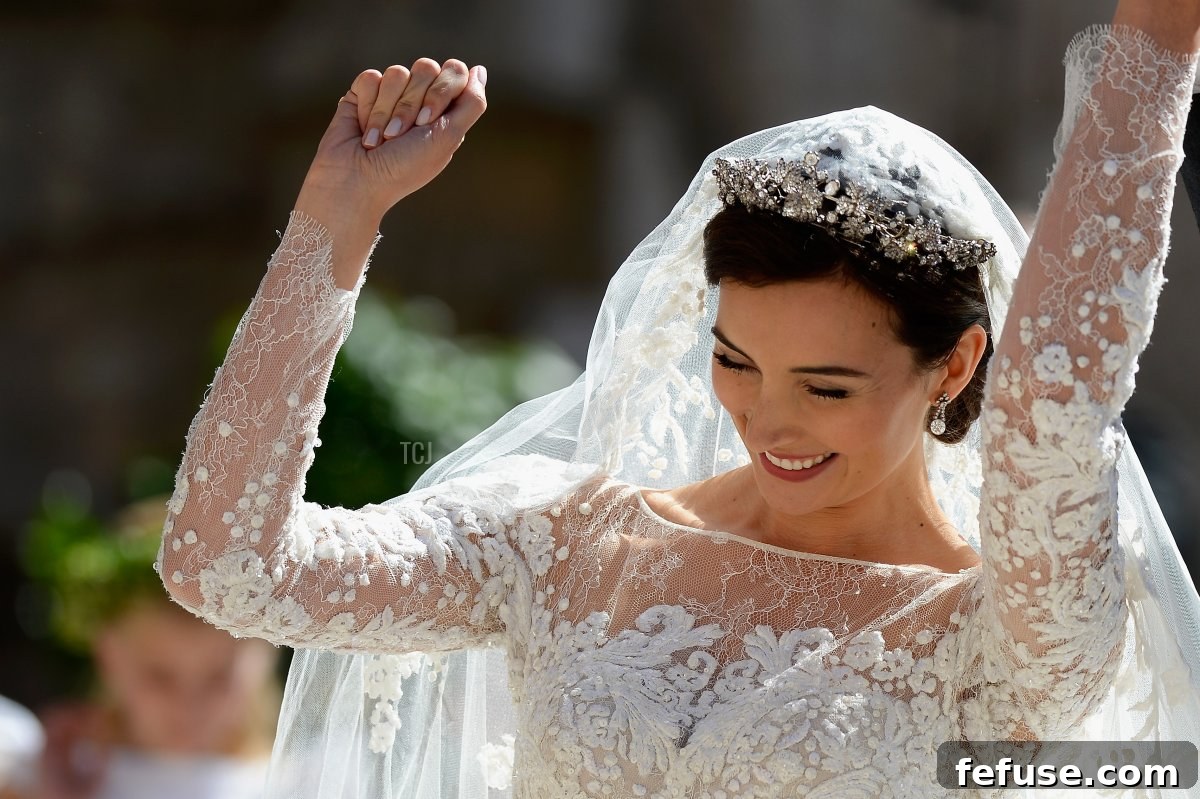
The Grand Ducal Family of Luxembourg is renowned for its rich history and stunning collection of royal jewels, especially the exquisite tiaras often donned by brides on their wedding days. As Princess Alexandra of Luxembourg recently celebrated her religious wedding to Nicolas Bagory at the historic Saint Trophyme church in Bormes-les-Mimosas, France, royal enthusiasts eagerly awaited her choice of bridal headpiece. The civil ceremony, which took place in Luxembourg the previous weekend, offered a glimpse into her bridal style, but the religious ceremony is where the true splendor of Luxembourgish royal wedding tiaras typically shines.
This momentous occasion provides a perfect opportunity to delve into the fascinating legacy of royal wedding tiaras within the Grand Ducal Family. From historical pieces steeped in tradition to more modern heirlooms, each tiara tells a story of love, lineage, and the enduring beauty of Luxembourg’s royal heritage. Join us as we explore some of the most memorable brides and the magnificent tiaras that have graced their wedding days, showcasing the elegance and continuity of this distinguished European monarchy.
The Nassau-Weilburg family has proudly reigned over the Grand Duchy of Luxembourg since 1890, navigating through periods of significant historical change. Following the tumultuous aftermath of World War I, the stability of the Luxembourger throne faced considerable challenges. Public pressure, fueled by sentiments that the young Grand Duchess Marie-Adélaïde had shown pro-German sympathies during the war, ultimately led to her abdication. In a pivotal moment for the nation, she stepped down in favor of her younger sister, Charlotte.
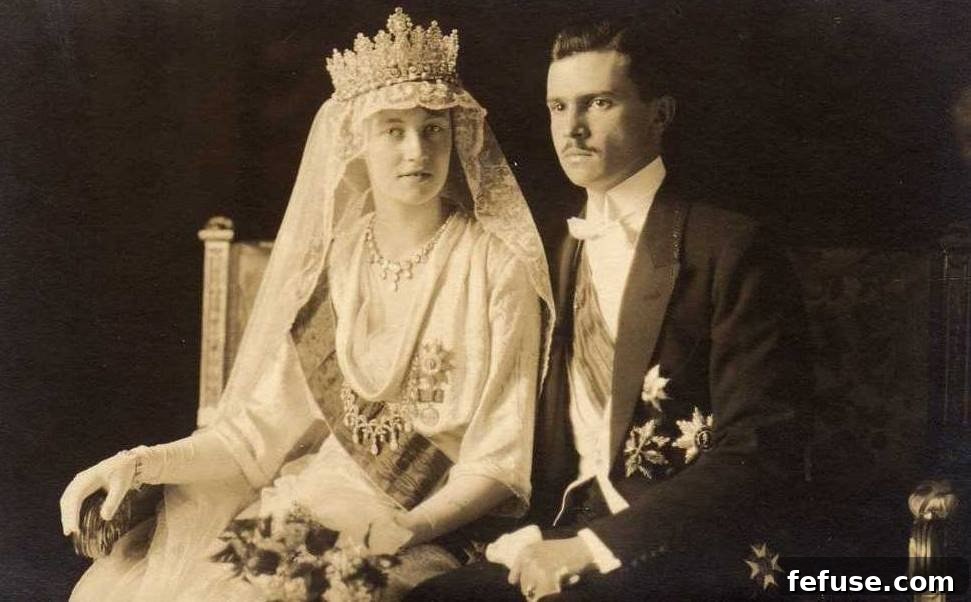
The autumn of 1919 marked a whirlwind of events for the newly ascended Grand Duchess Charlotte. Within a matter of weeks, she skillfully navigated a national referendum, successfully secured women’s suffrage, and announced her engagement to Prince Felix of Bourbon-Parma. While some Luxembourgers expressed reservations due to Prince Felix’s service with the Austrian army during the war, their concerns largely dissipated once Charlotte affirmed that their union was a genuine love match. The couple exchanged vows in a grand ceremony at Luxembourg’s cathedral on November 6, 1919. Grand Duchess Charlotte, radiant on her wedding day, adorned herself with an array of magnificent family jewels. Her bridal ensemble prominently featured the splendid Empire Tiara, a historic piece known for its imperial grandeur, along with a dazzling diamond drop necklace and a second necklace artfully fashioned as a corsage ornament, epitomizing royal elegance.
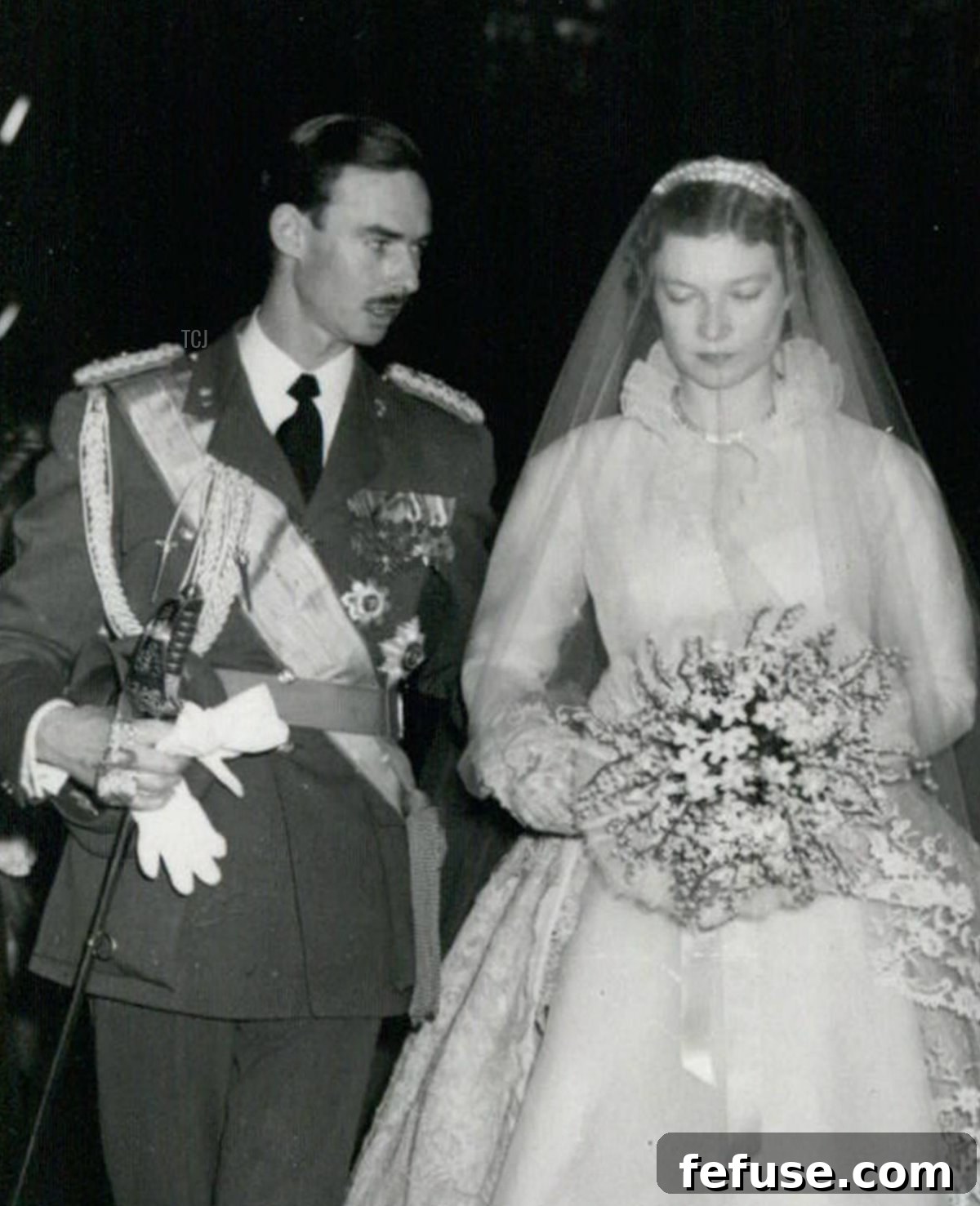
Grand Duchess Charlotte and Prince Felix were blessed with six children, and their eldest son, Hereditary Grand Duke Jean of Luxembourg, continued the grand tradition of royal weddings. He married Princess Joséphine-Charlotte of Belgium in a magnificent ceremony held at Luxembourg’s cathedral on April 9, 1953. This was a union not only of two royal houses but also a confluence of profound historical and personal sentiments. Princess Joséphine-Charlotte, a daughter of King Leopold III of Belgium and Princess Astrid of Sweden, brought with her a lineage as esteemed as her husband’s. Her marriage to Hereditary Grand Duke Jean was viewed as a significant dynastic event, further solidifying ties between two European monarchies. For her wedding, the radiant bride chose to wear a spectacular gift: the Congo Diamond Necklace Tiara. This remarkable piece, composed of dazzling diamonds, served as a stunning bridal diadem, perfectly complementing her elegant gown and marking her official entry into the Grand Ducal Family of Luxembourg. It is important to acknowledge that this particular tiara, like many royal jewels, carries a complex history intertwined with Belgium’s colonial past, reflecting a broader narrative within European royalty.
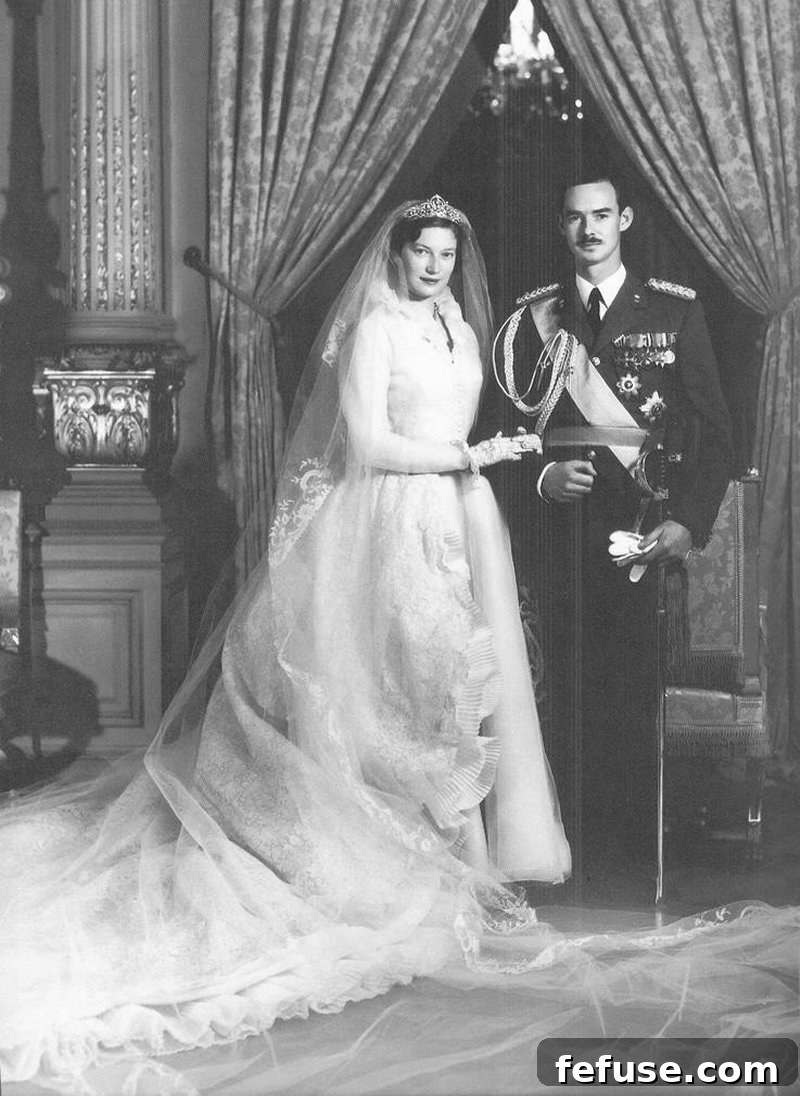
Following the main ceremony and for the official wedding portraits, Hereditary Grand Duchess Joséphine-Charlotte made a regal change, demonstrating the versatility and splendor of her new marital jewels. She adorned herself with a second magnificent wedding gift: the exquisite Belgian Scroll Tiara. This choice for the formal portraits underscored the depth of her personal collection and the importance of various ceremonial moments within a royal wedding. The Belgian Scroll Tiara, with its intricate design and historical significance, added another layer of grandeur to her bridal presentation, ensuring that her official wedding images captured her in two distinct yet equally stunning tiara looks, each reflecting a different facet of her royal new status.
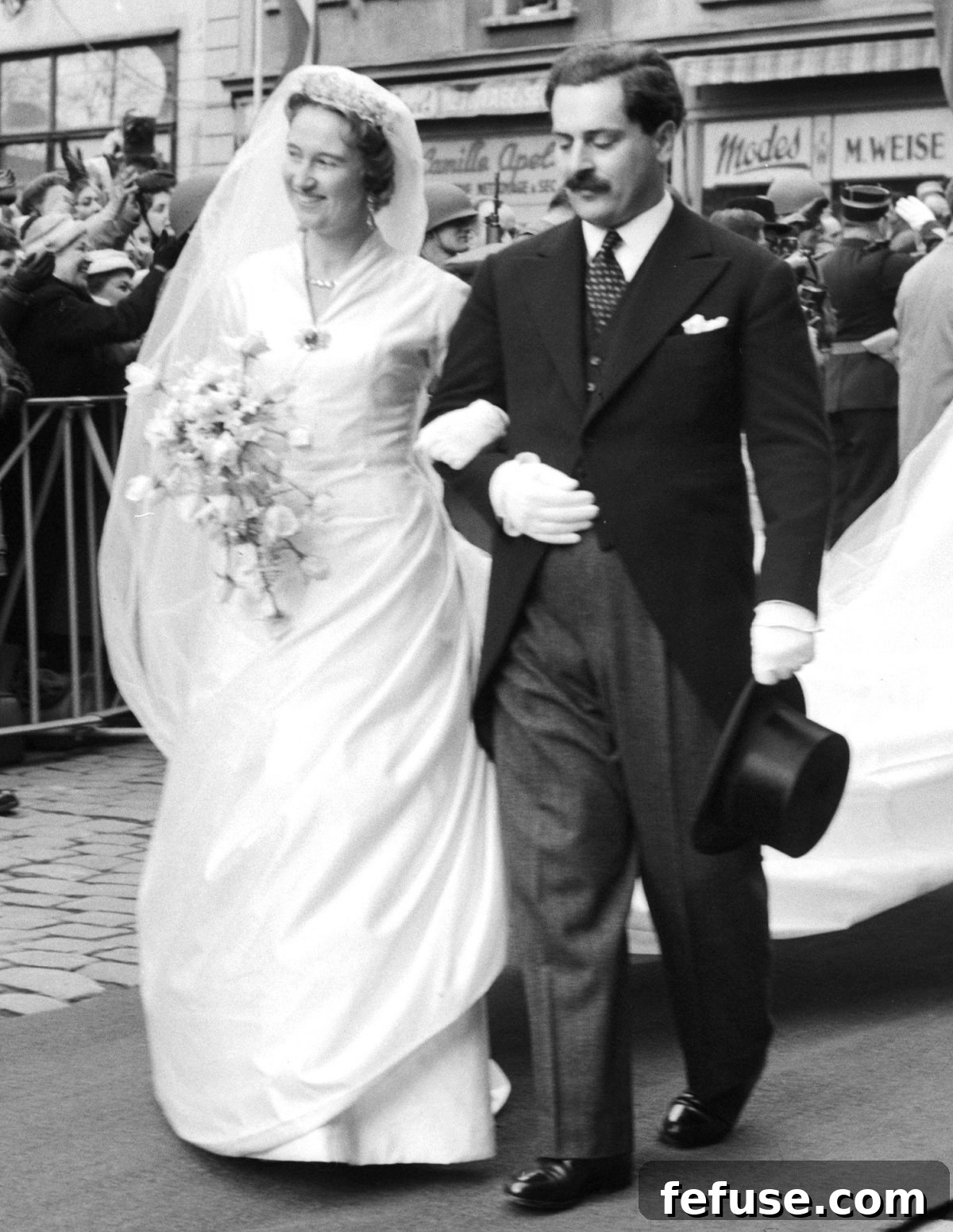
The daughters of Grand Duchess Charlotte and Prince Felix—Princess Elisabeth, Princess Marie-Adélaïde, Princess Marie-Gabrielle, and Princess Alix—each carried forward a cherished family tradition by selecting a specific tiara for their bridal diadem. All four princesses notably wore the elegant Diamond Vine Leaves Tiara on their respective wedding days. This beautiful tiara, characterized by its delicate diamond-encrusted vine leaf motifs, became a symbol of continuity and family heritage for this generation of royal brides. Princess Marie-Adélaïde of Luxembourg, for instance, chose this classic diamond tiara for her wedding to Count Karl Josef Henckel von Donnersmarck, which took place in Luxembourg on April 10, 1958. Her choice underscored the tiara’s enduring appeal and its role as a beloved heirloom, connecting her marriage to those of her sisters and the broader history of the Grand Ducal Family. The Diamond Vine Leaves Tiara remains one of the most frequently worn and significant pieces in the Luxembourgish royal jewel collection, cherished across generations.
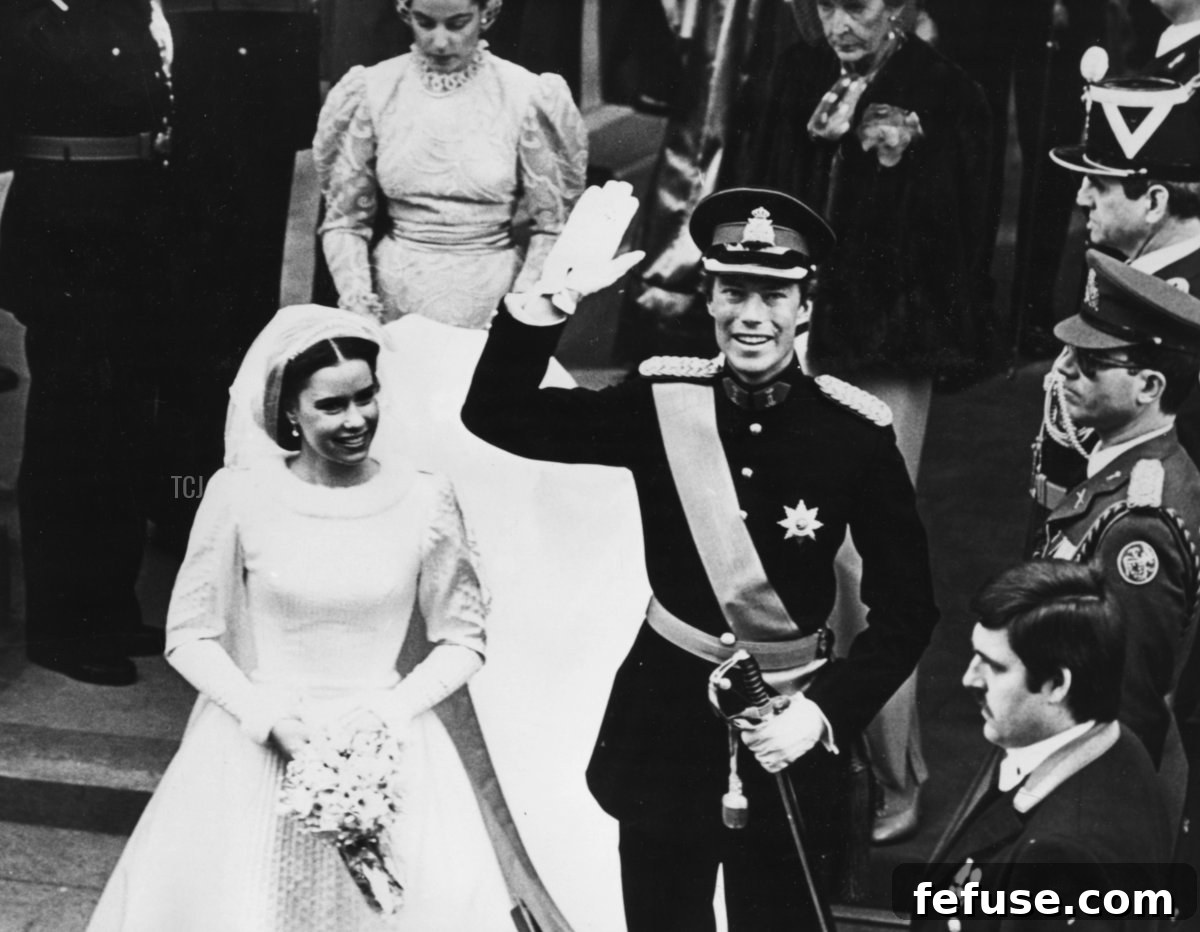
As the Grand Ducal Family entered the next generation, the tradition of choosing a significant heirloom for royal weddings continued with immense pride and sentiment. Grand Duke Jean and Grand Duchess Joséphine-Charlotte’s daughters, Princess Marie-Astrid and Princess Margaretha, both honored their mother’s bridal choice by wearing the Congo Diamond Necklace Tiara for their own weddings. This impressive diamond piece, therefore, transcended generations, becoming a central emblem of bridal elegance and family legacy. This cherished tradition was further extended when Maria Teresa Mestre y Batista married Hereditary Grand Duke Henri. Their wedding, a romantic affair celebrated on Valentine’s Day, February 14, 1981, in Luxembourg, saw Maria Teresa also wearing the iconic Congo Diamond Necklace Tiara. Her selection not only paid homage to her new husband’s mother but also firmly established the tiara as one of the most significant and beloved bridal jewels within the Grand Ducal treasury, symbolizing continuity and the enduring beauty of marital bonds within the royal family.
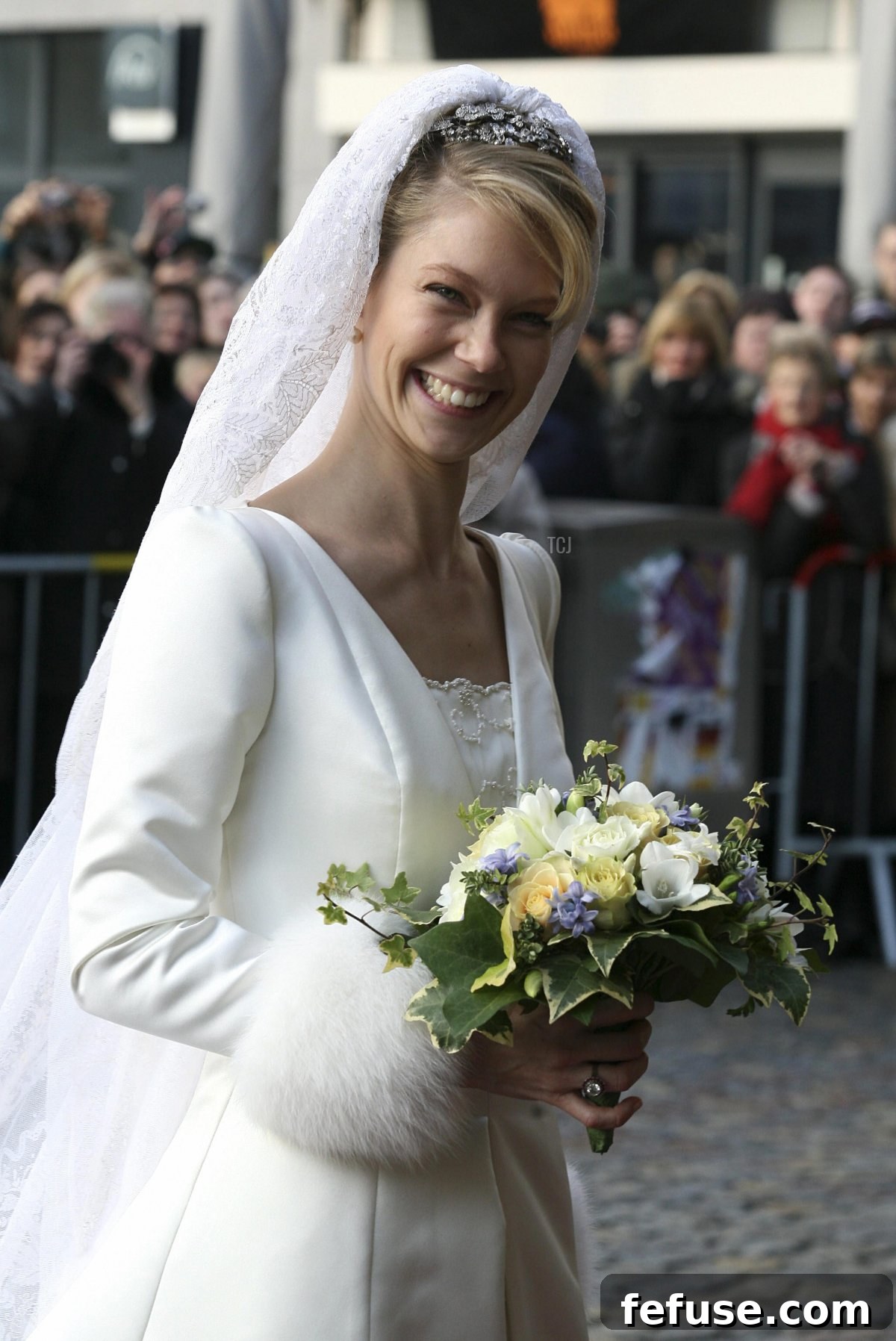
The tradition of resplendent wedding tiaras continued to flourish among the granddaughters and granddaughters-in-law of Grand Duke Jean and Grand Duchess Joséphine-Charlotte, showcasing the breadth and beauty of the Luxembourgish royal jewel collection. On December 6, 2008, Archduchess Marie-Christine of Austria, the daughter of Princess Marie-Astrid of Luxembourg and Archduke Carl Christian of Austria, chose the stunning Nassau Floral Tiara for her wedding to Count Rodolphe of Limburg-Stirum. The ceremony, held in Mechelen, Belgium, was a grand affair where the floral motif of the tiara perfectly complemented her bridal attire, adding a touch of natural elegance and intricate diamond sparkle. This choice highlighted the versatility of the Grand Ducal collection, featuring pieces that cater to various aesthetic preferences while maintaining a deep connection to the family’s heritage. The Nassau Floral Tiara, with its delicate yet impactful design, proved to be an ideal choice for a modern royal bride, bridging historical significance with contemporary grace.
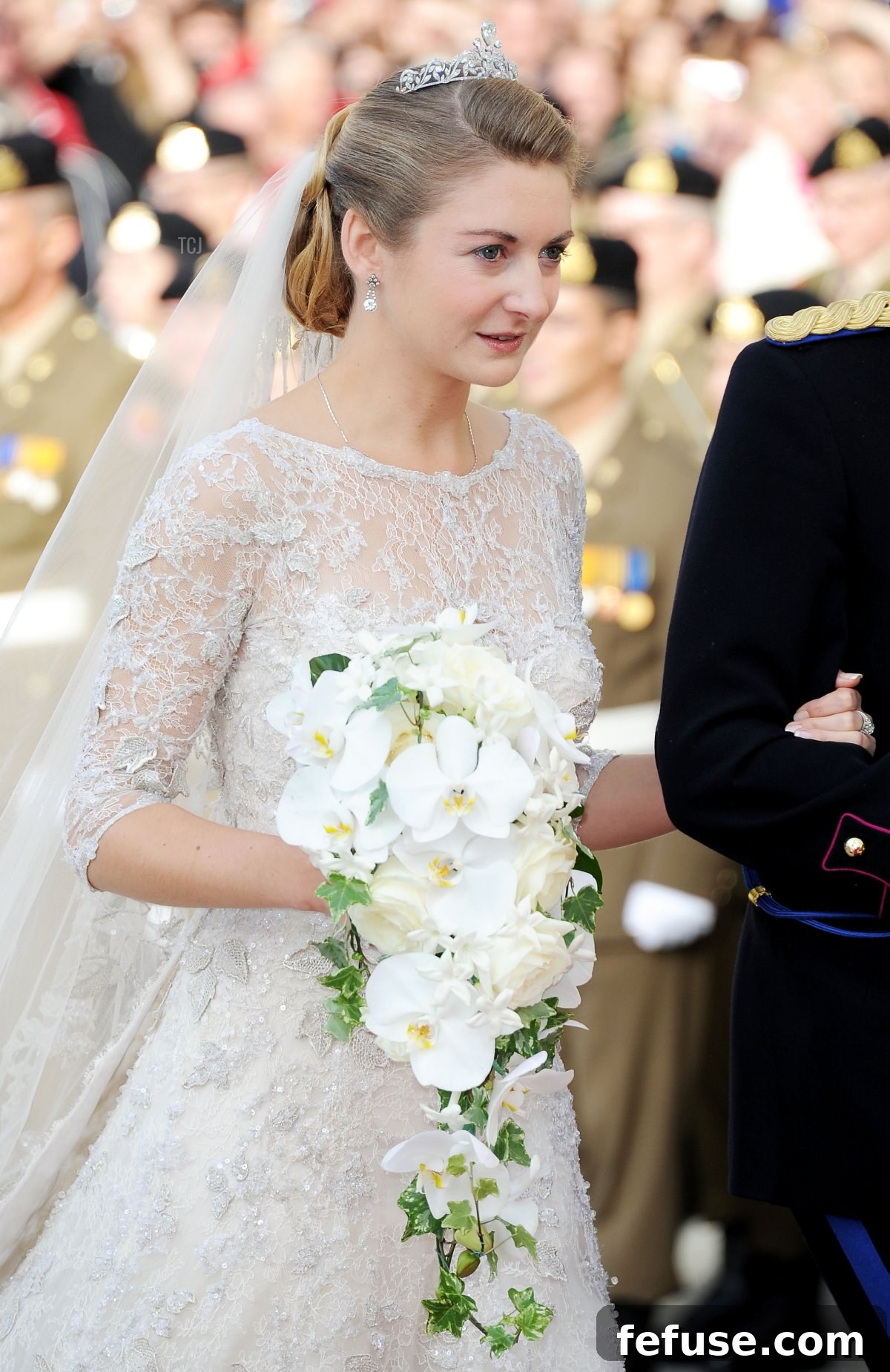
Countess Stéphanie de Lannoy’s wedding to Hereditary Grand Duke Guillaume of Luxembourg on October 20, 2012, was a magnificent celebration that drew attention for its blend of personal heritage and royal splendor. For her religious ceremony, Countess Stéphanie made a deeply personal choice, opting to wear her own family’s exquisite diamond tiara. This decision not only honored her own noble lineage but also added a unique dimension to the Luxembourgish royal wedding traditions. The Lannoy Tiara, a breathtaking piece rich with family history, beautifully showcased the bride’s personal connection to her heritage. However, the wedding festivities began the night before with a grand pre-wedding dinner, for which Stéphanie chose to wear another significant piece from the Grand Ducal collection: the beloved Diamond Vine Leaves Tiara. This thoughtful selection allowed her to embrace both her familial roots and the esteemed jewels of her new royal family, creating a harmonious blend of traditions and a truly memorable display of bridal elegance.
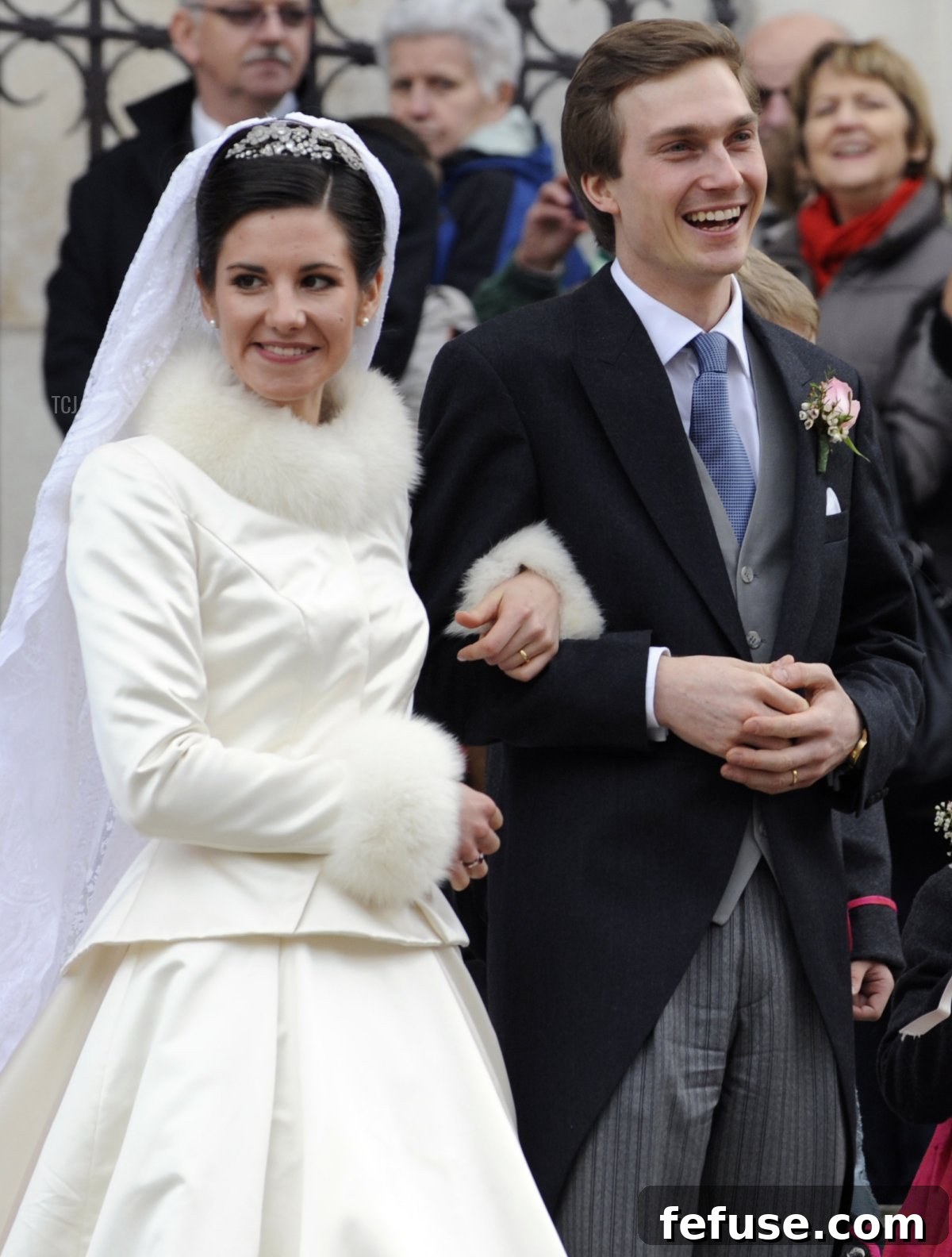
Continuing the pattern of selecting elegant heirloom tiaras for significant family occasions, Adélaïde Drapé-Frisch followed in her sister-in-law’s footsteps when she married Archduke Christoph of Austria. Archduke Christoph is another son of Princess Marie-Astrid and Archduke Carl Christian, thereby firmly linking this wedding to the broader Grand Ducal family of Luxembourg. Their wedding, held in Nancy, France, on December 29, 2012, was a charming winter affair. For this joyous occasion, Adélaïde chose to wear the beautiful Nassau Floral Tiara. Her selection not only showcased her personal taste but also reinforced the tiara’s growing prominence as a favored bridal jewel within the extended family. The Nassau Floral Tiara, with its delicate yet striking design, proved to be a perfect complement to her bridal gown, adding a touch of refined sparkle and contributing to the rich tapestry of royal wedding jewels associated with the Luxembourgish line.
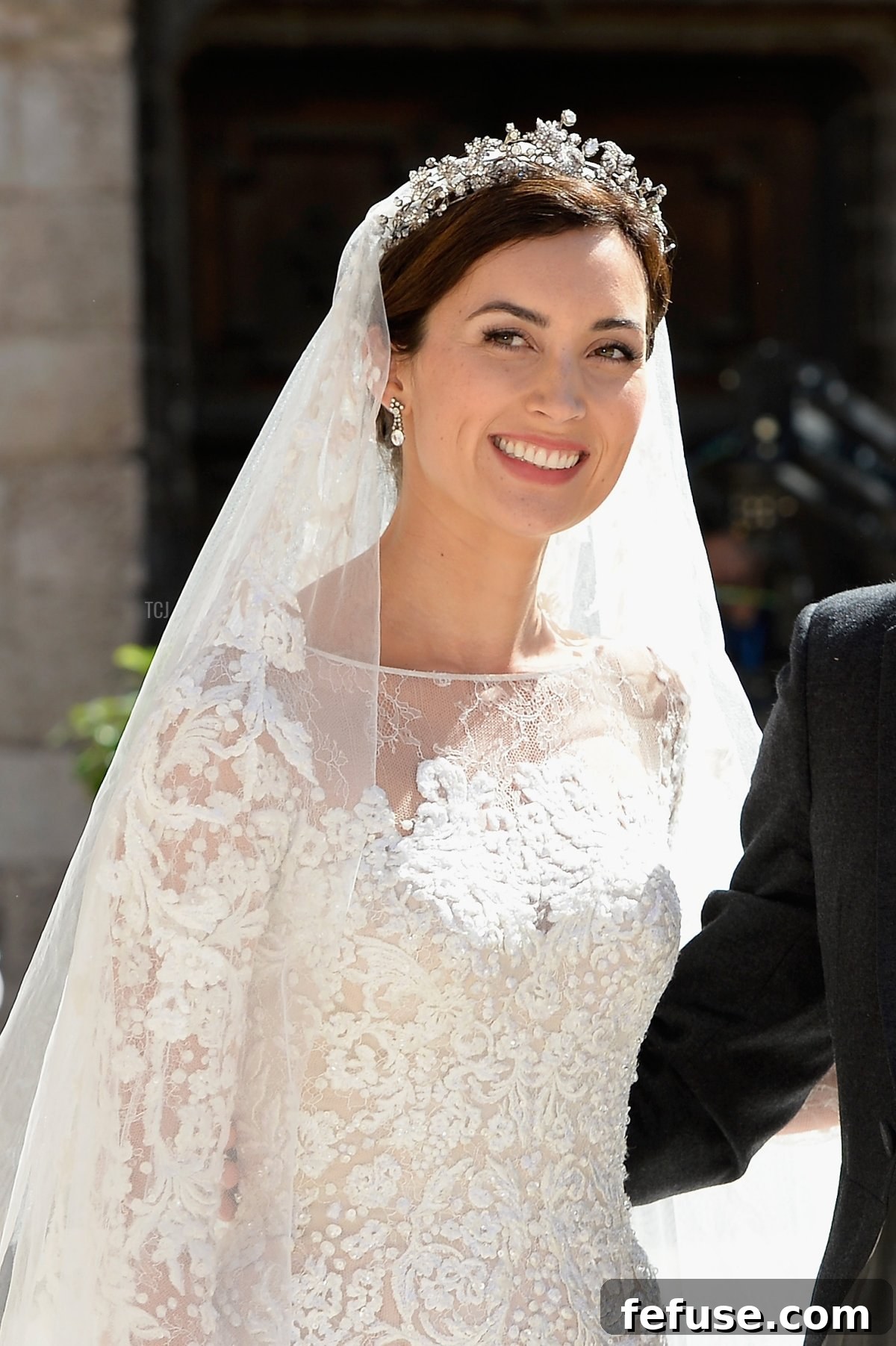
Another memorable addition to the illustrious list of Luxembourgish royal brides is Claire Lademacher, who married Prince Felix of Luxembourg in a picturesque ceremony in Saint-Maximin-La-Sainte-Baume, France, on September 21, 2013. Prince Felix, the second son of Grand Duke Henri and Grand Duchess Maria Teresa, celebrated his wedding with great pomp and circumstance. For her significant day, Claire Lademacher made a poignant choice, selecting the revered Diamond Vine Leaves Tiara. This tiara, as previously noted, holds a special place in the Grand Ducal collection, having been worn by several princesses across different generations, including Grand Duchess Charlotte’s daughters. By choosing this particular heirloom, Claire beautifully wove her own wedding into the rich historical fabric of the family, honoring past traditions while embarking on her own royal journey. The timeless elegance of the Diamond Vine Leaves Tiara perfectly complemented her bridal look, cementing its status as a favored choice for brides marrying into the Luxembourgish Grand Ducal Family.
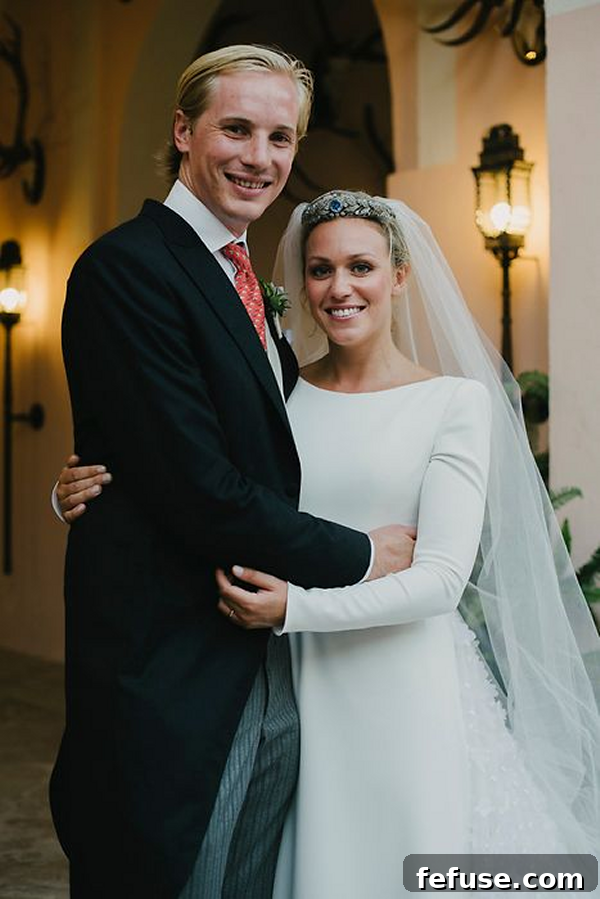
The Grand Ducal family’s tradition of unique bridal adornments continued with Princess Marie-Gabrielle of Nassau, daughter of Prince Jean of Luxembourg and Hélène Vestur. For her religious wedding to Antonius Willms, which took place in the beautiful setting of Marbella, Spain, on September 2, 2017, Princess Marie-Gabrielle sought out a truly distinctive piece. Her “something blue” for the occasion was not a dress accessory but a magnificent tiara with a subtle yet impactful blue element: the Grand Duchess Adelaide Tiara. This remarkable tiara, known for its significant diamonds and often featuring subtle blue nuances or sapphires that can be incorporated, was graciously borrowed from her uncle, Grand Duke Henri. Her choice underscored the personal connections and generosity within the Grand Ducal Family, allowing a treasured heirloom to shine on a new generation’s wedding day. The Grand Duchess Adelaide Tiara, with its historical depth and splendid craftsmanship, made for an unforgettable bridal statement, blending tradition with a touch of personal flair.
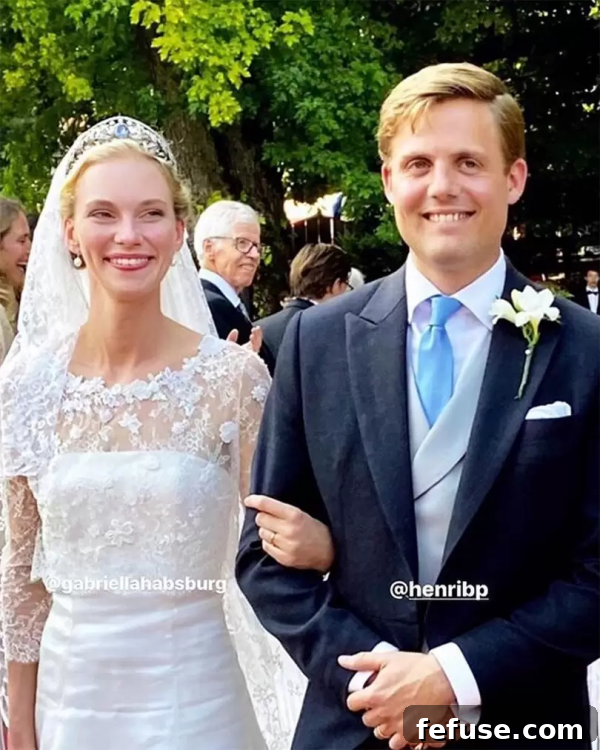
Archduchess Gabriella of Austria, the youngest child of Princess Marie-Astrid and Archduke Carl Christian, also embraced a cherished family heirloom for her wedding to Prince Henri of Bourbon-Parma on September 12, 2020. Their union was particularly notable as both are second cousins, sharing Grand Duchess Charlotte and Prince Felix as great-grandparents – Prince Henri’s grandmother being Princess Marie-Gabrielle of Luxembourg. For this significant occasion, Archduchess Gabriella chose to wear the majestic Grand Duchess Adelaide Tiara. Her decision reiterated the tiara’s status as a versatile and beloved piece within the extended royal family. The Grand Duchess Adelaide Tiara, often admired for its substantial diamonds and regal presence, perfectly complemented Gabriella’s bridal look, symbolizing both her connection to her heritage and the continuity of the Grand Ducal Family’s tradition of sharing these precious jewels across generations and branches of the family tree. This further solidified its place as a significant piece of Luxembourgish royal bridal jewelry.
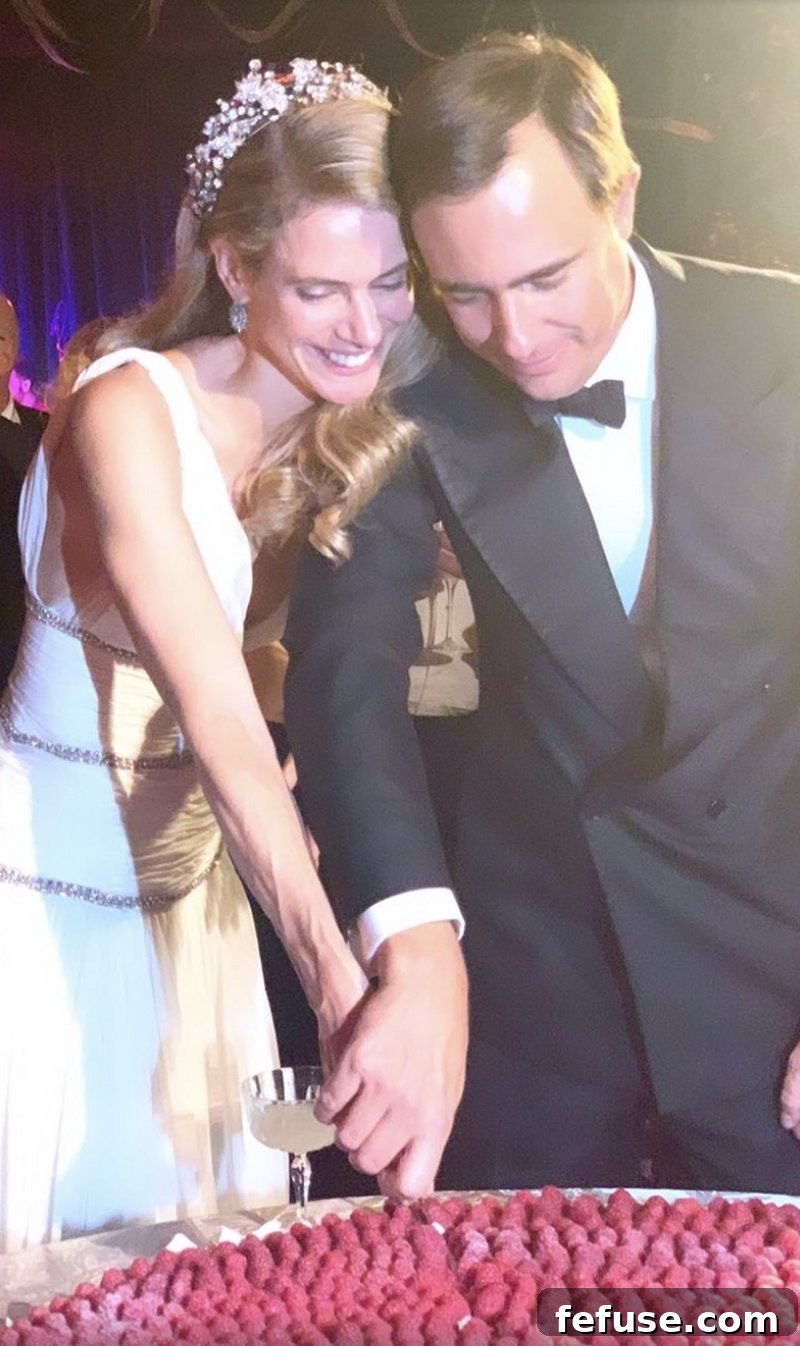
Princess Maria-Anunciata of Liechtenstein, daughter of Princess Margaretha of Luxembourg and Prince Nikolaus of Liechtenstein, brought an exquisite blend of two noble lineages to her wedding celebrations with Emanuele Musini. For her religious wedding ceremony on September 4, 2021, Princess Maria-Anunciata chose to wear the historic Habsburg Fringe Tiara. This choice not only honored her Austrian heritage but also showcased a magnificent piece with deep historical roots, highlighting the diverse collection of jewels available to royal brides. However, for the subsequent wedding reception held in Vienna, a different tiara made a dazzling appearance, graciously loaned by her uncle, Grand Duke Henri. Princess Maria-Anunciata adorned herself with the beautiful Diamond Vine Leaves Tiara. This change of tiara for different parts of the celebration underscored the symbolic importance of these heirlooms and the generosity within the Grand Ducal Family, allowing the tiara to be celebrated across multiple significant events. Her choice further cemented the Diamond Vine Leaves Tiara’s legacy as a versatile and cherished piece within the Luxembourgish royal collection, marking another memorable moment in the lineage of royal wedding jewels.
As we reflect on these splendid moments from Luxembourg’s royal bridal history, the anticipation around Princess Alexandra’s recent wedding tiara choice was palpable. Each tiara tells a unique story, intertwining personal narratives with dynastic heritage. These magnificent jewels are more than mere adornments; they are symbols of enduring love, family legacy, and the timeless elegance of the Grand Ducal Family. Stay tuned for further insights into Princess Alexandra’s beautiful wedding jewels as we continue to celebrate the rich traditions of Luxembourgish royalty.