
The Cursed Tiara: Queen Ena’s Tragic Royal Wedding and the Debut of La Buena
As autumn leaves turn and shadows lengthen, October brings with it a captivating fascination for the eerie and the unexplained. In the annals of royal history, where glittering jewels often mask profound human drama, some tales emerge that are as chilling as any ghost story. This month, leading up to Halloween, we delve into the terrifying stories intertwined with magnificent royal jewels. Our first installment unfolds the horrific debut of a Spanish royal treasure, aptly nicknamed “La Buena” – “The Good One” – a tiara that bore witness to a scene of unspeakable terror during its very first public appearance.
A Royal Romance Ignited: Alfonso XIII and Victoria Eugenie of Battenberg
The Fateful Encounter in London
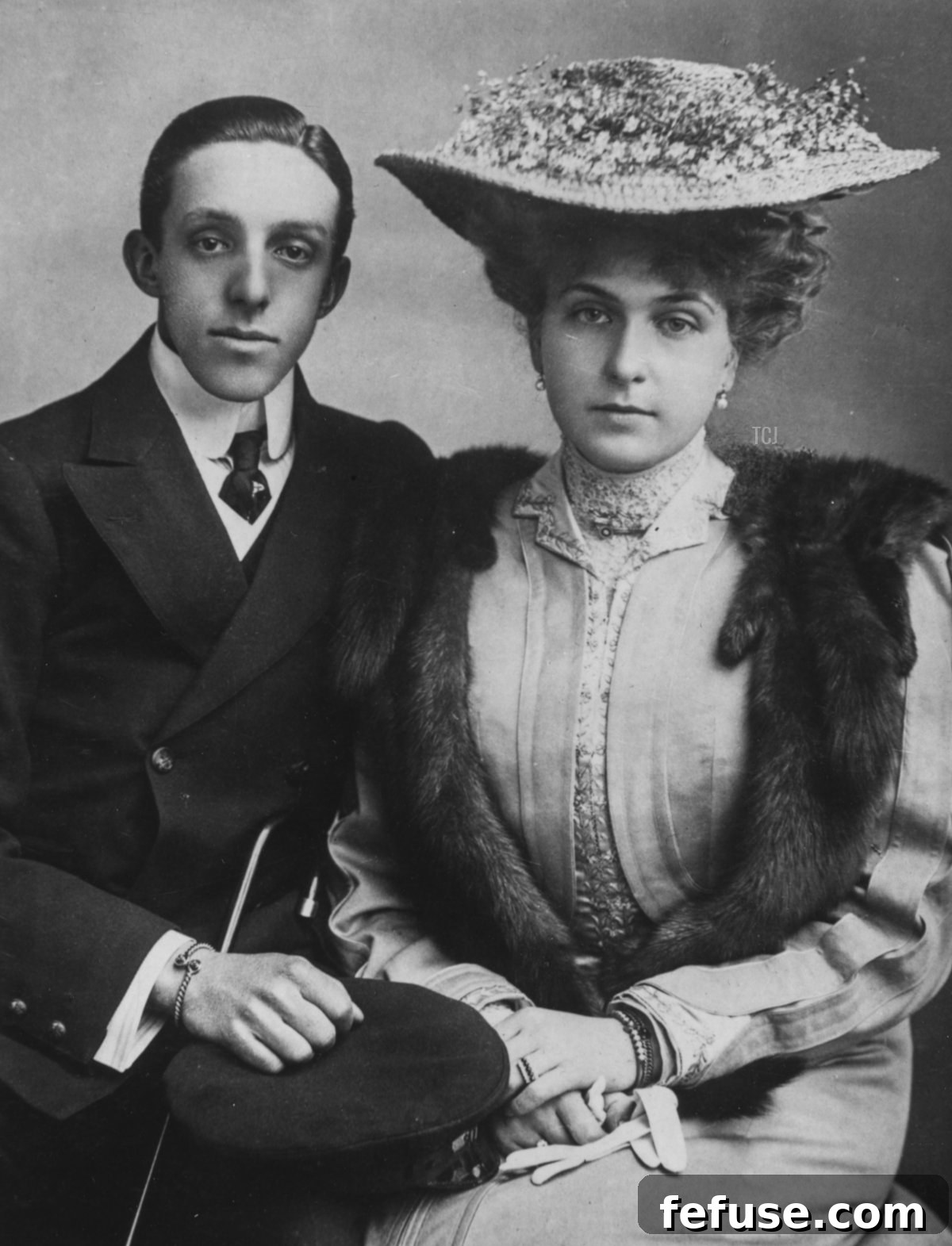
The year was 1905, a period of grandeur and simmering political tensions across Europe. In June, a significant diplomatic event unfolded in London as King Edward VII of the United Kingdom hosted a lavish state banquet at Buckingham Palace. The guest of honor was the young King Alfonso XIII of Spain. At just 19 years old, Alfonso’s path to the throne was unique; he was literally born a monarch, succeeding his father, King Alfonso XII, at the moment of his birth. His royal lineage was unquestionable, and by the spring of 1905, the young sovereign was actively seeking a suitable consort to secure the future of his dynasty.
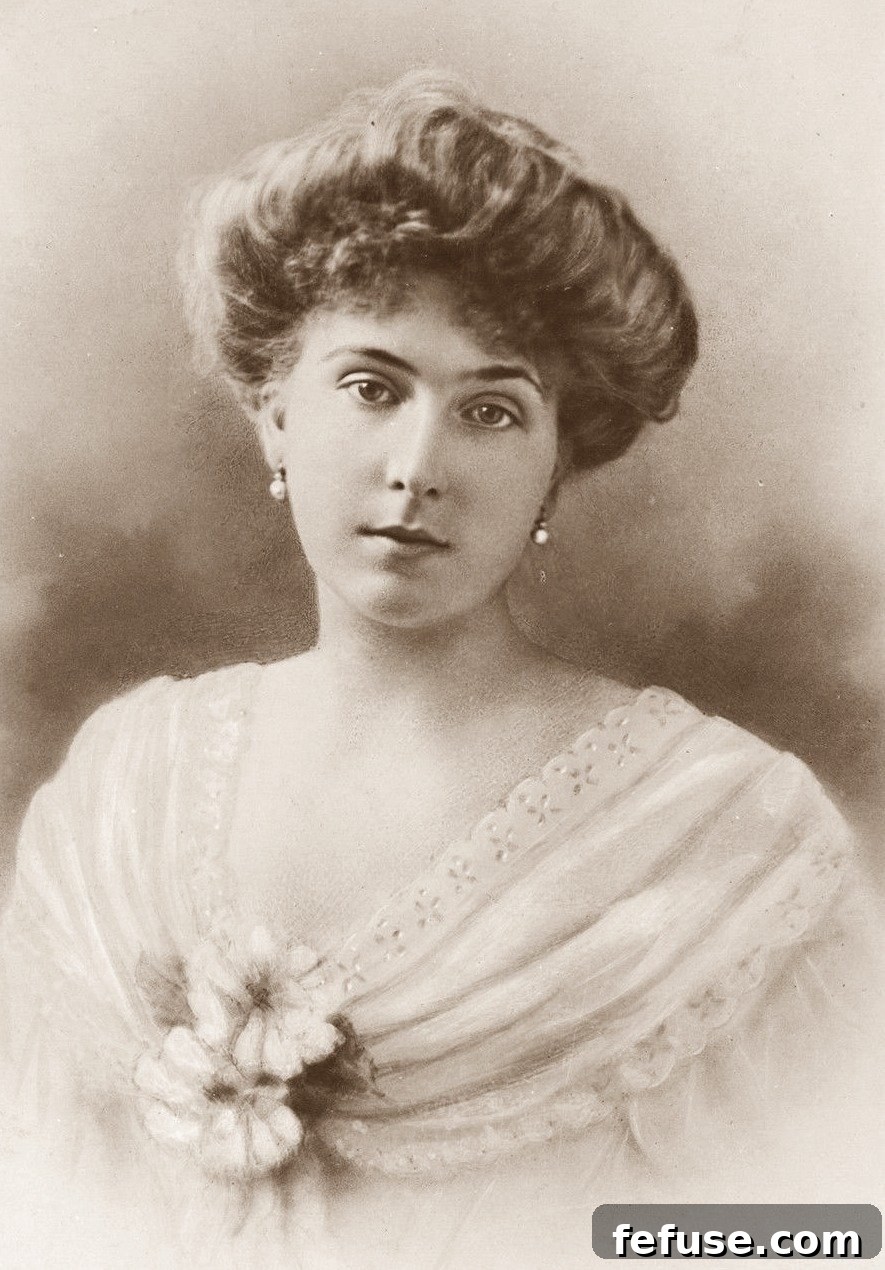
It was within the opulent ballroom of Buckingham Palace that destiny intervened. Alfonso’s gaze fell upon King Edward’s striking 17-year-old niece, Princess Victoria Eugenie of Battenberg. Known affectionately by her fourth name, Ena, the blond princess was instantly captivated by the dashing Spanish king. Their meeting sparked a whirlwind romance that would soon capture the attention of two nations and lead to a dazzling, yet ultimately tragic, union.
Overcoming Obstacles: Love Against the Odds
Their initial attraction quickly blossomed into an epistolary courtship, but their path to marriage was fraught with significant challenges. Three primary concerns threatened to derail their burgeoning romance before it could even solidify. The first was a matter of faith: Alfonso was a devout Catholic, while Ena adhered to the Anglican church. For the marriage to proceed, Ena was required to convert to Catholicism, a momentous decision that would sever her ties to her own family’s line of succession.
The second concern revolved around eligibility and lineage. Alfonso’s mother, Queen Maria Cristina, held reservations about Ena’s background. Ena’s late father, Prince Henry of Battenberg, was born from an unequal marriage—his father was a prince, but his mother was a countess who had served as a lady-in-waiting before their wedding. This perceived disparity in status deeply troubled the Spanish court.
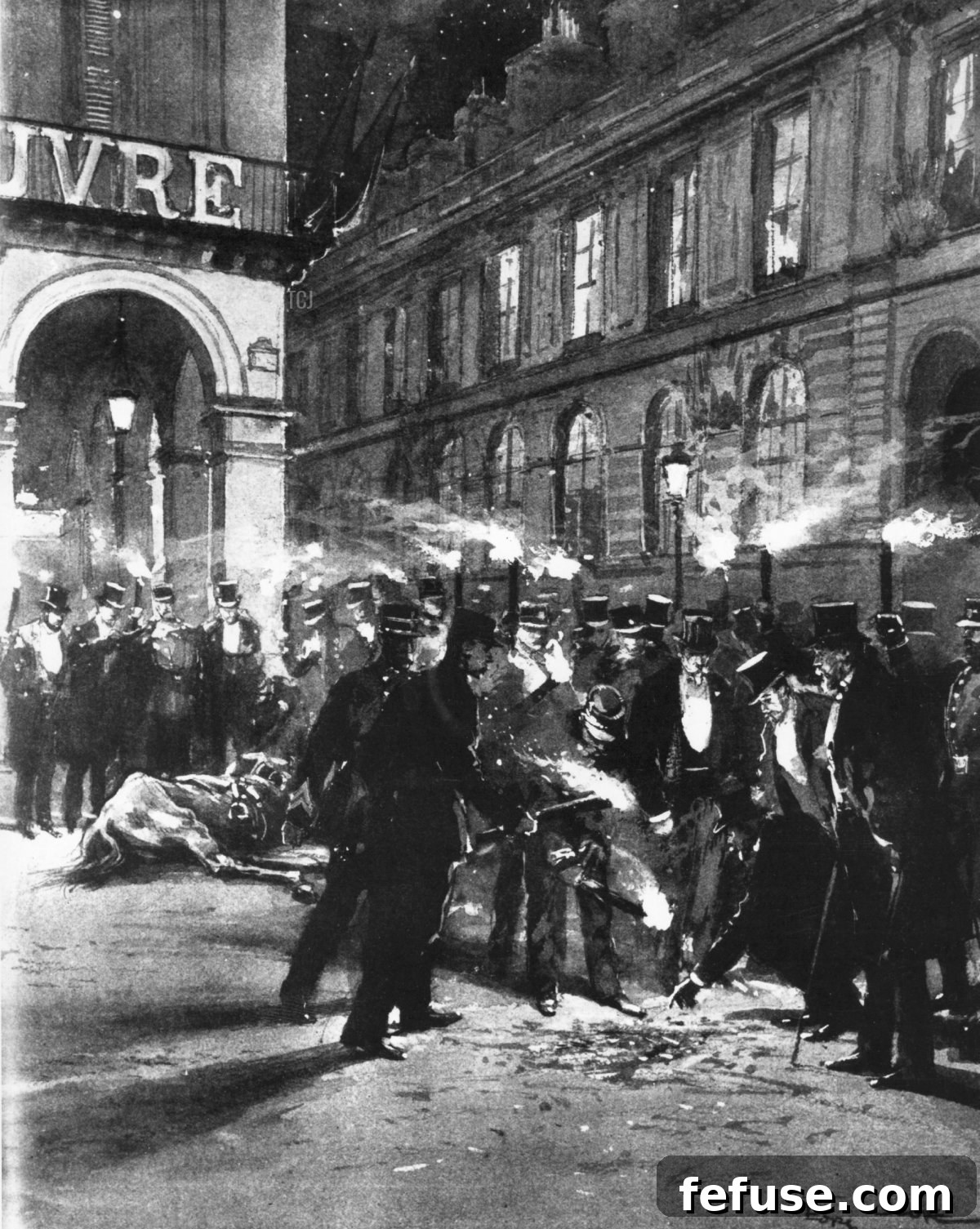
The third, and ultimately most tragic, issue was medical: Ena’s brother, Prince Leopold, suffered from hemophilia. There were grave fears that Ena might be a carrier of this hereditary disease, which she could potentially pass on to her future children. While the religious and eligibility hurdles were eventually overcome—Ena converted to Catholicism, and King Edward elevated her status to Her Royal Highness—the hemophilia concern was largely dismissed by Alfonso, despite its profound long-term implications for their family. Ironically, amidst these complex discussions, little attention was paid to the more immediate dangers lurking around the young King. Just days before Alfonso’s state visit to London, he had narrowly survived an assassination attempt in Paris, when an anarchist’s bomb exploded, missing his carriage by mere inches. This chilling precursor hinted at the precariousness of royal life in an era of rising political extremism.
From Biarritz to Madrid: The Road to the Altar
A Blossoming Engagement
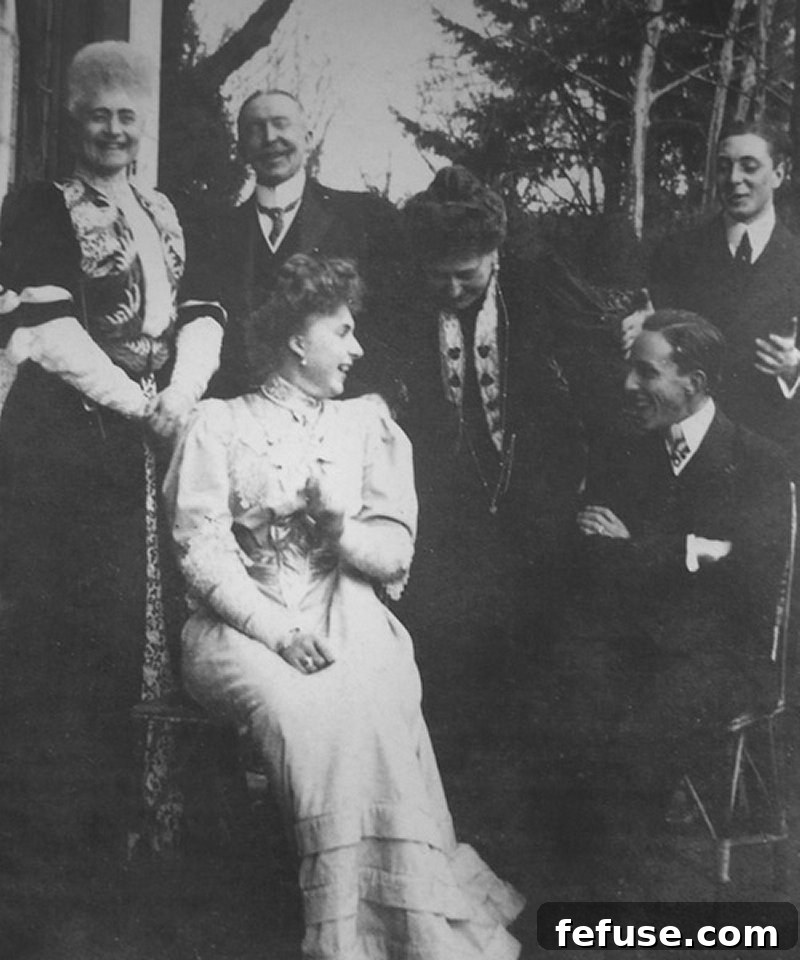
With the major obstacles seemingly addressed, the royal romance was finally free to flourish. Alfonso and Ena reunited in the picturesque south of France, at a villa in Biarritz owned by Ena’s cousin, Princess Frederica of Hanover. It was there, amidst the scenic beauty, that their affection deepened, cementing their decision to marry. Following this romantic interlude, Alfonso brought Ena to Spain to formally introduce her to his formidable mother, Queen Maria Cristina. Ena’s conversion to Catholicism swiftly followed, solidifying her place within the Spanish court and paving the way for an official diplomatic treaty between the United Kingdom and Spain, celebrating the forthcoming union.
As Ena celebrated her 18th birthday in April, the final preparations for the royal wedding were set in motion. A few weeks later, accompanied by her mother and brothers, she embarked on the momentous journey to Madrid, ready to embrace her new life as Queen of Spain.
A Treasure Trove for a Queen: The Wedding Jewels
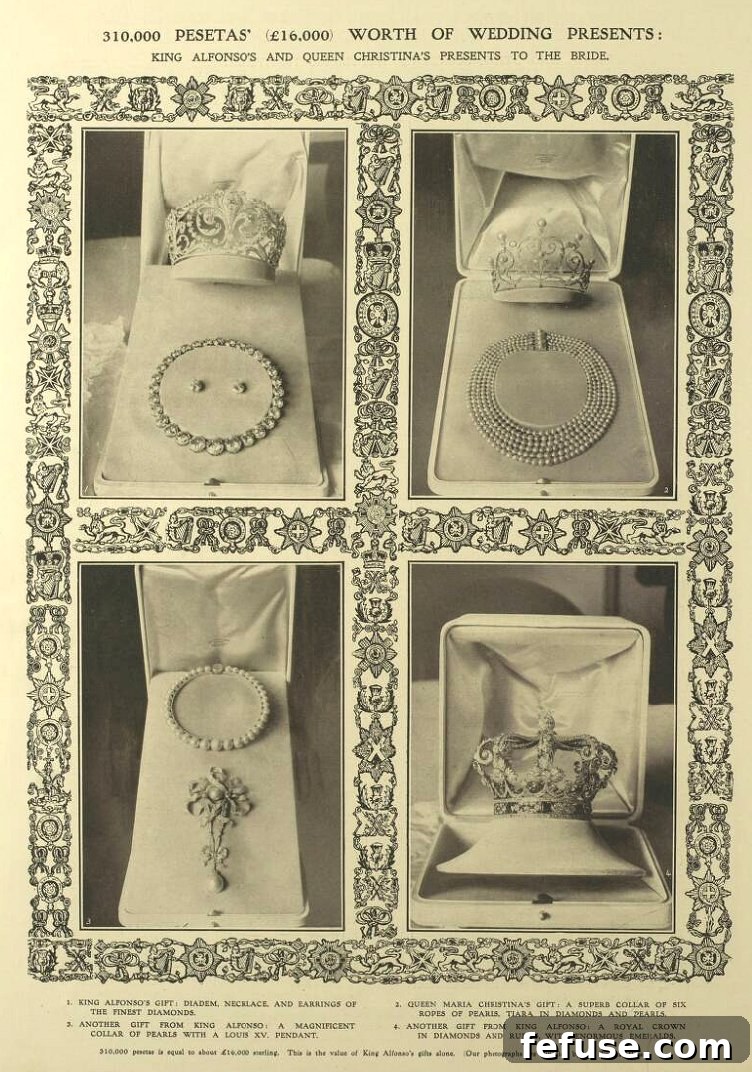
Upon her arrival at the majestic Royal Palace in Madrid, the queen-to-be was greeted by an astonishing display of wedding presents, a collection of jewels truly befitting a future sovereign. Gifts poured in from various royal relatives, including her mother, her aunt and uncle, and her future mother-in-law, Queen Maria Cristina. However, it was King Alfonso XIII who presented Ena with the most spectacular cache of treasures. His gifts included an actual crown, exquisite necklaces of pearls and diamonds, dazzling earrings, and elegant brooches. The undisputed star of this magnificent collection was a grand diamond tiara, crafted by Ansorena, the renowned court jeweler to the Spanish royal family. This stunning diadem prominently featured the iconic symbol of the House of Borbón – the fleur-de-lis – rendered in brilliant, sparkling gems.
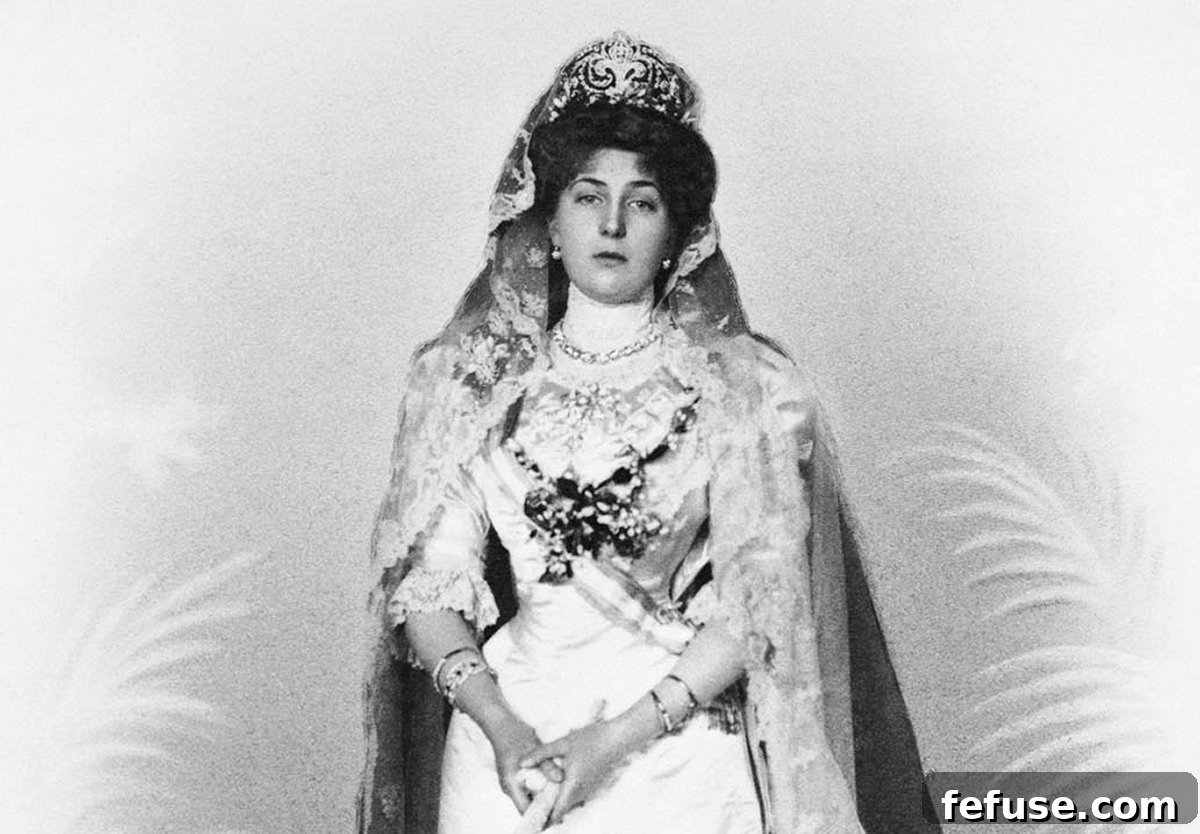
Pictured in its protective case in the upper left of the historical image above, this magnificent headpiece would soon earn the affectionate nickname “La Buena,” meaning “The Good One.” Little did anyone know that this symbol of love and royalty was destined to witness an event that would forever mar its gilded history.
The Day of Splendor and Shadow: May 31, 1906
The Royal Bride’s Grandeur
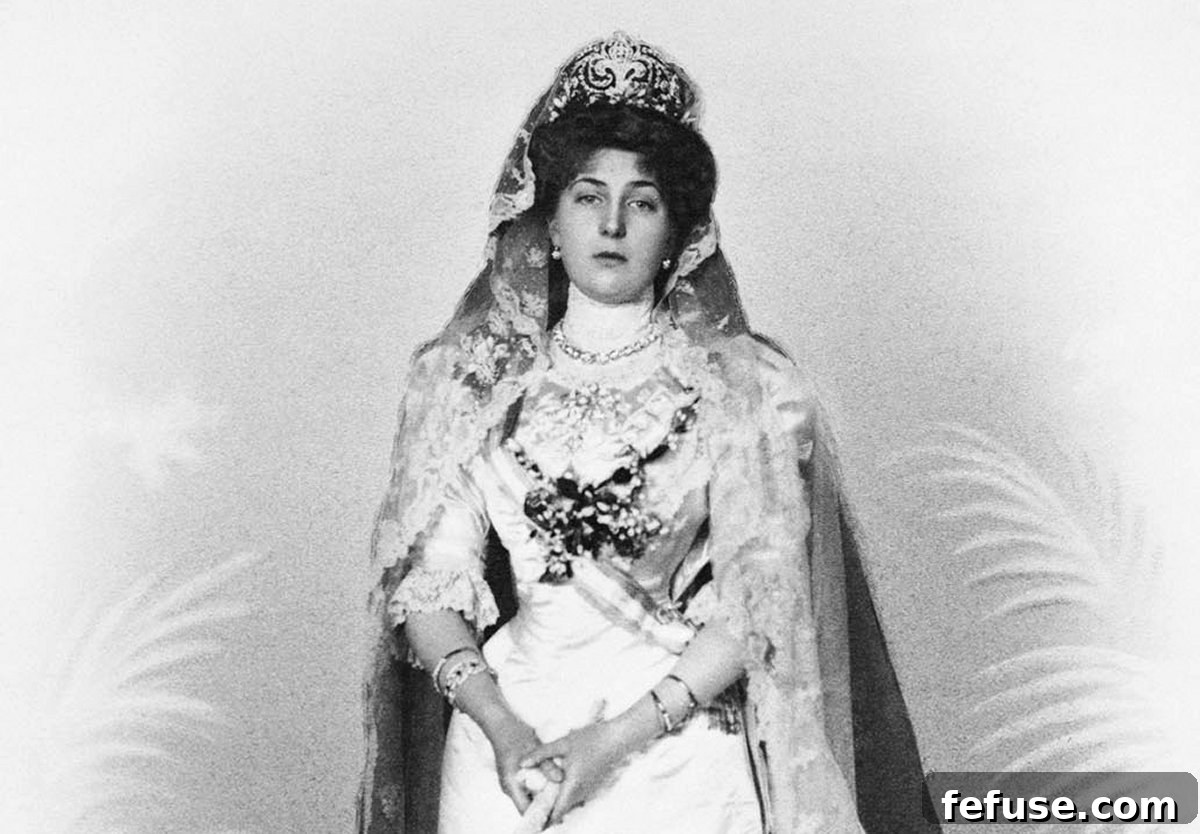
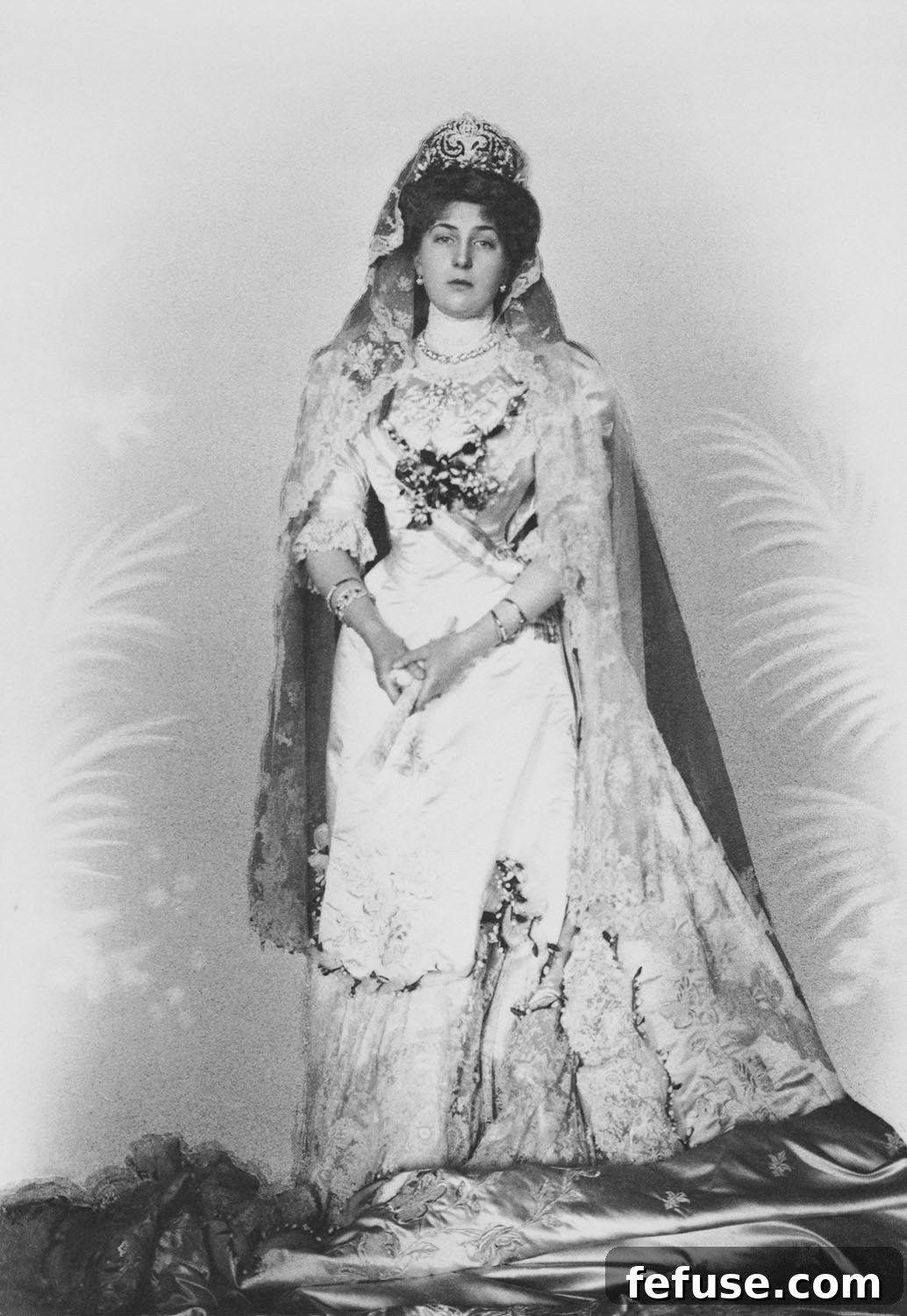
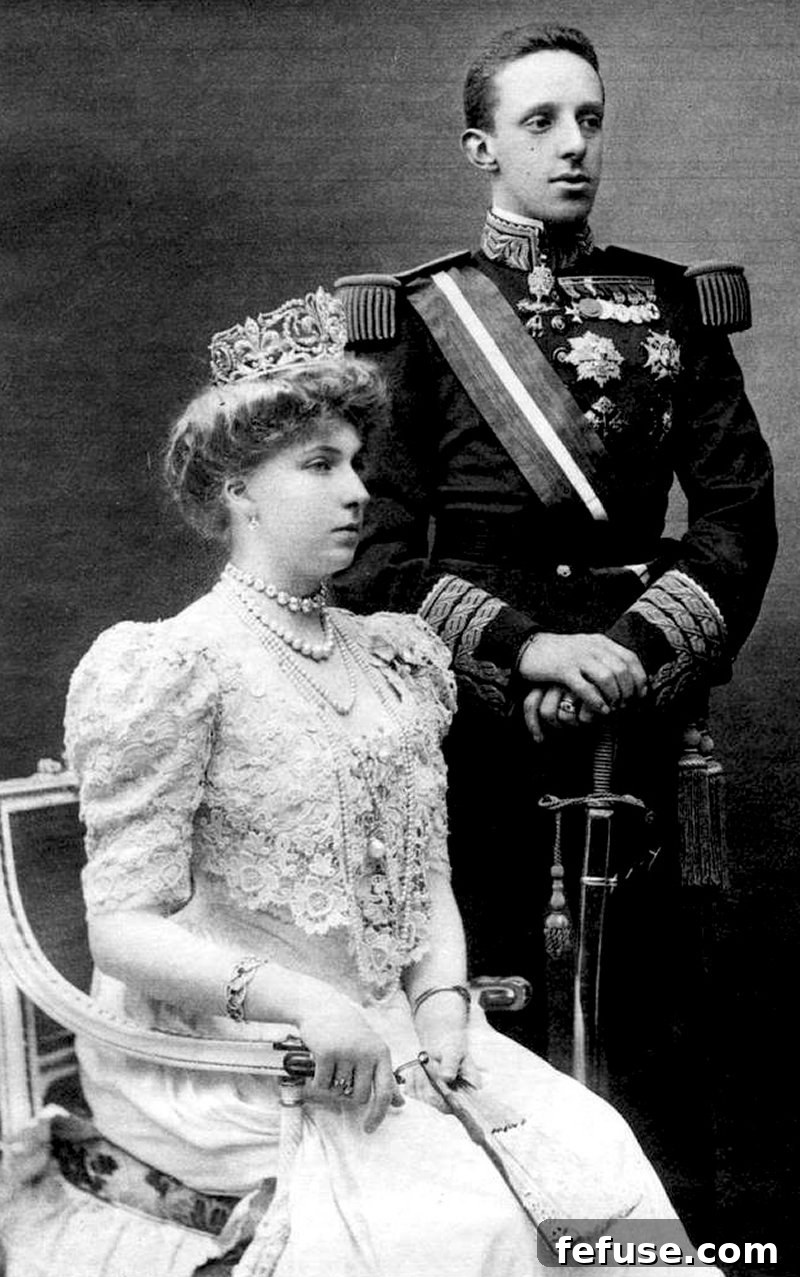
On May 31, 1906, Princess Ena, now Queen Victoria Eugenie of Spain, made her first public appearance wearing “La Buena” tiara for her eagerly anticipated royal wedding. The magnificent tiara crowned an ensemble of unparalleled splendor. Her gown, a gift from Alfonso, was a masterpiece of white brocade, adorned with intricate silver embroidery and delicate Spanish lace, and gracefully trimmed with fragrant orange blossoms. The ethereal lace veil, a precious heirloom, had been worn by her mother-in-law, Queen Maria Cristina, at her own wedding in 1879, adding a layer of historical significance to Ena’s bridal attire.
Complementing the tiara, Ena wore an array of other exquisite jewels: a resplendent diamond necklace, sparkling pearl earrings, and a brooch featuring a pendant pearl – all also gifts from her new husband. Several bracelets, including one presented by members of the Spanish royal family, completed her dazzling adornment. Fully attired in her radiant bridal finery, Queen Ena, accompanied by her mother, Princess Beatrice, and Queen Maria Cristina, stepped into the ornate Mahogany State Coach, embarking on the momentous journey to the Royal Monastery of San Jerónimo for the ceremony.
A Nation Awaits: The Procession to San Jerónimo
Awaiting his bride at the historic church, King Alfonso XIII was equally resplendent in his finest attire, featuring elegant white satin breeches and ceremonial gold spurs. The bridal procession was deliberately slow, making its way along a lengthy five-mile route through the heart of Madrid. This extended path was chosen specifically to allow the eager citizens of Madrid ample opportunity to gather and witness their new Queen of Spain on her wedding day. It was a warm, vibrant day, and along the entire route, the throngs of people cheered enthusiastically as the princess, now Queen, graciously waved from her carriage. Security officials, ever vigilant, had advised against throwing flowers at the passing carriages, a small precaution against unforeseen dangers.
Despite the joyous atmosphere, King Alfonso grew visibly anxious at the church, sending a message to the procession to hasten their pace. Yet, he patiently waited for an entire hour for his bride to finally arrive, a testament to the grand scale and pageantry of the occasion.
A Ceremony Marred by Fate: From Vows to Violence
The Unblemished Ceremony
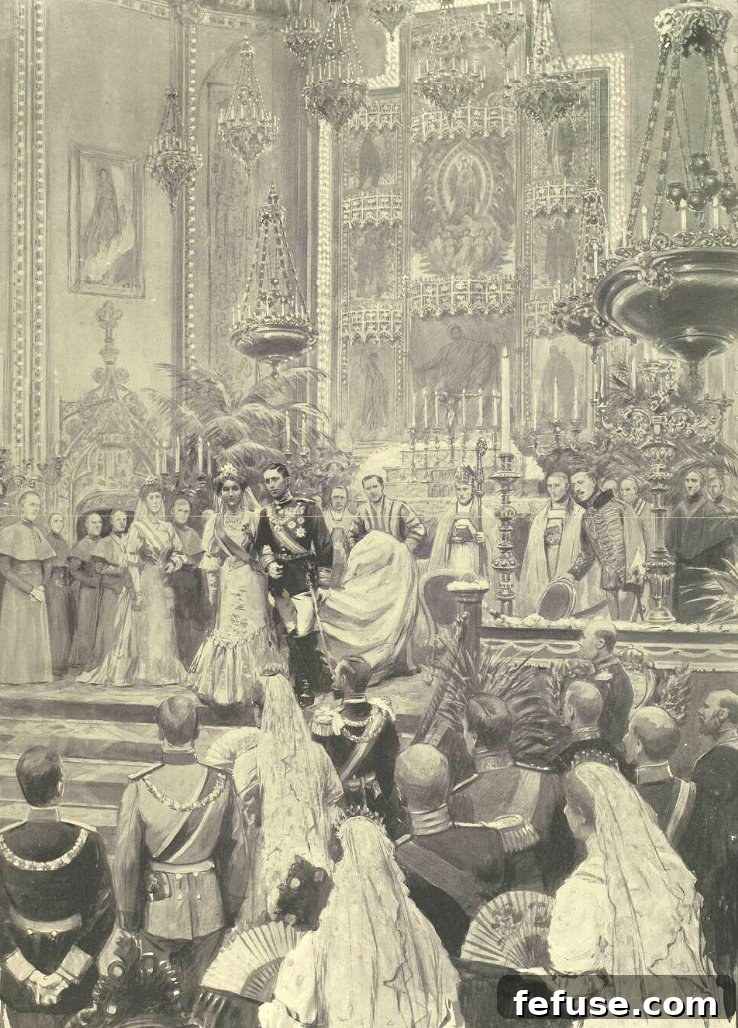
When Queen Ena finally emerged from the Mahogany State Coach, she was a breathtaking vision, gleaming in white and sparkling with diamonds and pearls. Her presence, enhanced by the newly debuted “La Buena” tiara, was truly awe-inspiring. The other distinguished royal ladies in attendance, including the Princess of Wales (who would later become Queen Mary), the Duchess of Saxe-Coburg and Gotha, and Grand Duchess Vladimir of Russia, also wore their magnificent tiaras, further enhancing the grandeur of the solemn occasion. Inside the Royal Monastery of San Jerónimo, the wedding ceremony unfolded with flawless precision. A choir of 200 voices filled the air with hymns as the royal couple stood before an altar adorned with flickering candles and fragrant roses. The Archbishop of Toledo, Cardinal Sancha, officiated the sacred union, pronouncing the couple married and, in a single, momentous declaration, transforming Her Royal Highness Princess Victoria Eugenie of Battenberg into Her Majesty The Queen of Spain.
The Explosive Return: Terror on Calle Mayor
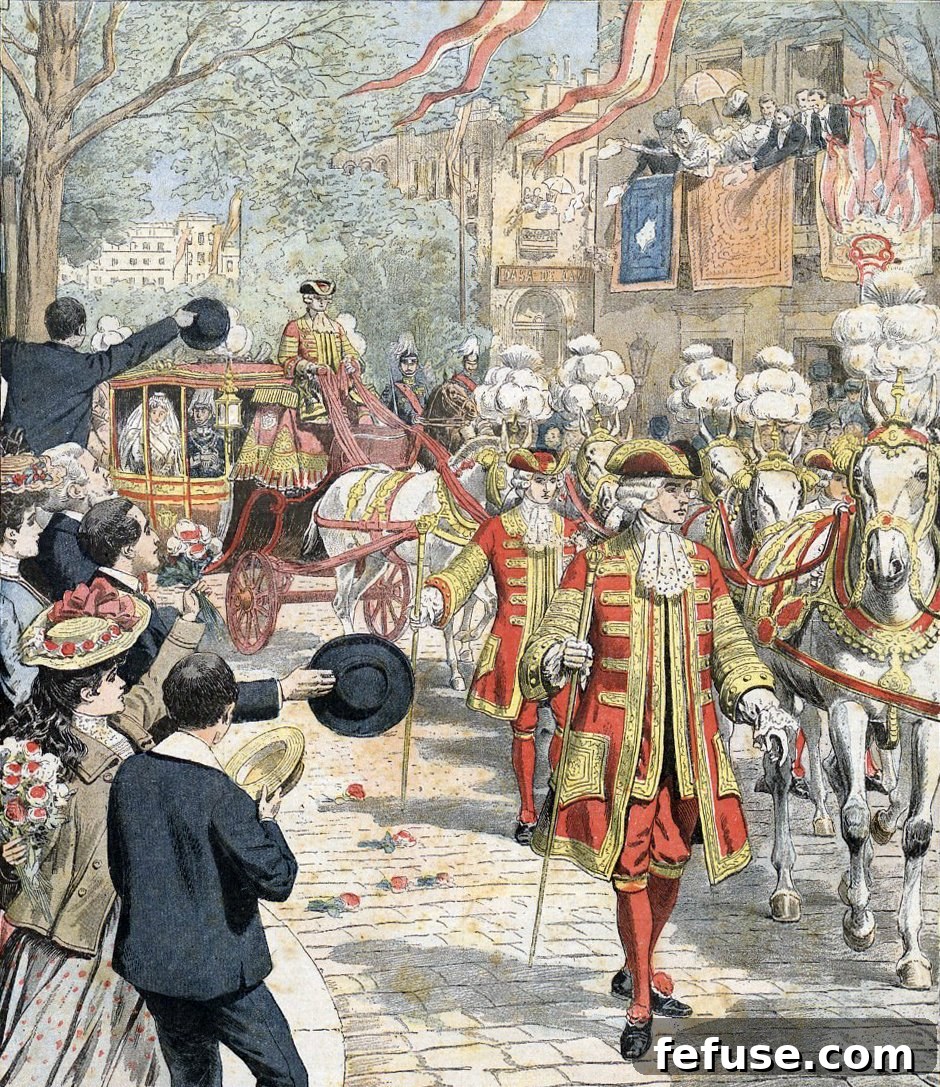
Emerging from the church, the jubilant King and Queen, along with their families, stepped back into the bright Madrid sunshine. A triumphant cacophony of church bells rang out across the city, punctuated by celebratory cannon fire. Alfonso and Ena ascended into the resplendent crown coach, leading a truly remarkable royal procession. Directly behind them followed a gold-paneled coach, kept traditionally empty, a symbolic gesture. This was followed by more than fifteen additional carriages and coaches, each carrying esteemed royal dignitaries and family members. Once this glittering assemblage was seated within their luxurious vehicles, the magnificent procession, drawn by splendid horses, set off through the bustling streets of Madrid, heading towards the Royal Palace.
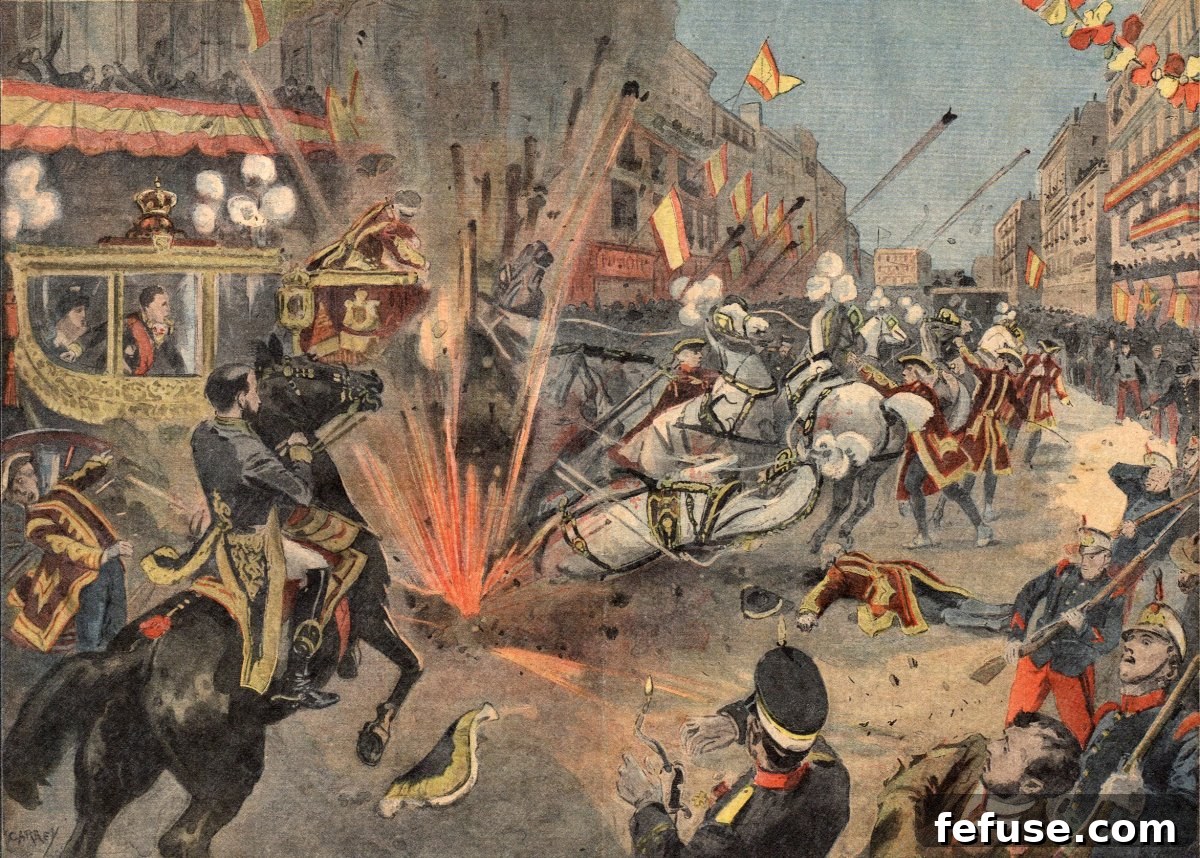
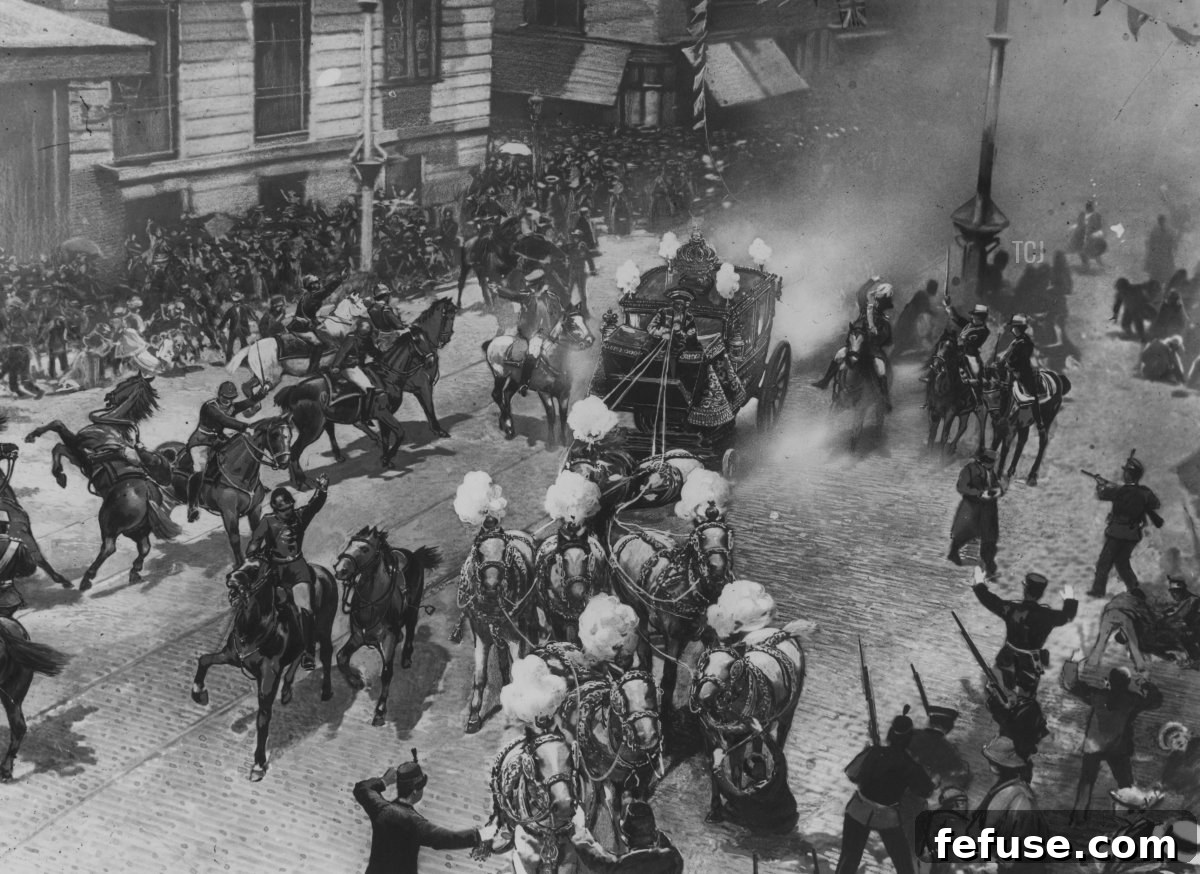
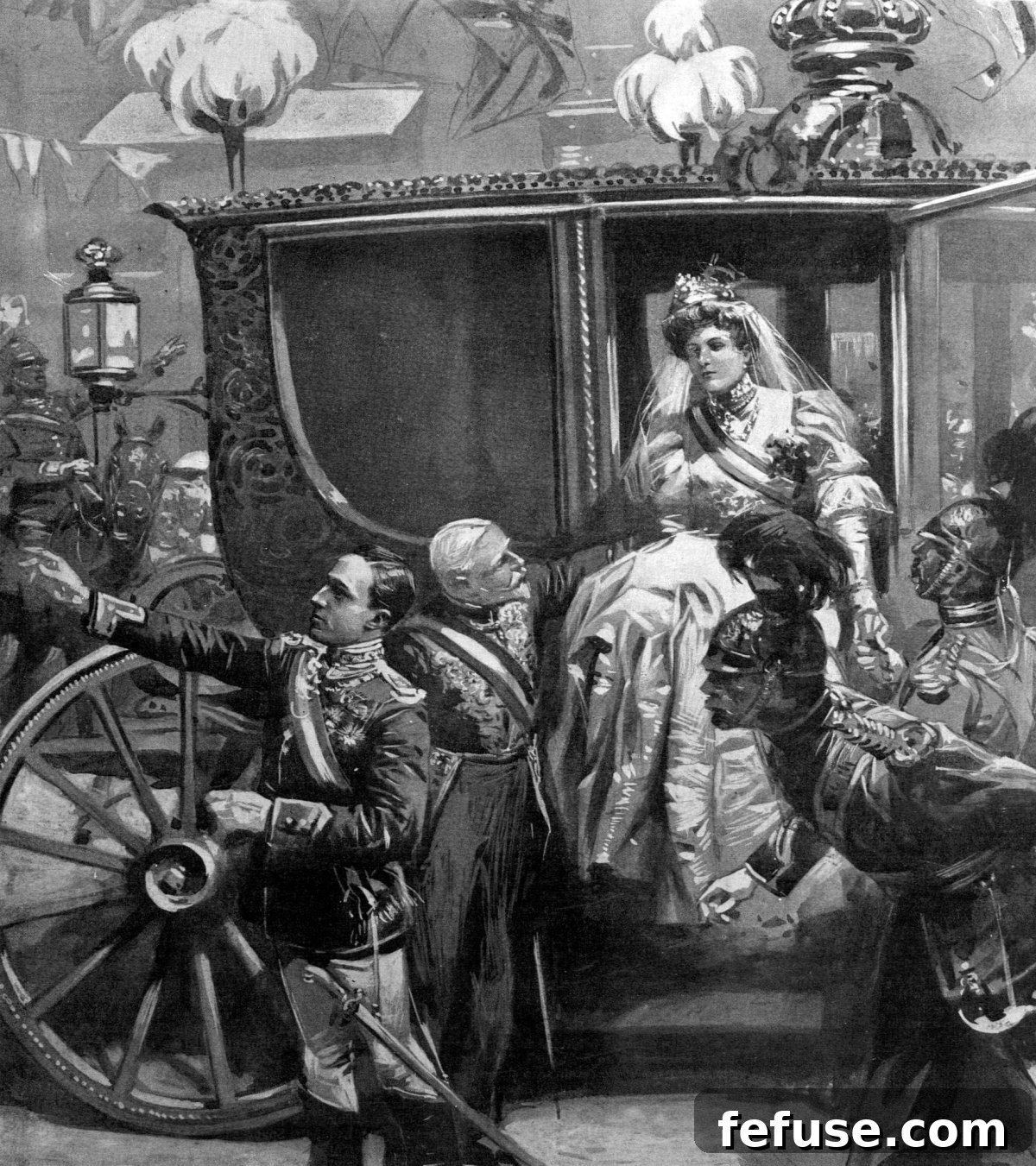
Along the Calle Mayor, one of Madrid’s principal thoroughfares, well-wishers lined the street, leaning from windows and balconies, shouting congratulations to the newlyweds. The air was thick with excitement and celebration. The procession was nearing the palace complex when, without warning, a single bouquet of flowers drifted down from a third-floor balcony of Number 88, a building of flats adjacent to the Italian embassy. And then, in an instant, the street erupted into utter chaos. A blinding flash of light consumed the scene, immediately followed by a deafening, reverberating crash. Fragments of metal, clouds of smoke, and debris enveloped the royal procession. The grand carriages teetered violently as the horses, seized by panic, plunged into a terrifying melee. The joy of the wedding day was shattered, replaced by an incomprehensible scene of horror.
Miraculous Escape and Tragic Aftermath
The seemingly innocent bouquet had concealed a deadly bomb, hurled by an anarchist directly at the royal coach carrying Alfonso and Ena. Miraculously, the explosive device narrowly missed its intended target, reportedly deflecting off an electric wire, as some witnesses later recounted. Instead, the bomb detonated among the magnificent horses pulling the coach, instantly killing several of them. The blast also claimed the lives of numerous onlookers who had been cheering from nearby balconies on the building. In the immediate pandemonium, many believed that the King and Queen themselves had perished. Yet, amidst the tragic casualties among the innocent bystanders, both Queen Ena and King Alfonso somehow emerged physically unharmed, a truly astonishing escape.
King Alfonso, seething with a furious anger, stepped down from the coach. A reporter for the Daily Telegraph documented his distraught shouts: “This is infamous. It is cowardice. If they wish to kill me, let them meet me face to face, without shedding innocent blood!” He pointed vehemently at the balcony from which the bomb had been thrown. The perpetrator, a man identified as Mateu Morral, was apprehended and tragically killed a few days later while resisting arrest. The toll on the innocent citizens of Madrid was immense and heartbreaking. Though the royals had miraculously escaped, over 20 people were killed and more than 100 were injured. In the somber days following what should have been a joyous occasion, Alfonso spent a great deal of time visiting the wounded and viewing the bodies of the dead, offering prayers and solace to those affected by the horrific attack.
Resilience Amidst the Bloodshed: A Queen’s First Ordeal
A Blood-Stained Tiara
As Queen Ena was helped out of the shattered carriage, King Alfonso reportedly tried to shield her face from the gruesome carnage that surrounded them. Her magnificent diamond wedding tiara, “La Buena,” still sparkled defiantly atop her head, a stark contrast to the horrific scene. Both their clothes were streaked with the blood of those injured in the blast, a chilling testament to their proximity to the tragedy. A piece of shrapnel was said to have shattered the coach window, striking Alfonso’s shoulder and damaging one of the links of his prestigious collar of the Order of the Golden Fleece. Swiftly, the second carriage, the one traditionally kept empty, was brought forward, allowing the King and Queen to complete the remainder of their journey to the palace.
British Comfort in Crisis
As they prepared to set off once more, the shaken royal couple found themselves surrounded by members of the British diplomatic party, who had traveled from London to attend the wedding. These individuals, including the British ambassador, formed an impromptu protective escort, walking alongside the carriage for the remainder of the short, somber drive. A correspondent from The Times poignantly reflected, “It may be imagined with what feelings the Queen saw the faces of old friends and the uniforms of the old country.” Among this comforting entourage were members of the Cochrane family, who had been close companions to Princess Beatrice and her children for many years. Ena later confided in Minnie Cochrane, Beatrice’s lady-in-waiting, how profoundly comforted she had been to see Minnie’s brother walking beside her in the immediate aftermath of the horrific incident, a small beacon of familiarity amidst overwhelming terror.
Echoes of a Violent Era: The Legacy of a Cursed Debut
Shock and Somber Reflections
Inside the palace, the King and Queen were immediately enveloped by their anxious families and friends. Queen Ena, though outwardly composed, was clearly in profound shock, repeatedly murmuring the chilling phrase, “I saw a man without any legs,” as others desperately tried to soothe her. Rumors about the intended target of the bombing immediately began to circulate. In the initial confusion, some speculated that the explosive might have been meant for Grand Duke Vladimir Alexandrovich of Russia, uncle to the reigning Tsar. After all, Vladimir’s own father, Tsar Alexander II, had been assassinated in similar circumstances in 1881, and his brother, Grand Duke Sergei, had been killed by a bomb thrown at his carriage in Moscow just over a year prior, in February 1905. During the somber wedding reception held at the palace, where no one felt able to eat, the Duchess of Saxe-Coburg and Gotha—daughter of Tsar Alexander II and sister to the Grand Dukes Vladimir and Sergei—was overheard sighing languidly, “I’m so very accustomed to these sorts of things,” a chilling testament to the era’s brutal realities for royalty.
A Prophetic Shadow
It quickly became clear, however, that the bomb had always been intended for King Alfonso. The wedding had taken place exactly one year to the day after the failed attempt on Alfonso’s life in Paris, a grim anniversary. It was said that several warnings had been issued about possible further attacks coordinated with the wedding celebrations. Sadly, these warnings may have been tragically dismissed, partly due to the increasing commonality of such assassination attempts against European royalty at the time. Indeed, this would prove to be far from the last brush with violence for this particular group of illustrious royals. The crowd that had gathered around Alfonso and Ena as they arrived at the palace, shaken but alive, included Prince Luis Filipe, heir to the throne of Portugal, and Archduke Franz Ferdinand, heir to the Habsburg thrones—both of whom were subsequently murdered in their vehicles while traveling through Lisbon and Sarajevo, respectively, within a few short years. The Madrid bombing served as a stark and terrifying prelude to an era of unprecedented political violence.
Beyond the Horror: The Enduring Legacy of Queen Ena and Her Tiara
A Life Marked by Struggle
The bomb attack on their wedding day was, tragically, far from an auspicious beginning for Queen Ena and King Alfonso XIII. The couple went on to have seven children together, but their family life was profoundly marred by Alfonso’s frequent infidelities and, more significantly, by the hemophilia that Ena did indeed pass on to two of their sons, leading to immense suffering and loss. The tumultuous political climate eventually caught up with the Spanish monarchy, and Alfonso lost his throne in 1931, leading to the couple’s separation in exile. Ena, resilient and dignified, purchased a home in Switzerland, where she lived for much of the remainder of her long life, maintaining her role as the matriarch of the exiled family.
Though she did not live long enough to witness it, her grandson, King Juan Carlos, was eventually restored to the Spanish throne, fulfilling her lifelong hopes. Before her passing, Queen Ena left a magnificent and invaluable gift to the current Spanish royal family: a precious jewelry bequest known as the joyas de pasar. These designated jewels are traditionally worn by the reigning Queen or Queen Consort of Spain, ensuring their historical continuity.
“La Buena” Today: A Symbol of Continuity
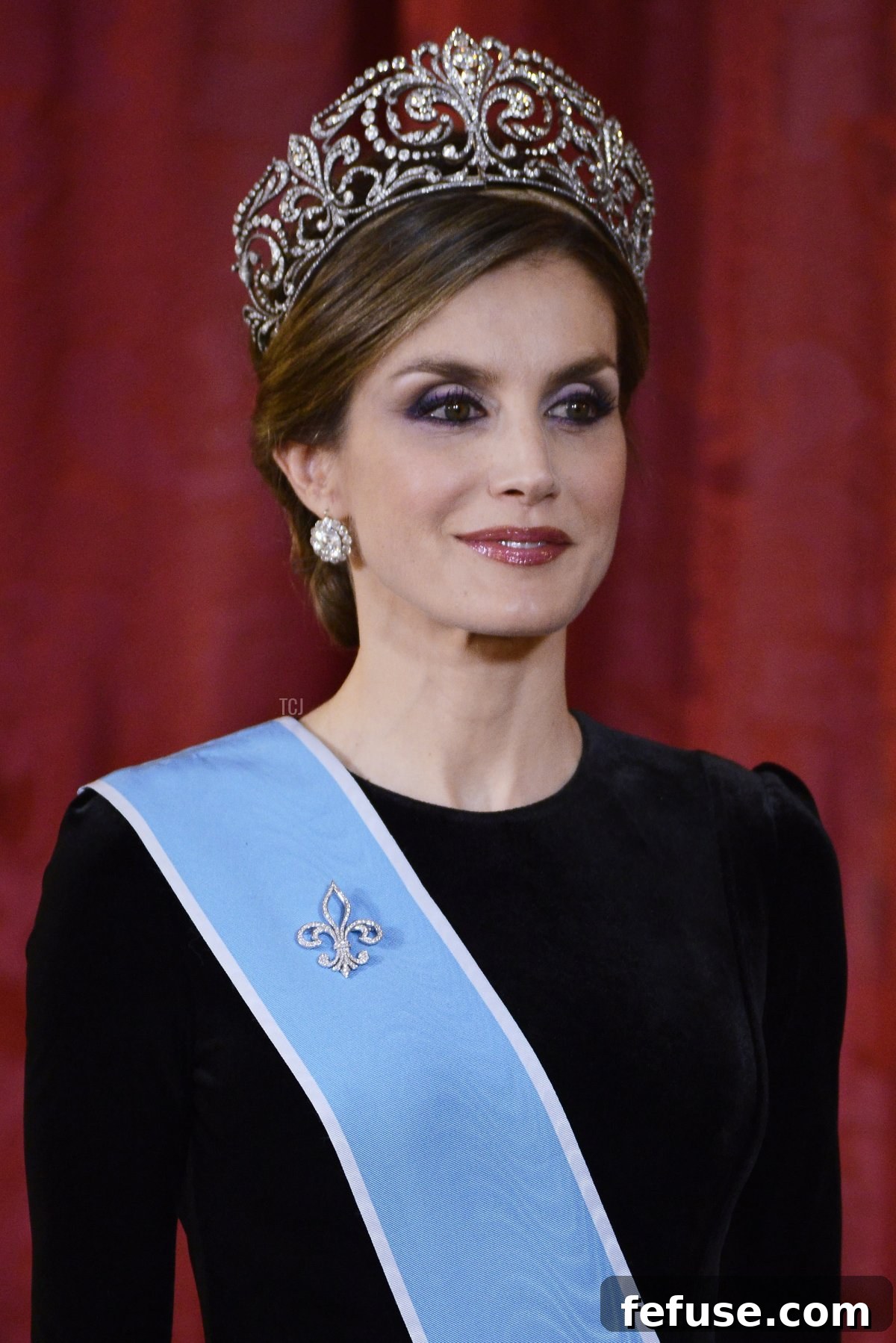
This esteemed collection includes none other than “La Buena” – the very tiara that endured such a terrifying debut in 1906. Today, this magnificent diamond diadem, once a silent witness to unthinkable horror, continues to grace grand occasions, worn by Queen Letizia, the elegant wife of Ena’s great-grandson, King Felipe VI of Spain. Its journey from a symbol of hope and love to a silent participant in a brutal attack, and finally to an enduring emblem of royal heritage, speaks volumes about the resilience of the Spanish monarchy and the fascinating, often perilous, history of its most cherished jewels. The “Good One” tiara stands as a glittering testament to a queen’s fortitude and the enduring power of history.