
Queen Victoria’s Wedding: A Diamond Affair Without a Tiara
The marriage of Queen Victoria to Prince Albert of Saxe-Coburg and Gotha on February 10, 1840, was a landmark event that captivated a nation and set numerous trends still observed today. While many royal brides are synonymous with glittering tiaras, Victoria’s wedding was notable for the surprising absence of such an ornament. Instead, her bridal ensemble was adorned with a unique blend of personal sentiment, patriotic craftsmanship, and exquisite diamonds, making it a truly exceptional moment in royal history. This article delves into the fascinating jewels and sartorial choices that defined Queen Victoria’s wedding day, exploring the intricate details of her gown, the symbolic significance of her accessories, and the enduring legacy of these cherished royal treasures.
The Royal Union: Victoria and Albert’s Grand Day
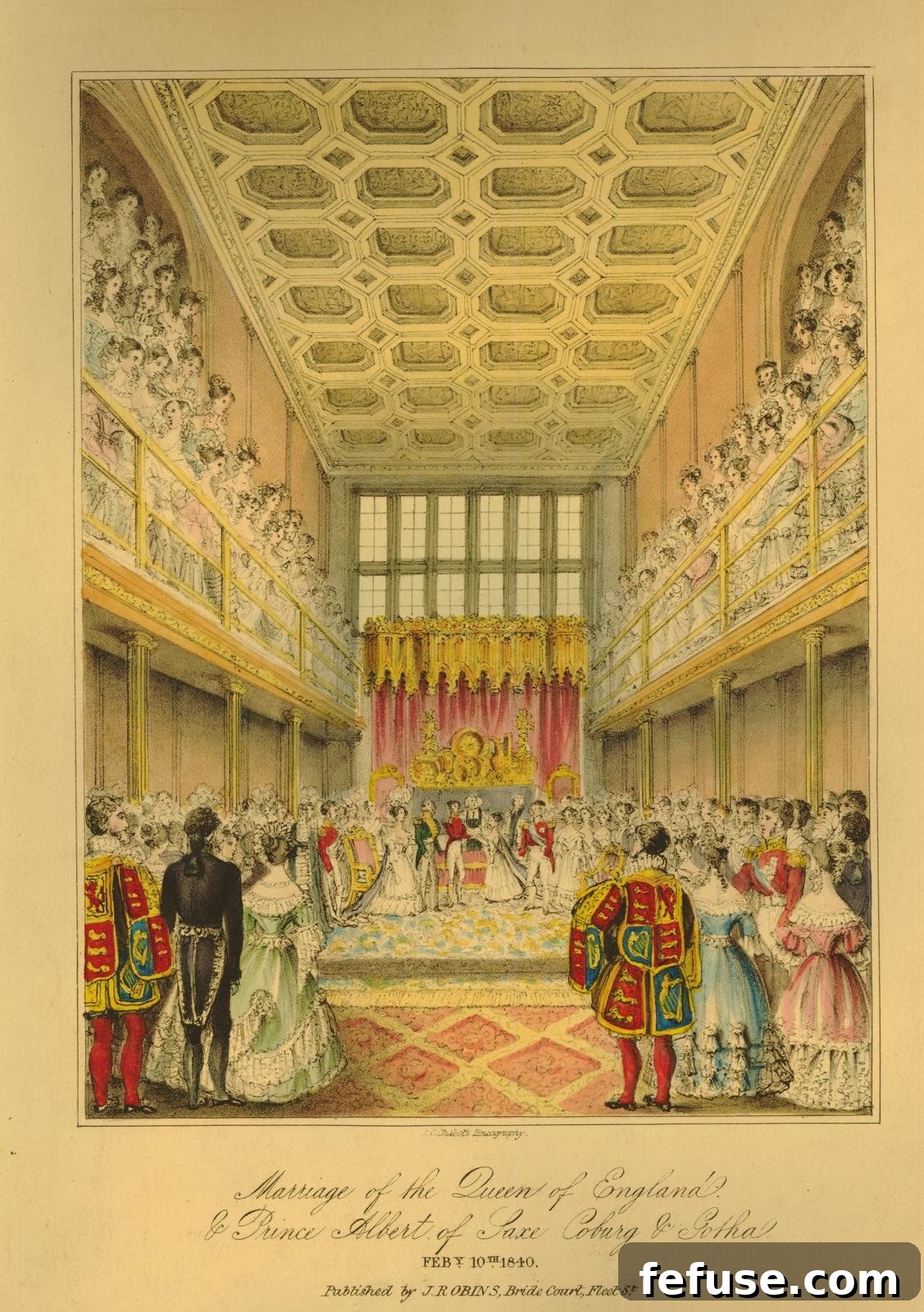
On that crisp February morning in 1840, the eyes of the British Empire were firmly fixed on St. James’s Palace in London. The young Queen Victoria, who had ascended to the throne just three years prior, was about to marry her first cousin, Prince Albert. Their union, both a love match and a strategic alliance, promised stability and prosperity for the burgeoning empire. Victoria’s mother, the Duchess of Kent, and Albert’s father, the Duke of Saxe-Coburg and Gotha, were siblings, making the cousins’ bond exceptionally close. Despite her status as a reigning monarch, Queen Victoria chose to include the traditional vow to “obey” her husband, a decision that garnered significant public attention and praise at the time, underscoring her commitment to both her personal life and her role as queen.
An Illustrious Guest List: Witnessing History
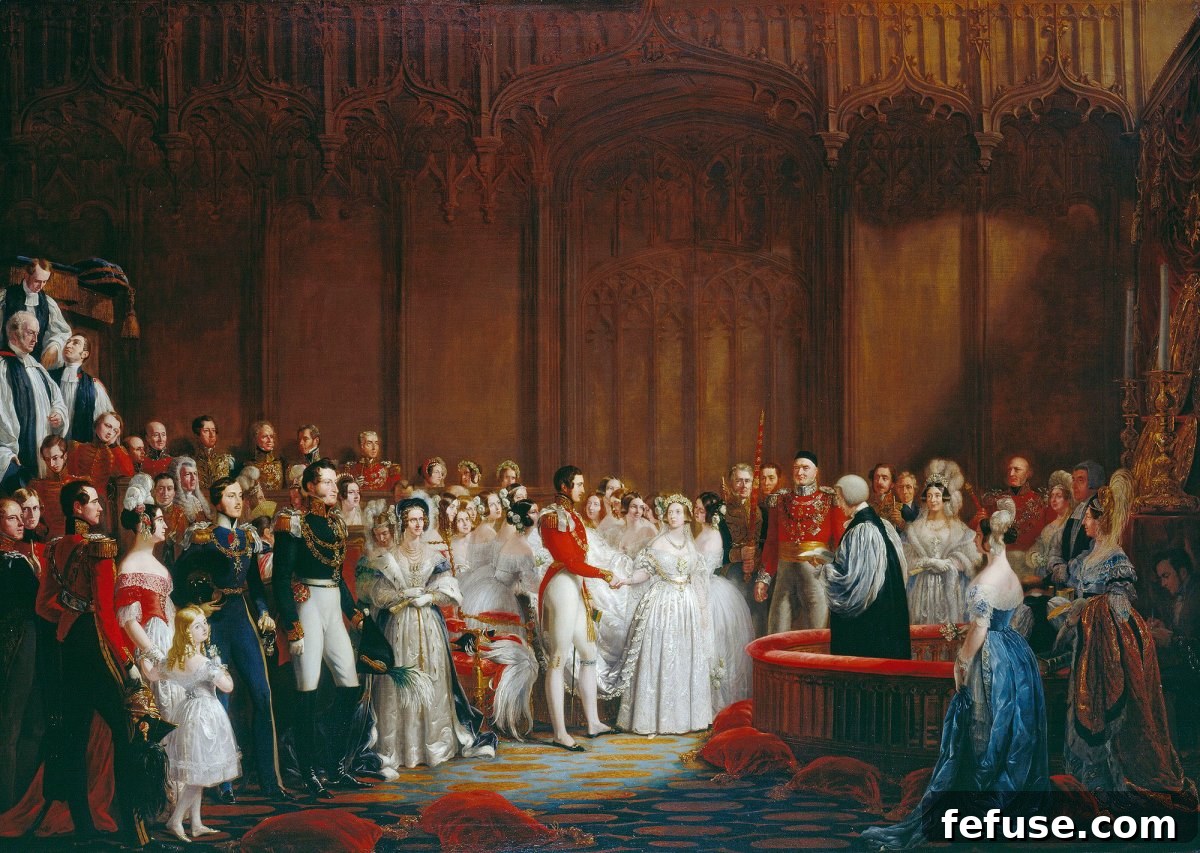
The intimate Chapel Royal at St. James’s Palace was filled to capacity with an assembly of the era’s most influential figures. Royalty from across Europe, high-ranking government officials, and foreign dignitaries gathered to witness the momentous occasion. Among the esteemed guests were Queen Adelaide, the dignified widow of King William IV, and numerous members of Victoria’s extended family. These included her beloved aunts and uncles, such as the Duke and Duchess of Cambridge, the Duke of Sussex, and Princess Augusta Sophia. The presence of such a distinguished congregation highlighted the political and social importance of this royal marriage, creating an atmosphere of grandeur and expectation for the young queen and her prince consort.
The Iconic White Wedding Gown: A Revolution in Bridal Fashion
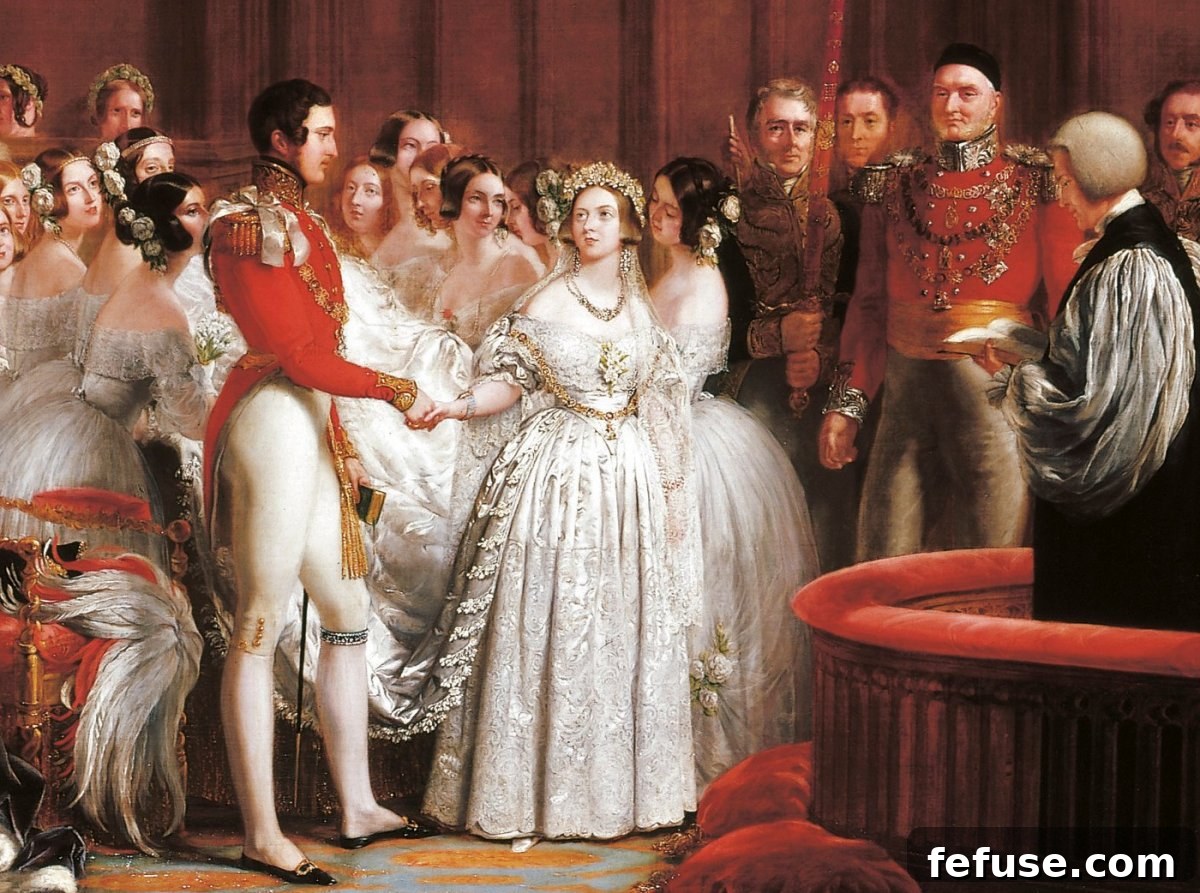
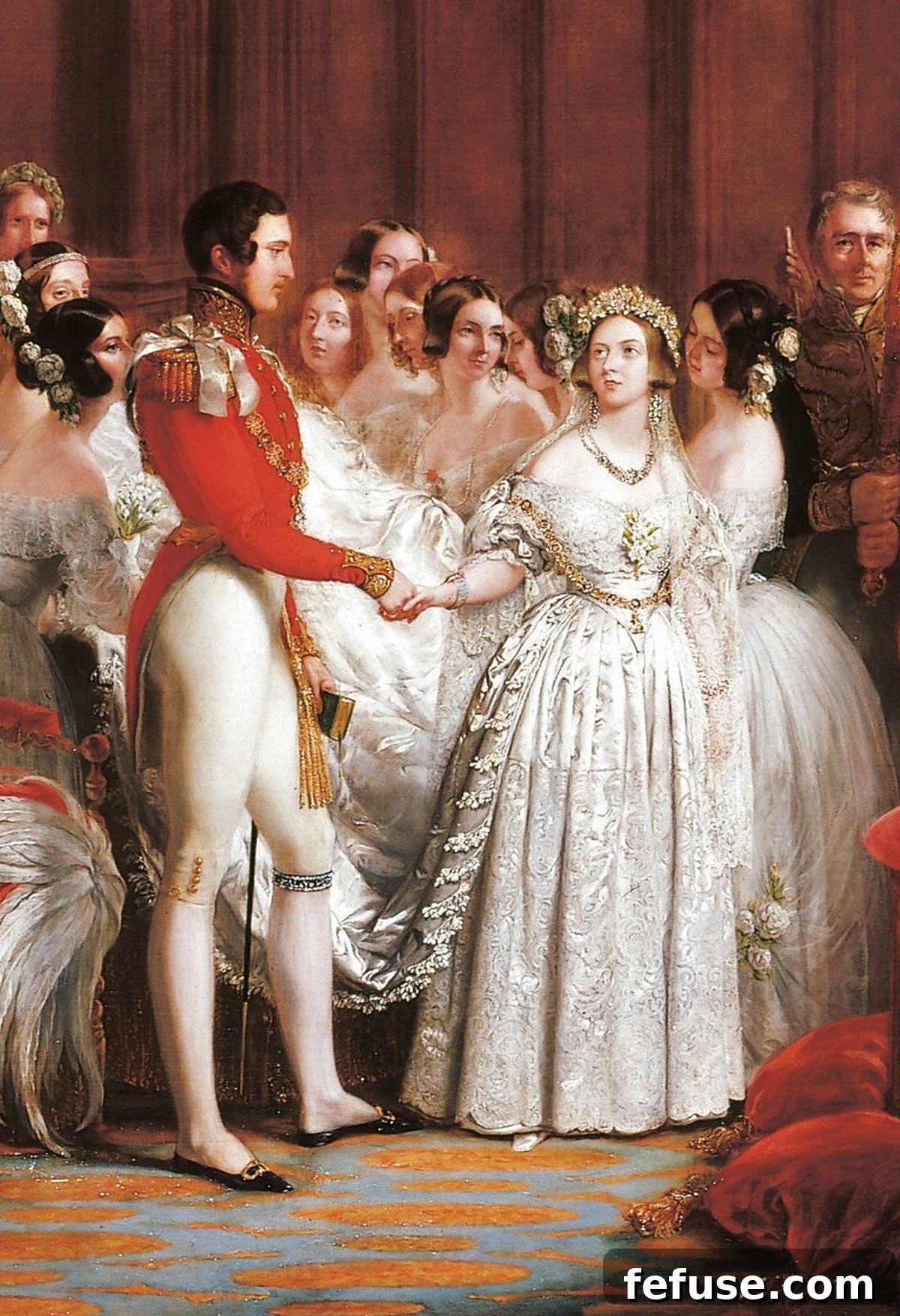
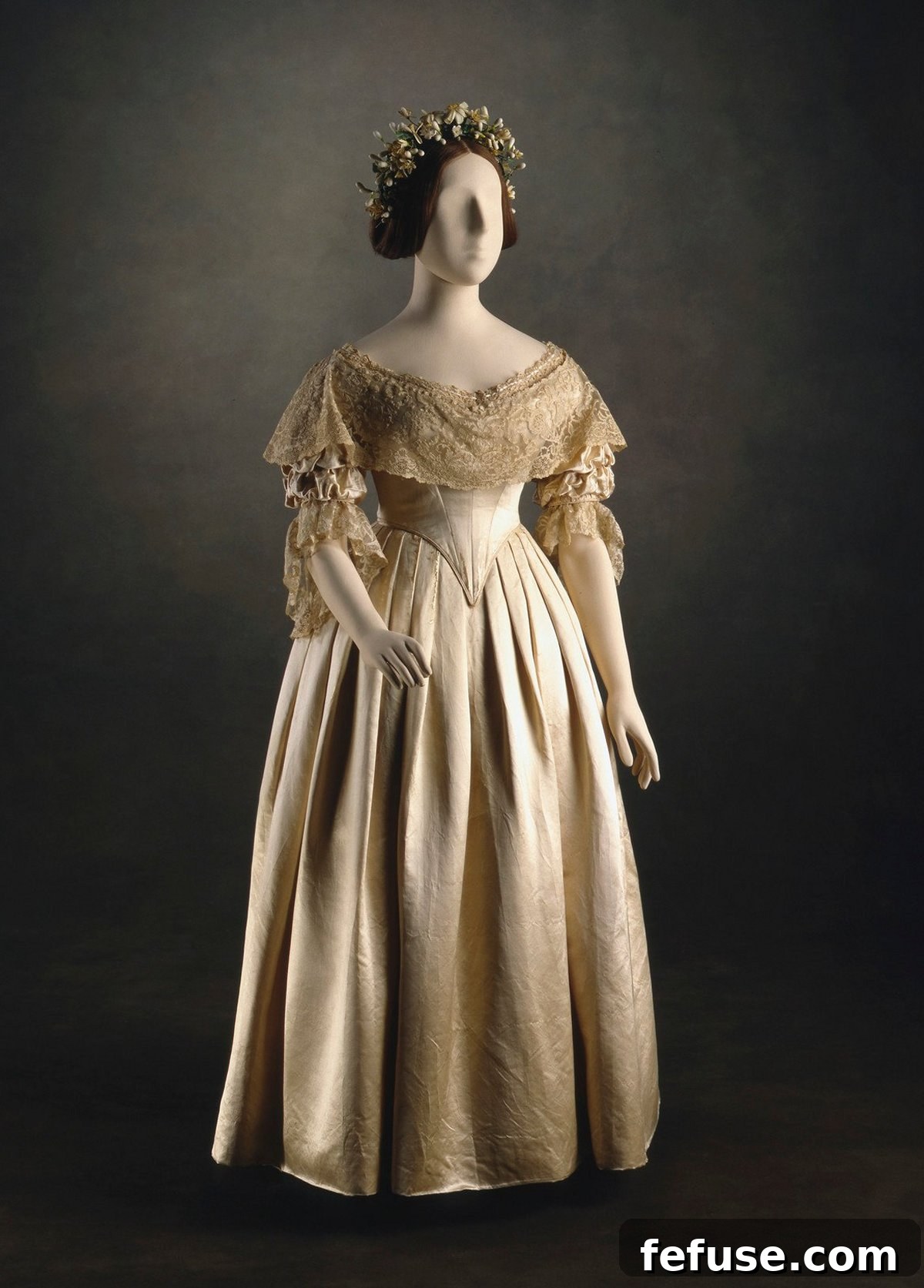
Queen Victoria’s wedding dress was more than just a garment; it was a statement that would forever change bridal fashion. Unlike many royal brides who opted for richly colored robes, Victoria chose a striking white satin gown, a decision that popularized white as the traditional color for weddings. Crafted by Mrs. Mary Bettans, Victoria’s trusted dressmaker from Jermyn Street, London, the dress was a masterpiece of Victorian design and craftsmanship. Contemporary reports, widely syndicated across prominent British newspapers like the Observer, described the gown in lavish detail: “of white satin, with a very deep trimming of Honiton lace, in design similar to that of the veil. The body and sleeves were richly trimmed with the same material to correspond. The train was of white satin, and was also lined with white satin, trimmed with orange blossoms.” To complete her royal appearance, the collar and star of the prestigious Order of the Garter were elegantly fastened to the bodice of the gown, symbolizing her dual role as both a bride and the sovereign.
Patriotism in Fabric: The Story of Spitalfields Silk and Honiton Lace
Beyond its aesthetic appeal, Victoria’s wedding dress carried a profound message of national pride and economic support. The exquisite white satin used for the gown was meticulously manufactured in Spitalfields, a historic textile district in London, showcasing British industry. Equally significant was her choice of lace. At a time when Belgian, particularly Brussels, lace dominated European fashion, Victoria deliberately opted for Honiton lace from Devon. This decision was a direct and powerful endorsement of the struggling British lace industry. Contemporary accounts reveal the incredible effort involved: “The lace was really worked at the village of Beer, which is situated near the sea coast, about ten miles from Honiton. It was executed under the direction of Miss Bidney, a native of the village, who went from London, at the command of Her Majesty, for the express purpose of superintending the work. More than two hundred persons were employed upon it from March to November during the past year.” The Royal Collection notes explicitly that Victoria’s patronage “revived the flagging lace industry in Honiton, Devon,” injecting much-needed life into the local economy. Victoria herself was particularly proud of the lace flounce gracing the gown’s bodice. Press reports emphasized its unparalleled quality and unique design: “The flounce’s lace measured four yards and is three-quarters of a yard in depth. The pattern is a rich and exquisitely tasteful design, drawn expressly for the purpose, and surpasses anything that has ever been executed either in England or in Brussels. So anxious was the manufacturer that Her Majesty should have a dress perfectly unique that she has since the completion of the lace destroyed all the designs.” This meticulous attention to detail ensured that Victoria’s bridal ensemble was truly one-of-a-kind, celebrating British artistry and supporting its skilled workers.
The Exquisite Wedding Veil: A Symbol of Purity and Craftsmanship
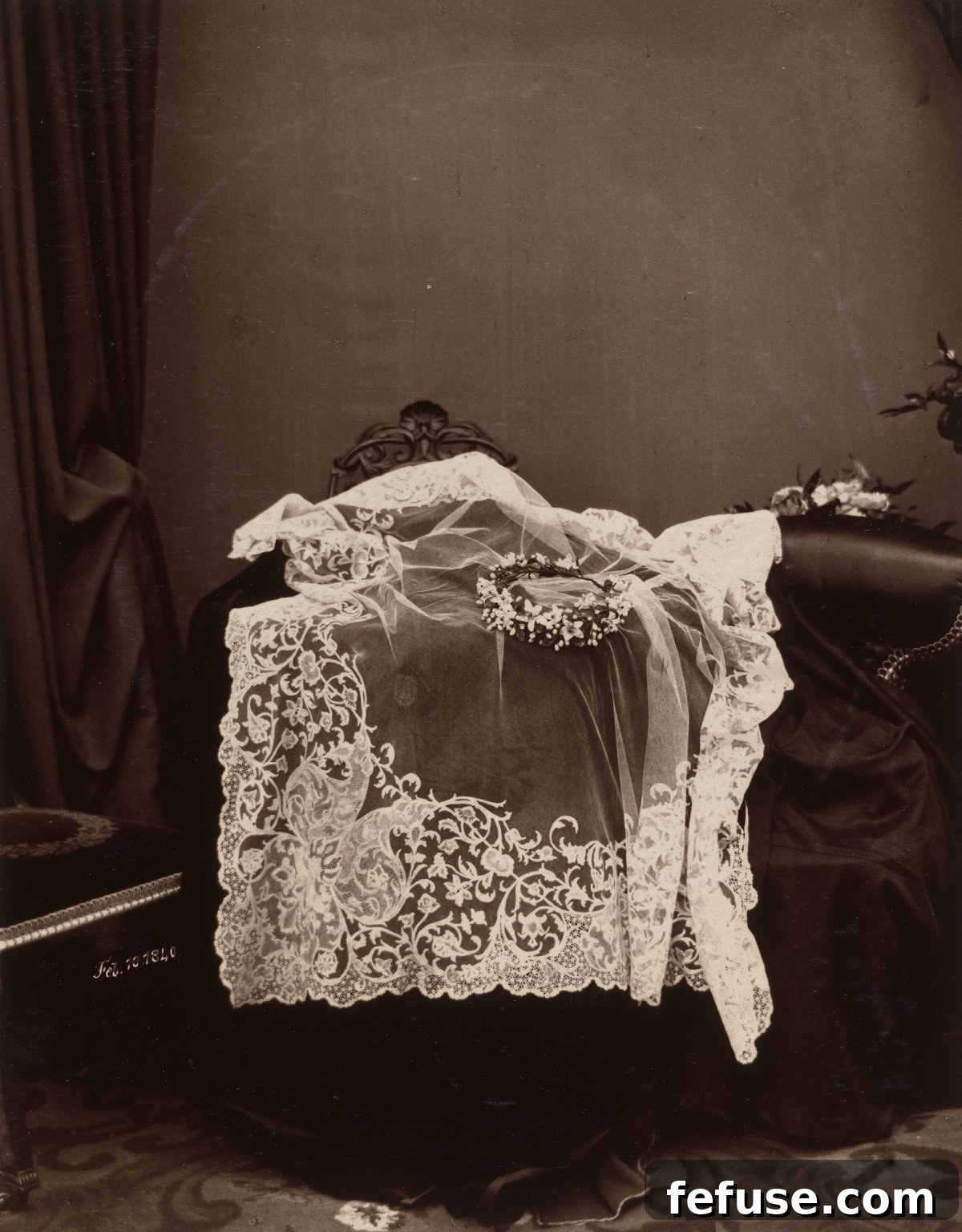
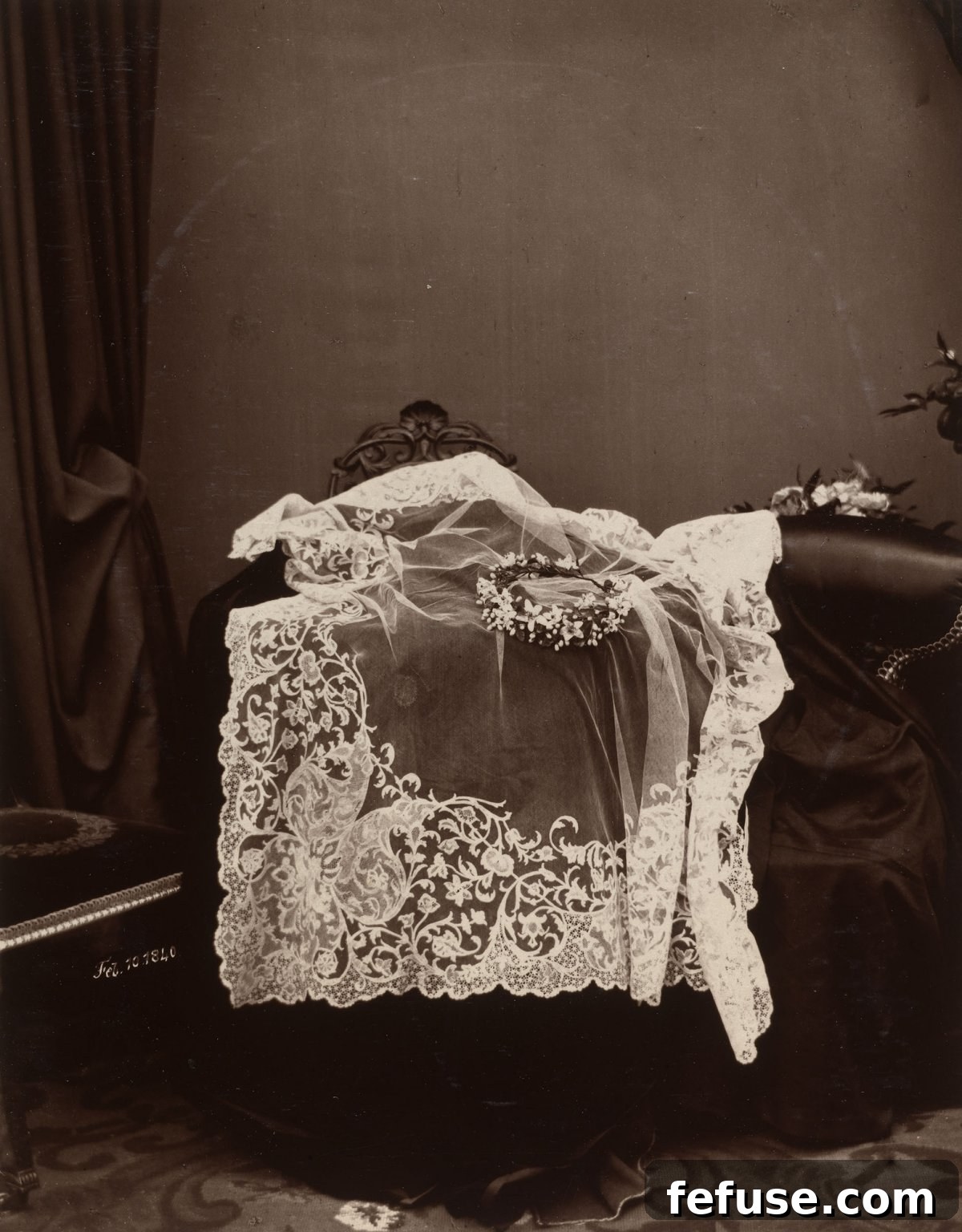
Complementing her magnificent gown, Queen Victoria’s wedding veil was also crafted from the same unique Honiton lace, mirroring the intricate design of the flounce. This delicate accessory was substantial in size, with contemporary papers reporting it to be “a yard and a half square.” The creation of this intricate veil was a labor-intensive process, providing employment for local artisans. It “afforded employment to the poor lace-workers for more than six weeks,” highlighting the economic benefit Victoria’s choices brought to the region. The veil, a symbol of purity and innocence, beautifully framed the young queen’s face. Its enduring significance is captured in a poignant photograph, taken around 1890 for Victoria’s personal collection, where it is pictured decades after her wedding, still decorated with the symbolic orange blossoms.
No Tiara, But a Wreath of Fresh Orange Blossoms: A New Trend Set by the Queen
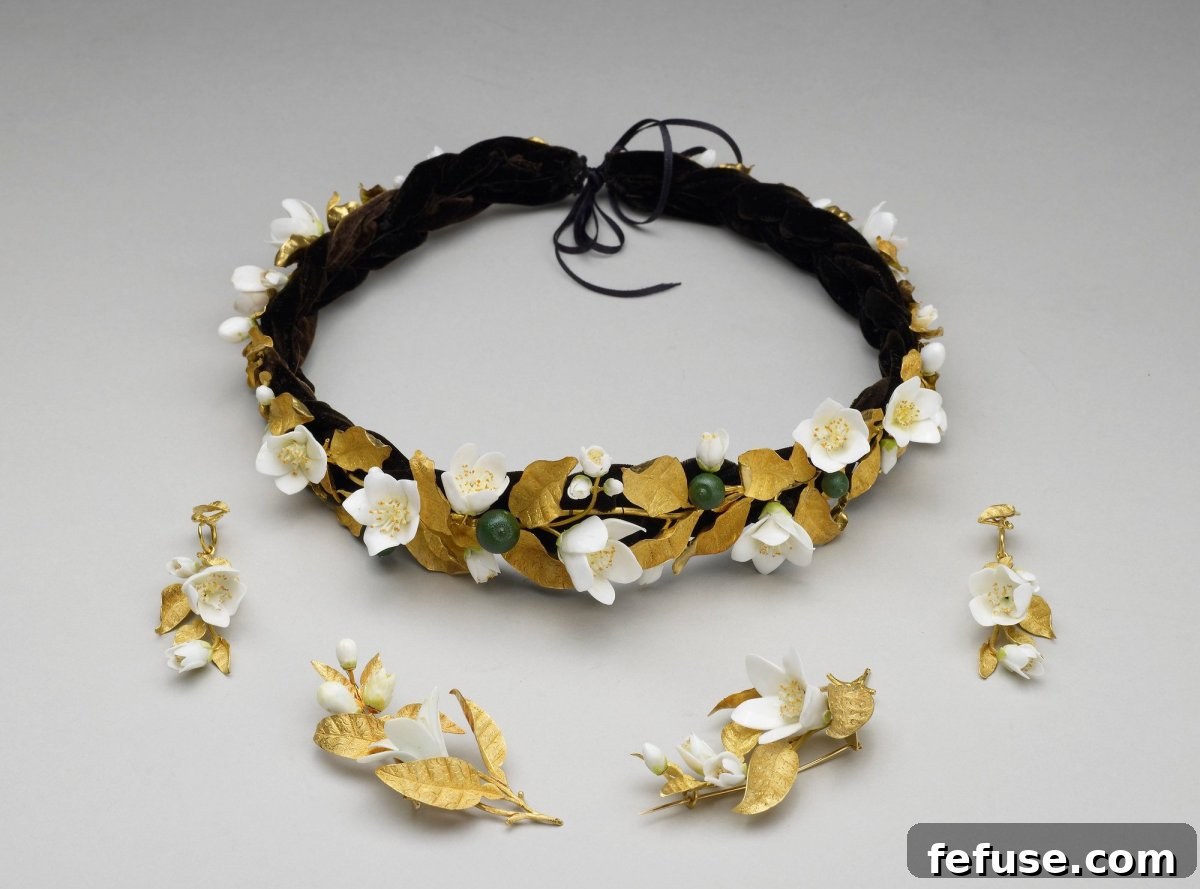
Perhaps one of the most distinctive aspects of Queen Victoria’s bridal attire was her decision not to wear a tiara, a traditional embellishment for royal brides. While many of her wedding guests, as news reports noted, arrived with “headdresses of the ladies were most profusely studded with jewels,” Victoria chose a simpler, yet profoundly symbolic, headpiece. Her veil was elegantly secured with a wreath of fresh orange blossoms, with additional blossoms pinned to her gown. This choice was not merely an aesthetic one; orange blossoms traditionally symbolize fertility and eternal love. Victoria’s embrace of this natural motif quickly sparked a fashion trend, making jewelry featuring orange blossom designs highly sought after. Prince Albert, ever attentive to his beloved wife’s preferences, further cemented this trend. He had already gifted her an orange blossom brooch for their engagement in 1839. Over the years, he continued to add to this collection, creating a magnificent orange blossom parure. In December 1845, he presented her with a second brooch and a pair of earrings. As a poignant anniversary gift in February 1846, he completed the set with a matching headpiece. This exquisite parure featured delicate porcelain orange blossoms and intricate gold leaves. The bandeau of the headpiece uniquely incorporated four round enamel oranges, symbolizing their four children born at that time: Vicky, Bertie, Alice, and Affie. Victoria, deeply sentimental, would faithfully wear this cherished orange blossom jewelry every year on their wedding anniversary, turning it into a beautiful personal tradition.
The Jewels of the Day: Turkish Diamonds and Albert’s Sapphire Brooch
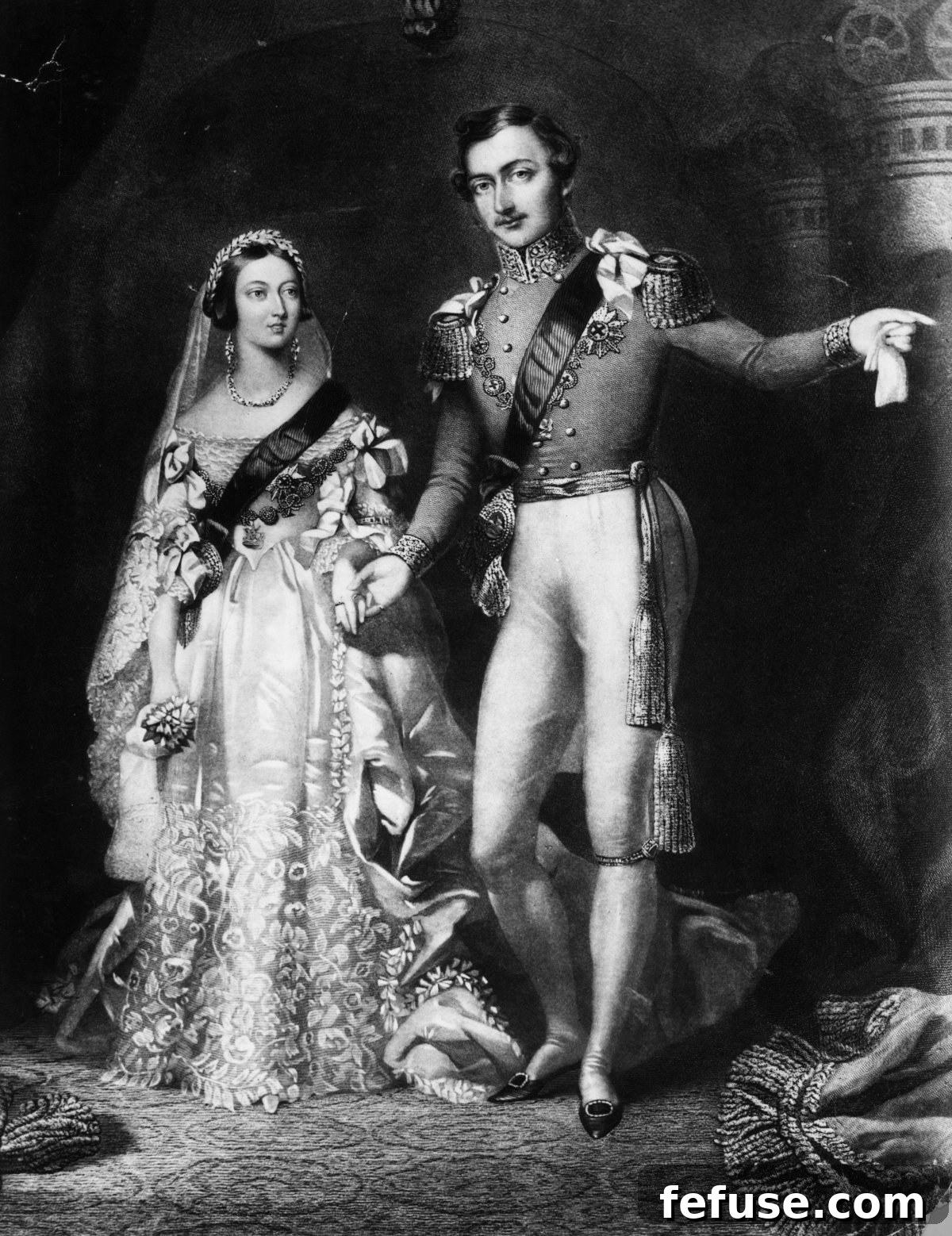
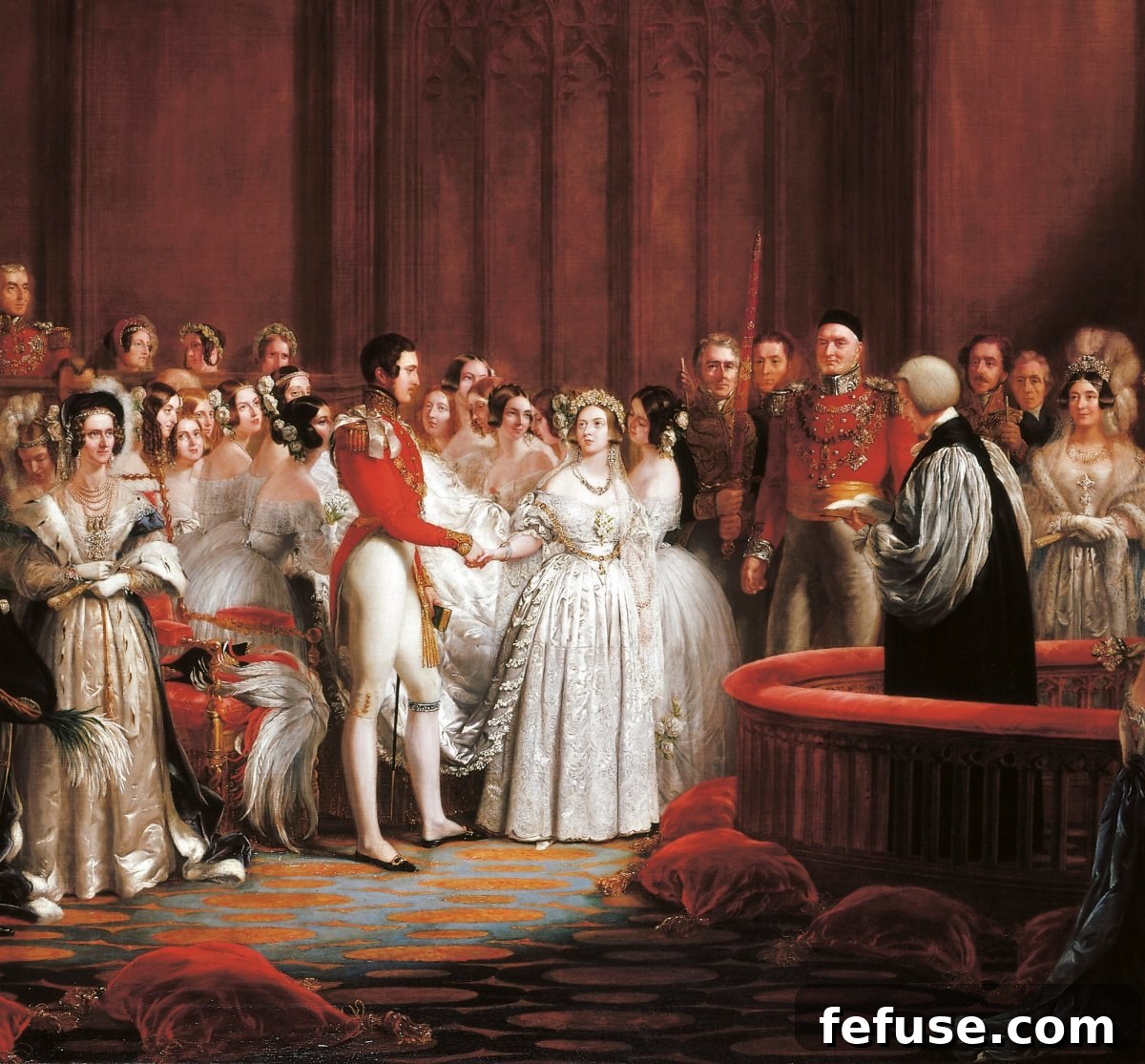
While photography was not yet a widely accessible technology in 1840, artists diligently captured the royal wedding through paintings and illustrations. These historical artworks, though varying in their accuracy, offer glimpses into Victoria’s wedding day jewels. For instance, some stylized illustrations might replace her actual orange blossom wreath with a more conventional laurel wreath. However, these depictions consistently feature the two primary diamond jewels Victoria wore for the ceremony: a magnificent necklace and a pair of matching earrings. These stunning pieces, known as the Turkish Diamonds, were a diplomatic gift from the Sultan of Turkey in 1838, the year of her coronation. Expertly crafted by the renowned jewelers Rundell & Bridge, both the necklace and earrings prominently featured intricate diamond rosettes in their design, adding a regal sparkle to her bridal ensemble. This suite represented a significant part of her coronation year gifts and held both personal and geopolitical importance.

Immortalizing the Moment: Winterhalter’s Portrait and the Brooch Controversy
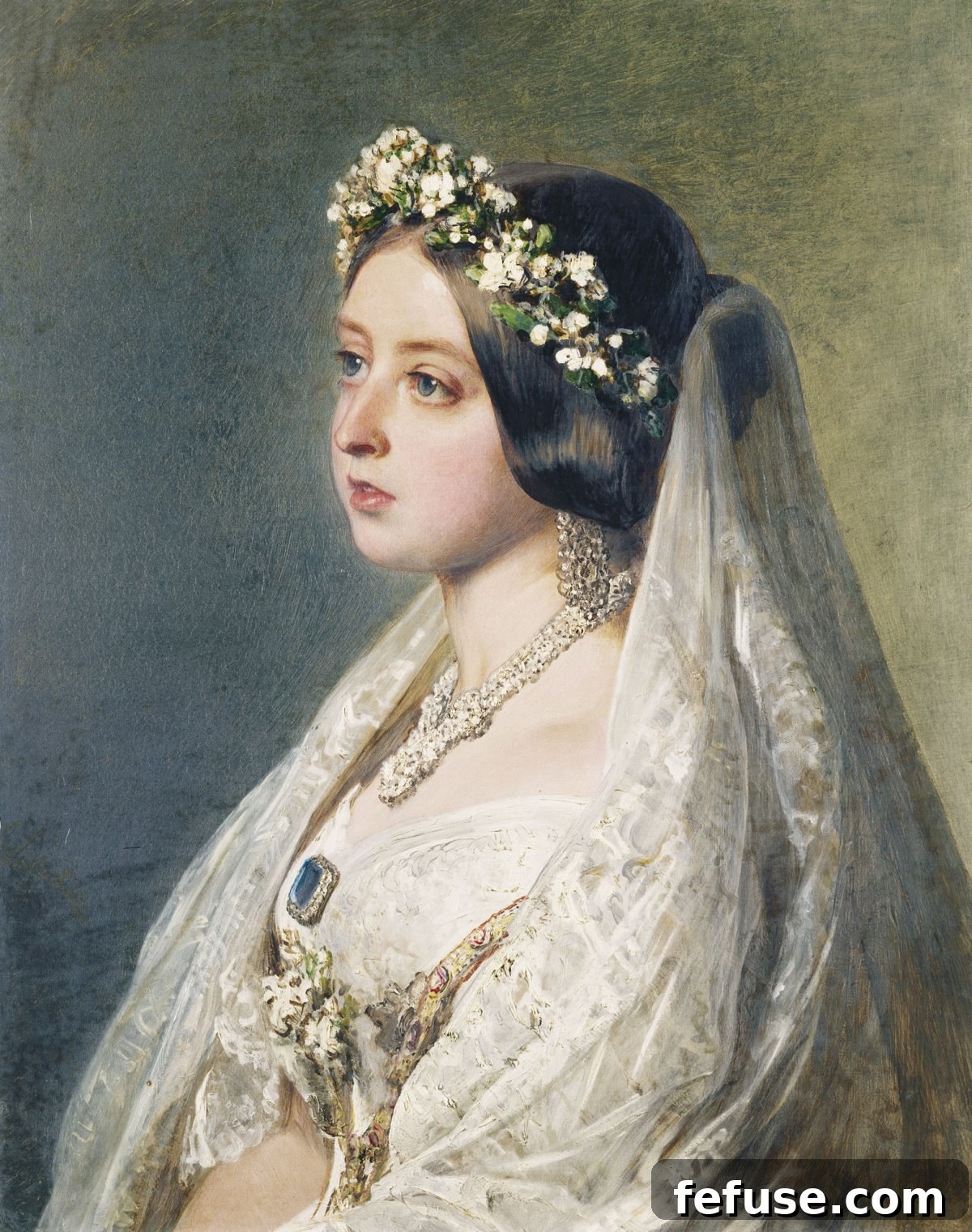
Seven years after her joyous wedding, Queen Victoria commissioned a special portrait from her favorite court artist, Franz Xaver Winterhalter, as a heartfelt anniversary gift for Prince Albert. Completed by February 1847, this painting depicted Victoria in her wedding attire, a sentimental gesture. She surprised Albert with the gift on February 24, and it was subsequently placed in his private dressing room at Windsor Castle. Interestingly, this 1847 portrait stands apart from contemporary paintings and illustrations of the actual wedding day due to its inclusion of a significant piece of jewelry: the diamond and sapphire cluster brooch, a cherished gift from Albert the night before their wedding. George Hayter’s famous depiction of the wedding scene conspicuously omits this brooch, showing a simple spring of orange blossoms affixed to her bodice instead. Similarly, contemporary newspaper accounts detailing Victoria’s wedding dress and jewels made no mention of the brooch. However, Victoria’s personal journal entry from her wedding night provides the definitive record: “I wore a white satin dress, with a deep flounce of Honiton lace, an imitation of an old design. My jewels were my Turkish diamond necklace & earrings & dear Albert’s beautiful sapphire brooch.” As noted by Charlotte Gere in her 2012 essay on Victoria’s jewelry, Winterhalter’s 1847 portrait served as a valuable historical correction, accurately representing the presence of Albert’s beloved sapphire brooch on her wedding day.
A Legacy of Sentiment: Re-wearing Wedding Day Elements
Queen Victoria was renowned for her deeply sentimental nature, and her wedding ensemble was far from a one-time affair. The 1847 portrait was just one instance of her incorporating elements of her bridal attire into other significant life events, extending the cherished memories of her wedding day. This practice began remarkably quickly, exactly one year after her marriage. On February 10, 1841, the couple’s first wedding anniversary, their eldest child, Princess Victoria, Princess Royal (affectionately known as Vicky), was baptized at Buckingham Palace. This combination of a family celebration and a personal milestone highlighted Victoria’s profound attachment to the symbols of her union with Albert.
The Christening of Princess Vicky: A First Anniversary Tradition
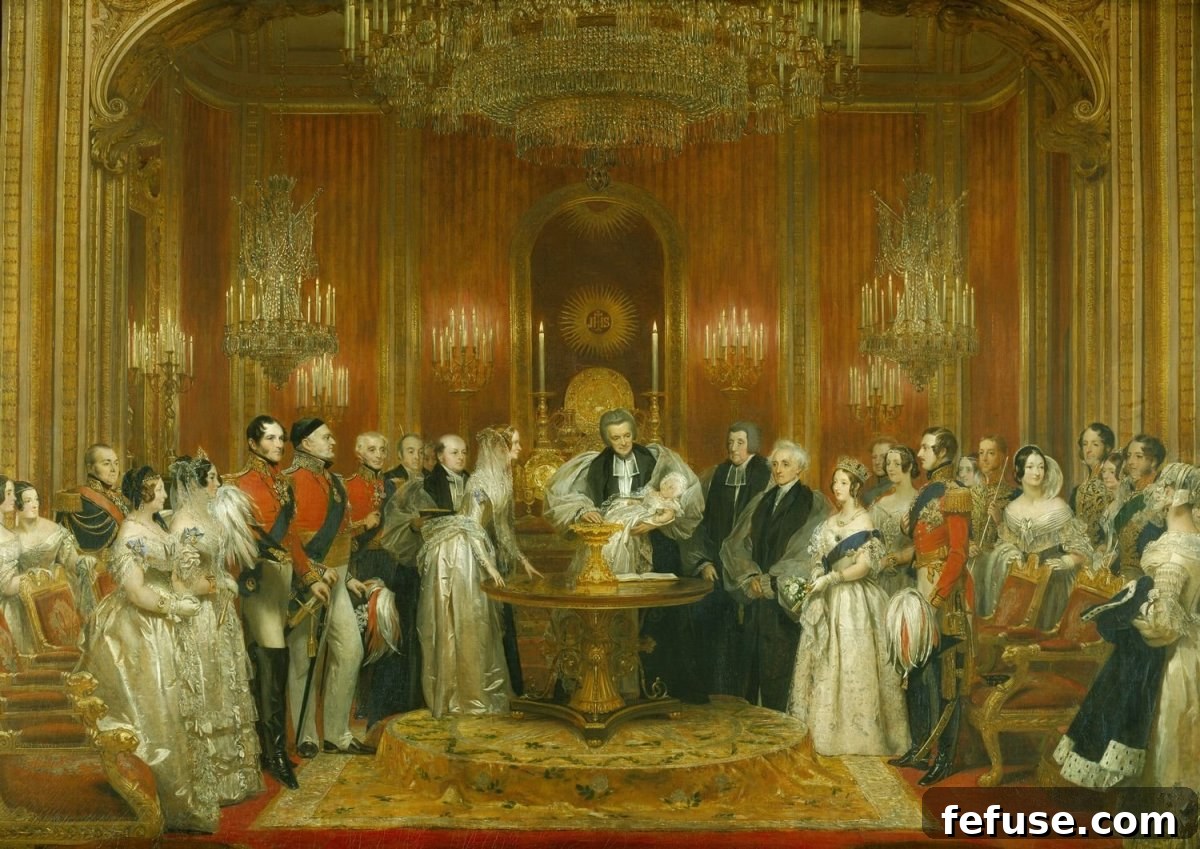
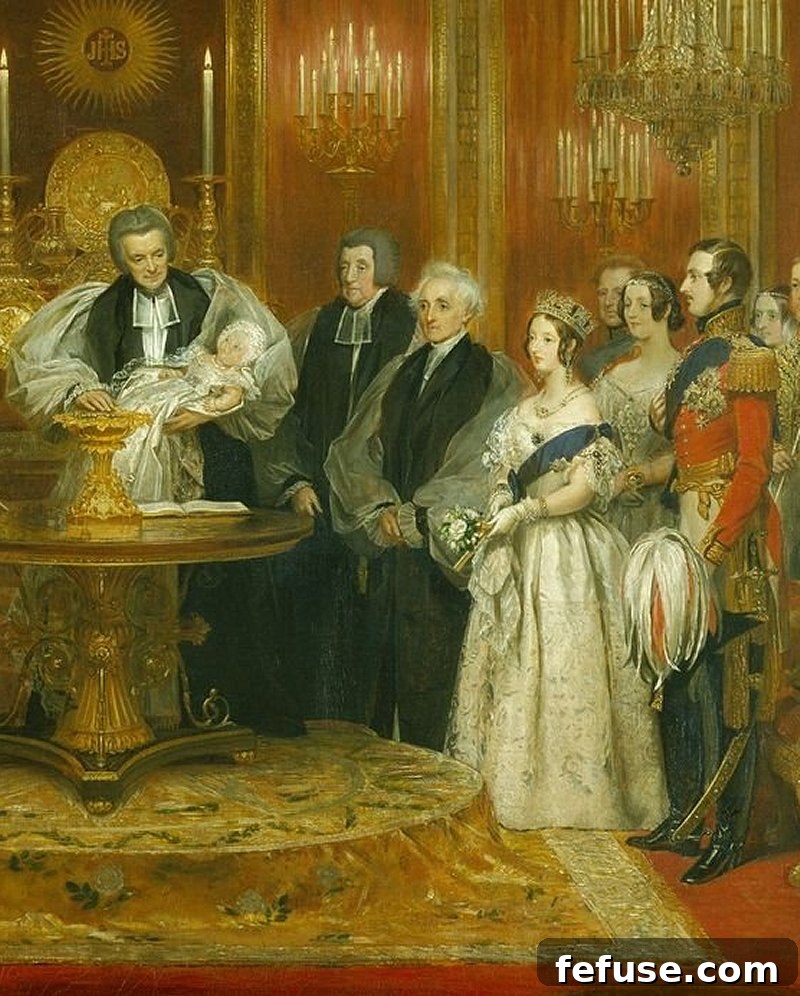
The painting by Charles Robert Leslie depicting Princess Vicky’s christening provides a vivid illustration of Queen Victoria’s sentimental traditions. In this artwork, the Queen is shown wearing several significant pieces from her royal jewelry collection. She proudly displays the Diamond Diadem, a magnificent piece originally made for her uncle, King George IV, along with the Turkish Diamonds—her wedding necklace and earrings. Critically, she also sports Prince Albert’s Brooch, cementing its place as a cherished personal treasure. Furthermore, the painting distinctly shows Victoria wearing the exquisite lace flounce from her wedding gown, carefully repurposed and attached to her dress for this important family occasion. This re-use of her bridal lace symbolized the enduring love and happiness she found in her marriage and motherhood.
Princess Vicky’s Wedding: Echoes of a Queen’s Love
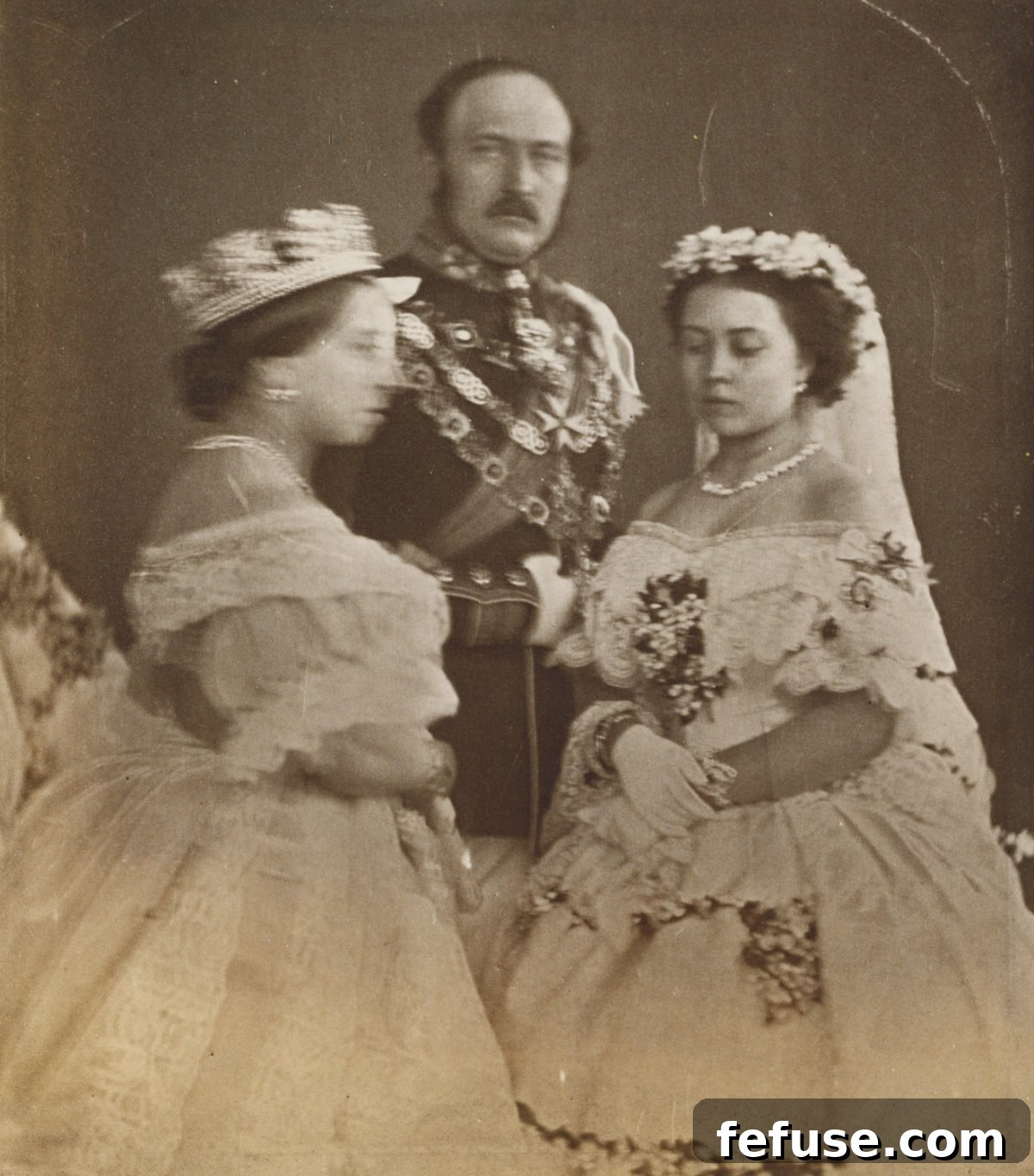
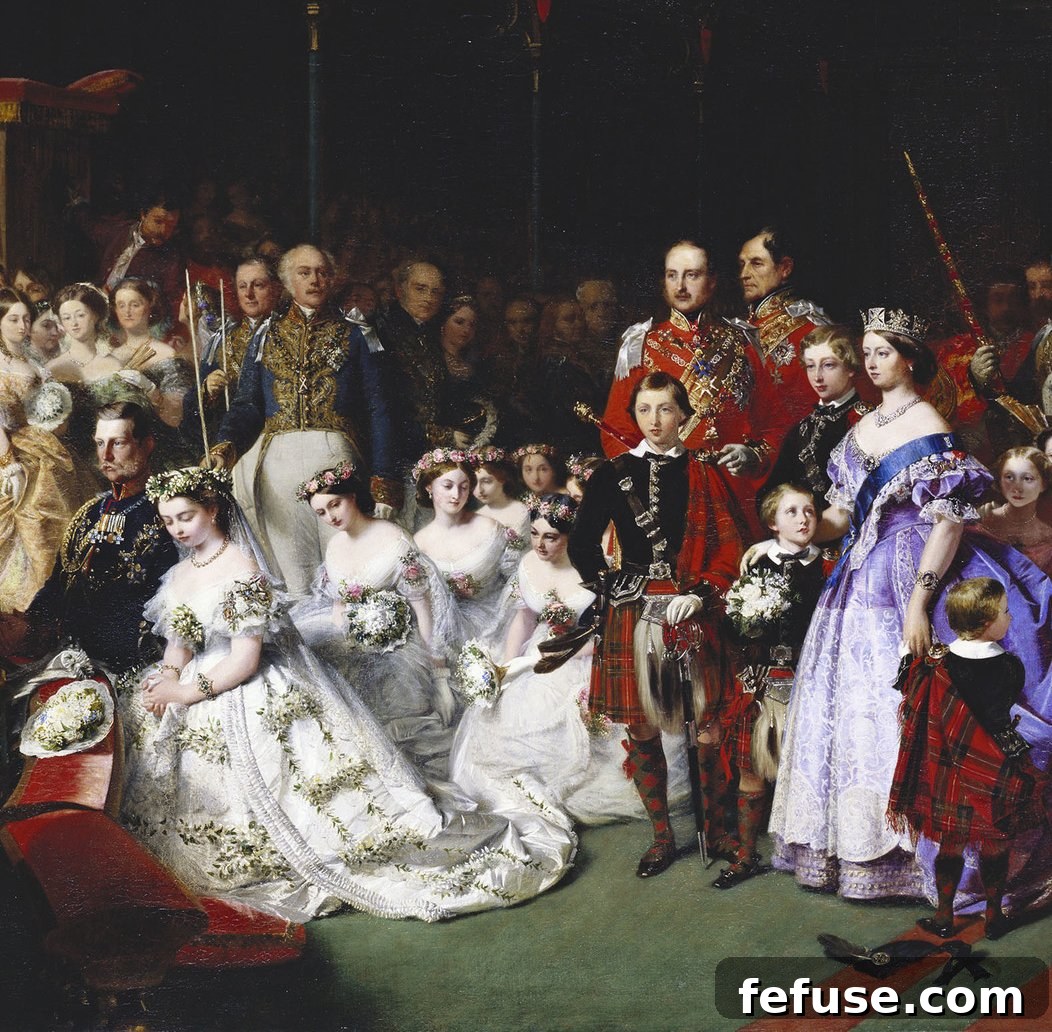
Seventeen years later, the echoes of Victoria’s own wedding day resonated once more at the marriage of her eldest daughter, Princess Vicky, to Prince Friedrich Wilhelm of Prussia. The ceremony took place on January 25, 1858, in the very same Chapel Royal at St. James’s Palace where Victoria and Albert had exchanged vows. For this significant mother-of-the-bride occasion, Victoria chose a lilac-hued ensemble, onto which she proudly affixed the treasured lace flounce from her own wedding gown. A photographic print, derived from a daguerreotype taken just before the ceremony, attempts to capture the moment. However, the image appears blurry, a poignant detail explained by Victoria herself in her journal that night: “Vicky was daguerreotyped in my room, & she & her dear father & I, together, but I trembled so that it has come out indistinct. Then, it was time to go.” Her emotional state, a mixture of nerves and overwhelming love for her daughter, underscored the deep personal connection she felt to both the event and the cherished lace she wore.
Phillip’s Painting: Capturing the Lace and Royal Jewels
John Phillip’s magnificent painting of Princess Vicky’s wedding in 1858 offers a clearer view of Queen Victoria’s attire. The intricate lace, visibly adorning the front of her gown, stands out, reiterating its importance to her. Beyond the sentimental lace, Victoria’s choice of jewelry for her daughter’s wedding was equally significant. She wore the Turkish Diamond Necklace, a reminder of her own bridal jewels, complemented by other spectacular pieces from the Crown. These included the Diamond Diadem, a grand symbol of monarchy, and the iconic Koh-i-Noor Brooch. This combination of personal sentiment and grand royal regalia reflected her role as both a loving mother and the reigning monarch.
The Lace’s Enduring Journey: From Wedding to Diamond Jubilee
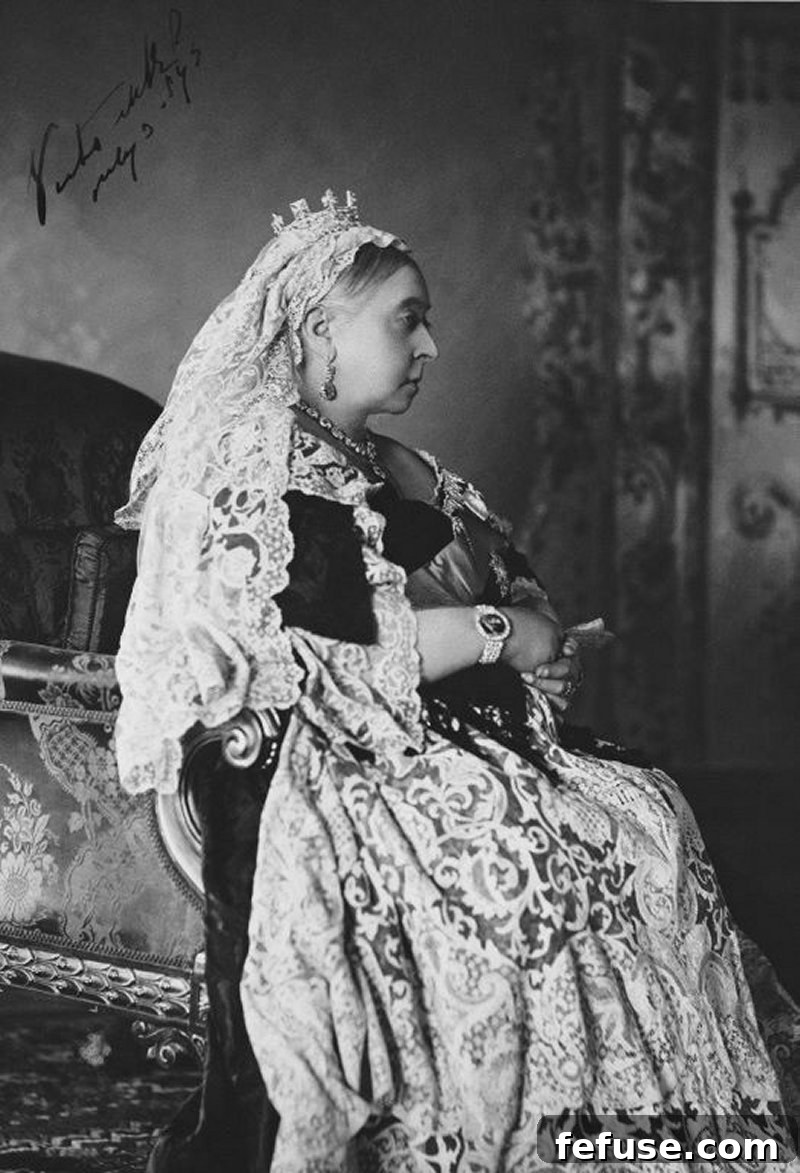
The Honiton lace flounce, once part of Queen Victoria’s wedding gown, enjoyed a remarkably long and storied life. It became a cherished heirloom, carefully detached from her original dress and re-attached, time and again, to other significant garments she wore on countless important family occasions. As the late fashion writer Hilary Alexander observed in 2011, “It was carefully removed from her wedding gown and added, time and time again, to other dresses. After Albert’s death from typhoid fever in 1861, at the age of 42, the lace became more beloved.” This poignant sentiment transformed the lace into a tangible link to her beloved Prince Consort. One of the last documented public appearances for this historic lace, along with her wedding veil, was in the summer of 1893. Victoria wore both for the wedding of her grandson, the Duke of York, and Princess May of Teck, who would later become King George V and Queen Mary. Photographs from this portrait session were subsequently used four years later in 1897 as the official portraits for her Diamond Jubilee, forever intertwining the symbol of her youthful love with her long and glorious reign.
Where Are Queen Victoria’s Wedding Treasures Today?
The journey of Queen Victoria’s wedding ensemble—comprising her dress, veil, shoes, and an array of precious jewels—reflects a fascinating blend of preservation and loss. While some elements have been meticulously conserved for posterity, offering a tangible link to one of Britain’s most iconic monarchs, others have regrettably succumbed to the passage of time or have found new homes outside the immediate royal collection. Tracing the whereabouts of these historical artifacts provides a captivating insight into the care of royal heritage and the dispersal of personal treasures over generations.

The Preserved Gown and Delicate Parure
Queen Victoria’s pioneering white wedding dress has undergone extensive and careful conservation efforts, ensuring its survival for future generations. This historically significant gown has frequently been displayed at Kensington Palace in London, her childhood home, allowing the public to marvel at its beauty and historical resonance. However, the delicate Honiton lace flounce, a central feature of the original gown and so often re-worn by the Queen, is now deemed too fragile for public exhibition and remains safely in storage, a testament to its age and intricate craftsmanship. Similarly, the exquisite orange blossom parure, a loving gift from Prince Albert that echoed her original bridal wreath, has also graced displays at Kensington Palace, showcasing the sentimental depth of their union.
The Royal Footwear: Victoria’s Wedding Slippers
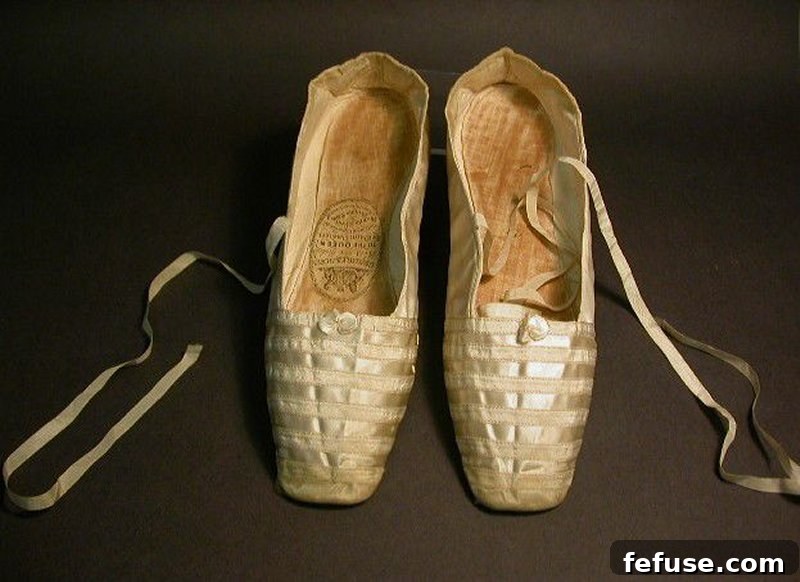
The delicate white satin slippers that Queen Victoria wore on her wedding day, a small yet intimate detail of her bridal ensemble, have also been preserved. These precious historical artifacts are now part of the extensive shoe collection housed at the Northampton Museum & Art Gallery. Their presence there offers a unique glimpse into the personal style and physical dimensions of the monarch, serving as a tangible connection to her historic marriage.
Final Resting Place: Veil and Ring Interred with the Queen
In a profound testament to her enduring sentimentality and love for Prince Albert, two key elements of Queen Victoria’s wedding ensemble accompanied her to her final resting place. Upon her death in January 1901, her beloved wedding ring remained on her finger as she was laid in her coffin. Additionally, her cherished wedding veil, which had symbolized purity and love throughout her life, was draped over her body. Both these intensely personal items are interred with her at Frogmore, a private burial ground, symbolizing a perpetual bond that transcended life itself.
Prince Albert’s Brooch: A Crown Heirloom
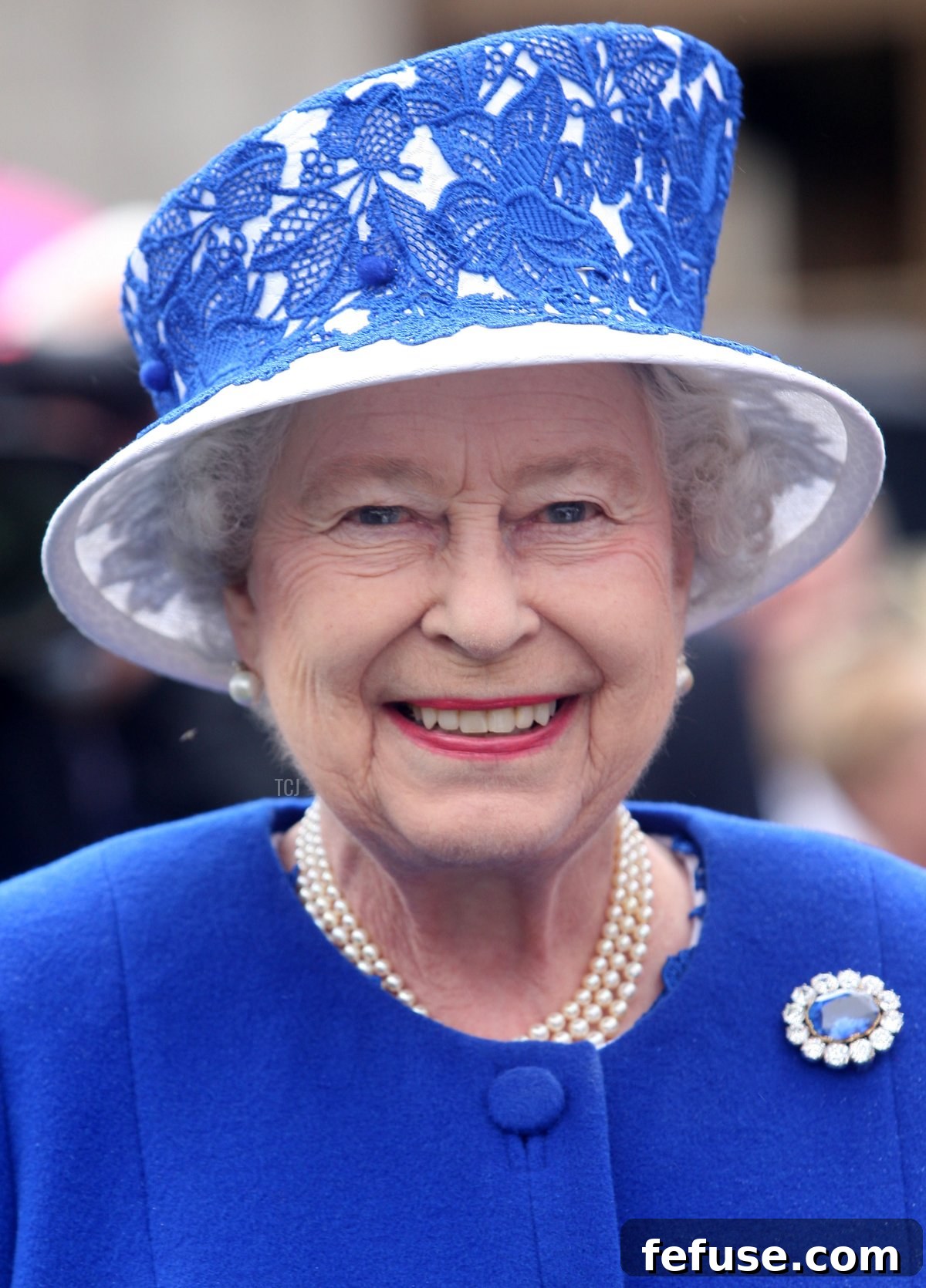
Regarding the rest of Queen Victoria’s extensive jewelry collection, some pieces have clear trajectories, while others remain elusive. Notably, Prince Albert’s Brooch, the sapphire and diamond cluster he gave her on the eve of their wedding, has a well-documented and secure future. Victoria, recognizing its profound personal and historical significance, designated it as an heirloom of the Crown. This important designation ensures that the brooch is not a personal possession to be inherited by a specific family member but rather passes directly from one reigning monarch to the next, symbolizing continuity and the enduring legacy of the monarchy.
A Royal Favorite: Queen Elizabeth II and the Brooch
The significance of Prince Albert’s Brooch continued well into the 21st century. It became a particular favorite of the late Queen Elizabeth II, who frequently wore the exquisite piece throughout her remarkable 70-year reign. Its presence often graced her outfits on numerous public engagements, symbolizing her connection to her illustrious great-great-grandmother and the enduring strength of the British monarchy. However, since her passing in September 2022, the cherished brooch has not been seen in public, leading to speculation about its future use by the current monarch.
The Journey of the Turkish Diamond Necklace
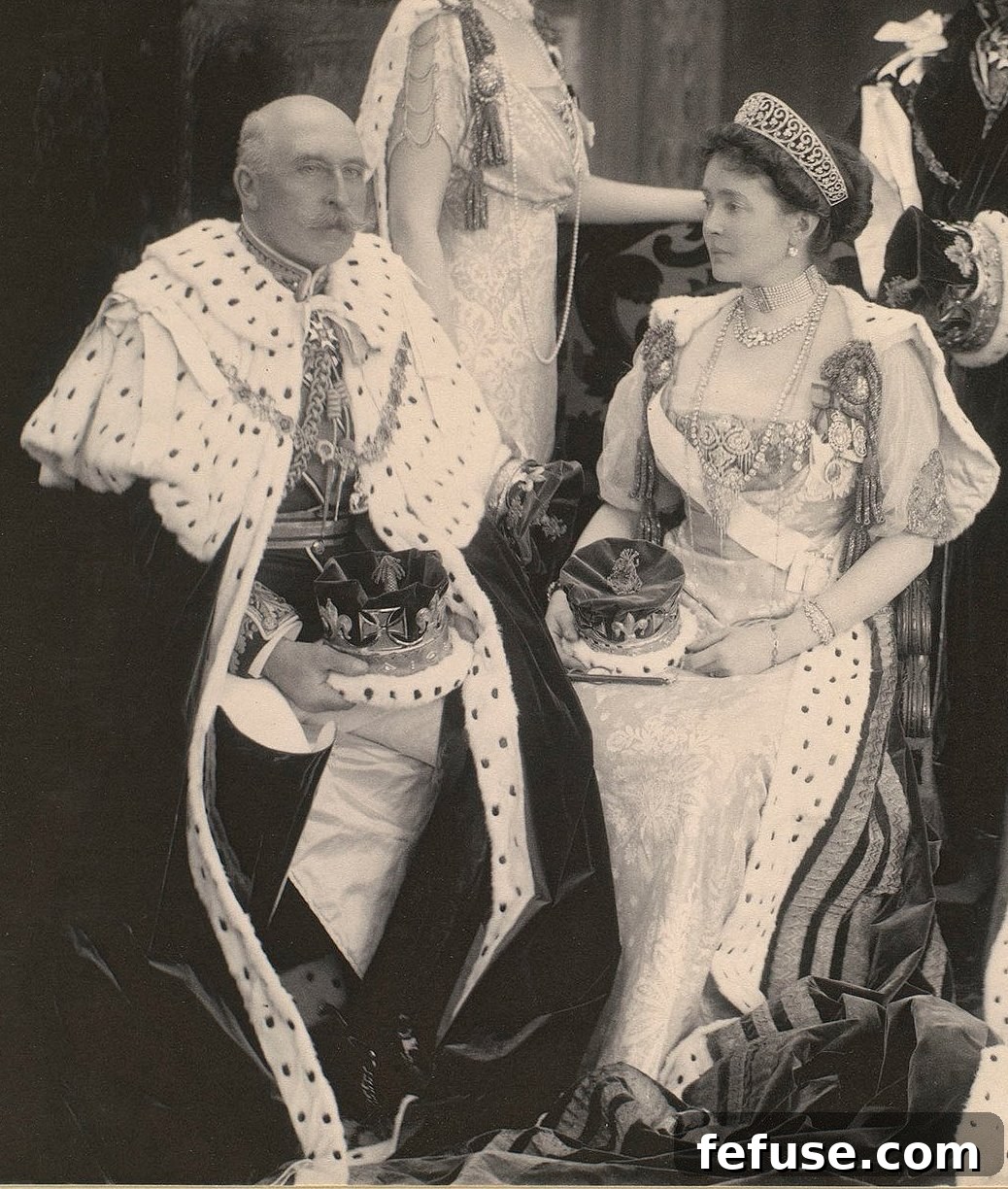
The fate of the Turkish Diamonds, particularly the necklace from the suite, followed a different path. During her lifetime, Queen Victoria gifted the necklace to her seventh child, Prince Arthur, Duke of Connaught and Strathearn. His wife, Princess Louise Margaret of Prussia, the Duchess of Connaught, frequently wore the magnificent necklace on various important state occasions. She was seen wearing it, often paired with a pearl choker and a diamond sautoir, at significant events such as the coronation of Emperor Nicholas II of Russia in 1896 and the coronation of King George V of the United Kingdom in 1911. A photograph from the 1911 coronation distinctly shows her adorned with this impressive jewel. However, over the decades, the necklace eventually left the immediate royal collection when it was sold at auction in London in 1970 by their descendants, marking the end of its direct connection to the British Crown.
The Mystery of the Turkish Diamond Earrings
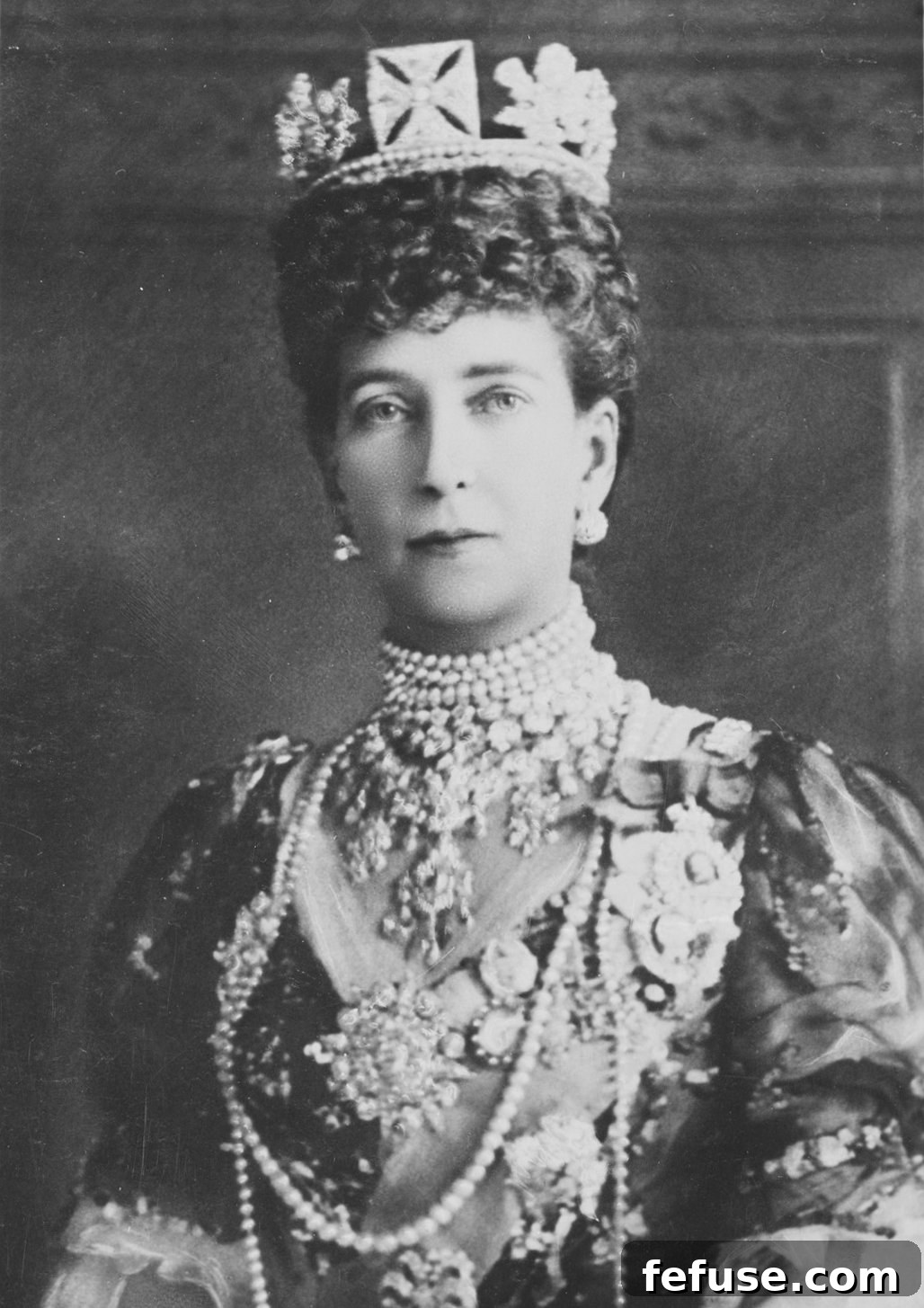
The whereabouts of the earrings from Queen Victoria’s Turkish Diamond suite remain shrouded in a degree of mystery. While the necklace’s trajectory is known, the fate of its matching earrings is less clear. Some historians and jewel enthusiasts speculate that these earrings may have been passed down to Victoria’s daughter-in-law, Queen Alexandra. Alexandra was known for her elaborate taste in jewelry and frequently wore a pair of distinctive diamond pendants as part of her necklaces. A 1905 photograph offers a glimpse of these pendants, visible on either side of a larger central pendant on her necklace. The resemblance sparks intrigue, prompting observers to consider a possible lineage from Victoria’s wedding day. However, a conclusive link has yet to be definitively established.
Tracing Royal Jewels: The Norwegian Connection
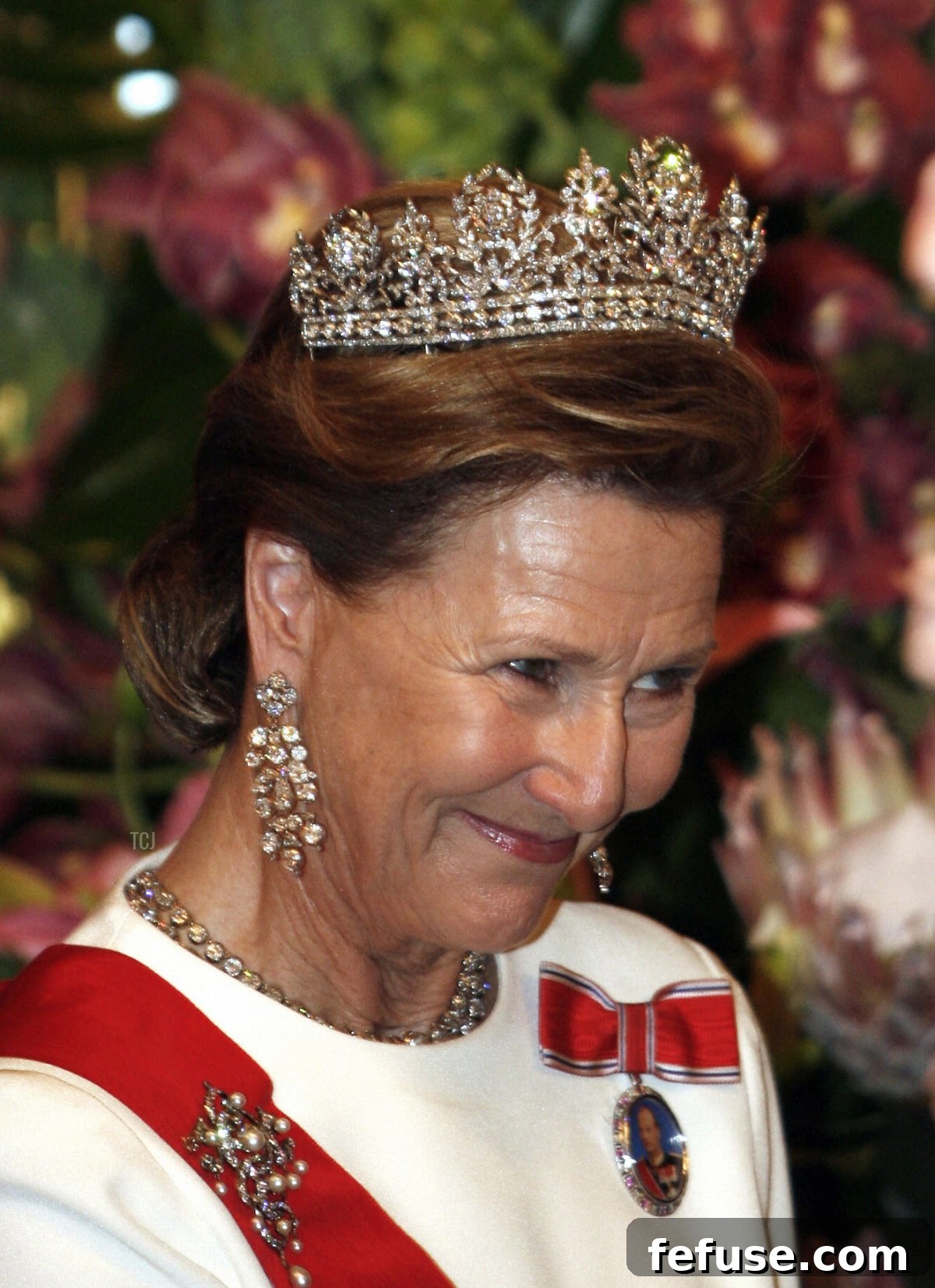
Intriguingly, Queen Alexandra’s diamond pendants are now part of the Norwegian royal family’s collection, having been inherited through Queen Maud, Alexandra’s daughter who became Queen of Norway. Today, these beautiful pendants are frequently worn as earrings by Queen Sonja of Norway, continuing their royal journey. However, a close comparison between the pendants worn by Queen Sonja and the known depictions of Queen Victoria’s original Turkish earrings reveals some noticeable differences in size and shape. This discrepancy leads many to question whether they are, in fact, the same pieces. The debate among royal jewelry enthusiasts continues, highlighting the complexities and captivating mysteries inherent in tracing the provenance of historic royal jewels across generations and national borders. Ultimately, Queen Victoria’s wedding remains a captivating chapter in royal history, not only for its societal impact but also for the enduring allure of its unique and cherished jewels.