
Turquoise, with its vibrant blue-green hues, has captivated humanity for millennia, revered across cultures for its beauty and perceived mystical properties. As a coveted gemstone, it has graced the adornments of royalty and nobility throughout history, symbolizing wisdom, tranquility, and protection. In the extensive and magnificent collection of British royal jewels, pieces featuring turquoise are relatively rare, making those that do exist particularly special. Among these treasured items is a distinctive demi-parure known as the Jordanian Turquoise Suite, a fascinating addition to Queen Elizabeth II’s jewelry vault that stands out for both its exquisite craftsmanship and its diplomatic significance.
The Origin of the Royal Gift: King Hussein’s 1966 State Visit
The story of the Jordanian Turquoise Suite begins in the summer of 1966, a period marked by burgeoning diplomatic relations and cultural exchanges between nations. King Hussein of Jordan embarked on a significant state visit to the United Kingdom, a formal occasion designed to strengthen ties between the two monarchies and their respective countries. State visits are meticulously planned events, rich with tradition, protocol, and the exchange of meaningful gifts, symbolizing goodwill and mutual respect. It was during this historic visit that King Hussein presented Queen Elizabeth II with a truly memorable and personal token of friendship: a stunning suite of turquoise jewels.
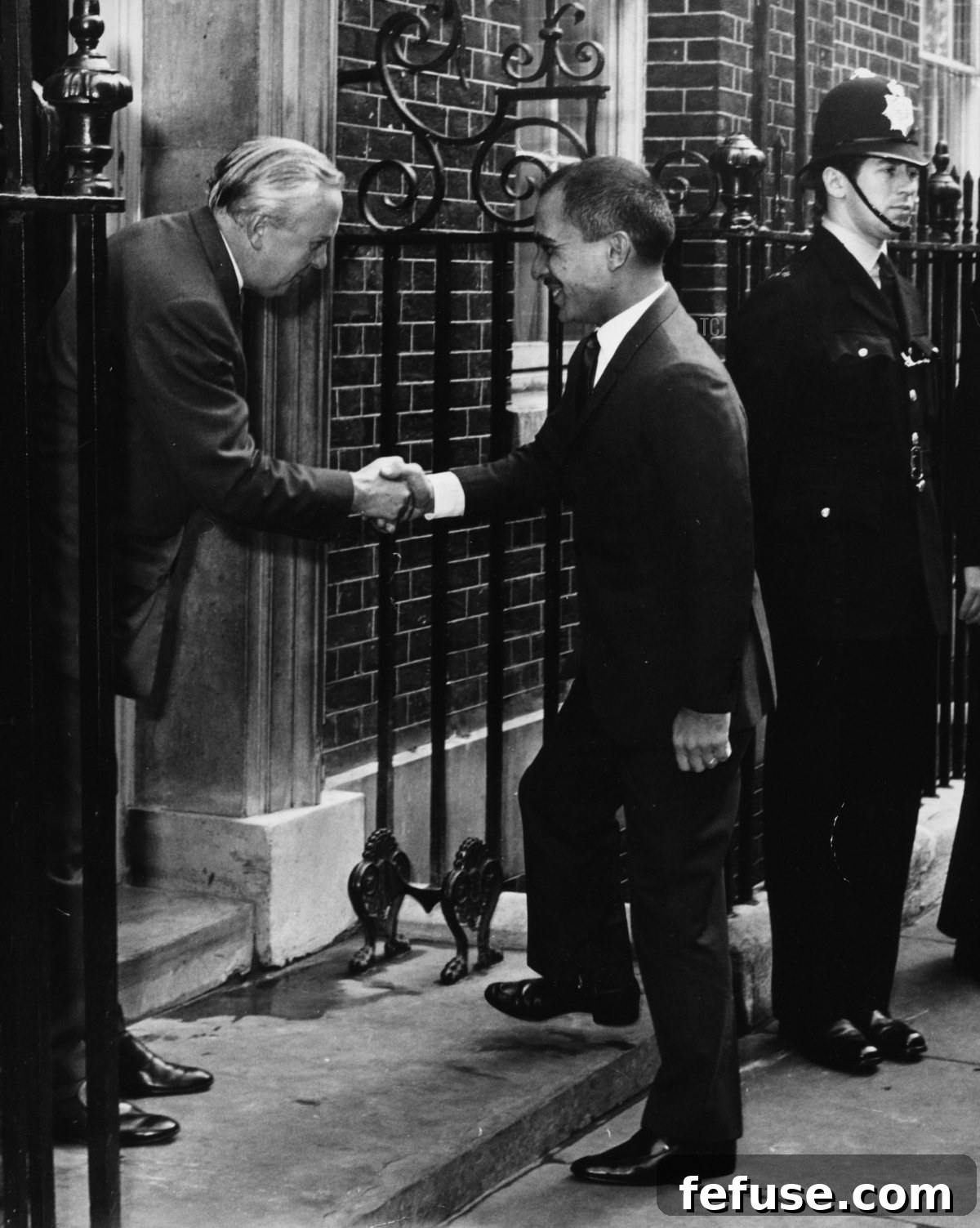
The visit itself was a grand affair, encompassing official engagements and ceremonial events. Above, King Hussein is captured in a poignant moment, greeting the then-British Prime Minister Harold Wilson outside the iconic 10 Downing Street in London on July 22nd, 1966. This image serves as a powerful reminder of the historical context surrounding the presentation of the Jordanian Turquoise Suite, underscoring the era’s diplomatic cordiality and the personal connections forged between world leaders.
A Detailed Look at the Exquisite Jordanian Turquoise Suite
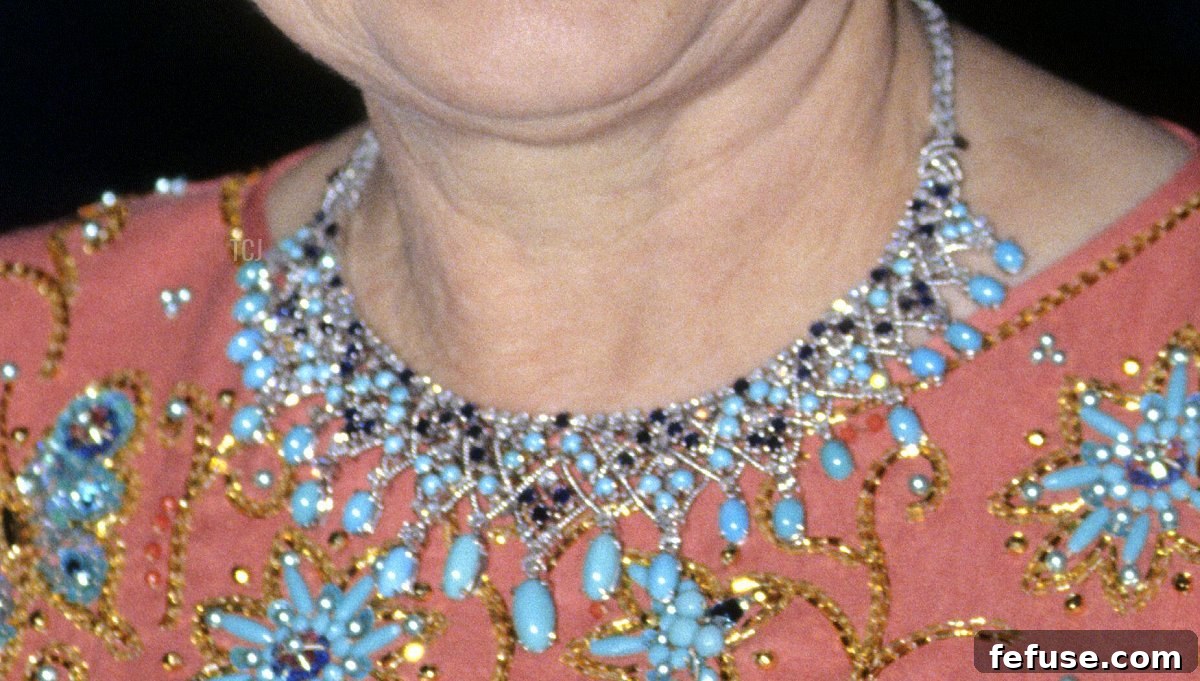
The gift from King Hussein to Queen Elizabeth II was a striking demi-parure, consisting of a magnificent necklace and a pair of perfectly matching earrings. As detailed by royal jewelry expert Leslie Field in her seminal work, The Queen’s Jewels, the pieces are described as “a cluster-and-drop necklace and matching earrings of turquoises, with diamonds and sapphires.” This description offers a glimpse into the intricate design: the necklace likely features individual turquoise stones artfully arranged in clusters, perhaps complemented by delicate drops that sway with movement, enhancing their natural beauty. These vibrant turquoise elements are then further elevated by the sparkle of diamonds and the deep azure of sapphires, creating a sophisticated interplay of color and brilliance. The integration of diamonds would provide a dazzling contrast to the opaque turquoise, while sapphires would deepen the cool color palette, offering an elegant touch that defines its regal character.
Despite the Queen’s vast and legendary jewelry collection, a trove so extensive that its full scope is still not entirely known to the public, the Jordanian Turquoise Suite holds a unique position. It appears to be the only major set of turquoise jewels directly owned by Queen Elizabeth II within her personal vault. This rarity makes the suite all the more significant. While other prominent British royal turquoise parures exist, they have followed different paths of inheritance. For example, the spectacular Teck Turquoises, known for their grandeur, were inherited by the Dukes and Duchesses of Gloucester. Similarly, Princess Margaret, Queen Elizabeth’s sister, received the stunning Persian Turquoises, which originally belonged to their mother, the Queen Mother. Speculation continues as to whether the Persian Turquoises may have eventually found their way back to the Buckingham Palace vaults, but official confirmation remains elusive. Therefore, in terms of significant turquoise pieces frequently worn by Queen Elizabeth II, the Jordanian Turquoise Suite, alongside Queen Mary’s Turquoise Brooch, effectively represents the primary examples of this gemstone in her public repertoire.
Public Debuts and Memorable Appearances of the Jordanian Turquoise Suite
Despite receiving the suite in 1966, Queen Elizabeth II waited nearly two decades before publicly showcasing King Hussein’s thoughtful gift. This careful timing often signifies a deliberate diplomatic gesture or a sentimental occasion. Her choice to wear the turquoise demi-parure for the first time was particularly poignant and symbolic, tying back directly to its origins.
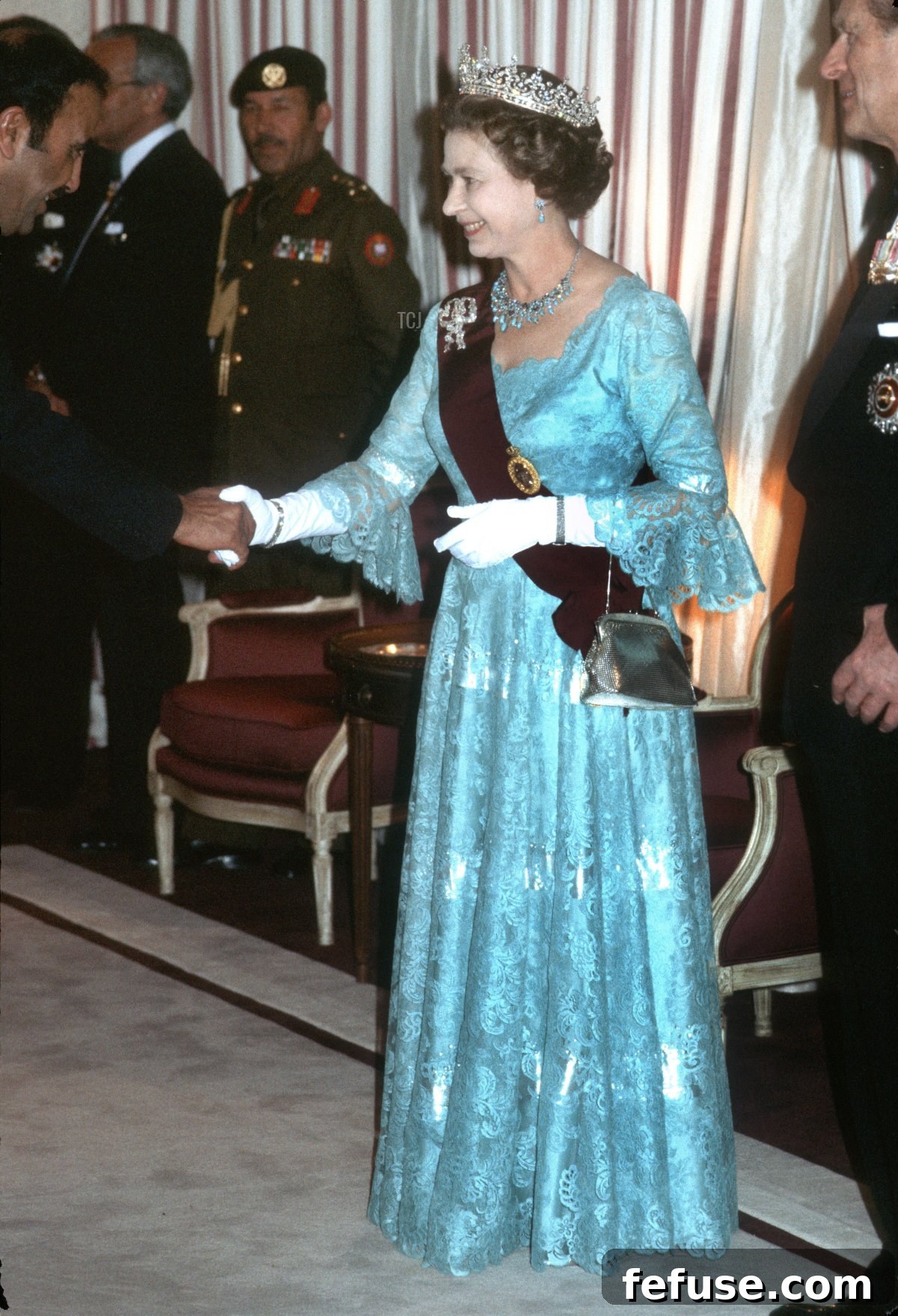
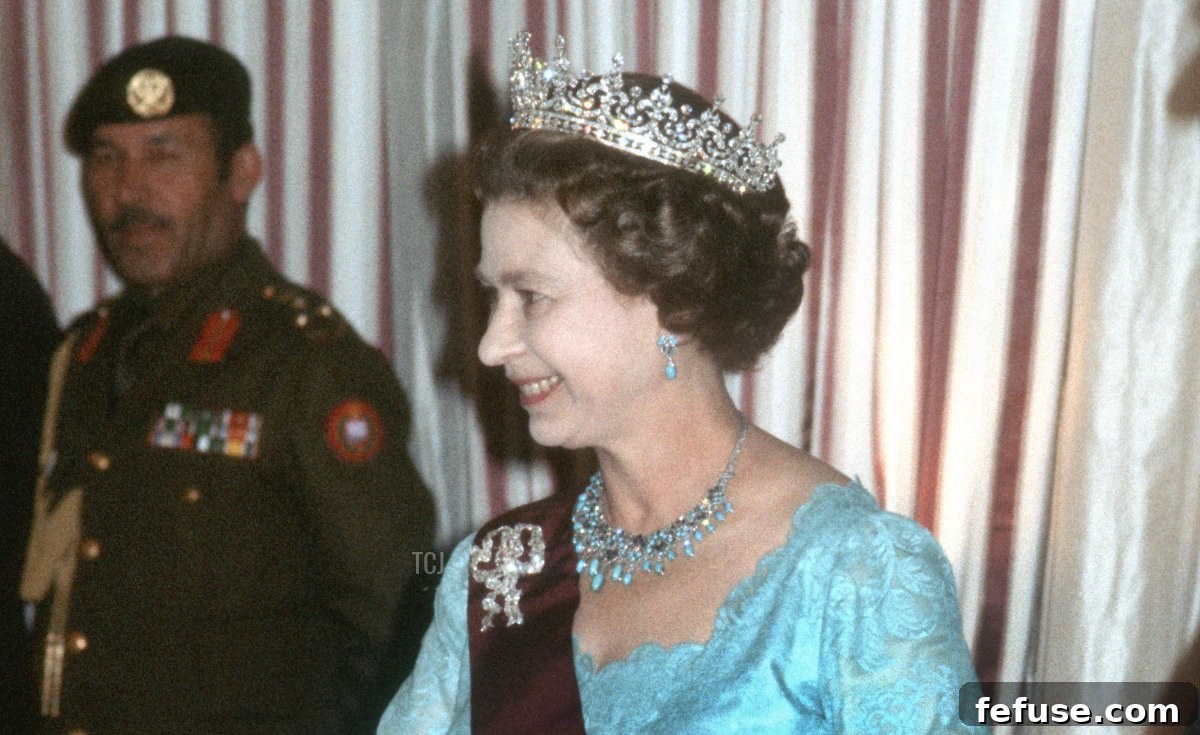
The Queen debuted the turquoise demi-parure in March 1984, during a state visit to Jordan itself, accompanied by the Duke of Edinburgh. This choice was a powerful diplomatic gesture, honoring the donor country and reaffirming the strong bonds between the two nations. She wore the suite to a grand state banquet held in Amman, the capital of Jordan, an occasion of high importance that underscored the significance of the jewels. For the Queen to wear a gift from the host country’s monarch during a visit there is a time-honored tradition that conveys deep respect and appreciation, making this initial public appearance particularly memorable.
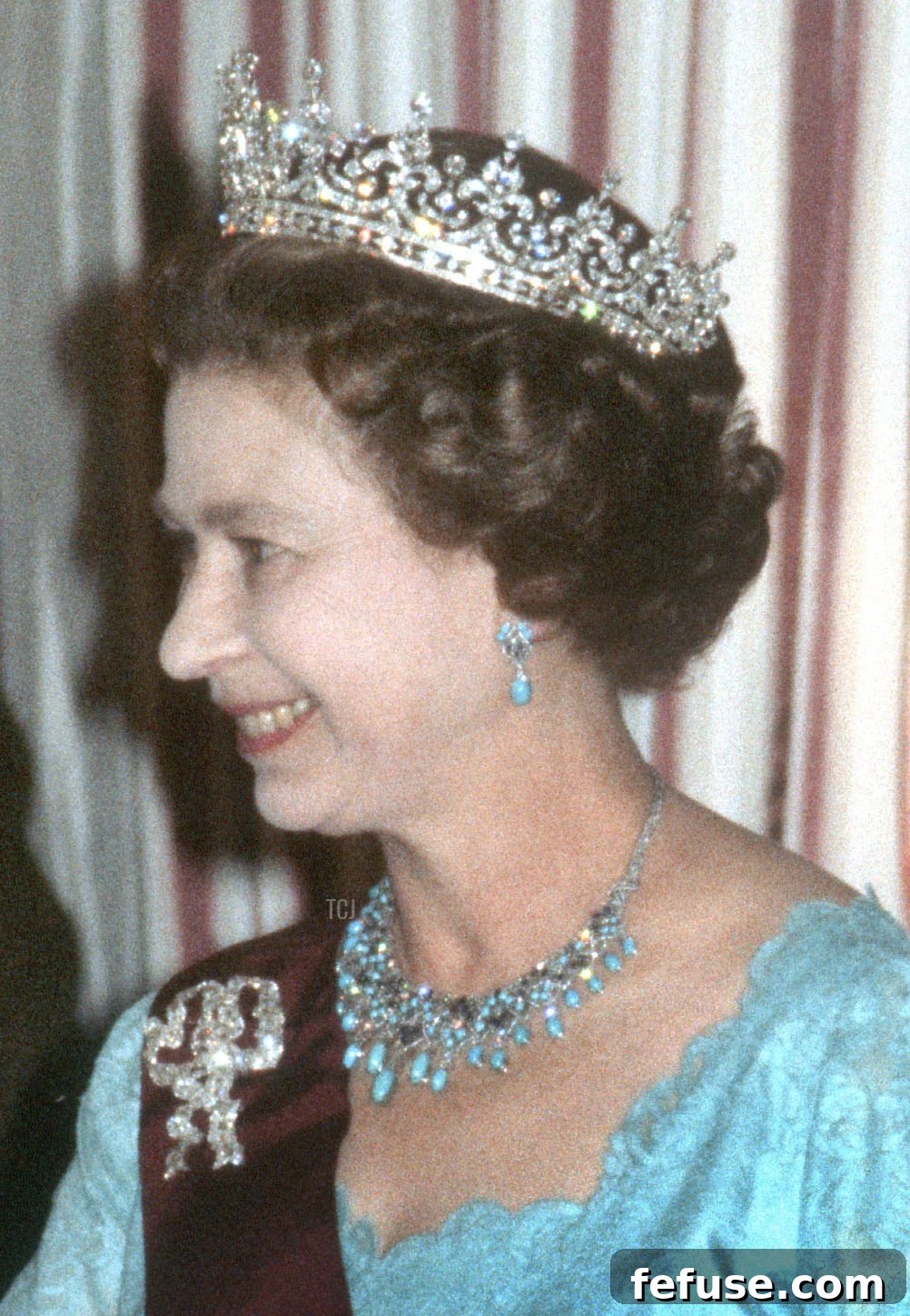
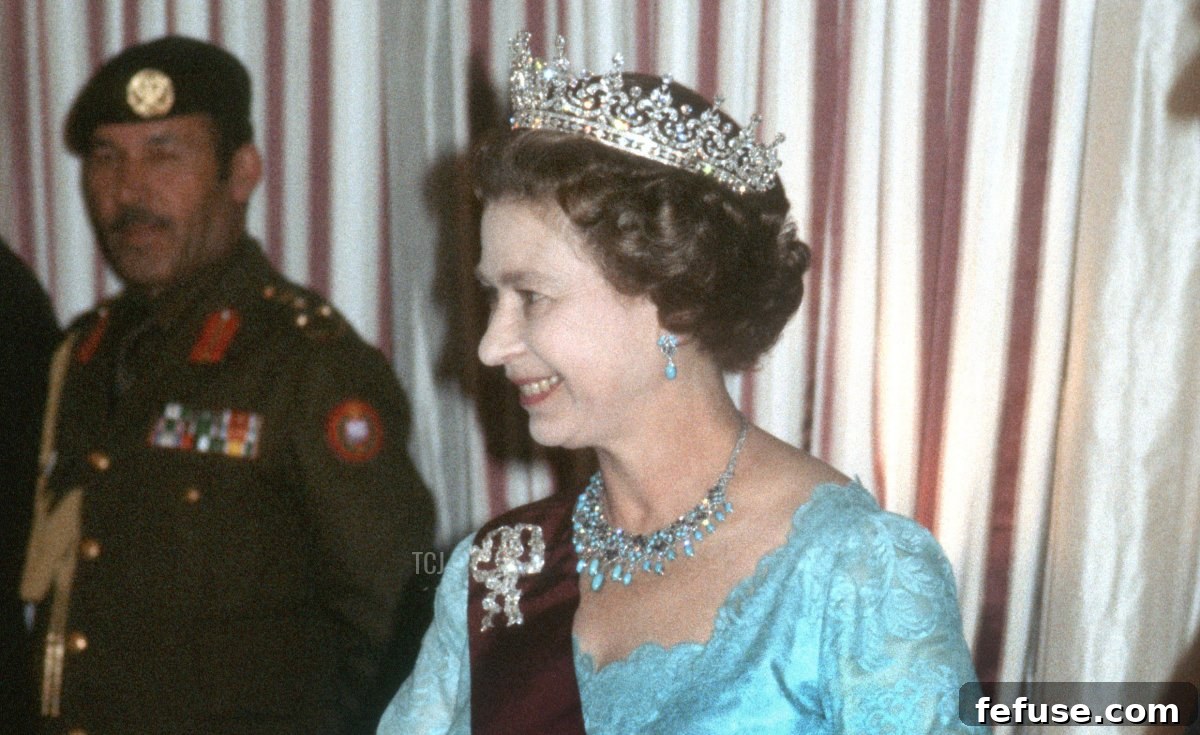
A closer view of the Queen at the Amman banquet reveals the full splendor of her chosen ensemble. For this significant occasion, she masterfully paired the turquoise suite with other iconic diamond jewels from her collection. Adorning her head was the magnificent Girls of Great Britain and Ireland Tiara, a piece with its own rich history, having been a wedding gift to the future Queen Mary in 1893 and later a favorite of Queen Elizabeth II herself. Its dazzling diamond framework provided a stunning backdrop for the vibrant turquoise. Additionally, she wore Queen Mary’s Lover’s Knot Brooch, a timeless and elegant diamond piece that perfectly complemented the intricate design of the turquoise necklace and earrings. This combination demonstrated the Queen’s unparalleled skill in curating her jewelry to create a harmonious and impactful look, enhancing both the historical value of each piece and the overall regal impression.
A Return to the Spotlight in the 1990s
Almost a decade after its memorable debut in Amman, the Jordanian Turquoise Suite re-emerged in the public eye during a series of royal engagements in 1992, showcasing its versatility and enduring appeal. The year 1992, famously dubbed the “Annus Horribilis” by the Queen herself due to various personal and public challenges, nevertheless saw her maintain a steadfast schedule of international and domestic duties, often adorned with her renowned jewels.
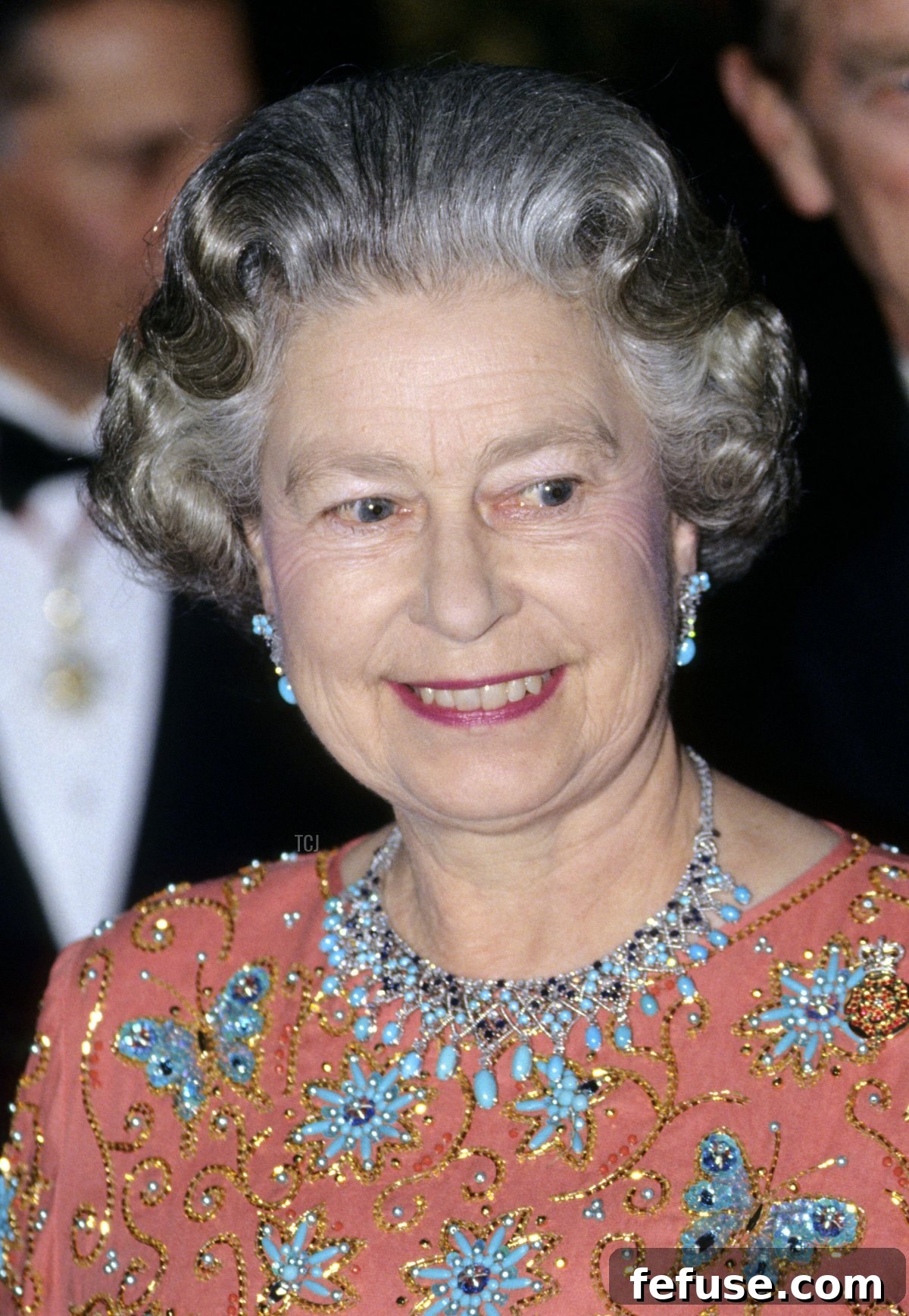
In October 1992, during a royal visit to Germany, the Queen once again chose the striking turquoise set for a public appearance. She wore the jewels at the Berlin Tattoo, an impressive military music festival held at the Deutschlandhalle in Berlin. On this occasion, the Queen made a bold fashion statement, pairing the cool blue-green tones of the turquoises with a striking orange gown. This elegant dress was further adorned with gold and turquoise beads, creating a cohesive and visually stunning ensemble that demonstrated her sophisticated eye for color and texture. The interplay between the vibrant orange of her attire and the distinct hue of the turquoise jewels created a memorable contrast, allowing both the dress and the jewelry to shine. Her choice highlighted how the suite, while rooted in a diplomatic gift, could also be a versatile accessory for high-profile cultural events.
Just a month later, in November 1992, the Queen made a third notable outing in the demi-parure. She attended a concert by the Oslo Philharmonic at the Barbican Centre in London, an event that showcased international cultural cooperation. For this sophisticated evening, she again paired the necklace and earrings with a beautiful beaded gown, though this time in shades of blue and purple. The subtle blend of these colors provided a different backdrop for the turquoise, allowing its natural vibrancy to stand out in a complementary fashion. This third appearance within a relatively short period underscored the Queen’s fondness for the Jordanian Turquoise Suite and its suitability for diverse formal occasions, from state banquets to cultural performances, cementing its place as a valued part of her personal collection.
The Enduring Legacy of the Jordanian Turquoise Suite
The Jordanian Turquoise Suite, though not among the most frequently seen jewels in the vast British Royal Collection, holds a significant place due to its unique combination of diplomatic origins, intrinsic beauty, and relative rarity within Queen Elizabeth II’s personal possessions. As a gift from King Hussein, it embodies the warm relations between the United Kingdom and Jordan, serving as a tangible symbol of international friendship and cultural exchange. Its design, with its elegant cluster-and-drop motif featuring turquoise, diamonds, and sapphires, reflects a timeless aesthetic that transcends eras. While the future of royal jewels often involves careful consideration of their wearers and occasions, the Jordanian Turquoise Suite stands as a beautiful testament to a thoughtful gift and Queen Elizabeth II’s discerning taste, ensuring its legacy as a distinct and cherished part of royal history.