
India’s Gem and Jewellery Exports: A Detailed Analysis of Recent Trends and Future Outlook
India’s gem and jewellery sector stands as a cornerstone of its economy, contributing significantly to exports, employment, and global trade. Renowned for its unparalleled craftsmanship and robust manufacturing capabilities, India has long held a dominant position in the global diamond cutting and polishing industry, as well as being a major exporter of exquisite gold jewellery. Recent export data, meticulously compiled and released by the Gem & Jewellery Export Promotion Council (GJEPC), offers a nuanced perspective on the industry’s performance, revealing a mix of challenges and remarkable growth in specific segments.
Overall Export Performance: A Slight Contraction in the Short Term
The latest figures indicate a marginal but notable decline in the overall gem and jewellery exports during the specific period under review. In February 2019, total exports from the sector reached $3507.59 million, marking a 1.59% decrease when compared to the $3564.33 million recorded in February 2018. This slight dip reflects the dynamic and often volatile nature of the global market, influenced by various macroeconomic factors and shifting consumer demands.
Extending beyond a single month, the cumulative performance for the financial year (FY19) from April to February also showed a contraction. During this eleven-month period, India’s gem and jewellery exports totaled $36.03 billion. This represents a 3.64% reduction from the $37.48 billion achieved during the corresponding period in FY18. While such figures warrant careful observation, it’s crucial to delve deeper into the sub-segments to understand the underlying drivers behind these overall trends.
Navigating the Diamond Market: Cut and Polished Diamonds
The cut and polished diamond segment, a significant component of India’s gem and jewellery exports, showcased a somewhat mixed performance. In February 2019, exports of cut and polished diamonds experienced a decline of 3.51%, amounting to $2.34 billion compared to $2.43 billion in February 2018. This monthly dip could be attributed to various factors including reduced demand from key consumer markets, inventory adjustments by retailers, or temporary supply chain disruptions.
However, a broader look at the financial year’s cumulative data paints a more resilient picture for this segment. From April to February of FY19, exports of cut and polished diamonds demonstrated a marginal yet encouraging increase of 1.17%. The total exports for this period reached $21.95 billion, a slight rise from the $21.70 billion registered during the same timeframe in FY18. This cumulative growth underscores the enduring strength and global demand for Indian-processed diamonds, highlighting the industry’s ability to recover and maintain its foothold despite short-term fluctuations. The slight increase suggests that while individual months might see variations, the long-term trend for India’s dominance in diamond processing remains intact, driven by its skilled workforce and advanced technological capabilities.
Gold Jewellery: A Shining Star in Export Growth
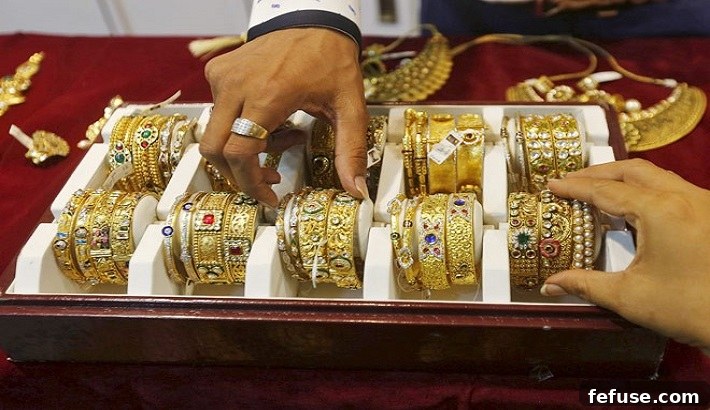
In stark contrast to the moderate contractions observed in the overall sector and the mixed performance of cut and polished diamonds, the gold jewellery segment emerged as a significant growth driver. The export of gold jewellery witnessed an impressive surge in the period from April to February of FY19. During this eleven-month span, gold jewellery exports soared by a remarkable 24.76%, reaching an impressive total of $10.79 billion. This substantial growth is a significant leap from the $8.65 billion recorded in the corresponding period of FY18.
This outstanding performance in gold jewellery exports can be attributed to several factors. India has a rich heritage of gold craftsmanship, offering intricate designs and high-quality products that are highly sought after in international markets, particularly in the Middle East, North America, and parts of Asia. Increased demand during festive seasons, wedding trends, and potentially favorable government policies promoting exports could have played a pivotal role. Furthermore, Indian manufacturers might have successfully diversified their product offerings and expanded into new markets, leveraging their reputation for design innovation and competitive pricing.
Factors Influencing India’s Gem and Jewellery Export Landscape
The performance of India’s gem and jewellery sector is a complex interplay of various domestic and international factors. Globally, economic slowdowns, trade tensions between major economies, and fluctuations in currency exchange rates can directly impact consumer spending on luxury goods. Domestically, government policies related to gold imports, export incentives, and ease of doing business significantly shape the industry’s competitiveness. The rise of lab-grown diamonds also presents both a challenge and an opportunity, influencing market dynamics and pricing strategies for natural diamonds.
Consumer preferences are also evolving. There is an increasing demand for ethically sourced and sustainable products, pushing manufacturers to adopt more transparent supply chains. Digital transformation, including e-commerce platforms and online marketing, has opened new avenues for reaching global customers but also intensifies competition. The ability of Indian exporters to adapt to these changing market landscapes, innovate in design, and maintain product quality will be crucial for sustained growth.
The Role of the Gem & Jewellery Export Promotion Council (GJEPC)
The Gem & Jewellery Export Promotion Council (GJEPC) plays an instrumental role in monitoring, promoting, and supporting the Indian gem and jewellery industry. As the primary body responsible for collating and disseminating export data, GJEPC provides invaluable insights that help stakeholders understand market trends and formulate strategic responses. Beyond data collection, GJEPC actively engages in international trade fairs, organises buyer-seller meets, facilitates skill development programs, and advocates for policy changes to enhance the industry’s global competitiveness. Their efforts are pivotal in helping Indian exporters navigate global challenges and capitalise on emerging opportunities, fostering sustainable growth across all segments of the sector.
Challenges and Opportunities Ahead
Despite the commendable growth in gold jewellery exports, the overall sector faces several challenges. Access to finance for small and medium-sized enterprises (SMEs), ensuring consistent supply of raw materials, and managing the increasing competition from other manufacturing hubs remain pressing concerns. Furthermore, geopolitical uncertainties and the evolving regulatory landscape in key export markets demand constant vigilance and adaptability from Indian exporters.
However, significant opportunities also abound. The burgeoning middle class in emerging economies, the increasing penetration of e-commerce, and a renewed focus on unique, handcrafted pieces offer fertile ground for expansion. India’s unparalleled expertise in diamond polishing and gold craftsmanship, combined with its capacity for innovation in design and manufacturing technologies, positions it favorably to capture new market shares. Strategic partnerships, diversification into colored gemstones and platinum jewellery, and strong branding initiatives can further bolster India’s position as a global leader.
Conclusion: A Resilient Sector Poised for Future Growth
The recent export data for India’s gem and jewellery sector paints a picture of resilience and strategic adaptation. While overall figures showed a slight contraction in the short term, the robust growth in gold jewellery exports and the steady performance of cut and polished diamonds over the cumulative period highlight the underlying strengths of the industry. These figures underscore the sector’s ability to navigate global economic headwinds and adapt to changing market dynamics.
Moving forward, continued focus on product innovation, market diversification, sustainable practices, and leveraging technological advancements will be crucial for the industry’s sustained success. With the unwavering support of organizations like GJEPC and the inherent skill of its artisans, India’s gem and jewellery sector is well-positioned to overcome challenges and continue its trajectory as a dominant force in the global market, contributing significantly to the nation’s economic prosperity.